
2 Peterchapter 1
21 verses · Peter, by tradition · AD 64 to 68 · The general letters
For this very reason, make every effort to add to your faith virtue; and to virtue, knowledge;
Introduction
Peter, by tradition, The general letters, 2 Peter Overview.
This chapter opens the last letter the church received under Peter's name, written by an old apostle who expected to die soon. He writes to believers who already had one letter from him and who were now hearing teachers offer a deeper, secret knowledge. The chapter lays the ground for everything that follows. Listen for the word knowledge, which returns again and again, and for a list of qualities joined one to the next. Listen also for the mountain he stood on and the voice he heard there. Read it as a man's last charge to people he will not see again.
Context
- Who
- Believers being offered a spirituality that promised inside knowledge and looser morals
- What
- The opening of Peter's second letter, with its greeting, a call to grow in a chain of Christian qualities, and the two grounds of the apostles' message, what they saw and what the prophets wrote.
- Where
- Most likely written from Rome to churches in the Roman provinces of Asia Minor, the same readers who received 1 Peter.
- When
- About AD 65 to 68 on the traditional dating, near the end of Peter's life in the reign of Nero.
- Why
- To show believers that God has already given them what they need for a godly life, and to fix their confidence on eyewitness testimony and the prophetic Scriptures before false teachers arrive.
Historical context
The body as a tent was a common way of speaking in both Greek and Jewish writing, a temporary shelter to be folded up. Peter says he will put his tent aside soon, which reads as a man settling his affairs.
Show the rest of the historical context, 3 more paragraphs
The list of qualities to add to faith looks like the virtue chains Greek moral teachers used, and that resemblance is probably deliberate. Peter takes a familiar shape and fills it with different content, ending not with self-sufficiency but with love.
The word Peter uses for being an eyewitness of Christ's majesty was a technical term in the Greek mystery religions for someone admitted to the highest level of initiation. He is claiming, against teachers selling secret experience, that he was on the mountain and heard the voice himself.
Prophecy in the wider world came from oracles, dream interpreters, and inspired speakers, and it was famously ambiguous. Peter draws a line: the prophetic word did not come by a man's own impulse but from men carried along by the Holy Spirit, a picture of a ship driven by wind.
Significance
The hearers were being told the real thing lay behind a door only the teachers could open. Peter answers that everything needed for life and godliness has already been given, and then hands them a list of things to do about it.
Show the rest of the significance, 1 more paragraph
For a church about to lose its last living apostles, the promise that he would make sure they could recall these things after his departure was a promise about what would remain when the eyewitnesses were gone.
The heads below are this chapter's scenes. The numbered points under each are its verses.
Add to Your Faith: The Ladder That Keeps You From Stumbling
2 Peter 1:1-2
a faith as precious as ours: Peter writes to readers who received a faith as precious as ours, isotimon, of equal honor with the apostles' own. Our God and Savior Jesus Christ sets one article over both titles, as Titus 2:13 does. Grace and peace grow through the knowledge of God, epignosis.
2 Peter 1:1
“Simon Peter - Margin, “Symeon.” The name is written either “Simon” or “Simeon” - Σίμων Simōn or Συμεών Sumeōn. Either word properly means “hearing;” and perhaps, like other names, was at first significant. The first epistle 1Pe 1:1 begins simply, “Peter, an apostle,” etc. The name Simon, however, was, his proper name - “Peter,” or “Cephas,” having been added to it by the Saviour, Joh 1:42. Compare Mat 16:18. A servant and an apostle of Jesus Christ - In the first epistle the word “apostle” only is used.”
3 more voices on this verseWhat preachers and commentators have said about this verse, in their own words.
2 Peter 1:1
“The faith of those who have not seen, being equally precious with that of those who saw our Lord in the flesh. Through the righteousness - Both active and passive. Of our God and saviour - It is this alone by which the justice of God is satisfied, and for the sake of which he gives this precious faith.”
John Wesley · Explanatory Notes upon the New Testament (1755)evangelical
2 Peter 1:1
“Christ is to all believers "made of God wisdom, righteousness, sanctification, and redemption." through--Greek, "in." Translate, as the one article to both nouns requires, "the righteousness of Him who is (at once) our God and (our) Saviour." Peter, confirming Pau;'s testimony to the same churches, adopts Paul's inspired phraseology.”
Jamieson, Fausset & Brown · Commentary Critical and Explanatory on the Whole Bible (1871)reformed
2 Peter 1:1
“The satisfactory meritorious righteousness and obedience of Christ gives faith all its value and preciousness: and the righteousness of such a person cannot but be of infinite value to those who by faith receive it. For, (1.) This Jesus Christ is God, yea, our God, as it is in the original.”
Matthew Henry · Commentary on the Whole Bible (1707-1721)puritan
knowledge of God: Grace and peace grow through knowing God. Jamieson, Fausset and Brown note that the Greek word means full knowledge, and they read it as the sphere in which grace and peace increase. Adam Clarke takes the knowledge as owning God openly in all of life.
2 Peter 1:2
“Grace - God’s favor; peace - the effects of that favor in the communication of spiritual and temporal blessings. Through the knowledge of God - Εν επιγνωσει· By the acknowledging of God, and of Jesus our Lord. For those who acknowledge him in all their ways, he will direct their steps. Those who know Christ; and do not acknowledge him before men, can get no multiplication of grace and peace.”
Adam Clarke · Commentary on the Bible (1810-1826)evangelical
2 Peter 1:3-4
everything we need for life and godliness: His divine power has given us everything we need for life and godliness before any demand is made. The channel is His precious and magnificent promises, and their end is that believers become partakers of the divine nature.
2 Peter 1:3
“That pertain to life and godliness - To the present, natural life, and to the continuance and increase of spiritual life. Through that divine knowledge of him - Of Christ. Who hath called us by - His own glorious power, to eternal glory, as the end; by Christian virtue or fortitude, as the means.”
John Wesley · Explanatory Notes upon the New Testament (1755)evangelical
1 more voice on this verse
2 Peter 1:3
“The oil and flame are given wholly of grace by God, and "taken" by believers: their part henceforth is to "trim their lamps" (compare 2Pe 1:3, 4 with 2Pe 1:5, &c.). life and godliness--Spiritual life must exist first before there can be true godliness. Knowledge of God experimentally is the first step to life (Joh 17:3).”
Jamieson, Fausset & Brown · Commentary Critical and Explanatory on the Whole Bible (1871)reformed
partakers of the divine nature: The promises are the channel of the gift. Through them believers come to share in God's own life, and Ambrose of Milan reads the phrase as God making man akin to Himself. Jamieson, Fausset and Brown add that the promises are themselves a gift, as sure as if already kept.
2 Peter 1:4
“Why should I add further, carrying you, as it were, through the whole course, that God made man partaker of the Divine nature, as we read in the Epistle of Peter? Whence one says not improperly, We also are His offspring, for He made us akin to Himself, and we are of a rational nature, that we might seek for that Godhead Which is not far from each one of us, in Whom we live and move and have our being.”
Ambrose of Milan · written before 397 · Letter 43 to Horontianus, 10patristic
4 more voices on this verse
2 Peter 1:4
“To be a partaker of the divine nature is not, of course, to become God. That cannot be. The essence of Deity is not to be participated in by the creature.”
2 Peter 1:4
“What he says is that the Christian becomes by grace partaker of the Divine nature. What the heathen philosopher taught was that all men are so by nature.”
2 Peter 1:4
“Now the gift of grace surpasses every capability of created nature, since it is nothing short of a partaking of the Divine Nature, which exceeds every other nature.”
2 Peter 1:4
“But the word nature is not here essence but quality.”
2 Peter 1:5-7
add to your faith virtue: And beside this turns gift into diligence: add is epichoregeo, the word for the wealthy citizen who furnished a chorus, lavish supply. The ladder runs eight rungs, each grace supplied in the one before it, faith the root and charity the crown as in Paul.
2 Peter 1:5
“Superadd the latter, without losing the former. The Greek word properly means lead up, as in dance, one of these after the other, in a beautiful order. Your faith, that "evidence of things not seen," termed before "the knowledge of God and of Christ," the root of all Christian graces.”
John Wesley · Explanatory Notes upon the New Testament (1755)evangelical
self-control: follows knowledge in the chain, and John Wesley reads the order as a guard against knowledge that puffs up. He names the teachers who boasted of knowledge and turned grace into license. Adam Clarke defines perseverance as bearing trials evenly.
2 Peter 1:6
“Temperance - A proper and limited use of all earthly enjoyments, keeping every sense under proper restraints, and never permitting the animal part to subjugate the rational. Patience - Bearing all trials and difficulties with an even mind, enduring in all, and persevering through all. Godliness - Piety towards God; a deep, reverential, religious fear; not only worshipping God with every becoming outward act, but adoring, loving, and magnifying him in the heart: a disposition indispensably necessary to salvation, but exceedingly rare among professors.”
Adam Clarke · Commentary on the Bible (1810-1826)evangelical
1 more voice on this verse
2 Peter 1:6
“The more knowledge you have, the more renounce your own will; indulge yourself the less. "Knowledge puffeth up," and the great boasters of knowledge (the Gnostics) were those that "turned the grace of God into wantonness." But see that your knowledge be attended with temperance. Christian temperance implies the voluntary abstaining from all pleasure which does not lead to God.”
John Wesley · Explanatory Notes upon the New Testament (1755)evangelical
brotherly kindness: The chain ends in love. Albert Barnes reads brotherly kindness as the love Christians owe one another as one family, and love as the wider love owed to all people. Jamieson, Fausset and Brown extend that love even to enemies, in thought, word and deed.
2 Peter 1:7
“And to godliness brotherly kindness - Love to Christians as such. See the Joh 13:34 note; Heb 13:1 note. And to brotherly kindness charity - Love to all mankind. There is to be a special affection for Christians as of the same family; there is to be a true and warm love, however, for all the race. See the notes at 1 Cor. 13.”
1 more voice on this verse
2 Peter 1:7
“Your natural affection and brotherly kindness are to be sanctified by godliness. "And in your brotherly kindness love," namely, to all men, even to enemies, in thought, word, and deed. From brotherly kindness we are to go forward to love.”
Jamieson, Fausset & Brown · Commentary Critical and Explanatory on the Whole Bible (1871)reformed
2 Peter 1:8-9
if you possess these qualities: These qualities keep a believer from being ineffective and unproductive, argos, idle. Whoever lacks them is nearsighted to the point of blindness, muopazon, having forgotten that he has been cleansed from his past sins. The fall begins with forgetting the cleansing.
2 Peter 1:8
“For if these things be in you and abound - If ye possess all there graces, and they increase and abound in your souls, they will make - show, you to be neither αργους, idle, nor ακαρπους, unfruitful, in the acknowledgment of our Lord Jesus Christ. The common translation is here very unhappy: barren and unfruitful certainly convey the same ideas; but idle or inactive, which is the proper sense of αργους, takes away this tautology, and restores the sense.”
Adam Clarke · Commentary on the Bible (1810-1826)evangelical
1 more voice on this verse
2 Peter 1:8
“Those who have chosen to live the glorious and beloved way of life devised by Christ must first be adorned with simple and unblemished faith, and then add virtue to their faith. When this has been done, they must strive to enrich their knowledge of the mystery of Christ and ascend to the most complete understanding of him.”
Cyril of Alexandria · written before 444 · LETTERS 1.3patristic
nearsighted: A believer without these qualities sees only what is close at hand. Matthew Henry reads the blindness as blindness to spiritual and heavenly things, even in someone who seems to have the graces and leaves them unused. Such a person has forgotten his cleansing.
2 Peter 1:9
“There he sets forth how miserable it is to be without those quickening fructifying graces; for he who has not the forementioned graces, or, though he pretends or seems to have them, does not exercise and improve them, is blind, that is, as to spiritual and heavenly things, as the next words explain it: He cannot see far off.”
Matthew Henry · Commentary on the Whole Bible (1707-1721)puritan
2 Peter 1:10-11
your calling and election sure: Strive to make your calling and election sure uses bebaian, confirmed. You will never stumble carries the double negative ou me. The lavish reception into the eternal kingdom answers the supply verb of verse 5, so whoever supplies the graces is richly supplied.
2 Peter 1:10
“Wherefore - Seeing the danger of apostasy, and the fearful end of them who obey not the Gospel, and thus receive the grace of God in vain; give all diligence, σπουδασατε, hasten, be deeply careful, labor with the most intense purpose of soul. To make your calling - From deep Gentile darkness into the marvellous light of the Gospel. And election - Your being chosen, in consequence of obeying the heavenly calling, to be the people and Church of God. Instead of κλησιν, calling, the Codex Alexandrinus has παρακλησιν, consolation. Sure - Βεβαιαν· Firm, solid.”
Adam Clarke · Commentary on the Bible (1810-1826)evangelical
2 more voices on this verse
2 Peter 1:10
“To make your calling and election firm - God hath called you by his word and his Spirit; he hath elected you, separated you from the world, through sanctification of the Spirit. O cast not away these inestimable benefits! If ye are thus diligent to make your election firm, ye shall never finally fall.”
John Wesley · Explanatory Notes upon the New Testament (1755)evangelical
2 Peter 1:10
“Nowhere else does he so address them, which makes his calling them so here the more emphatical. give diligence--The Greek aorist implies one lifelong effect [ALFORD]. to make--Greek middle voice; to make so far as it depends on you; to do your part towards making.”
Jamieson, Fausset & Brown · Commentary Critical and Explanatory on the Whole Bible (1871)reformed
lavish reception: The welcome into the kingdom is richly supplied. Albert Barnes notes that the verb is the one used in verse 5, so whoever supplies each quality is richly supplied in turn. Bede sets the passage beside the building on a mountain in Ezekiel 40, whose ascent had eight steps.
2 Peter 1:11
“For so an entrance - In this manner you shall be admitted into the kingdom of God. Shall be ministered unto you - The same Greek word is here used which occurs in 2Pe 1:5, and which is there rendered “add.” See the notes at that verse.”
1 more voice on this verse
2 Peter 1:11
“Minister in your faith virtue and the other graces, so shall there be ministered to you the entrance into that heaven where these graces shine most brightly. The reward of grace hereafter shall correspond to the work of grace here. abundantly--Greek, "richly." It answers to "abound," 2Pe 1:8.”
Jamieson, Fausset & Brown · Commentary Critical and Explanatory on the Whole Bible (1871)reformed
I Will Stir You Up While I Am in This Tent
2 Peter 1:12-15
I will always remind you of these things: Peter's last work is remembrance. He calls his body a tent that will soon be laid aside, as the Lord foretold in John 21:18-19. After my departure uses exodon, his exodus, and many older readers linked this promise to Mark's Gospel.
2 Peter 1:12
“Wherefore I will not be negligent - He had already written one epistle, this is the second; and probably he meditated more should he be spared. He plainly saw that there was no way of entering into eternal life but that which he described from the 5th to the 10th verse; and although they knew and were established in the present truth, yet he saw it necessary to bring these things frequently to their recollection.”
Adam Clarke · Commentary on the Bible (1810-1826)evangelical
1 more voice on this verse
2 Peter 1:12
“Wherefore--as these graces are so necessary to your abundant entrance into Christ's kingdom (2Pe 1:10, 11). I will not be negligent--The oldest manuscripts read, "I will be about always to put you in remembrance" (an accumulated future: I will regard you as always needing to be reminded): compare "I will endeavor," 2Pe 1:15.”
Jamieson, Fausset & Brown · Commentary Critical and Explanatory on the Whole Bible (1871)reformed
tent of my body: Peter calls his body a tent. Albert Barnes reads it as the dwelling where the soul lives a little while, and he points to the same picture in 2 Corinthians 5:1. The nearness of the end is the reason for his reminders.
2 Peter 1:13
“Yea--Greek, "But"; though "you know" the truth (2Pe 1:12). this tabernacle--soon to be taken down (2Co 5:1): I therefore need to make the most of my short time for the good of Christ's Church. The zeal of Satan against it, the more intense as his time is short, ought to stimulate Christians on the same ground. by--Greek, "in" (compare 2Pe 3:1).”
Jamieson, Fausset & Brown · Commentary Critical and Explanatory on the Whole Bible (1871)reformed
made clear to me: Peter knew his death was near. Adam Clarke refers the verse to the Lord's words in John 21:18 to 19, which foretold his death in old age. Hilary of Arles allows that the knowledge may also have come by a revelation of the Spirit or by dreams.
2 Peter 1:14
“The Lord Jesus showed Peter that his end was near either by a revelation through the Holy Spirit or by his response to Peter when he said: "Get behind me, Satan" or perhaps by dreams and visions in the night.”
Hilary of Arles · written before 449 · Introductory Commentary on 2 Peterpatristic
1 more voice on this verse
2 Peter 1:14
“Knowing that shortly I must put off - St. Peter plainly refers to the conversation between our Lord and himself, related Joh 21:18, Joh 21:19. And it is likely that he had now a particular intimation that he was shortly to seal the truth with his blood. But as our Lord told him that his death would take place when he should be old, being aged now he might on this ground fairly suppose that his departure was at hand.”
Adam Clarke · Commentary on the Bible (1810-1826)evangelical
after my departure: Peter plans for the church's memory after his death. Albert Barnes reads the promise as a plan to leave a written record. Oecumenius notes that some readers take the verse to promise that the memory of these things will stay with them always.
2 Peter 1:15
“Moreover, I will endeavour - I will leave such a permanent record of my views on these subjects that you may not forget them. He meant not only to declare his sentiments orally, but to record them that they might be perused when he was dead. He had such a firm conviction of the truth and value of the sentiments which he held, that he would use all the means in his power that the church and the world should not forget them. After my decease - My “exodus,” (ἔξοδον exodon;) my journey out; my departure; my exit from life.”
1 more voice on this verse
2 Peter 1:15
“Peter thus fulfils Christ's charge, "Feed My sheep" (Joh 21:16, 17). decease--"departure." The very word ("exodus") used in the Transfiguration, Moses and Elias conversing about Christ's decease (found nowhere else in the New Testament, but Heb 11:22, "the departing of Israel" out of Egypt, to which the saints' deliverance from the present bondage of corruption answers).”
Jamieson, Fausset & Brown · Commentary Critical and Explanatory on the Whole Bible (1871)reformed
Not Cunning Fables: We Heard the Voice on the Holy Mount
2 Peter 1:16-18
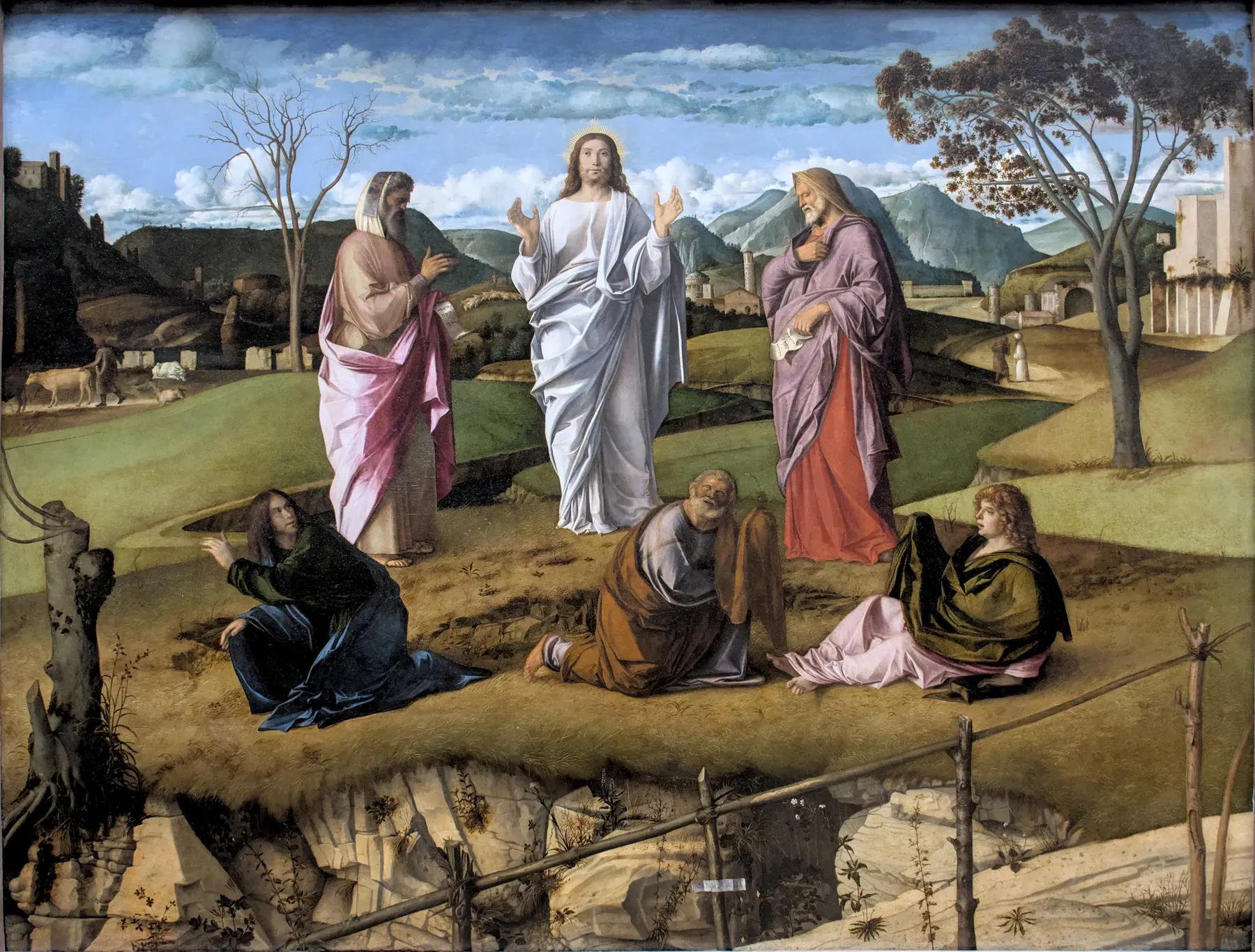
we did not follow cleverly devised fables: The gospel rests on testimony: we did not follow cleverly devised fables, sesophismenois muthois, and were eyewitnesses, epoptai, of His majesty. The scene is the transfiguration on the holy mountain. Matthew 16:28 promised that sight as a preview of the power and coming of our Lord.
2 Peter 1:16
A refutation of the scoffers (2Pe 3:4): I, James and John, saw with our own eyes a mysterious sample of His coming glory. were--Greek, "were made." eye-witnesses--As initiated spectators of mysteries (so the Greek), we were admitted into His innermost secrets, namely, at the Transfiguration. his--emphatical (compare Greek): "THAT great ONE'S majesty."
Jamieson, Fausset & Brown · Commentary Critical and Explanatory on the Whole Bible (1871)reformed
2 more voices on this verse
2 Peter 1:16
“The constructions of the heretics are myths and human fantasies, which Paul wants us to avoid, as he writes: "Warn a heretic once or twice, and after that have nothing to do with him." Peter is here already starting to do battle against the heretics. To the extent that they do not possess the truth, heretics are obliged to concoct a lie by using flowery words. But we are not like that, he says, because we saw the truth with our eyes when we were with him on the mountain.”
Cyril of Alexandria · written before 444 · CATENApatristic
2 Peter 1:16
“Cunningly devised fables - Σεσοφισμενοις μυθοις. I think, with Macknight and others, from the apostle’s using εποπται, eye witnesses, or rather beholders, in the end of the verse, it is probable that he means those cunningly devised fables among the heathens, concerning the appearance of their gods on earth in human form. And to gain the greater credit to these fables, the priests and statesmen instituted what they called the mysteries of the gods, in which the fabulous appearance of the gods was represented in mystic shows.”
Adam Clarke · Commentary on the Bible (1810-1826)evangelical
Majestic Glory: The Father's voice gave honor and glory to the Son. Albert Barnes reads the Majestic Glory as the bright cloud that overshadowed the disciples at Matthew 17:5. Gregory the Dialogist cites this verse against those who denied that Peter wrote the letter.
2 Peter 1:17
“For he received from God the Father honour and glory - He was honored by God in being thus addressed. When there came such a voice to him from the excellent glory - The magnificent splendor; the bright cloud which overshadowed them, Mat 17:5. This is my beloved Son, in whom I am well pleased - See the notes at Mat 17:5; Mat 3:17. This demonstrated that he was the Messiah. Those who heard that voice could not doubt this; they never did afterwards doubt.”
1 more voice on this verse
2 Peter 1:17
And there were certain ones who said that the second Epistle of Peter, in which the Epistles of Paul are praised, was not his. But if they had been willing to weigh the words of that Epistle, they could have thought far otherwise. For in it is written: "A voice came down to him of this kind from the magnificent glory: This is my beloved Son, in whom I am well pleased." And it is added: "And we heard this voice when we were with him on the holy mountain."
Gregory the Dialogist · written before 604 · Homilies on Ezekiel, Book 2, Homily 6patristic
holy mountain: Peter, James and John heard the voice with their own ears. Adam Clarke sets the scene beside Sinai, where God also came down on a holy mountain in splendor. John Wesley reads the mountain as made holy by that glorious appearing, as Horeb was of old.
2 Peter 1:18
“And this voice - we heard - That is, himself, James, and John heard it, and saw this glory; for these only were the εποπται, beholders, on the holy mount. It is worthy of remark that our blessed Lord, who came to give a new law to mankind, appeared on this holy mount with splendor and great glory, as God did when he came on the holy mount, Sinai, to give the old law to Moses.”
Adam Clarke · Commentary on the Bible (1810-1826)evangelical
1 more voice on this verse
2 Peter 1:18
“And we - Peter, James, and John. St. John was still alive. Being with him in the holy mount - Made so by that glorious manifestation, as Mount Horeb was of old, Exod. iii, 4, 5.”
John Wesley · Explanatory Notes upon the New Testament (1755)evangelical
We also have the word of the prophets: The word of the prophets as confirmed beyond doubt is read as prophecy confirmed by the transfiguration or as Scripture surer than the voice. It is a lamp shining in a dark place until the morning star rises in your hearts, phosphoros, as Revelation 22:16 names the Lord.
2 Peter 1:19
“The fulfilment of prophecy so far in Christ's history makes us the surer of what is yet to be fulfilled, His consummated glory. The word was the "lamp (Greek for 'light') heeded" by Old Testament believers, until a gleam of the "day dawn" was given at Christ's first coming, and especially in His Transfiguration.”
Jamieson, Fausset & Brown · Commentary Critical and Explanatory on the Whole Bible (1871)reformed
2 more voices on this verse
2 Peter 1:19
“Till the day should dawn - Till the full light of the gospel should break through the darkness. As is the difference between the light of a lamp and that of the day, such is that between the light of the Old Testament and of the New. And the morning star - Jesus Christ, Rev. xxii, 16.”
John Wesley · Explanatory Notes upon the New Testament (1755)evangelical
2 Peter 1:19
“We have also a more sure word of prophecy - That is, a prophecy pertaining to the coming of the Lord Jesus; for that is the point under discussion. There has been considerable diversity of opinion in regard to the meaning of this passage. Some have supposed that the apostle, when he says, “a more sure word,” did not intend to make any comparison between the miracle of the transfiguration and prophecy, but that he meant to say merely that the word of prophecy was very sure, and could certainly be relied on.”
ConnectionsPsalms 19:7
2 Peter 1:20-21
no prophecy of Scripture: comes from one’s own interpretation, idias epiluseos, stands beside 2 Timothy 3:16. Verse 21: men spoke from God as they were carried along by the Holy Spirit, pheromenoi, the word Acts 27 uses of a ship driven.
2 Peter 1:20
“Knowing this first - Considering this as a first principle, that no prophecy of the Scripture, whether that referred to above, or any other, is of any private interpretation - proceeds from the prophet’s own knowledge or invention, or was the offspring of calculation or conjecture. The word επιλυσις signifies also impetus, impulse; and probably this is the best sense here; not by the mere private impulse of his own mind.”
Adam Clarke · Commentary on the Bible (1810-1826)evangelical
2 more voices on this verse
2 Peter 1:20
“Ye do well, as knowing this, that no scripture prophecy is of private interpretation - It is not any man's own word. It is God, not the prophet himself, who thereby interprets things till then unknown.”
John Wesley · Explanatory Notes upon the New Testament (1755)evangelical
2 Peter 1:20
“Laying it down as a first principle never to be lost sight of. is--Greek, not the simple verb, to be, but to begin to be, "proves to be," "becometh." No prophecy is found to be the result of "private (the mere individual writer's uninspired) interpretation" (solution), and so origination.”
Jamieson, Fausset & Brown · Commentary Critical and Explanatory on the Whole Bible (1871)reformed
carried along: The prophets spoke from God as the Spirit carried them along, like a ship driven by the wind. Jamieson, Fausset and Brown note that the prophecy remains the living voice of God now that it stands in writing. Its source lies outside the prophet's will.
2 Peter 1:21
“For the prophecy came not in old time - Margin, or, “at any.” The Greek word (ποτὲ pote) will bear either construction. It would be true in either sense, but the reference is particularly to the recorded prophecies in the Old Testament. What was true of them, however, is true of all prophecy, that it is not by the will of man.”
2 more voices on this verse
2 Peter 1:21
“For as the blessed prophets were made, so to speak, eyes for us, they foresaw through faith the mysteries of the word, and became ministers of these things also to succeeding generations, not only reporting the past, but also announcing I the present and the future, so that the prophet might not appear to be one only for the time being, but might also predict the future for all generations, and so be reckoned a (true) prophet.”
Hippolytus of Rome · written before 235 · Fragments - Dogmatic and Historicalpatristic
2 Peter 1:21
"Spake" implies that, both in its original oral announcement, and now even when in writing, it has been always, and is, the living voice of God speaking to us through His inspired servants. Greek, "borne (along)" forms a beautiful antithesis to "was borne." They were passive, rather than active instruments.
Jamieson, Fausset & Brown · Commentary Critical and Explanatory on the Whole Bible (1871)reformed
How this psalm is built
The form: The opening of a farewell letter: the greeting at 1:1 to 2, God's gift and the chain of qualities at 1:3 to 11, the apostle's reason for writing at 1:12 to 15, and the two grounds of the message at 1:16 to 21, as the site's 2 Peter exposition, notes on 1:3 to 4, 1:12 to 15 and 1:16 to 18 classes it.
The patterns in this chapter
| Device | What it does | Where to see it |
|---|---|---|
| The chain of eight qualities | Verses 5 to 7 join eight qualities one to the next, from faith to love, each added to the one before. John Wesley reads the Greek verb as leading up, as in a dance, one after another in a fair order. The list begins with the faith the readers already hold and ends with love.John Wesley, Explanatory Notes upon the New Testament, on 2 Peter 1:5. | 2 Peter 1:5, 2 Peter 1:6, 2 Peter 1:7 |
| Exodus, the word for Peter's death | Peter calls his coming death his departure, in Greek exodus. Jamieson, Fausset and Brown note that it is the word used for the death Moses and Elijah spoke of with Jesus at the Transfiguration in Luke 9:31. The next verses turn to that same mountain.Jamieson, Fausset & Brown, Commentary Critical and Explanatory on the Whole Bible, 1871, on 2 Peter 1:15. | 2 Peter 1:15, 2 Peter 1:16, 2 Peter 1:17, 2 Peter 1:18 |
Where it stands in the letter
5 more paragraphs on the patterns
Chapter 1 lays the ground the rest of the letter stands on. The knowledge of God given at the start is the knowledge the false teachers of chapter 2 claim to improve on, and the prophetic word of verses 19 to 21 is the word the scoffers of chapter 3 mock. The chapter answers both before either appears.
The Transfiguration outside the Gospels
Verses 16 to 18 are the one place outside the Gospels where the Transfiguration is told. Matthew 17:1 to 8, Mark 9:2 to 8 and Luke 9:28 to 36 record the same mountain, the same cloud and the same voice, and the words Peter reports match Matthew's form of the Father's saying. Here the scene serves as evidence, told by one of the three who were there.
Where to go deeper
The mountain scene has its own page at /featured/the-transfiguration, and the prophetic word of verse 19 has one at /featured/the-prophetic-word-made-sure. The teaching of verses 20 and 21 on how Scripture came stands beside 2 Timothy 3:16 at /featured/all-scripture-god-breathed.
Keep studying
Sources for this chapter
The summary
Jamieson, Fausset & Brown, Commentary Critical and Explanatory; John Calvin, Commentaries; John Wesley, Explanatory Notes Upon the New Testament and Matthew Henry, Complete Commentary.
The form and classifications
Cyril of Alexandria, Catena on 2 Peter, on 2 Peter 1:16 and the site's 2 Peter exposition, notes on 1:3 to 4, 1:12 to 15 and 1:16 to 18, citing John Wesley, Explanatory Notes upon the New Testament, Matthew Henry, Commentary on the Whole Bible, and Adam Clarke, Commentary on the Bible.
The exposition
Adam Clarke, Commentary on the Bible; Albert Barnes; Ambrose of Milan, Letter 43 to Horontianus; Bede, Commentary on the Catholic Epistles; Gregory the Dialogist, Homilies on Ezekiel, Book 2, Homily 6; Hilary of Arles, Introductory Commentary on 2 Peter; Jamieson, Fausset & Brown, Commentary Critical and Explanatory on the Whole Bible; John Calvin, Commentary on 2 Peter; John Gill, Exposition of the New Testament; John Wesley, Explanatory Notes upon the New Testament; Matthew Henry, Commentary on the Whole Bible and Oecumenius, Commentary on 2 Peter.