
2 Peter 1:19
in 2 Peter 1We also have the word of the prophets as confirmed beyond doubt. And you will do well to pay attention to it, as to a lamp shining in a dark place, until the day dawns and the morning star rises in your hearts.
BSB
The same verse in ASV and KJV ▾
ASV
And we have the word of prophecy made more sure; whereunto ye do well that ye take heed, as unto a lamp shining in a dark place, until the day dawn, and the day-star arise in your hearts:
KJV
We have also a more sure word of prophecy; whereunto ye do well that ye take heed, as unto a light that shineth in a dark place, until the day dawn, and the day star arise in your hearts:
⋯
This verse in 2 Peter 1
Commentary
17 notes on this verseA commentator
Albert Barnes1798–1870
Notes, Explanatory and Practical, on the Old and New Testaments (1832-1869)
We have also a more sure word of prophecy - That is, a prophecy pertaining to the coming of the Lord Jesus; for that is the point under discussion. There has been considerable diversity of opinion in regard to the meaning of this passage. Some have supposed that the apostle, when he says, “a more sure word,” did not intend to make any comparison between the miracle of the transfiguration and prophecy, but that he meant to say merely that the word of prophecy was very sure, and could certainly be relied on.
This site's exposition
We also have the word of the prophets
The word of the prophets as confirmed beyond doubt is read as prophecy confirmed by the transfiguration or as Scripture surer than the voice. It is a lamp shining in a dark place until the morning star rises in your hearts, phosphoros, as Revelation 22:16 names the Lord.
The record, by era
The Church Fathers4 voices
For those who have died in the faith, the light-bearing lamp has risen and the day dawns, according to the Scriptures, and to them the light of truth is sent, which is the face of the Holy Spirit.
And we have something more sure, the prophetic word, to which you will do well to pay attention as to a lamp shining in a dark place, until the day approaches and the morning star rises in your hearts. Therefore, the prophetic word, to which …
The light which shone on them was the light of Scripture.
The blessed apostle Peter, with two other disciples of Christ the Lord, James and John, was up the mountain with the Lord himself and heard a voice coming down from heaven saying "This is my beloved Son in whom I am well pleased. Listen to him" To remind us of this and draw it to our attention, the same apostle referred to it in his letter and went on to add that all this confirmed the message of the prophets. The voice echoed from heaven, and the prophetic word was thus made more certain.
The Medieval Church1 voice
A commentator
BonaventureCollations on the Hexaemeron, Collation 9 · Written in the 13th century.
proposed
The second certainty existed in the minds of prophets. We have the word of prophecy, surer still, to which you do well to attend, as to a lamp shining in a dark place, until the day dawns and the morning star rises in your hearts. …
10 more voices on this verse
The Medieval Church5 voices
Attending, he says, to the predictions of the prophets, you will not be deceived in your hope. For in due time they will be justified by the very events, which the apostle called "day," continuing the figurative speech, for right there he spoke of the …
And we have the prophetic word made more certain. That is, the one where it is said from the person of the Mediator of God and men: The Lord said to me, You are my Son, today I have begotten you (Psalm II). For if …
You do well to pay attention as to a lamp shining in a dark place, etc. The sense of the order is: You do well to pay attention as to a lamp shining in a dark place. For in this world's night, full of dark …
And the morning star rises in your hearts. Who is this morning star? If you say the Lord, it is not enough. The morning star itself is our clear understanding. For it rises in our hearts, it will be illuminated, it will be manifested. Love …
The prophets of the New and of the Old Testament spoke in the same Spirit. If it is true that some things were saved to be revealed in the New Testament, it is also true that the prophets of the Old Testament were commanded to …
The Puritans and the Awakening3 voices
Till the day should dawn - Till the full light of the gospel should break through the darkness. As is the difference between the light of a lamp and that of the day, such is that between the light of the Old Testament and of the New. And the morning star - Jesus Christ, Rev. xxii, 16.
Though this word of prophecy is generally understood of the writings and prophecies of the Old Testament concerning Christ, yet different ways are taken to fix the comparison: some think the sense is, that they are more sure than the cunningly devised fables, 2Pe 1:16 but as these have no certainty nor authority in them, but are entirely to be rejected, the apostle would never put the sacred writings in comparison with them: and it is most clear, that the comparison lies between this word of prophecy, and the testimony of the apostles, who were eye and ear witnesses of the majesty and glory of Christ; but how prophecy should be a surer evidence of Christ, and the Gospel, than such a testimony, is difficult to understand; and is a sense which all agree to reject, by different methods: some think that a comparative is used for a positive, and that the meaning is, that besides the testimony of the apostles, prophecy is a very sure evidence; and this is countenanced by the Syriac version, which renders it, "and we have also a firm", or "true word of prophecy"; to which the Arabic agrees, "and we have a word of prophecy very true": others choose to retain the comparison, and which indeed ought not to be thrown out; but these are divided about it; some are of opinion that it is to be understood of the Jews to whom the apostle writes, and he himself was one, and the sense to be this; not that prophecy in itself was surer than an apostolical testimony, but that it was surer to the Jews, and more valid with them, who had been trained up in, and long used to the prophetic writings; and who had a greater esteem for the prophets of the Old Testament than for the apostles of the New; but it is scarcely credible that the apostle, who had been an eye and ear witness in the holy mount, would put himself in among them, and say, "we have", &c. […]
And the dominion that sin has in the men of the world is through lust; their desires are to it, and therefore it rules over them. The dominion that sin has over us is according to the delight we have in it. 5 And beside this, giving all diligence, add to your faith virtue; and to virtue knowledge;
The Nineteenth Century2 voices
A commentator
Jamieson, Fausset & Brown1802–1910
Commentary Critical and Explanatory on the Whole Bible (1871)
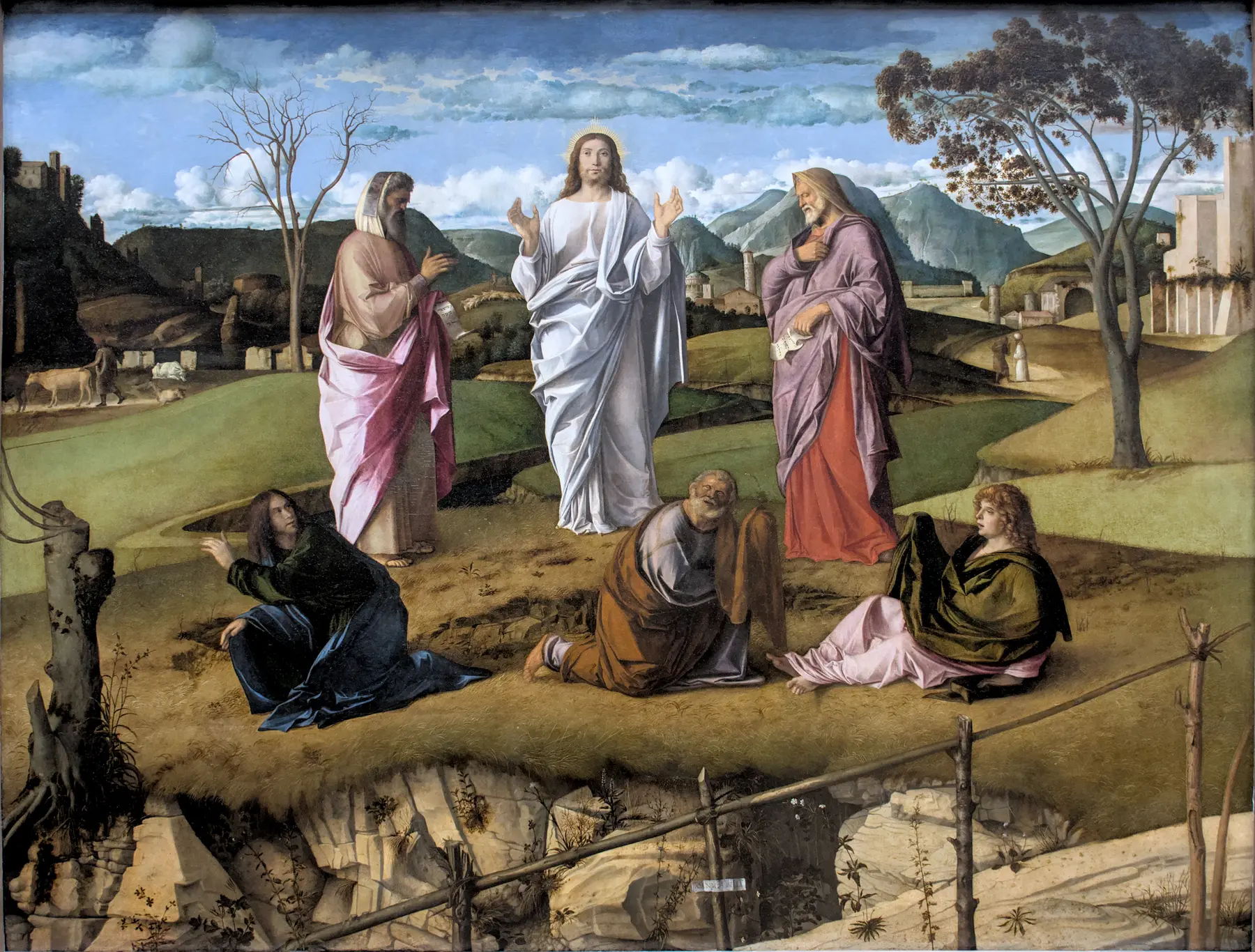
The fulfilment of prophecy so far in Christ's history makes us the surer of what is yet to be fulfilled, His consummated glory. The word was the "lamp (Greek for 'light') heeded" by Old Testament believers, until a gleam of the "day dawn" was given at Christ's first coming, and especially in His Transfiguration.
We have also a more sure word of prophecy - Εχομεν βεβαιοτερον τον προφητικον λογον· We have the prophetic doctrine more firm or more confirmed; for in this sense the word βεβαιοω is used in several places in the New Testament. See 1Co 1:6: Even as the testimony of Christ εβεβαιωθη, was Confirmed, among you. 2Co 1:21: Now he which stablisheth us, ὁ δε βεβαιων ἡμας, who Confirmeth Us. Col 2:7: Rooted and built up in him, and established in the faith, βεβαιουμενοι, Confirmed in the faith. Heb 2:3: How shall we escape if we neglect so great salvation ἡτις εβεβαιωτη, which was Confirmed to us. Heb 6:16: And an oath, εις βεβαιωσιν, for Confirmation. This is the literal sense of the passage in question; and this sense removes that ambiguity from the text which has given rise to so many different interpretations. Taken according to the common translation, it seems to say that prophecy is a surer evidence of Divine revelation than miracles; and so it has been understood. The meaning of the apostle appears to be this: The law and the prophets have spoken concerning Jesus Christ, and Isaiah has particularly pointed him out in these words: Behold my servant whom I uphold, my Chosen in Whom My Soul Delighteth; I have put my Spirit upon him, and he shall bring forth judgment to the Gentiles; to open the blind eyes, to bring out the prisoners from the prison, and Them That Sit in Darkness out of the prison house, Isa 42:1, Isa 42:7. Now both at his baptism, Mat 3:17, and at his transfiguration, Jesus Christ was declared to be this chosen person, God’s only Son, the beloved One in Whom He Delighted. The voice, therefore, from heaven, and the miraculous transfiguration of his person, have confirmed the prophetic doctrine concerning him. […]
The words behind it
27 Greek wordsEvery Greek word of this verse in the order it stands, with what it means and the door to its own study. The last column counts the times a word stands in the whole Bible: the rarer the word, the more the places it appears belong together.
| Greek | Sound | Meaning | Word study | In the Bible |
|---|---|---|---|---|
| Καὶ | kai | And | G2532 → | 9120 times |
| ἔχομεν | echomen | we have | G2192 → | 707 times |
| βεβαιότερον | bebaioteron | more certain | G949 → | |
| τὸν | ton | the | G3588 → | 19766 times |
| προφητικὸν | prophetikon | prophetic | G4397 → | |
| λόγον, | logon | word, | G3056 → | 329 times |
| ᾧ | ho | to which | G3739 → | 1405 times |
| καλῶς | kalos | well | G2573 → | |
| ποιεῖτε | poieite | you do | G4160 → | 569 times |
| προσέχοντες | prosechontes | taking heed | G4337 → | |
| ὡς | hos | as | G5613 → | 500 times |
| λύχνῳ | luchno | to a lamp | G3088 → | |
| φαίνοντι | phainonti | shining | G5316 → | |
| ἐν | en | in | G1722 → | 2738 times |
| αὐχμηρῷ | auchmero | [a] dark | G850 → | |
| τόπῳ | topo | place | G5117 → | |
| ἕως | he'os | until | G2193 → | |
| οὗ | hou | this | G3739 → | 1405 times |
| ἡμέρα | hemera | day | G2250 → | 389 times |
| διαυγάσῃ | diaugase | may have shone through | G1223 →G826 → | 664 times |
| καὶ | kai | and | G2532 → | 9120 times |
| φωσφόρος | phosphoros | [the] morning star | G5459 → | |
| ἀνατείλῃ | anateile | may have arisen | G393 → | |
| ἐν | en | in | G1722 → | 2738 times |
| ταῖς | tais | the | G3588 → | 19766 times |
| καρδίαις | kardiais | hearts | G2588 → | |
| ὑμῶν· | humon | of you; | G4771 → | 2973 times |
ΚαὶAnd
kaiG2532 →9120 times
ἔχομενwe have
echomenG2192 →707 times
βεβαιότερονmore certain
bebaioteronG949 →
τὸνthe
tonG3588 →19766 times
προφητικὸνprophetic
prophetikonG4397 →
λόγον,word,
logonG3056 →329 times
ᾧto which
hoG3739 →1405 times
καλῶςwell
kalosG2573 →
ποιεῖτεyou do
poieiteG4160 →569 times
προσέχοντεςtaking heed
prosechontesG4337 →
ὡςas
hosG5613 →500 times
λύχνῳto a lamp
luchnoG3088 →
φαίνοντιshining
phainontiG5316 →
ἐνin
enG1722 →2738 times
αὐχμηρῷ[a] dark
auchmeroG850 →
τόπῳplace
topoG5117 →
ἕωςuntil
he'osG2193 →
οὗthis
houG3739 →1405 times
ἡμέραday
hemeraG2250 →389 times
διαυγάσῃmay have shone through
καὶand
kaiG2532 →9120 times
φωσφόρος[the] morning star
phosphorosG5459 →
ἀνατείλῃmay have arisen
anateileG393 →
ἐνin
enG1722 →2738 times
ταῖςthe
taisG3588 →19766 times
καρδίαιςhearts
kardiaisG2588 →
ὑμῶν·of you;
humonG4771 →2973 times
A shaded row is a word that stands 400 times or fewer in the Bible.
The walk
8 stopsEach card is a verse this one points to, and under it the verses that one points to in turn. Where several paths arrive at the same place, that place is listed first: the text keeps returning to it.
Through
Psalms 119:105Your word is a lamp to my feet and a light to my path.
it leads to
- Proverbs 6:23
For this commandment is a lamp, this teaching is a light, and the reproofs of discipline are the way to life,
- Psalms 43:3
Send out Your light and Your truth; let them lead me. Let them bring me to Your holy mountain, and to the place where You dwell.
- Psalms 18:28
For You, O LORD, light my lamp; my God lights up my darkness.
- Job 29:3
when His lamp shone above my head, and by His light I walked through the darkness,
- Psalms 19:8
The precepts of the LORD are right, bringing joy to the heart; the commandments of the LORD are radiant, giving light to the eyes.
- Proverbs 6:23
Through
Isaiah 9:2The people walking in darkness have seen a great light; on those living in the land of the shadow of death, a light has dawned.
it leads to
- Matthew 4:16
the people living in darkness have seen a great light; on those living in the land of the shadow of death, a light has dawned.”
- Ephesians 5:8
For you were once darkness, but now you are light in the Lord. Walk as children of light,
- John 8:12
Once again, Jesus spoke to the people and said, “I am the light of the world. Whoever follows Me will never walk in the darkness, but will have the light of life.”
- Matthew 4:16
Where this verse is studied
On this page
Studies14
On this verse
On this chapter
What the record shows
1 entry◈The word of prophecy made more surecontested
The "word of prophecy made more sure" (2 Peter 1:19) is ranked above a heavenly sign witnessed first-hand, and Psalm 19 makes the same move within itself, pivoting at verse 7 from the sky to the law of the LORD — the honest landing point.
The case against it
The honest landing rather than a contested claim. 2 Peter 1:19 ranks the word of prophecy above even a heavenly sign witnessed first-hand, and Psalm 19 makes the same move within itself, pivoting at verse 7 from the sky to the law of the LORD. The only caution is against reading the ranking as a dismissal: the Psalm does not retract verses 1-6, it subordinates them. The heavens testify truly and insufficiently, and the page should end there rather than on either half alone.
About 2 Peter
This page draws on 15 works. Open the list of works
This page draws on Adam Clarke, Commentary on the Bible; Albert Barnes, Notes, Explanatory and Practical, on the Old and New Testaments (1832-1869); Andreas of Caesarea, CATENA; Augustine of Hippo, SERMONS 43.5; Bede, Commentary on the Catholic Epistles; Bonaventure, Collations on the Hexaemeron, Collation 9; Cyril of Alexandria, LETTERS 55.6; Hilary of Arles, INTRODUCTORY COMMENTARY ON 2 PETER; Jamieson, Fausset & Brown, Commentary Critical and Explanatory on the Whole Bible; John Gill, Exposition of the New Testament; John Gill, Exposition of the New Testament (1746-1748); John Wesley, Explanatory Notes upon the New Testament; Matthew Henry, Commentary on the Whole Bible; Oecumenius, Commentary on 2 Peter and Theophylact of Ohrid, Commentary on 2 Peter.