
2 Peter 1:15
in 2 Peter 1And I will make every effort to ensure that after my departure, you will be able to recall these things at all times.
BSB
The same verse in ASV and KJV ▾
ASV
Yea, I will give diligence that at every time ye may be able after my decease to call these things to remembrance.
KJV
Moreover I will endeavour that ye may be able after my decease to have these things always in remembrance.
⋯
This verse in 2 Peter 1
Commentary
10 notes on this verseWhat is suggested, for example: "I will be careful to ensure that you always," some understand through a reversal of a word order in this way: I will take care and after my departure, you will always have or continuously the memory of these things: …
This site's exposition
I will always remind you of these things
on 2 Peter 1:12-15
Peter's last work is remembrance. He calls his body a tent that will soon be laid aside, as the Lord foretold in John 21:18-19. After my departure uses exodon, his exodus, and many older readers linked this promise to Mark's Gospel.
This site's exposition
after my departure
Peter plans for the church's memory after his death. Albert Barnes reads the promise as a plan to leave a written record. Oecumenius notes that some readers take the verse to promise that the memory of these things will stay with them always.
The record, by era
The Church Fathers1 voice
By writing to them often Peter hoped to leave something behind him after his death.
The Medieval Church2 voices
The reason why we have to remember these things is that we hope that Christ will soon come back and transform our present life.
Some understand this with a rearrangement of the words as follows: "I will endeavor even after my departure to bring you always to remembrance," that is, to remember daily and continuously, and from this they derive the idea that the saints even after death remember …
The Puritans and the Awakening1 voice
Moreover, I will endeavour,....
The Nineteenth Century1 voice
A commentator
Albert Barnes1798–1870
Notes, Explanatory and Practical, on the Old and New Testaments (1832-1869)
Moreover, I will endeavour - I will leave such a permanent record of my views on these subjects that you may not forget them. He meant not only to declare his sentiments orally, but to record them that they might be perused when he was dead. He had such a firm conviction of the truth and value of the sentiments which he held, that he would use all the means in his power that the church and the world should not forget them. After my decease - My “exodus,” (ἔξοδον exodon;) my journey out; my departure; my exit from life.
2 more voices on this verse
The Nineteenth Century2 voices
A commentator
Jamieson, Fausset & Brown1802–1910
Commentary Critical and Explanatory on the Whole Bible (1871)
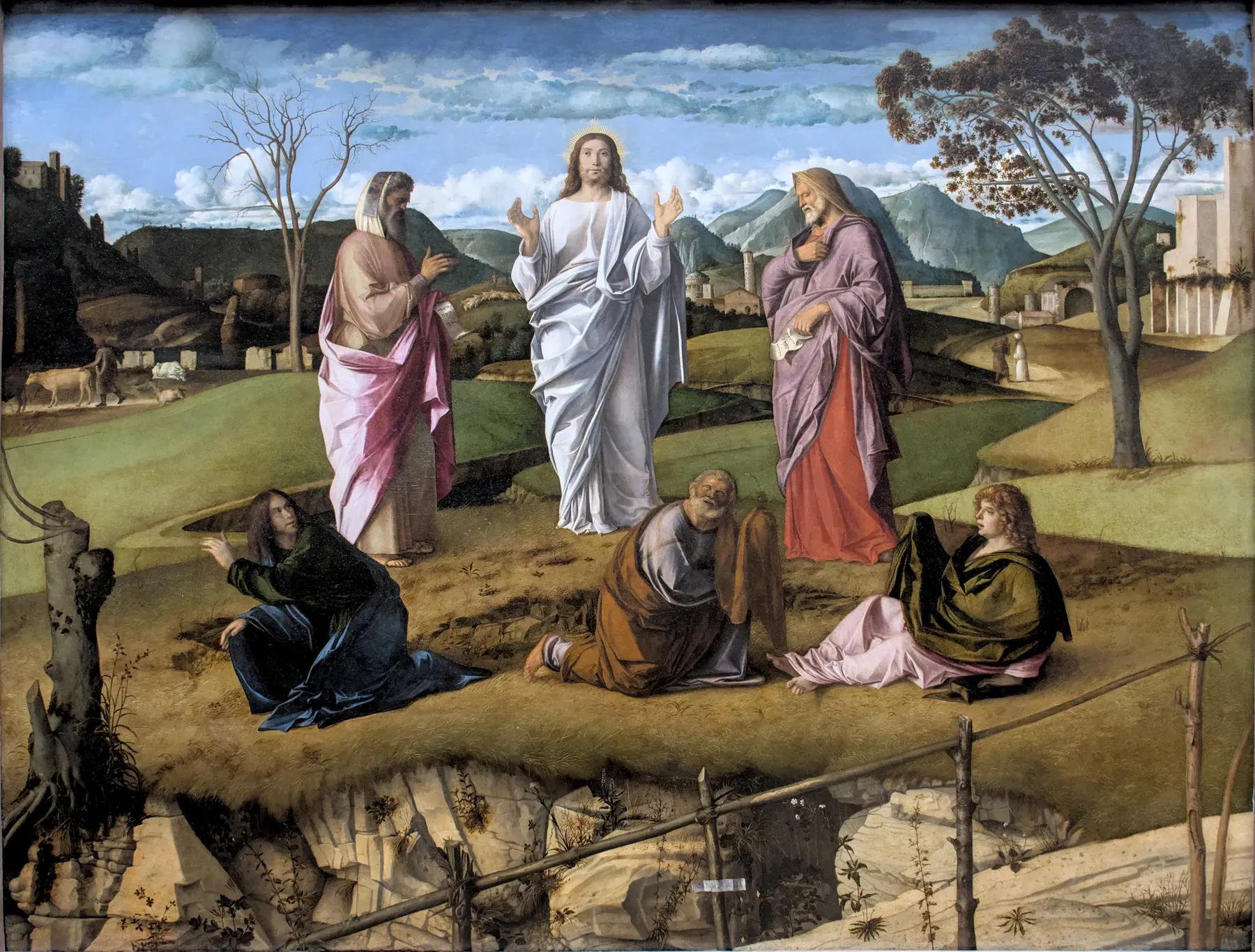
Peter thus fulfils Christ's charge, "Feed My sheep" (Joh 21:16, 17). decease--"departure." The very word ("exodus") used in the Transfiguration, Moses and Elias conversing about Christ's decease (found nowhere else in the New Testament, but Heb 11:22, "the departing of Israel" out of Egypt, to which the saints' deliverance from the present bondage of corruption answers).
Moreover, I will endeavor - And is not this endeavor seen in these two epistles? By leaving these among them, even after his decease, they had these things always in remembrance. After my decease - Μετα την εμην εξοδον· After my going out, i.e. of his tabernacle. The real Peter was not open to the eye, nor palpable to the touch; he was concealed in that tabernacle vulgarly supposed to be Peter. There is a thought very similar to this in the last conversation of Socrates with his friends. As this great man was about to drink the poison to which he was condemned by the Athenian judges, his friend Crito said, “But how would you be buried? - Socrates: Just as you please, if you can but catch me, and I do not elude your pursuit. Then, gently smiling, he said: I cannot persuade Crito, ὡς εγω ειμι οὑτος ὁ Σωκρατης ὁ νυνι διαλεγομενος, that I AM that Socrates who now converses with you; but he thinks that I am he, ὁν οψεται ολιγον ὑστερον νεκρον, και ερωτα πως εδι με θαπτειν, whom he shall shortly see dead; and he asks how I would be buried? I have asserted that, after I have drunk the poison, I should no longer remain with you, but shall depart to certain felicities of the blessed.” Platonis Phaedo, Oper., vol. i, edit. Bipont., p 260.
The words behind it
14 Greek wordsEvery Greek word of this verse in the order it stands, with what it means and the door to its own study. The last column counts the times a word stands in the whole Bible: the rarer the word, the more the places it appears belong together.
| Greek | Sound | Meaning | Word study | In the Bible |
|---|---|---|---|---|
| σπουδάσω | spoudaso | I will be diligent | G4704 → | 11 times |
| δὲ | de | now | G1161 → | 2765 times |
| καὶ | kai | also | G2532 → | 9120 times |
| ἑκάστοτε | hekastote | at every time | G1539 → | |
| ἔχειν | echein | to have | G2192 → | 707 times |
| ὑμᾶς | humas | for you | G4771 → | 2973 times |
| μετὰ | meta | after | G3326 → | |
| τὴν | ten | <the> | G3588 → | 19766 times |
| ἐμὴν | emen | my | G1473 → | |
| ἔξοδον | exodon | departure | G1841 → | |
| τὴν | ten | <the> | G3588 → | 19766 times |
| τούτων | touton | these things | G3778 → | 1381 times |
| μνήμην | mnemen | a lasting remembrance | G3420 → | |
| ποιεῖσθαι. | poieisthai | to make. | G4160 → | 569 times |
σπουδάσωI will be diligent
spoudasoG4704 →11 times
δὲnow
deG1161 →2765 times
καὶalso
kaiG2532 →9120 times
ἑκάστοτεat every time
hekastoteG1539 →
ἔχεινto have
echeinG2192 →707 times
ὑμᾶςfor you
humasG4771 →2973 times
μετὰafter
metaG3326 →
τὴν<the>
tenG3588 →19766 times
ἐμὴνmy
emenG1473 →
ἔξοδονdeparture
exodonG1841 →
τὴν<the>
tenG3588 →19766 times
τούτωνthese things
toutonG3778 →1381 times
μνήμηνa lasting remembrance
mnemenG3420 →
ποιεῖσθαι.to make.
poieisthaiG4160 →569 times
A shaded row is a word that stands 400 times or fewer in the Bible.
The walk
8 stopsEach card is a verse this one points to, and under it the verses that one points to in turn. Where several paths arrive at the same place, that place is listed first: the text keeps returning to it.
Through
Psalms 71:18Even when I am old and gray, do not forsake me, O God, until I proclaim Your power to the next generation, Your might to all who are to come.
it leads to
- Isaiah 46:4
Even to your old age, I will be the same, and I will bear you up when you turn gray. I have made you, and I will carry you; I will sustain you and…
- Psalms 71:9
Do not discard me in my old age; do not forsake me when my strength fails.
- Psalms 78:4
We will not hide them from their children, but will declare to the next generation the praises of the LORD and His might, and the wonders He has performed.
- Psalms 145:4–5
One generation will commend Your works to the next, and will proclaim Your mighty acts—
- Psalms 78:6
that the coming generation would know them— even children yet to be born— to arise and tell their own children
- Isaiah 46:4
Through
2 Peter 1:12Therefore I will always remind you of these things, even though you know them and are established in the truth you now have.
it leads to
- 1 John 2:21
I have not written to you because you lack knowledge of the truth, but because you have it, and because no lie comes from the truth.
- Romans 15:14–15
I myself am convinced, my brothers, that you yourselves are full of goodness, brimming with knowledge, and able to instruct one another.
- Philippians 3:1
Finally, my brothers, rejoice in the Lord. It is no trouble for me to write the same things to you again, and it is a safeguard for you.
- 1 John 2:21
Where this verse is studied
On this page
About 2 Peter
This page draws on 10 works. Open the list of works
This page draws on Adam Clarke, Commentary on the Bible; Albert Barnes, Notes, Explanatory and Practical, on the Old and New Testaments; Albert Barnes, Notes, Explanatory and Practical, on the Old and New Testaments (1832-1869); Andreas of Caesarea, CATENA; Hilary of Arles, INTRODUCTORY COMMENTARY ON 2 PETER; Jamieson, Fausset & Brown, Commentary Critical and Explanatory on the Whole Bible; John Gill, Exposition of the New Testament (1746-1748); Matthew Henry, Commentary on the Whole Bible; Oecumenius, Commentary on 2 Peter and Theophylact of Ohrid, Commentary on 2 Peter.