
2 Peter 1:16
in 2 Peter 1For we did not follow cleverly devised fables when we made known to you the power and coming of our Lord Jesus Christ, but we were eyewitnesses of His majesty.
BSB
The same verse in ASV and KJV ▾
ASV
For we did not follow cunningly devised fables, when we made known unto you the power and coming of our Lord Jesus Christ, but we were eyewitnesses of his majesty.
KJV
For we have not followed cunningly devised fables, when we made known unto you the power and coming of our Lord Jesus Christ, but were eyewitnesses of his majesty.
⋯
This verse in 2 Peter 1
Commentary
10 notes on this verseThe constructions of the heretics are myths and human fantasies, which Paul wants us to avoid, as he writes: "Warn a heretic once or twice, and after that have nothing to do with him." Peter is here already starting to do battle against the heretics. To the extent that they do not possess the truth, heretics are obliged to concoct a lie by using flowery words. But we are not like that, he says, because we saw the truth with our eyes when we were with him on the mountain.
This site's exposition
we did not follow cleverly devised fables
on 2 Peter 1:16-18
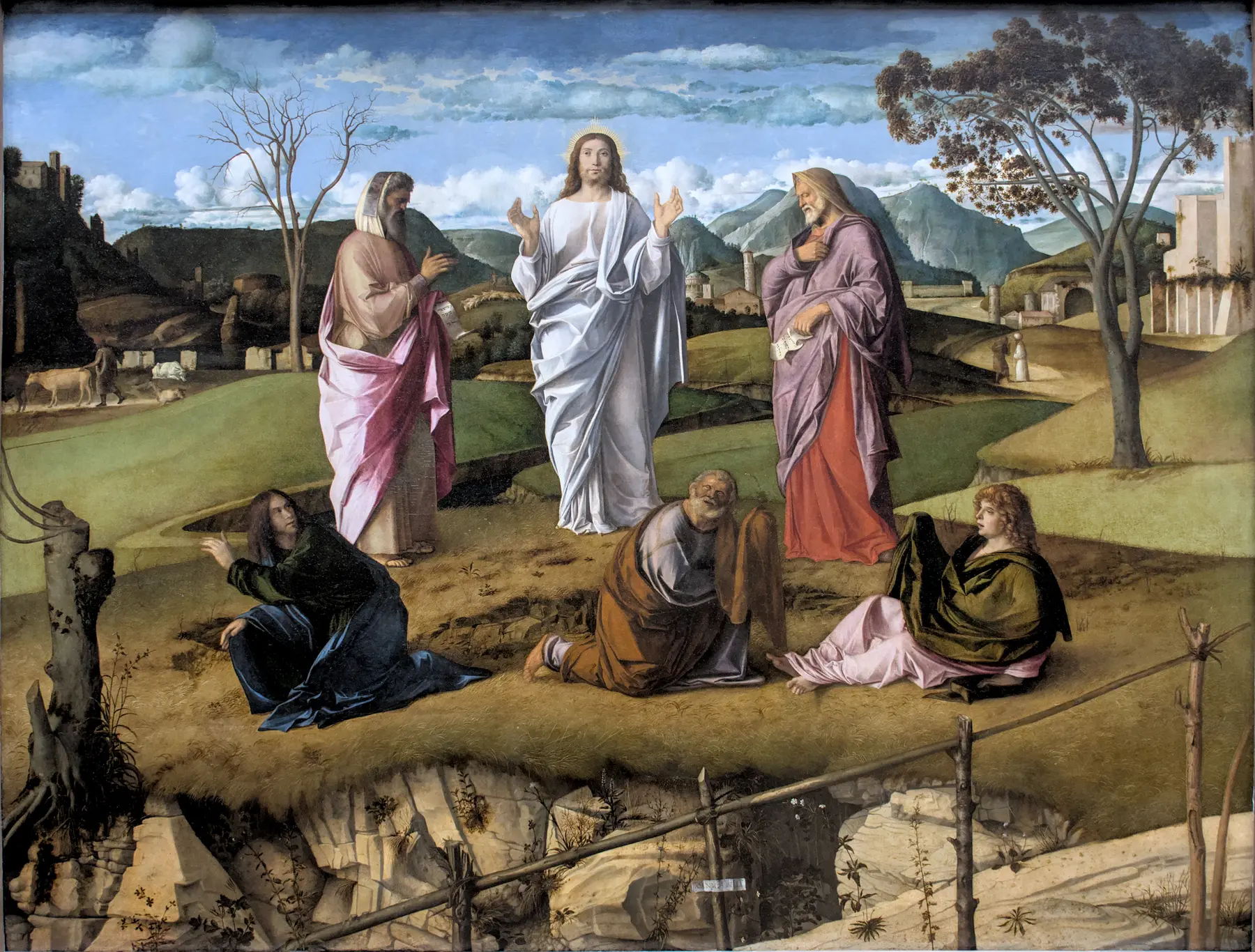
The gospel rests on testimony: we did not follow cleverly devised fables, sesophismenois muthois, and were eyewitnesses, epoptai, of His majesty. The scene is the transfiguration on the holy mountain. Matthew 16:28 promised that sight as a preview of the power and coming of our Lord.
The record, by era
The Church Fathers1 voice
When Peter had said that they should diligently attend to themselves, and that those things which had been announced to them were indeed so, and he had explained this at length, frequently: although he knew and they had heard in various ways, he now adds …
The Medieval Church2 voices
For we did not follow cleverly devised myths, etc. Here he touches upon both pagans and heretics, the former of whom did not fear to call whatever pleased them gods; the latter, after receiving the mysteries of the true God, no longer paid attention to …
Demanding strict attention from the believers to his proclamation and insisting on this at length, even though they already know and have heard it more than once, the apostle now says: it is not in vain that I dwell on this, but because I recognize …
The Puritans and the Awakening2 voices
These things are worthy to be always had in remembrance For they are not cunningly devised fables - Like those common among the heathens. While we made known to you the power and coming - That is, the powerful coming of Christ in glory.
For we have not followed cunningly devised fables,....
3 more voices on this verse
The Nineteenth Century3 voices
Cunningly devised fables - Σεσοφισμενοις μυθοις. I think, with Macknight and others, from the apostle’s using εποπται, eye witnesses, or rather beholders, in the end of the verse, it is probable that he means those cunningly devised fables among the heathens, concerning the appearance of their gods on earth in human form. And to gain the greater credit to these fables, the priests and statesmen instituted what they called the mysteries of the gods, in which the fabulous appearance of the gods was represented in mystic shows.
A commentator
Jamieson, Fausset & Brown1802–1910
Commentary Critical and Explanatory on the Whole Bible (1871)
A refutation of the scoffers (2Pe 3:4): I, James and John, saw with our own eyes a mysterious sample of His coming glory. were--Greek, "were made." eye-witnesses--As initiated spectators of mysteries (so the Greek), we were admitted into His innermost secrets, namely, at the Transfiguration. his--emphatical (compare Greek): "THAT great ONE'S majesty."
A commentator
Albert Barnes1798–1870
Notes, Explanatory and Practical, on the Old and New Testaments (1832-1869)
proposed
For we have not followed cunningly devised fables - That is, fictions or stories invented by artful men, and resting on no solid foundation. The doctrines which they held about the coming of the Saviour were not, like many of the opinions of the Greeks, defended by weak and sophistical reasoning, but were based on solid evidence - evidence furnished by the personal observation of competent witnesses. It is true of the gospel, in general, that it is not founded on cunningly devised fables; but the particular point referred to here is the promised coming of the Saviour. The evidence of that fact Peter proposes now to adduce. When we made known unto you - Probably Peter here refers particularly to statements respecting the coming of the Saviour in his first epistle, 1Pe 1:5, 1Pe 1:13; 1Pe 4:13; but this was a common topic in the preaching, and in the epistles, of the apostles. It may, therefore, have referred to statements made to them at some time in his preaching, as well as to what he said in his former epistle. The apostles laid great stress on the second coming of the Saviour, and often dwelt upon it. Compare 1Th 4:16; Notes, Act 1:11. The power and coming - These two words refer to the same thing; and the meaning is, his “powerful coming,” or his “coming in power.” The advent of the Saviour is commonly represented as connected with the exhibition of power. Mat 24:30, “coming in the clouds of heaven, with power.” See the notes at that verse. Compare Luk 22:69; Mar 3:9. The “power” evinced will be by raising the dead; summoning the world to judgment; determining the destiny of men, etc. When the coming of the Saviour, therefore, was referred to by the apostles in their preaching, it was probably always in connection with the declaration that it would be accompanied by exhibitions of great power and glory - as it undoubtedly will be. […]
The words behind it
22 Greek wordsEvery Greek word of this verse in the order it stands, with what it means and the door to its own study. The last column counts the times a word stands in the whole Bible: the rarer the word, the more the places it appears belong together.
| Greek | Sound | Meaning | Word study | In the Bible |
|---|---|---|---|---|
| οὐ | ou | Not | G3756 → | 1664 times |
| γὰρ | gar | for | G1063 → | 1039 times |
| σεσοφισμένοις | sesophismenois | contrived | G4679 → | |
| μύθοις | muthois | fables | G3454 → | |
| ἐξακολουθήσαντες | exakolouthesantes | having followed | G1811 → | 3 times |
| ἐγνωρίσαμεν | egnorisamen | we have made known | G1107 → | |
| ὑμῖν | humin | to you | G4771 → | 2973 times |
| τὴν | ten | the | G3588 → | 19766 times |
| τοῦ | tou | of the | G3588 → | 19766 times |
| κυρίου | kuriou | Lord | G2962 → | 711 times |
| ἡμῶν | hemon | of us | G3165 → | 1936 times |
| Ἰησοῦ | iesou | Jesus | G2424 → | 908 times |
| Χριστοῦ | christou | Christ | G5547 → | 523 times |
| δύναμιν | dunamin | power | G1411 → | 119 times |
| καὶ | kai | and | G2532 → | 9120 times |
| παρουσίαν, | parousian | coming, | G3952 → | 24 times |
| ἀλλ᾽ | all᾽ | but | G235 → | 635 times |
| ἐπόπται | epoptai | eyewitnesses | G2030 → | |
| γενηθέντες | genethentes | having been | G1096 → | 667 times |
| τῆς | tes | <the> | G3588 → | 19766 times |
| ἐκείνου | ekeinou | of His | G1565 → | |
| μεγαλειότητος. | megaleiotetos | majesty. | G3168 → |
οὐNot
ouG3756 →1664 times
γὰρfor
garG1063 →1039 times
σεσοφισμένοιςcontrived
sesophismenoisG4679 →
μύθοιςfables
muthoisG3454 →
ἐξακολουθήσαντεςhaving followed
exakolouthesantesG1811 →3 times
ἐγνωρίσαμενwe have made known
egnorisamenG1107 →
ὑμῖνto you
huminG4771 →2973 times
τὴνthe
tenG3588 →19766 times
τοῦof the
touG3588 →19766 times
κυρίουLord
kuriouG2962 →711 times
ἡμῶνof us
hemonG3165 →1936 times
ἸησοῦJesus
iesouG2424 →908 times
ΧριστοῦChrist
christouG5547 →523 times
δύναμινpower
dunaminG1411 →119 times
καὶand
kaiG2532 →9120 times
παρουσίαν,coming,
parousianG3952 →24 times
ἀλλ᾽but
all᾽G235 →635 times
ἐπόπταιeyewitnesses
epoptaiG2030 →
γενηθέντεςhaving been
genethentesG1096 →667 times
τῆς<the>
tesG3588 →19766 times
ἐκείνουof His
ekeinouG1565 →
μεγαλειότητος.majesty.
megaleiotetosG3168 →
A shaded row is a word that stands 400 times or fewer in the Bible.
The walk
8 stopsEach card is a verse this one points to, and under it the verses that one points to in turn. Where several paths arrive at the same place, that place is listed first: the text keeps returning to it.
Through
John 1:14The Word became flesh and made His dwelling among us. We have seen His glory, the glory of the one and only Son from the Father, full of grace and truth.
it leads to
- 1 John 4:9
This is how God’s love was revealed among us: God sent His one and only Son into the world, so that we might live through Him.
- 1 Timothy 3:16
By common confession, the mystery of godliness is great: He appeared in the flesh, was vindicated by the Spirit, was seen by angels, was proclaimed among the nations, was believed in throughout the world,…
- Galatians 4:4
But when the time had fully come, God sent His Son, born of a woman, born under the law,
- John 1:1
In the beginning was the Word, and the Word was with God, and the Word was God.
- Isaiah 40:5
And the glory of the LORD will be revealed, and all humanity together will see it. For the mouth of the LORD has spoken.”
- 1 John 4:9
Through
1 Corinthians 2:4My message and my preaching were not with persuasive words of wisdom, but with a demonstration of the Spirit’s power,
it leads to
- 1 Corinthians 4:20
For the kingdom of God is not a matter of talk but of power.
- 1 Thessalonians 1:5
because our gospel came to you not only in word, but also in power, in the Holy Spirit, and with great conviction—just as you know we lived among you for your sake.
- 1 Corinthians 1:17
For Christ did not send me to baptize, but to preach the gospel, not with words of wisdom, lest the cross of Christ be emptied of its power.
- 1 Corinthians 4:20
Where this verse is studied
On this page
Studies14
On this verse
About 2 Peter
This page draws on 10 works. Open the list of works
This page draws on Adam Clarke, Commentary on the Bible; Albert Barnes, Notes on the New Testament; Albert Barnes, Notes, Explanatory and Practical, on the Old and New Testaments (1832-1869); Bede, Commentary on the Catholic Epistles; Cyril of Alexandria, CATENA; Jamieson, Fausset & Brown, Commentary Critical and Explanatory on the Whole Bible; John Gill, Exposition of the New Testament (1746-1748); John Wesley, Explanatory Notes upon the New Testament; Oecumenius, Commentary on 2 Peter and Theophylact of Ohrid, Commentary on 2 Peter.