
2 Peter 1:17
in 2 Peter 1For He received honor and glory from God the Father when the voice came to Him from the Majestic Glory, saying, “This is My beloved Son, in whom I am well pleased.”
BSB
The same verse in ASV and KJV ▾
ASV
For he received from God the Father honor and glory, when there was borne such a voice to him by the Majestic Glory, This is my beloved Son, in whom I am well pleased:
KJV
For he received from God the Father honour and glory, when there came such a voice to him from the excellent glory, This is my beloved Son, in whom I am well pleased.
⋯
This verse in 2 Peter 1
Commentary
11 notes on this verseAnd there were certain ones who said that the second Epistle of Peter, in which the Epistles of Paul are praised, was not his. But if they had been willing to weigh the words of that Epistle, they could have thought far otherwise. For in it is written: "A voice came down to him of this kind from the magnificent glory: This is my beloved Son, in whom I am well pleased." And it is added: "And we heard this voice when we were with him on the holy mountain."
This site's exposition
we did not follow cleverly devised fables
on 2 Peter 1:16-18
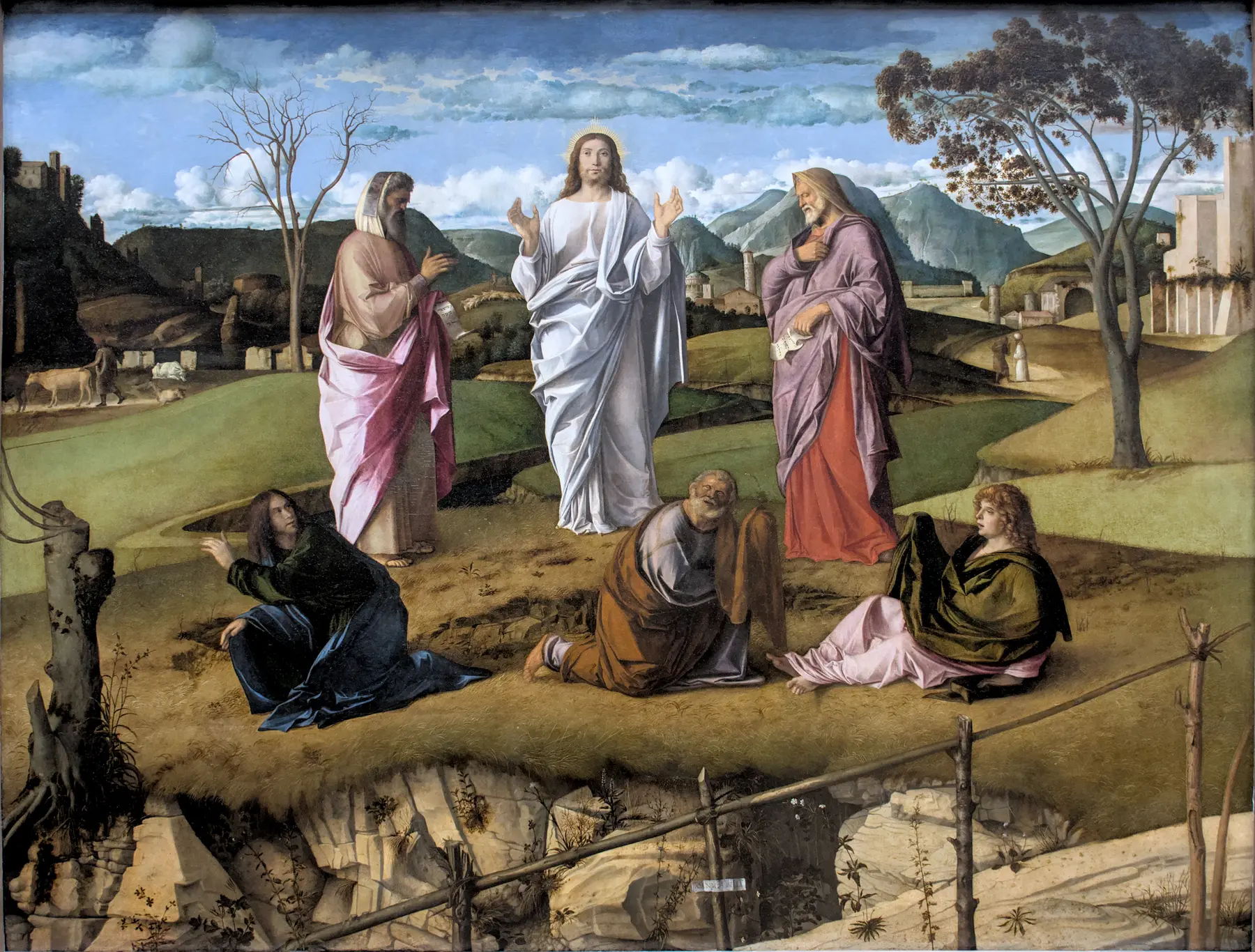
The gospel rests on testimony: we did not follow cleverly devised fables, sesophismenois muthois, and were eyewitnesses, epoptai, of His majesty. The scene is the transfiguration on the holy mountain. Matthew 16:28 promised that sight as a preview of the power and coming of our Lord.
This site's exposition
Majestic Glory
The Father's voice gave honor and glory to the Son. Albert Barnes reads the Majestic Glory as the bright cloud that overshadowed the disciples at Matthew 17:5. Gregory the Dialogist cites this verse against those who denied that Peter wrote the letter.
The record, by era
The Church Fathers2 voices
The one who received glory and honor was not inferior to the one who bestowed these things, because it was in his human flesh that the Son received them, not in his eternal divinity.
Furthermore, here through the things that are now proposed. "For he received from God the Father." This participle λαδὼν is either placed in the position of the indicative verb ἔλαδεν, that is, he received: since according to the consequence of the participle, the discourse does …
The Medieval Church1 voice
Not because there is any prophecy about a voice of the Father that came down from heaven, but because from this voice of the Father from heaven, which testified to the sonship of Jesus Christ, we became convinced that everything revealed through the prophets indisputably …
The Puritans and the Awakening2 voices
For he received divine honour and inexpressible glory - Shining from heaven above the brightness of the sun. When there came such a voice from the excellent glory - That is, from God the Father.
quarantine:scripture (2026-07-29) — scripture-overlap:82%@v17-19
For he received from God the Father honour and glory,....
3 more voices on this verse
The Nineteenth Century3 voices
A commentator
Albert Barnes1798–1870
Notes, Explanatory and Practical, on the Old and New Testaments (1832-1869)
For he received from God the Father honour and glory - He was honored by God in being thus addressed. When there came such a voice to him from the excellent glory - The magnificent splendor; the bright cloud which overshadowed them, Mat 17:5. This is my beloved Son, in whom I am well pleased - See the notes at Mat 17:5; Mat 3:17. This demonstrated that he was the Messiah. Those who heard that voice could not doubt this; they never did afterwards doubt.
A commentator
Jamieson, Fausset & Brown1802–1910
Commentary Critical and Explanatory on the Whole Bible (1871)
proposed
Ps 21:5)." in whom--Greek, "in regard to whom" (accusative case); but Mt 17:5, "in whom" (dative case) centers and rests My good pleasure. Peter also omits, as not required by his purpose, "hear Him," showing his independence in his inspired testimony. I am--Greek aorist, past time, "My good pleasure rested from eternity."
quarantine:debris (2026-07-29) — unbalanced-parens+odd-straight-quotes
For he received honor and glory - In his transfiguration our Lord received from the Father honor in the voice or declaration which said, This is my Son, the beloved One, in whom I have delighted. And he received glory, when, penetrated with, and involved in, that excellent glory, the fashion of his countenance was altered, for his face did shine as the sun, and his raiment was white and glistening, exceeding white like snow; which most glorious and preternatural appearance was a confirmation of the supernatural voice, as the voice was of this preternatural appearance: and thus his Messiahship was attested in the most complete and convincing manner.
The words behind it
28 Greek wordsEvery Greek word of this verse in the order it stands, with what it means and the door to its own study. The last column counts the times a word stands in the whole Bible: the rarer the word, the more the places it appears belong together.
| Greek | Sound | Meaning | Word study | In the Bible |
|---|---|---|---|---|
| λαβὼν | labon | Having received | G2983 → | |
| γὰρ | gar | for | G1063 → | 1039 times |
| παρὰ | para | from | G3844 → | 192 times |
| θεοῦ | theou | God | G2316 → | 1312 times |
| πατρὸς | patros | [the] Father | G3962 → | |
| τιμὴν | timen | honor | G5092 → | |
| καὶ | kai | and | G2532 → | 9120 times |
| δόξαν | doxan | glory | G1391 → | 165 times |
| φωνῆς | phones | a voice | G5456 → | 139 times |
| ἐνεχθείσης | enechtheises | was brought | G5342 → | 66 times |
| αὐτῷ | auto | to Him | G846 → | 5565 times |
| τοιᾶσδε | toiasde | such as follows | G5107 → | |
| ὑπὸ | hupo | by | G5259 → | 219 times |
| τῆς | tes | the | G3588 → | 19766 times |
| μεγαλοπρεποῦς | megaloprepous | Majestic | G3169 → | |
| δόξης· | doxes | Glory: | G1391 → | 165 times |
| ὁ | ho | The | G3588 → | 19766 times |
| υἱός | huios | Son | G5207 → | |
| μου | mou | of Mine | G3165 → | 1936 times |
| ὁ | ho | <the> | G3588 → | 19766 times |
| ἀγαπητός | agapetos | beloved | G27 → | 61 times |
| μου | mou | of Mine | G3165 → | 1936 times |
| οὗτός | houtos | this | G3778 → | 1381 times |
| ἐστιν, | estin | is, | G1510 → | 2333 times |
| εἰς | eis | in | G1519 → | 1755 times |
| ὃν | hon | whom | G3739 → | 1405 times |
| ἐγὼ | ego | I myself | G1473 → | |
| εὐδόκησα. | eudokesa | found delight. | G2106 → |
λαβὼνHaving received
labonG2983 →
γὰρfor
garG1063 →1039 times
παρὰfrom
paraG3844 →192 times
θεοῦGod
theouG2316 →1312 times
πατρὸς[the] Father
patrosG3962 →
τιμὴνhonor
timenG5092 →
καὶand
kaiG2532 →9120 times
δόξανglory
doxanG1391 →165 times
φωνῆςa voice
phonesG5456 →139 times
ἐνεχθείσηςwas brought
enechtheisesG5342 →66 times
αὐτῷto Him
autoG846 →5565 times
τοιᾶσδεsuch as follows
toiasdeG5107 →
ὑπὸby
hupoG5259 →219 times
τῆςthe
tesG3588 →19766 times
μεγαλοπρεποῦςMajestic
megaloprepousG3169 →
δόξης·Glory:
doxesG1391 →165 times
ὁThe
hoG3588 →19766 times
υἱόςSon
huiosG5207 →
μουof Mine
mouG3165 →1936 times
ὁ<the>
hoG3588 →19766 times
ἀγαπητόςbeloved
agapetosG27 →61 times
μουof Mine
mouG3165 →1936 times
οὗτόςthis
houtosG3778 →1381 times
ἐστιν,is,
estinG1510 →2333 times
εἰςin
eisG1519 →1755 times
ὃνwhom
honG3739 →1405 times
ἐγὼI myself
egoG1473 →
εὐδόκησα.found delight.
eudokesaG2106 →
A shaded row is a word that stands 400 times or fewer in the Bible.
The walk
8 stopsEach card is a verse this one points to, and under it the verses that one points to in turn. Where several paths arrive at the same place, that place is listed first: the text keeps returning to it.
Through
Matthew 3:17And a voice from heaven said, “This is My beloved Son, in whom I am well pleased!”
it leads to
- Isaiah 42:1
“Here is My Servant, whom I uphold, My Chosen One, in whom My soul delights. I will put My Spirit on Him, and He will bring justice to the nations.
Reached by 2 separate paths from here.
- Matthew 12:18
“Here is My Servant, whom I have chosen, My beloved, in whom My soul delights. I will put My Spirit on Him, and He will proclaim justice to the nations.
Reached by 2 separate paths from here.
- Matthew 17:5
While Peter was still speaking, a bright cloud enveloped them, and a voice from the cloud said, “This is My beloved Son, in whom I am well pleased. Listen to Him!”
- Isaiah 42:1
Through
Luke 3:22and the Holy Spirit descended on Him in a bodily form like a dove. And a voice came from heaven: “You are My beloved Son; in You I am well pleased.”
it leads to
- Psalms 2:7
I will proclaim the decree spoken to Me by the LORD: “You are My Son; today I have become Your Father.
Reached by 2 separate paths from here.
- 2 Peter 1:17–18
For He received honor and glory from God the Father when the voice came to Him from the Majestic Glory, saying, “This is My beloved Son, in whom I am well pleased.”
- John 1:32
Then John testified, “I saw the Spirit descending from heaven like a dove and resting on Him.
- Luke 9:34–35
While Peter was speaking, a cloud appeared and enveloped them, and they were afraid as they entered the cloud.
- Psalms 2:7
Through
Matthew 17:5While Peter was still speaking, a bright cloud enveloped them, and a voice from the cloud said, “This is My beloved Son, in whom I am well pleased. Listen to Him!”
it leads to
- Matthew 3:17
And a voice from heaven said, “This is My beloved Son, in whom I am well pleased!”
Reached by 2 separate paths from here.
- Matthew 3:17
Where this verse is studied
On this page
Studies14
On this verse
On this chapter
About 2 Peter
This page draws on 11 works. Open the list of works
This page draws on Adam Clarke, Commentary on the Bible; Albert Barnes, Notes on the New Testament; Albert Barnes, Notes, Explanatory and Practical, on the Old and New Testaments; Albert Barnes, Notes, Explanatory and Practical, on the Old and New Testaments (1832-1869); Gregory the Dialogist, Homilies on Ezekiel, Book 2, Homily 6; Hilary of Arles, INTRODUCTORY COMMENTARY ON 2 PETER; Jamieson, Fausset & Brown, Commentary Critical and Explanatory on the Whole Bible; John Gill, Exposition of the New Testament (1746-1748); John Wesley, Explanatory Notes upon the New Testament; Oecumenius, Commentary on 2 Peter and Theophylact of Ohrid, Commentary on 2 Peter.