
2 Peter 1:21
in 2 Peter 1For no such prophecy was ever brought forth by the will of man, but men spoke from God as they were carried along by the Holy Spirit.
BSB
The same verse in ASV and KJV ▾
ASV
For no prophecy ever came by the will of man: but men spake from God, being moved by the Holy Spirit.
KJV
For the prophecy came not in old time by the will of man: but holy men of God spake as they were moved by the Holy Ghost.
⋯
This verse in 2 Peter 1
Commentary
15 notes on this verseFor as the blessed prophets were made, so to speak, eyes for us, they foresaw through faith the mysteries of the word, and became ministers of these things also to succeeding generations, not only reporting the past, but also announcing I the present and the future, so that the prophet might not appear to be one only for the time being, but might also predict the future for all generations, and so be reckoned a (true) prophet.
This site's exposition
no prophecy of Scripture
on 2 Peter 1:20-21
No prophecy of Scripture comes from one’s own interpretation, idias epiluseos, stands beside 2 Timothy 3:16. Verse 21: men spoke from God as they were carried along by the Holy Spirit, pheromenoi, the word Acts 27 uses of a ship driven.
This site's exposition
carried along
The prophets spoke from God as the Spirit carried them along, like a ship driven by the wind. Jamieson, Fausset and Brown note that the prophecy remains the living voice of God now that it stands in writing. Its source lies outside the prophet's will.
The record, by era
The Church Fathers1 voice
Knowing this first of all, that no prophecy of Scripture comes from someone's own interpretation. For no prophecy was ever produced by the will of man, but men spoke from God as they were carried along by the Holy Spirit. Then, in explaining, Peter adds …
The Medieval Church4 voices
"For prophecy never came by the will of man" (2 Pet. 1:21), this means: the prophets received prophecy from God, but not as they willed, but as the Spirit of God acted; they were conscious of and comprehended the prophetic word sent down to them, …
A commentator
BonaventureCollations on the Hexaemeron, Collation 9 · Written in the 13th century.
proposed
The second certainty existed in the minds of prophets. We have the word of prophecy, surer still, to which you do well to attend, as to a lamp shining in a dark place, until the day dawns and the morning star rises in your hearts. …
Peter does not say that the prophets interpreted their own sayings. They were not speaking to themselves but serving the Holy Spirit. What is the interpretation of their words if not the works which Christ revealed when he came? So if anyone wants to understand …
You see that it is not I who speak great and extraordinary things to your charity, but the Spirit of God who speaks in us. To this Peter, the chief apostle, bears witness when he says that no prophecy ever came by man, but holy …
7 more voices on this verse
The Medieval Church1 voice
For prophecy never came by the will of man, etc. They could always foretell the future; but the Spirit itself filled their hearts whenever it wished; thus, it was not in their power to teach whatever they wanted, but they spoke only what they had …
The Puritans and the Awakening3 voices
For prophecy came not of old by the will of man - Of any mere man whatever. But the holy men of God - Devoted to him, and set apart by him for that purpose, spake and wrote.
For the prophecy,....
Negatively: It came not by the will of man. Neither the things themselves that are recorded, and make up the several parts of the Old Testament, are the opinions of men, nor was the will of any of the prophets or penmen of the scriptures the rule or reason why any of those things were written which make up the canon of the scripture.
The Nineteenth Century3 voices
A commentator
Albert Barnes1798–1870
Notes, Explanatory and Practical, on the Old and New Testaments (1832-1869)
For the prophecy came not in old time - Margin, or, “at any.” The Greek word (ποτὲ pote) will bear either construction. It would be true in either sense, but the reference is particularly to the recorded prophecies in the Old Testament. What was true of them, however, is true of all prophecy, that it is not by the will of man.
A commentator
Jamieson, Fausset & Brown1802–1910
Commentary Critical and Explanatory on the Whole Bible (1871)
"Spake" implies that, both in its original oral announcement, and now even when in writing, it has been always, and is, the living voice of God speaking to us through His inspired servants. Greek, "borne (along)" forms a beautiful antithesis to "was borne." They were passive, rather than active instruments.
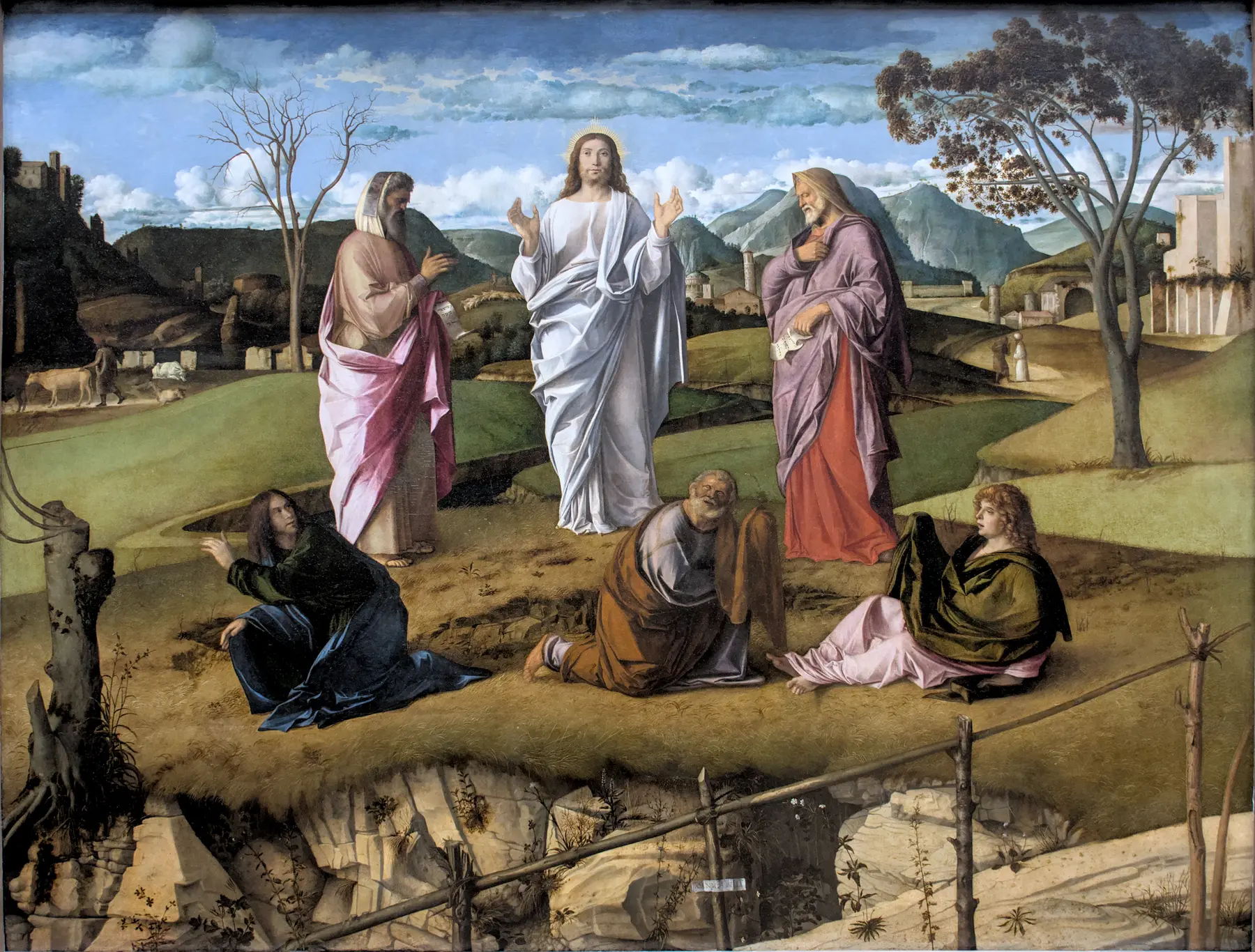
For the prophecy came not in old time - That is, in any former time, by the will of man - by a man’s own searching, conjecture, or calculation; but holy men of God - persons separated from the world, and devoted to God’s service, spake, moved by the Holy Ghost. So far were they from inventing these prophetic declarations concerning Christ, or any future event, that they were φερομενοι, carried away, out of themselves and out of the whole region, as it were, of human knowledge and conjecture, by the Holy Ghost, who, without their knowing any thing of the matter, dictated to them what to speak, and what to write; and so far above their knowledge were the words of the prophecy, that they did not even know the intent of those words, but searched what, or what manner of time the Spirit of Christ which was in them did signify, when it testified beforehand the sufferings of Christ, and the glory that should follow. See 1Pe 1:11, 1Pe 1:12, and the notes there. 1. As the writer of this epistle asserts that he was on the holy mount with Christ when he was transfigured, he must be either Peter, James, or John, for there was no other person present on that occasion except Moses and Elijah, in their glorious bodies. The epistle was never attributed to James nor John; but the uninterrupted current, where its Divine inspiration was granted, gave it to Peter alone. See the preface. 2. It is not unfrequent for the writers of the New Testament to draw a comparison between the Mosaic and Christian dispensations; and the comparison generally shows that, glorious as the former was, it had no glory in comparison of the glory that excelleth. St. Peter seems to touch here on the same point; the Mosaic dispensation, with all the light of prophecy by which it was illustrated, was only as a lamp shining in a dark place. […]
The words behind it
16 Greek wordsEvery Greek word of this verse in the order it stands, with what it means and the door to its own study. The last column counts the times a word stands in the whole Bible: the rarer the word, the more the places it appears belong together.
| Greek | Sound | Meaning | Word study | In the Bible |
|---|---|---|---|---|
| οὐ | ou | Not | G3756 → | 1664 times |
| γὰρ | gar | for | G1063 → | 1039 times |
| θελήματι | thelemati | by [the] will | G2307 → | |
| ἀνθρώπου | anthropou | of man | G444 → | 549 times |
| ἠνέχθη | enechthe | was brought | G5342 → | 66 times |
| προφητεία | propheteia | prophecy | G4394 → | |
| ποτέ, | pote | at any time | G4218 → | |
| ἀλλ᾽ | all᾽ | but | G235 → | 635 times |
| ὑπὸ | hupo | by | G5259 → | 219 times |
| πνεύματος | pneumatos | [the] Spirit | G4151 → | |
| ἁγίου | hagiou | Holy | G40 → | 220 times |
| φερόμενοι | pheromenoi | being carried | G5342 → | 66 times |
| ἐλάλησαν | elalesan | spoke | G2980 → | |
| ἀπὸ | apo | from | G575 → | 640 times |
| θεοῦ | theou | of God | G2316 → | 1312 times |
| ἄνθρωποι.¶ | anthropoi | men. | G444 → | 549 times |
οὐNot
ouG3756 →1664 times
γὰρfor
garG1063 →1039 times
θελήματιby [the] will
thelematiG2307 →
ἀνθρώπουof man
anthropouG444 →549 times
ἠνέχθηwas brought
enechtheG5342 →66 times
προφητείαprophecy
propheteiaG4394 →
ποτέ,at any time
poteG4218 →
ἀλλ᾽but
all᾽G235 →635 times
ὑπὸby
hupoG5259 →219 times
πνεύματος[the] Spirit
pneumatosG4151 →
ἁγίουHoly
hagiouG40 →220 times
φερόμενοιbeing carried
pheromenoiG5342 →66 times
ἐλάλησανspoke
elalesanG2980 →
ἀπὸfrom
apoG575 →640 times
θεοῦof God
theouG2316 →1312 times
ἄνθρωποι.¶men.
anthropoiG444 →549 times
A shaded row is a word that stands 400 times or fewer in the Bible.
The walk
8 stopsEach card is a verse this one points to, and under it the verses that one points to in turn. Where several paths arrive at the same place, that place is listed first: the text keeps returning to it.
Through
Acts 1:16“Brothers, the Scripture had to be fulfilled which the Holy Spirit foretold through the mouth of David concerning Judas, who became a guide for those who arrested Jesus.
it leads to
- Psalms 41:9
Even my close friend whom I trusted, the one who shared my bread, has lifted up his heel against me.
- John 13:18
I am not speaking about all of you; I know whom I have chosen. But this is to fulfill the Scripture: ‘The one who shares My bread has lifted up his heel against Me.’
- Psalms 55:12–15
For it is not an enemy who insults me; that I could endure. It is not a foe who rises against me; from him I could hide.
- Acts 1:20
“For it is written in the book of Psalms: ‘May his place be deserted; let there be no one to dwell in it,’ and, ‘May another take his position.’
- Matthew 26:56
But this has all happened so that the writings of the prophets would be fulfilled.” Then all the disciples deserted Him and fled.
- Psalms 41:9
Through
2 Samuel 23:2The Spirit of the LORD spoke through me; His word was on my tongue.
it leads to
- Matthew 22:43
Jesus said to them, “How then does David in the Spirit call Him ‘Lord’? For he says:
- Matthew 22:43
Through
1 Peter 1:11trying to determine the time and setting to which the Spirit of Christ in them was pointing when He predicted the sufferings of Christ and the glories to follow.
it leads to
- Isaiah 52:13–14
Behold, My Servant will prosper; He will be raised and lifted up and highly exalted.
- Luke 24:25–27
Then Jesus said to them, “O foolish ones, how slow are your hearts to believe all that the prophets have spoken!
- Isaiah 52:13–14
Where this verse is studied
On this page
Studies14
On this verse
On this chapter
About 2 Peter
This page draws on 14 works. Open the list of works
This page draws on Adam Clarke, Commentary on the Bible; Albert Barnes, Notes, Explanatory and Practical, on the Old and New Testaments (1832-1869); Andreas of Caesarea, CATENA; Bede, Commentary on the Catholic Epistles; Bonaventure, Collations on the Hexaemeron, Collation 9; Hippolytus of Rome, Fragments - Dogmatic and Historical; Jamieson, Fausset & Brown, Commentary Critical and Explanatory on the Whole Bible; John Gill, Exposition of the New Testament; John Gill, Exposition of the New Testament (1746-1748); John Wesley, Explanatory Notes upon the New Testament; Matthew Henry, Commentary on the Whole Bible; Oecumenius, Commentary on 2 Peter; Symeon the New Theologian, DISCOURSES 34.5 and Theophylact of Ohrid, Commentary on 2 Peter.