
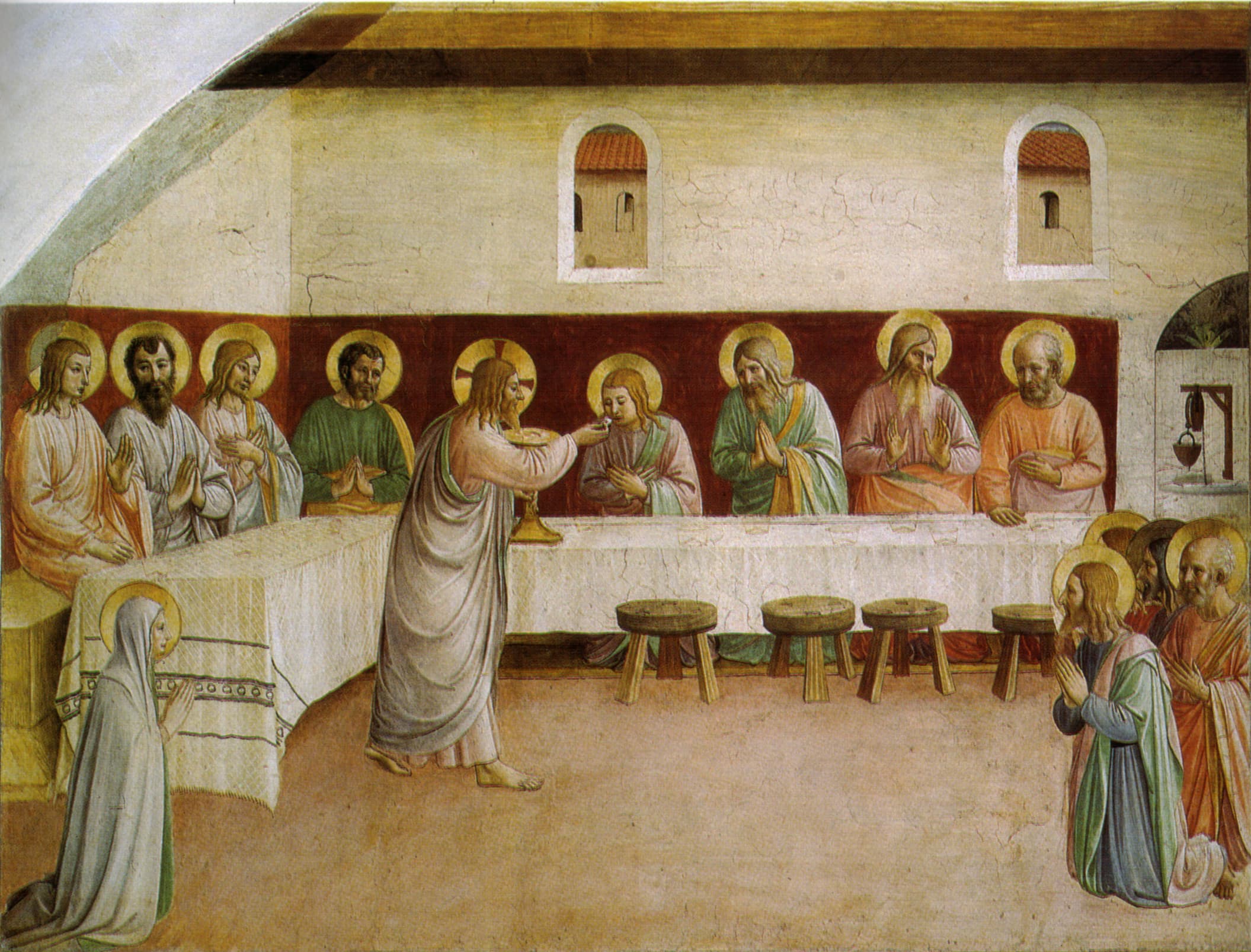
Psalm 133 · Value 30 of 41 · Featured Study
Unity and Fellowship
Unity is the oneness of God's people in Christ.
Paul asked, “Is Christ divided?” (1 Corinthians 1:13).
Behold, how good and pleasant it is when brothers live together in harmony!
- Anchor text
- Psalm 133:1 to 3 “Behold, how good and pleasant it is…”
- Its opposite
- Division and factions among the people of God
- Hold in memory
- Psalm 133:1
Summary
The God of Israel is one, and Scripture calls His people to be one with Him and with one another. The New Testament names the church one body and calls its shared life fellowship. Jesus asked the Father that all who would believe in Him might share the oneness of the Father and the Son. Paul told believers to keep that unity with diligence, in humility, patience and love.
- Unity rests on God: one Lord, one Spirit and one Father of all.
- Christ made Jew and Gentile one new people by His cross.
- Fellowship is first a sharing in the Father and the Son, and from it comes the care of believers for one another.
- Scripture commands believers to keep unity and to turn away from those who divide the church against the apostles' teaching.
What Unity Is
Two Hebrew words name being together and being made one, and two Greek words name fellowship and oneness.
Unity runs through Scripture from Israel's confession that the LORD is one to the apostles' letters to divided churches. A psalm of David praises brothers who dwell as one, the prophets promised one heart and one nation, and Jesus asked the Father to make His followers one. This study of unity asks what Scripture means by the oneness of God's people, where it comes from, and how believers are to keep it. It gives the words and key texts of unity, its ground and its practice, and the questions readers have asked.
Yachad, together
141 uses in the canon
The Hebrew yachad (H3162) is most often an adverb, together, and names people in one place or at one task. Genesis uses it twice of Abram and Lot, whose flocks were too many for them to share one land: “But the land was unable to support both of them while they stayed together.”
Yachad, to be made one
3 uses in the canon
The Hebrew verb yachad (H3161) means to be or become one. David asks God to make his heart one in its fear of Him: “Give me an undivided heart, that I may fear Your name.”
Koinonia, fellowship
The Greek koinonia (G2842) names a sharing or partnership, and Paul uses it of gifts for the poor as well as of fellowship in Christ. He thanks the Philippians “because of your partnership in the gospel from the first day until now.”
Henotes, oneness
2 uses in the canon
The Greek henotes (G1775) means oneness and stands only in Ephesians 4. There Paul names the goal of the church's growth: “until we all reach unity in the faith and in the knowledge of the Son of God.”
Yachad, together, Yachad, to be made one, Koinonia, fellowship, Henotes, oneness, The Words Yachad and Koinonia, the study in brief
The Key Texts of Unity
The prophets promise one heart, Jesus speaks of one flock, and the apostles ask the churches for one mind.
Prophets
I will give them one heart and one way, so that they will always fear Me for their own good and for the good of their children after them.
God promises to give His people the one heart that they cannot give themselves.
Prophets
I will make them one nation in the land, on the mountains of Israel, and one king will rule over all of them. Then they will no longer be two nations and will never again be divided into two kingdoms.
The promise answers Israel's split into two kingdoms, so the oneness of God's people is something He restores.
Prophets
For then I will restore pure lips to the peoples, that all may call upon the name of the LORD and serve Him shoulder to shoulder.
Zephaniah foresees the peoples serving the LORD together after He purifies their lips.
Gospels
I have other sheep that are not of this fold. I must bring them in as well, and they will listen to My voice. Then there will be one flock and one shepherd.
Jesus widens the people of God beyond Israel and makes Himself the one bond of the flock.
John 10:16BSB
Gospels
By this everyone will know that you are My disciples, if you love one another.”
Jesus makes the love of His disciples for one another the sign by which the world will know them.
John 13:35BSB
Epistles
Now may the God who gives endurance and encouragement grant you harmony with one another in Christ Jesus, so that with one mind and one voice you may glorify the God and Father of our Lord Jesus Christ.
Paul asks God for the harmony that lets a church praise Him with one voice.
Epistles
I appeal to you, brothers, in the name of our Lord Jesus Christ, that all of you agree together, so that there may be no divisions among you and that you may be united in mind and conviction.
Paul appeals in the name of Christ to a church that had broken into rival groups.
Epistles
There is neither Jew nor Greek, slave nor free, male nor female, for you are all one in Christ Jesus.
Paul names the divisions of nation, rank and sex that being one in Christ overcomes.
Epistles
then make my joy complete by being like-minded, having the same love, being united in spirit and purpose.
Paul makes a church's agreement the thing that will complete his own joy, so unity is a gift believers give one another.
Epistles
And over all these virtues put on love, which is the bond of perfect unity.
Paul names love as the bond that holds every other virtue together in unity.
Epistles
Finally, all of you, be like-minded and sympathetic, love as brothers, be tenderhearted and humble.
Peter's last counsel to churches under pressure turns on oneness of mind.
1 Peter 3:8BSB
Ezekiel 37:22, Zephaniah 3:9, John 10:16, John 13:35, Romans 15:5 to 6, 1 Corinthians 1:10, Galatians 3:28, Philippians 2:2 and 2 more
Unity Rests on the One God
Israel confessed one LORD, and the apostles traced the church's oneness to the one God it serves.
Scripture places the source of the church's unity in God, who is one, before any agreement among His people.
Hear, O Israel: The LORD our God, the LORD is One.Israel's confession of the one LORD stands under every later call for His people to be one.
There is one body and one Spirit, just as you were called to one hope when you were called; one Lord, one faith, one baptism; one God and Father of all, who is over all and through all and in all.Paul counts seven things all believers hold in common, and every one rests on God being one.
We proclaim to you what we have seen and heard, so that you also may have fellowship with us. And this fellowship of ours is with the Father and with His Son, Jesus Christ.John sets the fellowship of believers with one another inside their fellowship with God.
Who the Holy Spirit Is, the study in brief
Christ and Unity
John and Paul show Christ praying for the oneness of His people and bringing it about.
He prayed that His people would be oneJohn 17
Before He went out to the garden where He was arrested, Jesus prayed for His disciples and then for all who would come to believe through their message (John 17:20).
that all of them may be one, as You, Father, are in Me, and I am in You. May they also be in Us, so that the world may believe that You sent Me.
John 17:21BSB The prayer reaches every believer after the apostles, and it names the world's faith as its aim.
He made two peoples one by His crossEphesians 2
Paul reminded Gentile believers that they had once been “alienated from the commonwealth of Israel, and strangers to the covenants of the promise” (Ephesians 2:12).
For He Himself is our peace, who has made the two one and has torn down the dividing wall of hostility by abolishing in His flesh the law of commandments and decrees. He did this to create in Himself one new man out of the two, thus making peace and reconciling both of them to God in one body through the cross, by which He extinguished their hostility.
Ephesians 2:14 to 16BSB Paul says that Christ's death removed the hostility between Jew and Gentile and made one new man of the two.
He joins believers into one body1 Corinthians 12
Paul wrote to the Corinthians that the body “does not consist of one part, but of many” (1 Corinthians 12:14).
The body is a unit, though it is composed of many parts. And although its parts are many, they all form one body. So it is with Christ. For in one Spirit we were all baptized into one body, whether Jews or Greeks, slave or free, and we were all given one Spirit to drink.
1 Corinthians 12:12 to 13BSB Paul traces the one body to the one Spirit in whom every believer was baptized.
Read the study of One Body, Many Members 8 sections, 9 verses set out
He gave His people one loaf1 Corinthians 10
Paul drew the oneness of the church from the Lord's Supper, where the many share the cup and the bread.
Is not the cup of blessing that we bless a participation in the blood of Christ? And is not the bread that we break a participation in the body of Christ? Because there is one loaf, we who are many are one body; for we all partake of the one loaf.
1 Corinthians 10:16 to 17BSB Paul makes the one loaf of the Supper the sign that many believers are one body.
He made two peoples one by His cross (Ephesians 2), He joins believers into one body (1 Corinthians 12), He gave His people one loaf (1 Corinthians 10)
1 Corinthians 12:12 to 13, 1 Corinthians 10:16 to 17
Who Kept Unity
Three people of the Bible kept unity: a kinsman, a king and an apostle.

When his herdsmen quarrelled with Lot's, he said, “Please let there be no contention between you and me,” and gave Lot the first choice of the land.
Genesis 13:8 to 9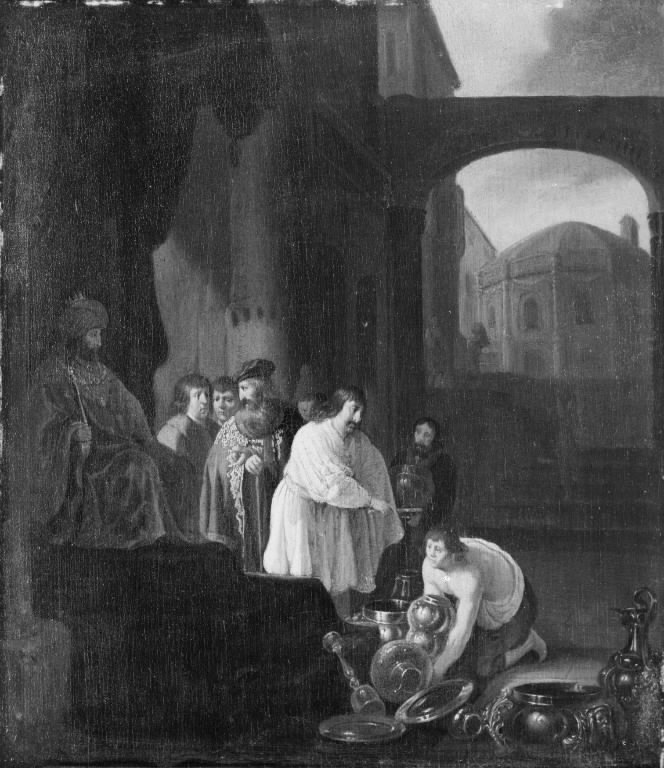
He called Israel and Judah to keep the Passover in Jerusalem, and “the power of God was on the people in Judah to give them one heart.”
2 Chronicles 30:12
With James and John he gave Paul and Barnabas “the right hand of fellowship,” though their missions went to different peoples.
Galatians 2:9
The Practice of Unity
Scripture names six practices of unity, each in the words of the verse that gives it.
- 1Keep the unity you were given“and with diligence to preserve the unity of the Spirit through the bond of peace.”Ephesians 4:3
- 2Bear with one another“with all humility and gentleness, with patience, bearing with one another in love,”Ephesians 4:2
- 3Put others first“Do nothing out of selfish ambition or empty pride, but in humility consider others more important than yourselves.”Philippians 2:3
- 4Carry the burdens of others“Carry one another’s burdens, and in this way you will fulfill the law of Christ.”Galatians 6:2
- 5Forgive as you were forgiven“Bear with one another and forgive any complaint you may have against someone else.”Colossians 3:13
- 6Keep meeting together“Let us not neglect meeting together, as some have made a habit, but let us encourage one another.”Hebrews 10:25
Bear with one another, Put others first, Carry the burdens of others, Forgive as you were forgiven, Keep meeting together
What Stands Against Unity
Scripture names the quarrels of rival parties, the jealousy that divides a church, and the one who stirs up discord among brothers.
Some from Chloe's household told Paul of quarrels in the church at Corinth (1 Corinthians 1:11). Its members were saying, “I follow Paul,” “I follow Apollos,” “I follow Cephas,” or “I follow Christ” (1 Corinthians 1:12). Paul called their “jealousy and dissension” the way of the world (1 Corinthians 3:3).
Paul also named two women of the church at Philippi. He wrote, “I urge Euodia and Syntyche to agree with each other in the Lord” (Philippians 4:2).
There are six things that the LORD hates, seven that are detestable to Him: haughty eyes, a lying tongue, hands that shed innocent blood, a heart that devises wicked schemes, feet that run swiftly to evil, a false witness who gives false testimony, and one who stirs up discord among brothers.Wisdom ranks the sowing of discord among the things the LORD hates most, beside lies and bloodshed.
idolatry and sorcery; hatred, discord, jealousy, and rage; rivalries, divisions, factions,Paul traces division to the flesh, so its cure is the fruit the Spirit grows.
Proverbs 6:16 to 19, Galatians 5:20
Unity in the Stories of the Bible
Three accounts tell of a pilgrim song, a church that shared its goods and a council that settled a dispute.
How good and pleasantPsalm 133
Psalm 133 carries the heading “A song of ascents. Of David.” In three verses it praises the life of brothers who dwell as one and gives two pictures of it. The first is the anointing oil running down Aaron's head and beard to the collar of his robes, the oil that set Israel's high priest apart. The second is the dew of Hermon, the high mountain of the north, falling on the mountains of Zion.
It is like the dew of Hermon falling on the mountains of Zion. For there the LORD has bestowed the blessing of life forevermore.
Psalm 133:3BSB The psalm closes by naming the place of unity as the place where the LORD gives His blessing.
Read the study of How Good and Pleasant 8 sections, 3 verses set out
The fellowship of the first churchActs 2
After Peter's sermon at Pentecost about three thousand were baptized in Jerusalem (Acts 2:41). They met daily in the temple courts and broke bread in their homes, and they sold their possessions and goods to give to anyone in need (Acts 2:45 to 46). A few chapters later Luke writes that the believers were “one in heart and soul” (Acts 4:32).
They devoted themselves to the apostles’ teaching and to the fellowship, to the breaking of bread and to prayer.
Acts 2:42BSB Luke names the four things the first believers gave themselves to, and the fellowship is one of them.
Read the study of the Fellowship of Acts 2 7 sections, 8 verses set out
The council at JerusalemActs 15
Men from Judea taught the believers at Antioch that Gentiles had to be circumcised to be saved, and Paul and Barnabas went up to Jerusalem after “sharp debate” (Acts 15:2). The apostles and elders heard Peter, Paul, Barnabas and James. They sent one letter to the Gentile churches, and in it they wrote, “we all agreed to choose men to send to you” (Acts 15:25).
It seemed good to the Holy Spirit and to us not to burden you with anything beyond these essential requirements:
Acts 15:28BSB The council's letter names the Holy Spirit and the church together as the authors of its decision.
The fellowship of the first church (Acts 2), The council at Jerusalem (Acts 15)
Unity in the Church's History
Three accounts tell of a bishop's letters on his road to martyrdom, a treatise against a schism in 251 and a village of quarrelling refugees reconciled in 1727.
Ignatius on the road to Rome98 to 117
John Bonaventure O'Connor wrote in the Catholic Encyclopedia (1910) that Ignatius, bishop of Antioch, was taken under guard to Rome and died there between 98 and 117. On the way he wrote seven letters to churches, and from Troas he wrote to the Christians of Philadelphia. He urged them, “Take heed, then, to have but one Eucharist.” In the same chapter he joined the one flesh of Christ and the one cup to one altar and one bishop.
Cyprian at Carthage251
John Chapman wrote in the Catholic Encyclopedia (1908) that Cyprian, bishop of Carthage, read his treatise On the Unity of the Catholic Church to the council that met in April 251. It answered the “schism started by Felicissimus and Novatus, who had a large following”. In it Cyprian wrote, “He can no longer have God for his Father, who has not the Church for his mother.”
Herrnhut1727
J. E. Hutton writes in his History of the Moravian Church (1909) that exiles from Moravia reached Count Zinzendorf's estate of Berthelsdorf in June 1722 and felled the first tree of Herrnhut on 17 June. By 1727 the settlement was split by quarrels. On 12 May Zinzendorf lectured the settlers on the sin of schism, and they shook hands. On 13 August they shared the Holy Communion in Berthelsdorf Parish Church, where, Hutton writes, they reached “the firm conviction that they were one in Christ”.
Read the story of Herrnhut, 1727 7 sections, 3 verses set out
Cyprian at Carthage (251), Herrnhut (1727)
Voices on Unity, by Century
Five quotations from the third century to the eighteenth, each under the line it teaches.
died 253 · Origen of Alexandria
ON FIRST PRINCIPLES 1.6.2
A third-century reading: the unity Christ prayed for will be restored in full in the age to come.
The quotation1 quotation
“I am of the opinion, so far as I can see, that this order of the human race has been appointed in order that in the future world—or in ages to come, when there shall be the new heavens and new earth spoken of by Isaiah—that unity may be restored that was promised by the Lord Jesus in his prayer to God the Father on behalf of his disciples. And this is further confirmed by the language of the apostle Paul: ‘Until we all come in the unity of the faith to a perfect man, to the measure of the stature of the fullness of Christ.’ And in keeping with this is the declaration of the same apostle when he exhorts us—who even in the present life are placed in the church, which is a form of that kingdom that is to come—to this same similitude of unity, ‘That you all speak the same thing and that there be no divisions among you. But that you be perfectly joined together in the same mind and in the same judgment.’”
Origen of Alexandria · On First Principles 1.6.2 · on John 17:20Patristic
died 367 · Hilary of Poitiers
On the Trinity, Book 8, Sections 13 and 15
A fourth-century reading: Christ in the believer and the Father in Christ make a perfect unity through a Mediator.
The quotation1 quotation
“Now our Lord has not left the minds of His faithful followers in doubt, but has explained the manner in which His nature operates, saying, ‘That they may be one, as We are one: I in them and Thou in Me, that they may be perfected in one.’... If He wished to indicate a mere unity of will, why did He set forth a kind of gradation and sequence in the completion of the unity, unless it were that, since He was in the Father through the nature of Deity, and we on the contrary in Him through His birth in the body, He would have us believe that He is in us through the mystery of the sacraments? And thus there might be taught a perfect unity through a Mediator, whilst, we abiding in Him, He abode in the Father, and as abiding in the Father abode also in us; and so we might arrive at unity with the Father, since in Him Who dwells naturally in the Father by birth, we also dwell naturally, while He Himself abides naturally in us also.”
Hilary of Poitiers · On the Trinity, Book 8, Sections 13 and 15 · on John 17:20Patristic
died 407 · John Chrysostom
Homily on Ephesians 9
A fifth-century reading: the Spirit holds believers together as one spirit holds a body's many members.
The quotation1 quotation
“‘Giving diligence,’ he proceeds, ‘to keep the unity of the Spirit.’ What is this ‘unity of Spirit?’ In the human body there is a spirit which holds all together, though in different members. So is it also here; for to this end was the Spirit given, that He might unite those who are separated by race and by different manners; for old and young, rich and poor, child and youth, woman and man, and every soul become in a manner one, and more entirely so than if there were one body. For this spiritual relation is far higher than the other natural one, and the perfectness of the union more entire; because the conjunction of the soul is more perfect, inasmuch as it is both simple and uniform. And how then is this unity preserved? ‘In the bond of peace.’ It is not possible for this to exist in enmity and discord. ‘For whereas there is,’ saith he, ‘among you jealousy and strife, are ye not carnal, and walk after the manner of men?’ For as fire when it finds dry pieces of wood works up all together into one blazing pile, but when wet does not act at all nor unite them; so also it is here. Nothing that is of a cold nature can bring about this union, whereas any warm one for the most part can. Hence at least it is that the glow of charity is produced; by the ‘bond of peace,’ he is desirous to bind us all together. For just in the same way, he would say, as if thou wouldest attach thyself to another, thou canst do it in no other way except by attaching him to thyself; and if thou shouldest wish to make the tie double, he must needs in turn attach himself to thee; so also here he would have us tied one to another; not simply that we be at peace, not simply that we love one another, but that all should be only even one soul. A glorious bond is this; with this bond let us bind ourselves together with one another and unto God. […]”
John Chrysostom · Homily on Ephesians 9 · on Ephesians 4:3Patristic
1509 to 1564 · John Calvin
Commentaries
A sixteenth-century reading: the oneness Paul asks the Ephesians to keep is believers agreeing in mind.
The quotation1 quotation
“Some consider the unity of the Spirit to mean that spiritual unity which is produced in us by the Spirit of God. There can be no doubt that He alone makes us ‘of one accord, of one mind,’ (Philippians 2:2,) and thus makes us one; but I think it more natural to understand the words as denoting harmony of views.”
John Calvin · Commentaries · on Ephesians 4:3Reformed
1662 to 1714 · Matthew Henry
Commentary on the Whole Bible
An eighteenth-century reading: God's glory is the centre of His people's unity, and His grace its cement.
The quotation1 quotation
“They shall be one in his hand, for his glory shall be the centre of their unity and his grace the cement of it. In him, in a regard to him and in his service and worship, they shall unite, and so shall become one.”
Matthew Henry · Commentary on the Whole Bible · on Ezekiel 37:22Puritan
John Chrysostom, John Calvin, Matthew Henry
How Unity Has Been Taught
Augustine in the fifth century and John Wesley in the eighteenth taught what joins believers who differ.
Augustine taught that later believers share the apostles' fellowship by holding their faith.1 paragraph
Augustine asked in his first homily on 1 John whether those who never saw the Lord are less happy than those who saw Him. He answered, “Those saw, we have not seen, and yet we are fellows; because we hold the faith in common.”
Wesley taught that believers who cannot think alike may still love alike.1 paragraph
John Wesley preached on Jehu's question to Jehonadab in 2 Kings 10:15 in his sermon Catholic Spirit, sermon 39 in the 1872 edition of his sermons. He granted that “a difference in opinions or modes of worship may prevent an entire external union”. He went on, “Herein all the children of God may unite, notwithstanding these smaller differences.”
Five Studies of Unity
Each study takes one part of unity into more depth.
The texts
3 studies
- Passages and psalms · 3 verses set outHow Good and Pleasant
Psalm 133 compares the harmony of brothers to the anointing oil on Aaron and the dew of Hermon.
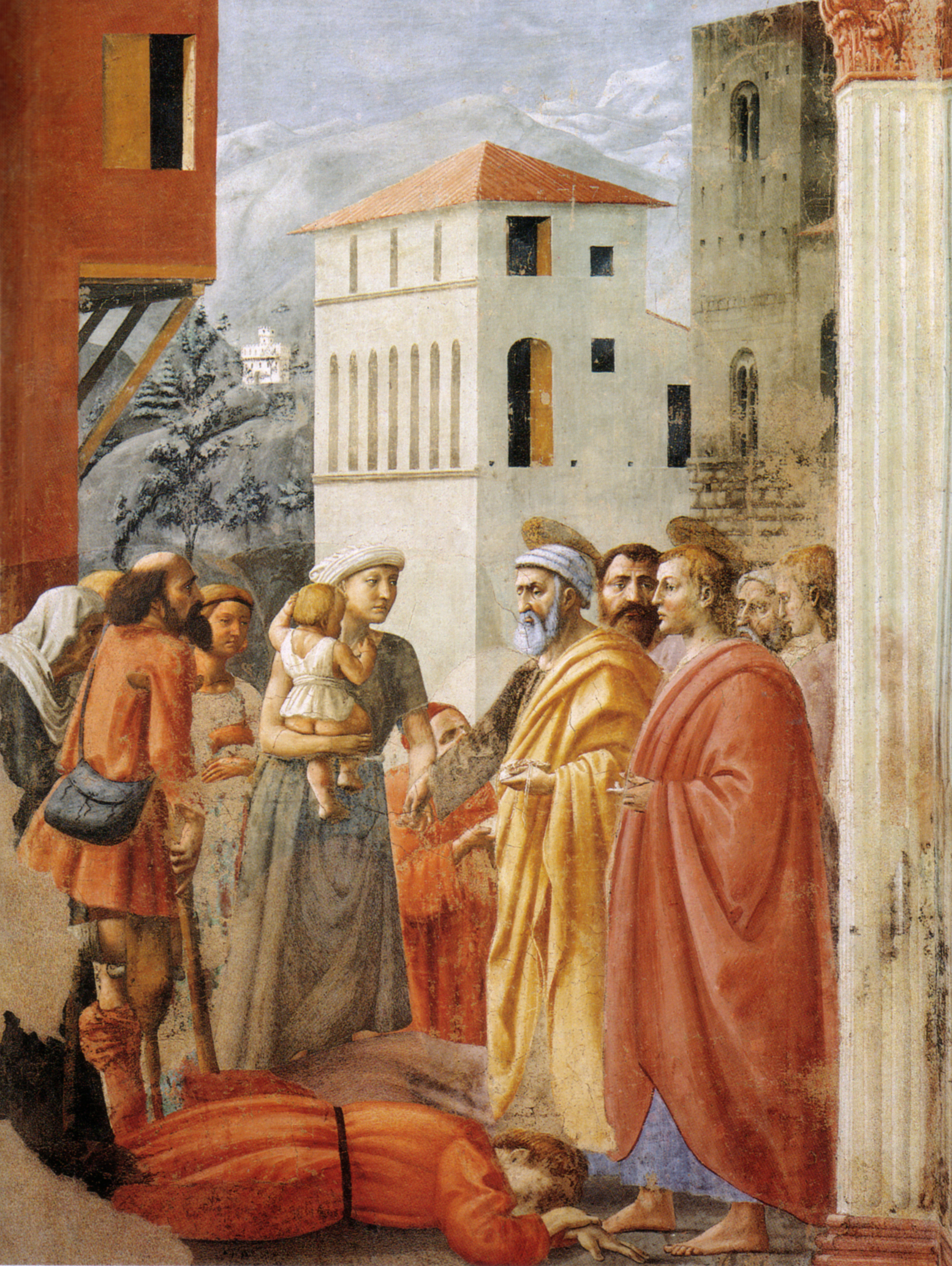
- Passages and psalms · 9 verses set outOne Body, Many Members
Paul set the church at Corinth beside a human body to teach its members their need of one another.
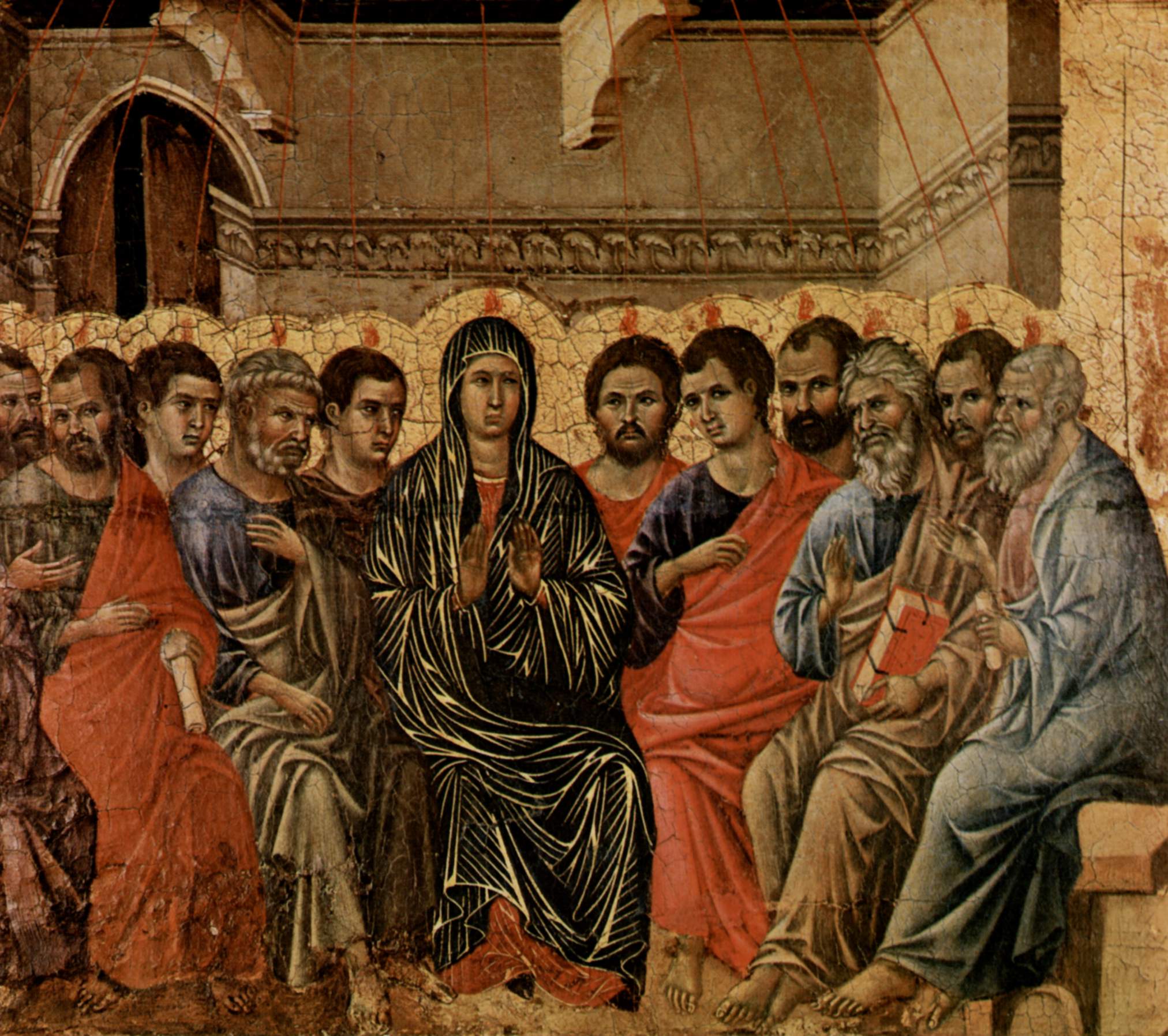
- Passages and psalms · 8 verses set outThe Fellowship of Acts 2
Acts 2:42 to 47 describes how the first believers in Jerusalem lived together.
- Passages and psalms · 3 verses set outHow Good and Pleasant
The stories
1 study
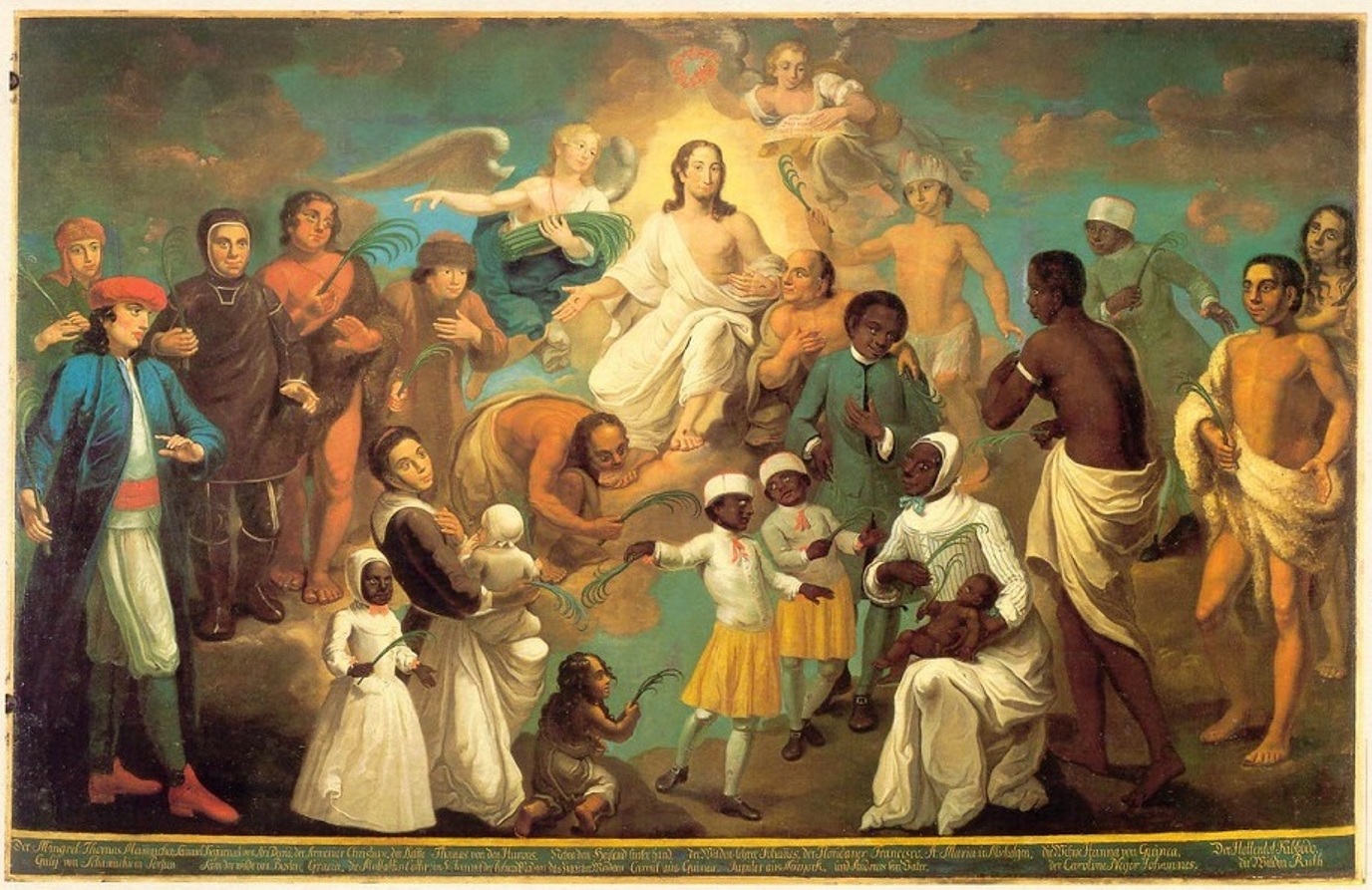
- Stories · 3 verses set outHerrnhut, 1727
In 1727 a quarrelling settlement of refugees at Herrnhut in Saxony agreed to live together as one congregation.
- Stories · 3 verses set outHerrnhut, 1727
The words
1 study
- Symbols and words · 8 verses set outThe Words Yachad and Koinonia
The Hebrew yachad means together, and the Greek koinonia means a sharing in something held in common.
- Symbols and words · 8 verses set outThe Words Yachad and Koinonia

One Body, Many Members, The Fellowship of Acts 2, Herrnhut, 1727, The Words Yachad and Koinonia
Where Readers Disagree
Six readings answer three questions, each with its holders, the work that argues it and the objection raised against it.
Whether the unity Christ prayed for is given or visible
Read the study of the Prayer for Unity
| Reading | Held by | Work | Objection |
|---|---|---|---|
| It is a oneness the Spirit makes, joining people of every race and rank | John Chrysostom (Patristic) | Chrysostom, Homilies on Ephesians, homily 9, on Ephesians 4:3 | Jesus prays in John 17:21 for a oneness the world will see. |
| It is one visible church, and to leave it is to leave God | Cyprian of Carthage (Patristic) | Cyprian, On the Unity of the Church (251), sections 5 and 6 | Jesus names one flock under one shepherd, Himself, in John 10:16, and names no bishop as the bond of the flock. |
What the unity of the Spirit in Ephesians 4:3 is
Read the study of the Words Yachad and Koinonia 7 sections, 8 verses set out
| Reading | Held by | Work | Objection |
|---|---|---|---|
| A harmony of views among believers | John Calvin (Reformed) | Calvin, Commentaries on Galatians and Ephesians (dedicated 1548), on Ephesians 4:3 | Paul calls it the unity of the Spirit and grounds it in the one Spirit of Ephesians 4:4. |
| A oneness of nature that goes deeper than a shared will | Hilary of Poitiers (Patristic) | Hilary, On the Trinity, book 8, sections 13 and 15 | Paul says in Ephesians 4:13 that the church grows toward “unity in the faith”, a oneness of belief still being reached. |
How a church treats those who divide it
Read the study of One Body, Many Members 8 sections, 9 verses set out
| Reading | Held by | Work | Objection |
|---|---|---|---|
| It marks them and avoids them, so as to give them no countenance | Jamieson, Fausset and Brown (Scottish Presbyterian commentary) | Jamieson, Fausset and Brown, Commentary Critical and Explanatory (1871), on Romans 16:17 | Paul tells the same church to bear “with one another in love” (Ephesians 4:2), which counsels patience before any parting. |
| It prays for them and waits for their healing | Augustine of Hippo (Patristic) | Augustine, Letter 142 | Paul writes in Romans 16:17 of those who cause divisions, “Turn away from them.” |
Sources
Scripture is the Berean Standard Bible.
- The Holy Bible, Berean Standard Bible, the superscription of Psalm 133.
- STEP Bible, Translators Brief lexicon of Extended Strongs for Hebrew and for Greek (Tyndale House, Cambridge), CC BY 4.0, with the Greek brief lexicon based on Abbott-Smith (1922)
- STEP Bible, Translators Amalgamated Hebrew Old Testament and Greek New Testament, the tagged texts (Tyndale House, Cambridge), CC BY 4.0.
- John Chapman, St. Cyprian of Carthage, The Catholic Encyclopedia, volume 4 (New York: Robert Appleton, 1908)
- Cyprian of Carthage, Treatise 1, On the Unity of the Church, sections 5 and 6, translated by Robert Ernest Wallis, Ante-Nicene Fathers, volume 5.
- Ignatius of Antioch, Epistle to the Philadelphians, chapter 4, translated by Alexander Roberts and James Donaldson, Ante-Nicene Fathers, volume 1 (Buffalo: Christian Literature Publishing, 1885)
- J. E. Hutton, A History of the Moravian Church, second edition, revised and enlarged (1909), book 2, chapter 3, The Founding of Herrnhut, 1722 to 1727.
- Origen, On First Principles 1.6.2, on John 17:20.
- Hilary of Poitiers, On the Trinity, book 8, sections 13 and 15.
- John Chrysostom, Homilies on Ephesians, homily 9, on Ephesians 4:3.
- Augustine of Hippo, Ten Homilies on the First Epistle of John, homily 1, on 1 John 1:3.
- Augustine of Hippo, Letter 142, on Psalm 133:1.
- John Calvin, Commentaries on the Epistles of Paul to the Galatians and Ephesians, the dedication dated Geneva, 1 February 1548, translated by William Pringle (translator's preface dated 6 September 1854), on Ephesians 4:3.
- Matthew Henry, Commentary on the Whole Bible (1710), on Ezekiel 37:22.
- John Wesley, Sermon 39, Catholic Spirit, in The Sermons of John Wesley (1872 edition)
- John Bonaventure O'Connor, St. Ignatius of Antioch, The Catholic Encyclopedia, volume 7 (New York: Robert Appleton, 1910)
- Robert Jamieson, A. R. Fausset and David Brown, Commentary Critical and Explanatory on the Whole Bible (1871), on Romans 16:17.
Keep Studying
In this value5
People and groups18
Doctrines7