
Daniel 3:24
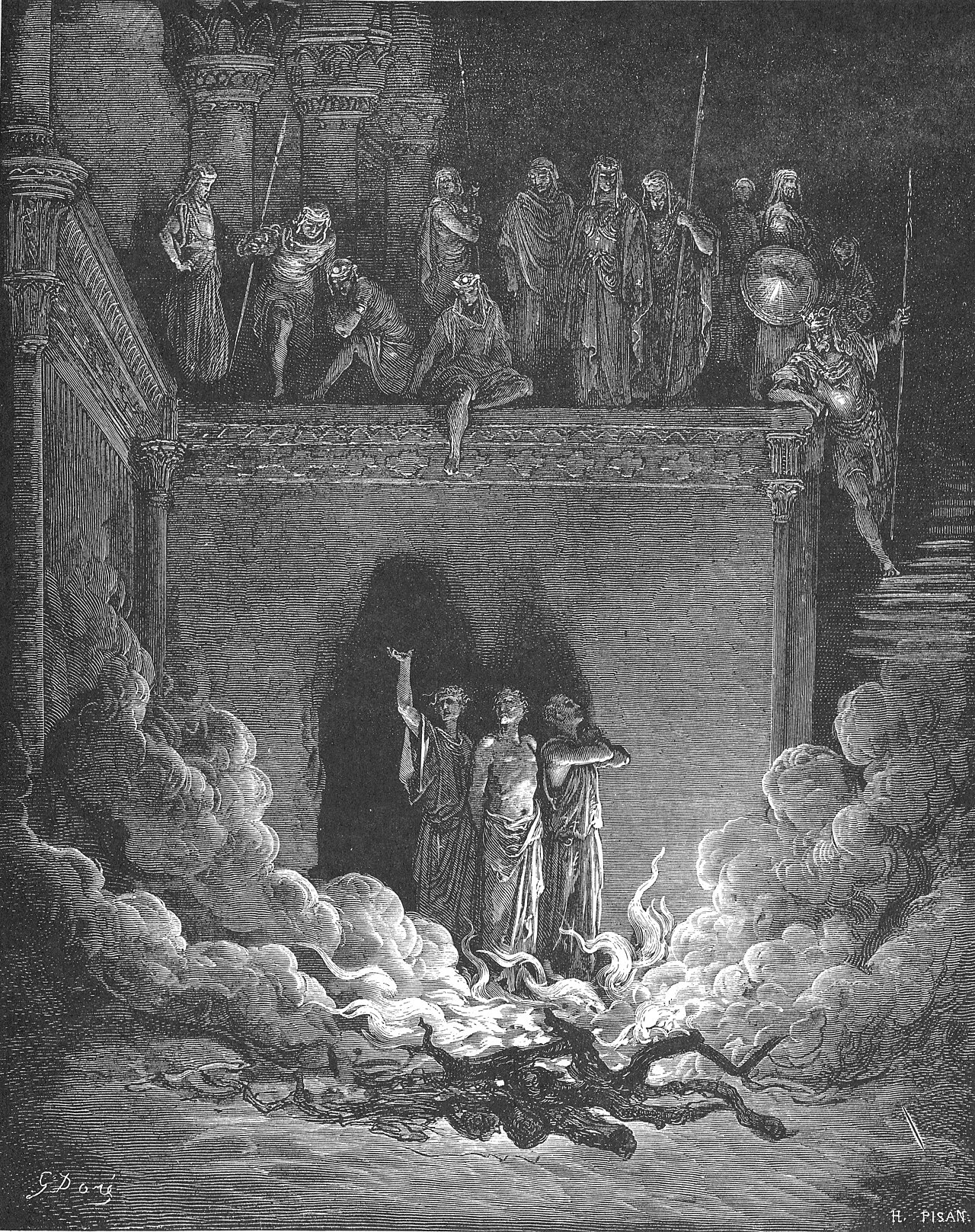
in Daniel 3Suddenly King Nebuchadnezzar jumped up in amazement and asked his advisers, “Did we not throw three men, firmly bound, into the fire?” “Certainly, O king,” they replied.
BSB
The same verse in ASV and KJV ▾
ASV
Then Nebuchadnezzar the king was astonished, and rose up in haste: he spake and said unto his counsellors, Did not we cast three men bound into the midst of the fire? They answered and said unto the king, True, O king.
KJV
Then Nebuchadnezzar the king was astonied, and rose up in haste, and spake, and said unto his counsellors, Did not we cast three men bound into the midst of the fire? They answered and said unto the king, True, O king.
⋯
This verse in Daniel 3
Commentary
5 notes on this verseVerses 24-25. "Then Nebuchadnezzar the king was astounded and hastily arose and said to his nobles: 'Did we not cast three men in shackles into the midst of the fire?'" After the princes have been punished, the king is rebuked, in order that he may glorify God while still alive. But he questions his nobles, by whose accusation and plot he had cast the three youths into the fiery furnace, so that when they reply that they had cast three youths into the furnace, he might announce and show forth to them (what had happened).
This site's exposition
Did we not throw three men
on Daniel 3:24-25
Nebuchadnezzar threw in “three men, firmly bound,” and now sees “four men, unbound and unharmed,” the fourth like “a son of the gods,” which Keil takes as a heavenly being in a pagan king's mouth. This site teaches with the early church that the fourth is Christ before his incarnation, keeping in person Isaiah 43:2, and other readings see a created angel. Every reading keeps the freed men and a fourth whom no one threw in.
The record, by era
The Puritans and the Awakening2 voices
Then Nebuchadnezzar was astonished, At the burning of those that cast the three men into the furnace, as Jacchiades; or he might be seized with a panic, and his spirits filled with fear and dread, the word (u) is by some said to signify, and this from the immediate hand of God: and rose up in haste; from the place where he was, and went to the mouth of the furnace, to see what was become of those that were cast into it: and spake and said unto his counsellors; who had advised him to do what he had done, out of envy and ill will to these Jews: did not we cast three men bound into the midst of the fire? that is, was there not an order of council for it? and was it not done according to it? they answered and said, true, O King; it was certainly so: thus they are brought to bear a testimony to the truth of this; it was not only the king that gave the orders, and saw them obeyed, but his counsellors also; and which they own, and serves to corroborate the truth of the miracle. (u) תוה "expavit", Munster, Piscator, Michaelis; "trepidavit", Gejerus; so Ben Melech from the Targum on Gen. xxvii. 33; "trepidus", Junius & Tremellius.
Perhaps the slaying of the men that executed his sentence was that which astonished him, as well it might, for he had reason to think his own turn would be next; or it was some unaccountable impression upon his own mind that astonished him, and made him rise up in haste, and go to the furnace, to see what had become of those he had cast into it.
The Nineteenth Century1 voice
A commentator
Albert Barnes1798–1870
Notes, Explanatory and Practical, on the Old and New Testaments (1832-1869)
Then, Nebuchadnezzar the king was astonied - The word “astonied,” which occurs several times in our translation Ezr 9:3; Job 17:8; Job 18:20; Eze 4:17; Dan 3:24; Dan 4:19; Dan 5:9, is but another form for “astonished,” and expresses wonder or amazement. The reasons of the wonder here were that the men who were bound when cast into the furnace were seen alive, and walking unbound; that to them a fourth person was added, walking with them; and that the fourth had the appearance of a Divine personage.
The words behind it
21 Hebrew wordsEvery Hebrew word of this verse in the order it stands, with what it means and the door to its own study. The last column counts the times a word stands in the whole Bible: the rarer the word, the more the places it appears belong together.
| Hebrew | Sound | Meaning | Word study | In the Bible |
|---|---|---|---|---|
| אֱדַ֙יִן֙ | ʾedayin | then | H116 → | 57 times |
| נְבוּכַדְנֶצַּ֣ר | nevukhadnetzar | Nebuchadnezzar | H5020 → | 31 times |
| מַלְכָּ֔א | malka' | king the | H4430 → | 180 times |
| תְּוַ֖הּ | tevah | he was alarmed | H8429 → | |
| וְקָ֣ם | vekam | and he arose | H6966 → | 35 times |
| בְּהִתְבְּהָלָ֑ה | behitbehalah | in haste | H927 → | 11 times |
| עָנֵ֨ה | ʾaneh | [he was] replying | H6032 → | 30 times |
| וְאָמַ֜ר | veamar | and [he was] saying | H560 → | 71 times |
| לְהַדָּֽבְר֗וֹהִי | lehadaverohi | to counselors his | H1907 → | 4 times |
| הֲלָא֩ | hala' | ¿ not | H3809 → | 82 times |
| גֻבְרִ֨ין | guvrin | men | H1400 → | 21 times |
| תְּלָתָ֜א | telata' | three | H8532 → | 11 times |
| רְמֵ֤ינָא | remeina' | did we throw | H7412 → | 12 times |
| לְגוֹא־ | legoy'- | to [the] midst of | H1459 → | 13 times |
| נוּרָא֙ | nura' | fire the | H5135 → | 17 times |
| מְכַפְּתִ֔ין | mekhapetin | bound | H3729 → | 4 times |
| עָנַ֤יִן | ʾanayin | [they were] replying | H6032 → | 30 times |
| וְאָמְרִין֙ | veamerin | and [they were] saying | H560 → | 71 times |
| לְמַלְכָּ֔א | lemalka' | to king the | H4430 → | 180 times |
| יַצִּיבָ֖א | yatziva' | certain | H3330 → | 5 times |
| מַלְכָּֽא׃ | malka' | king O | H4430 → | 180 times |
אֱדַ֙יִן֙then
ʾedayinH116 →57 times
נְבוּכַדְנֶצַּ֣רNebuchadnezzar
nevukhadnetzarH5020 →31 times
מַלְכָּ֔אking the
malka'H4430 →180 times
תְּוַ֖הּhe was alarmed
tevahH8429 →
וְקָ֣םand he arose
vekamH6966 →35 times
בְּהִתְבְּהָלָ֑הin haste
behitbehalahH927 →11 times
עָנֵ֨ה[he was] replying
ʾanehH6032 →30 times
וְאָמַ֜רand [he was] saying
veamarH560 →71 times
לְהַדָּֽבְר֗וֹהִיto counselors his
lehadaverohiH1907 →4 times
הֲלָא֩¿ not
hala'H3809 →82 times
גֻבְרִ֨יןmen
guvrinH1400 →21 times
תְּלָתָ֜אthree
telata'H8532 →11 times
רְמֵ֤ינָאdid we throw
remeina'H7412 →12 times
לְגוֹא־to [the] midst of
legoy'-H1459 →13 times
נוּרָא֙fire the
nura'H5135 →17 times
מְכַפְּתִ֔יןbound
mekhapetinH3729 →4 times
עָנַ֤יִן[they were] replying
ʾanayinH6032 →30 times
וְאָמְרִין֙and [they were] saying
veamerinH560 →71 times
לְמַלְכָּ֔אto king the
lemalka'H4430 →180 times
יַצִּיבָ֖אcertain
yatziva'H3330 →5 times
מַלְכָּֽא׃king O
malka'H4430 →180 times
A shaded row is a word that stands 400 times or fewer in the Bible.
The walk
8 stopsEach card is a verse this one points to, and under it the verses that one points to in turn. Where several paths arrive at the same place, that place is listed first: the text keeps returning to it.
Through
Daniel 6:22My God sent His angel and shut the mouths of the lions. They have not hurt me, for I was found innocent in His sight, and I have done no wrong against you, O…
it leads to
- 2 Timothy 4:17
But the Lord stood by me and strengthened me, so that through me the message would be fully proclaimed, and all the Gentiles would hear it. So I was delivered from the mouth of…
- Hebrews 11:33
who through faith conquered kingdoms, administered justice, and gained what was promised; who shut the mouths of lions,
- Acts 12:11
Then Peter came to himself and said, “Now I know for sure that the Lord has sent His angel and rescued me from Herod’s grasp and from everything the Jewish people were anticipating.”
- Psalms 91:11–13
For He will command His angels concerning you to guard you in all your ways.
- Psalms 84:11
For the LORD God is a sun and a shield; the LORD gives grace and glory; He withholds no good thing from those who walk with integrity.
- 2 Timothy 4:17
Through
Daniel 4:27Therefore, may my advice be pleasing to you, O king. Break away from your sins by doing what is right, and from your iniquities by showing mercy to the oppressed. Perhaps there will be…
it leads to
- Isaiah 55:6–7
Seek the LORD while He may be found; call on Him while He is near.
- Jonah 3:9
Who knows? God may turn and relent; He may turn from His fierce anger, so that we will not perish.”
- Ezekiel 18:27–32
But if a wicked man turns from the wickedness he has committed and does what is just and right, he will save his life.
- Isaiah 55:6–7
Where this verse is studied
On this page
About Daniel
This page draws on Albert Barnes, Notes, Explanatory and Practical, on the Old and New Testaments (1832-1869); Carl Friedrich Keil, Biblical Commentary on the Book of Daniel; Jerome, St. Jerome, Commentary on Daniel, CHAPTER THREE; John Calvin, Commentary on the Prophet Daniel; John Gill, Exposition of the Old Testament (1748-1763) and Matthew Henry, Commentary on the Whole Bible.