Skip to content
mannafest.faith

Voices and influences

John Bunyan

1628 to 1688[1]

An English Puritan preacher and pastor of the Bedford Meeting, imprisoned for his preaching, who wrote The Pilgrim's Progress.[1]

English Puritan
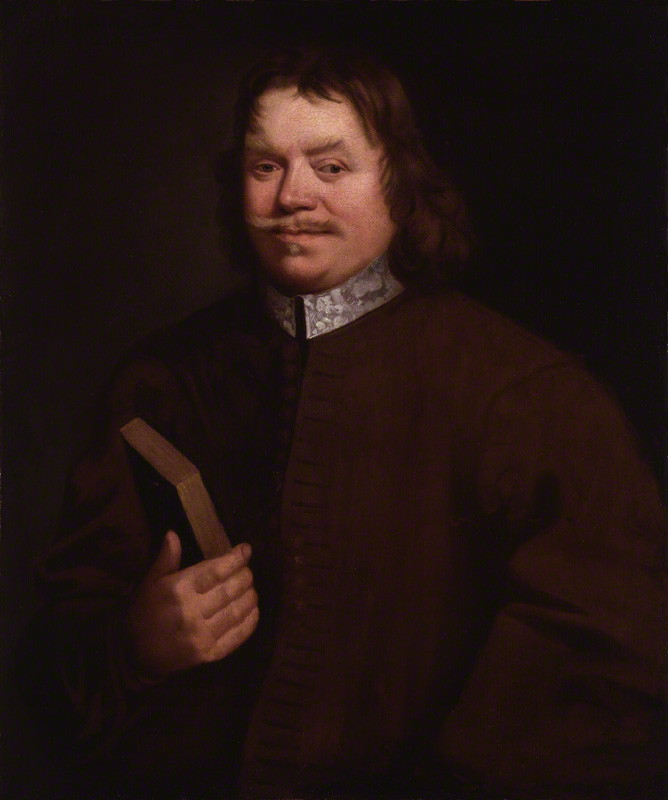
John Bunyan, painted by Thomas Sadler in 1684. Painting by Thomas Sadler, Public domain, from Wikimedia Commons.

At a glance

Born
1628, Elstow, Bedfordshire; baptised 30 November 1628[1]
Died
31 August 1688, Snow Hill, London[1]
Trade
A brazier or tinker, as his father was[1][2]
Family
Four children by his first wife, who died in 1658; then married to Elizabeth[1]
Known for
The Pilgrim's Progress and Grace Abounding to the Chief of Sinners[1][3]
Copyright
His works and George Offor's edition of them are in the public domain[2]

Life

John Bunyan was born in 1628 at Elstow, Bedfordshire, to Thomas and Margaret Bunyan, and was baptised there on 30 November 1628.[1] His father was a brazier or tinker, and Bunyan followed the trade.[1][2] At sixteen he joined the Parliamentary army at Newport Pagnell.[1][2]

He passed a group of poor women of the Bedford Meeting talking on a doorstep about spiritual matters, and their words turned him toward the faith.[1][2] He joined their congregation, and he tells the long struggle that followed in Grace Abounding to the Chief of Sinners.[1][2] His first wife died in 1658, leaving four children, one of them blind, and a year later he married Elizabeth.[1]

He was arrested for preaching in November 1660 and tried in January 1661.[1] He spent the next twelve years in Bedford County Gaol, with a Bible and John Foxe's Book of Martyrs, and there he wrote Grace Abounding.[1] He was released in 1672 and became the congregation's pastor.[1]

A second imprisonment of about six months followed in the later 1670s.[1] He published forty-two titles between 1656 and 1688, and more appeared after his death.[1] He died on 31 August 1688 at the house of John Strudwick on Snow Hill, London, after a ride through a storm, and he is buried in Bunhill Fields.[1]

Emphasis in teaching

Christ himself the believer's righteousness

He taught that the believer's righteousness is Jesus Christ himself at God's right hand, so that a good or bad frame of heart neither adds to it nor takes from it.[2]

Seen in Grace Abounding to the Chief of Sinners, sections 229 to 232

The promise taken at its full force

He weighed the promises of Scripture word by word against despair, and he pressed the promise of John 6:37 on every sinner who comes.[2]

Seen in Grace Abounding, sections 206 and 249; Come and Welcome to Jesus Christ, on John 6:37

Mercy offered first to the worst

He taught that Christ would have mercy offered first to the biggest sinners, and that he is able to save to the uttermost.[2]

Seen in The Jerusalem Sinner Saved, on Luke 24:47; Christ a Complete Saviour, on Hebrews 7:25

Prayer from the heart by the Spirit

He defined prayer as the heart poured out to God through Christ in the strength of the Holy Spirit, according to the Word.[2]

Seen in I Will Pray with the Spirit, on 1 Corinthians 14:15

The Christian life as a pilgrimage

He drew the Christian life as a road with real danger and real help, from the City of Destruction to the Celestial City.[2][3]

Seen in The Pilgrim's Progress

The fear of God and the broken heart

He taught that the fear of God belongs in the worship of his children, and that God chooses the broken and contrite heart for his companion.[2]

Seen in A Treatise of the Fear of God; The Acceptable Sacrifice, on Psalm 51:17

Accomplishments

  1. 1656Published the first of the forty-two titles that appeared in his lifetime.[1]
  2. 1660 to 1672Wrote Grace Abounding while a prisoner.[1]
  3. 1672Was called to lead the Bedford congregation on his release.[1]
  4. 1678Published The Pilgrim's Progress.[1]
  5. 1679Published A Treatise of the Fear of God.[2]
  6. 1684Published A Holy Life the Beauty of Christianity.[2]
  7. 1692Christ a Complete Saviour was published after his death.[2]

Where to find his work

Bunyan Meeting Free Church in Bedford keeps the John Bunyan Museum.[5] Project Gutenberg holds his books and George Offor's edition of his works free, and the Christian Classics Ethereal Library holds his works.[3][2][4]

Books

  1. The Pilgrim's Progress

    1678[1][3]

    The allegory comes in two parts; the second part follows Christian's wife, Christiana.

    Read free at Gutenberg

  2. Grace Abounding to the Chief of Sinners

    He tells his conversion and his search for assurance in numbered sections.[3]

    Read free at Gutenberg

  3. The Holy War

    This allegory tells of the town of Mansoul, taken and retaken.[3]

    Read free at Gutenberg

  4. The Life and Death of Mr. Badman

    This dialogue follows the course of an ungodly life.[3]

    Read free at Gutenberg

  5. The Jerusalem Sinner Saved

    The treatise is written on Luke 24:47.[3]

    Read free at Gutenberg

Collected works

  1. The Works of John Bunyan, edited by George Offor

    Blackie and Son, Glasgow[2]

    The three volumes hold every treatise, among them Come and Welcome to Jesus Christ, Saved by Grace, A Treatise of the Fear of God, The Acceptable Sacrifice, I Will Pray with the Spirit and Christ a Complete Saviour.

    Read the whole free at GutenbergRead volume one freeRead volume three free

Other details

Controversy

  • The Strict Baptists. George Offor's memoir records his controversy with the Strict Baptists.[2]

Sources

  1. 1“John Bunyan,” Wikipedia. en.wikipedia.org/wiki/John_Bunyan Opened 14 November 2026
  2. 2The Works of John Bunyan, edited by George Offor (Glasgow: Blackie and Son), with Offor's memoir and introductions, Project Gutenberg eBook 6049. gutenberg.org/ebooks/6049 Opened 14 November 2026
  3. 3Project Gutenberg, his books The Pilgrim's Progress, Grace Abounding, The Holy War, Mr. Badman and The Jerusalem Sinner Saved. gutenberg.org/ebooks/131 Opened 14 November 2026
  4. 4Christian Classics Ethereal Library, John Bunyan. ccel.org/ccel/bunyan Opened 14 November 2026
  5. 5Bunyan Meeting Free Church, Bedford. bunyanmeeting.co.uk Opened 14 November 2026

Every work cited on MannaFest is listed with its terms in the sources registry.

Keep Studying