
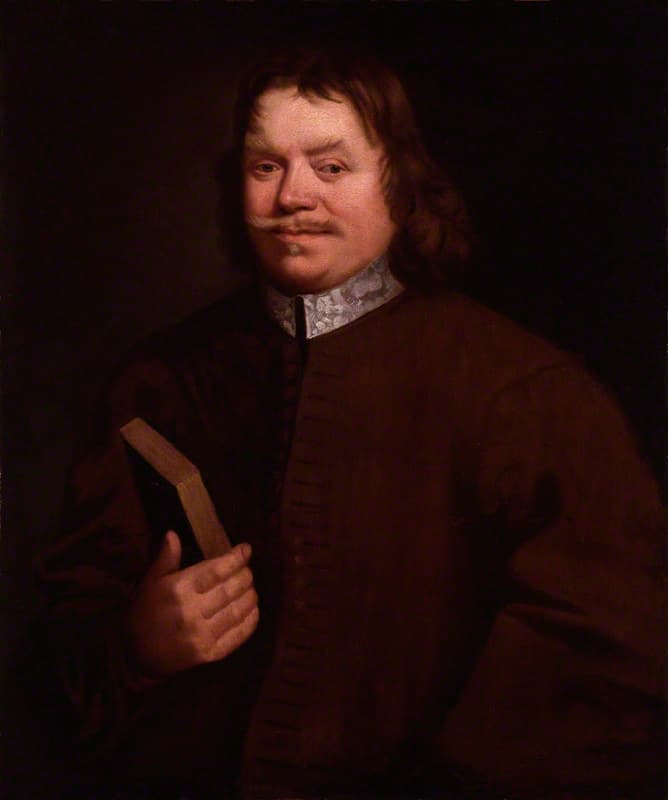
Thomas Sadler, John Bunyan, 1684. Public domain.
Bedford, to 1688 · Person · Featured Study
John Bunyan
He spent nearly twelve years in Bedford's county jail for preaching and published The Pilgrim's Progress in 1678.
A brazier's son left a blind child at home and went to jail, because he would not promise to stop preaching.
All these people died in faith, without having received the things they were promised. However, they saw them and welcomed them from afar. And they acknowledged that they were strangers and exiles on the earth.
- Born
- baptized 30 November 1628 at Elstow
- Died
- 31 August 1688 in London
- Family
- first wife: not named in his book; second wife: Elizabeth; daughter: Mary, born blind
- Places
- Elstow, Newport Pagnell, Bedford, London
Summary
John Bunyan grew up at Elstow in Bedfordshire and served in the army of the Civil War. For years he was sure he was lost, until he came to rest in Christ's righteousness. The Bedford congregation received him in 1653 and sent him out to preach. A magistrate took him at a meeting in November 1660, and the county jail held him until his pardon. He wrote Grace Abounding there.
- His wife Elizabeth pleaded for him before Sir Matthew Hale in 1661, and the judges would not hear it.
- John Brown dated the writing of The Pilgrim's Progress to a second, shorter term in prison.
- He defended receiving believers into a church whatever they held on water baptism.
Strangers on the Earth
Hebrews 11:13 lies behind his pilgrims, and Hosea 12:10 stands on his title page.
The title page of 1678 cites Hosea 12:10 for the book's similitudes. At Vanity Fair his two travellers answer that they are pilgrims and strangers in the world, in the older English of Hebrews 11:13.
The question of this life is how a man who spent years sure he had sold Christ came to sit in prison at peace. It is also why he would not give the promise that would have freed him.
I spoke through the prophets and multiplied their visions; I gave parables through the prophets.Bunyan set this verse on his title page to defend teaching by likenesses.
The Life in Order
Most dates come from the Elstow register and his own two accounts.
Prison took nearly twelve years from his early thirties.
- 30 November 1628He was baptized at ElstowThe Elstow register, in Brown
- June 1644His mother died, and he entered the army by that winterBrown; Grace Abounding, section 13
- 20 July 1650His blind daughter Mary was baptized at ElstowThe Elstow register, in Brown
- 1653The Bedford congregation received himBrown
- After August 1655His pastor died, and the church sent him out to preachBrown; Grace Abounding, section 271
- 12 November 1660He was taken at Samsell by HarlingtonA Relation of the Imprisonment
- Early 1661Sir John Kelynge sentenced him at the SessionsA Relation of the Imprisonment; Brown
- Midsummer 1661Elizabeth pleaded for him before the judgesA Relation of the Imprisonment
- 1666Grace Abounding was publishedBrown
- 1672He was licensed to teach on 9 May and pardoned on 13 SeptemberBrown
- Into 1676He served six months in the second term, and Bishop Barlow's order released himBrown
- 1678Nathaniel Ponder published The Pilgrim's ProgressBrown
- 31 August 1688He died in LondonBrown
Each step of the life stands with its witness.
Early 1661, Midsummer 1661, 1666, 1672, Into 1676, 1678, 31 August 1688
From Elstow to Snow Hill
Grace Abounding tells the inner road, and A Relation tells the arrest and the trial.
John Bunyan was an English Puritan preacher and popular allegorical writer. Born in Elstow, Bedfordshire, the son of a brazier, he served briefly as a soldier in the English Civil War.
He married soon after, a woman whose father had left her two books, The Plain Man's Pathway to Heaven and The Practice of Piety. He says they had not so much as a dish or a spoon between them.
One day his trade took him to Bedford. There he came on three or four poor women sitting at a door in the sun, talking about the new birth. He listened and understood nothing. Years of terror followed, with a temptation to sell Christ that he thought he had yielded to, and Esau's lost birthright in his mind.
He joined John Gifford's Bedford congregation in 1653, was converted shortly thereafter, and began preaching in public in 1655 after Gifford's death. People came, he says, by hundreds. He kept his trade.
From 1660 to 1672 he lay in the Bedford county jail under the old statute of 35 Elizabeth, for preaching without the license of the Church of England. A second, shorter term followed about 1676. Justice Wingate's constable found the meeting at Samsell with only their Bibles in their hands. Bunyan could have gone home on the promise to stop, and he would not give it.
He wrote the first part of The Pilgrim's Progress in prison. He wrote some sixty works. His account of his own soul came first, in 1666, and The Holy War and the second part of The Pilgrim's Progress followed in the 1680s.
In August 1688 he went to Reading to settle a quarrel between a father and son, and he rode on to London through driving rain. He died at John Strudwick's house on Snow Hill, and his friends laid him in Strudwick's vault in Bunhill Fields.
Elizabeth before the Judges
Her plea at the summer assizes won nothing from the judges.
A Relation of the Imprisonment gives the scene as she told it to him. She had married him less than two years before. She had gone into labour at the news of his arrest and lost the child.
She told Hale she had four small children to care for and one of them was blind. Judge Twisden answered that she made poverty her cloak. Hale asked what Bunyan's calling was, and someone said a tinker.
She answered, "because he is a tinker, and a poor man, therefore he is despised, and cannot have justice."
Hale told her he was sorry he could do her no good. She must, he said, apply to the king, or sue out a pardon, or get a writ of error.
In Their Own Words
Five sayings from his two accounts of himself and the opening of his dream.
John Bunyan (died 1688)
A Relation of the Imprisonment of Mr. John Bunyan, the examination before Justice Keelin
I would preach again to-morrow
“I told him, as to this matter, I was at a point with him; for if I were out of prison to-day, I would preach the Gospel again to-morrow, by the help of God.”
English Puritan
About this saying1 paragraph
He said this to Kelynge at the Sessions in 1661, as he wrote it down in prison.
John Bunyan
Grace Abounding to the Chief of Sinners, sections 327 and 328
The parting with his blind child
“the parting with my wife and poor children, hath often been to me in this place, as the pulling the flesh from the bones, and that not only because I am somewhat too fond of these great mercies, but also because I should have often brought to my mind the many hardships, miseries, and wants that my poor family was like to meet with, should I be taken from them, especially my poor blind child, who lay nearer my heart than all besides: Oh! the thoughts of the hardship I thought my poor blind one might go under, would break my heart to pieces.”
English Puritan
About this saying1 paragraph
This stands in the prison sections he added to a later edition of the book of 1666.
John Bunyan
Grace Abounding to the Chief of Sinners, section 229
Thy righteousness is in heaven
“But one day, as I was passing in the field, and that too with some dashes on my conscience, fearing lest yet all was not right, suddenly this sentence fell upon my soul, Thy righteousness is in heaven; and methought withal, I saw with the eyes of my soul, Jesus Christ at God’s right hand: there, I say, was my righteousness”
English Puritan
About this saying1 paragraph
This is section 229 of the book of 1666, where the years of terror break, and he gives no date for that day.
John Bunyan
Grace Abounding to the Chief of Sinners, section 130
Luther on Galatians
“I do prefer this book of Martin Luther upon the Galatians (excepting the Holy Bible) before all the books that ever I had seen, as most fit for a wounded conscience.”
English Puritan
About this saying1 paragraph
In section 130 of the book of 1666 he says what an old copy of Luther's commentary, near falling apart, did for him.
John Bunyan
The Pilgrim's Progress, Part I, the opening, Venables's edition (Oxford, 1900)
The opening of the dream
“As I walk'd through the wilderness of this world, I lighted on a certain place, where was a Den; and I laid me down in that place to sleep: and as I slept I dreamed a Dream.”
English Puritan
About this saying1 paragraph
The dream of the whole book begins here, in the edition of 1678.
The People Around Him
The witnesses name his household, his pastor, the men who held him and those who helped him.
The men who jailed him were magistrates, and one judge pitied his wife.
| Person | Tie to Bunyan | The witness |
|---|---|---|
| His first wife | She brought two books to the marriage, and he does not name her. | Grace Abounding, section 15 |
| Mary | His first child was blind, and he feared for her above the rest. | The Elstow register, in Brown; Grace Abounding, section 328 |
| Elizabeth | His second wife pleaded for him at the assizes. | A Relation of the Imprisonment |
| John Gifford | He was the first pastor of the Bedford congregation. | Brown |
| Francis Wingate | He issued the warrant for the meeting at Samsell. | A Relation of the Imprisonment |
| Sir John Kelynge | He sat at the Sessions and passed the sentence. | A Relation of the Imprisonment; Brown |
| Sir Matthew Hale | He heard Elizabeth and said he could do her no good. | A Relation of the Imprisonment |
| William Kiffin | He opposed the open table Bunyan defended. | Brown |
| John Strudwick | He took Bunyan in at the last, and Bunyan was laid in his vault. | Brown |
Sir Matthew Hale, William Kiffin, John Strudwick
The Places of His Life
Nearly all of his life lay in one English county, and he died on a visit to London.
Two Bedford prisons held him, by Brown's reading.
| Place | What the witnesses say | The witness |
|---|---|---|
| Elstow | He was baptized in its parish, and two daughters were born there. | Brown |
| Newport Pagnell | Brown thinks it likely that he served in its Parliament garrison. | Brown |
| Bedford | The poor women talked at a door there, and the congregation met there. | Grace Abounding, section 37; Brown |
| Samsell | A farmhouse meeting near Harlington was the place of his arrest. | A Relation of the Imprisonment |
| The County Gaol | It stood at the corner of the High Street and Silver Street, and it held him for the long term. | Brown |
| The prison on Bedford bridge | It was the town's jail, and Brown puts the second term there. | Brown |
| Snow Hill | It was his last lodging in London. | Brown |
| Bunhill Fields | He was buried there the following Monday. | Brown |
Snow Hill, Bunhill Fields
One Door to the Table
He argued in print for an open table at the Lord's Supper.
In the early months of 1672 he published a book contending that saints should be received into church fellowship as saints, independently of water baptism. Paul D'Anvers and William Kiffin, who held to strict communion, attacked it violently.
He stood where his church stood. Brown writes that the Bedford congregation had taken a position of neutrality on baptism from the start. Gifford on his deathbed, Brown adds, charged them not to separate over baptism or any other externals.
How the Key Verse Was Taught
Bunyan, Matthew Henry and Charles Spurgeon read the strangers of Hebrews 11.
John Bunyan (died 1688)
The Pilgrim's Progress, Part I, Vanity Fair, Venables's edition (Oxford, 1900)
Bunyan put the verse's words in his pilgrims' mouths at the fair.
“The men told them, that they were Pilgrims and Strangers in the World, and that they were going to their own Country, which was the Heavenly Jerusalem”
English Puritan
Matthew Henry (1662 to 1714)
Commentary on the Whole Bible
Matthew Henry drew from it how faith holds at the end.
“That faith held out to the last. By faith, when they were dying, they received the atonement; they acquiesced in the will of God; they quenched all the fiery darts of the devil; they overcame the terrors of death, disarmed it of its sting, and bade a cheerful farewell to this world and to all the comforts and crosses of it. These were the actings of their faith.”
on Hebrews 11:13Puritan
Charles Spurgeon (1834 to 1892)
The Metropolitan Tabernacle Pulpit, Sermon No. 1825: “An Inscription for the Mausoleum of the Saints” (lightly modernized text, CCEL edition)
Charles Spurgeon read it as an inscription over the believing dead.
“Believers are a class by themselves, even when they die. It is idle to think that we can mark out a spot in the cemetery where none but saints shall sleep, but yet there is a truth at the bottom of that folly. There is a separation even in death between the righteous and the wicked. The Lord seems to erect a mausoleum in which lie asleep the bodies of His people and He writes this epitaph across the front, ‘THESE ALL DIED IN FAITH.’ As for those who died without faith, they indeed, died.”
on Hebrews 11:13 to 14Particular Baptist
What the Witnesses Leave Open
Readers differ on his side in the war, the place of his book and the nature of his church.
Which side he fought onMacaulay; Froude; John Brown
Grace Abounding says only that he was a soldier. Macaulay put him in the Parliament's army, and Froude thought probability lay on the Royalist side. Brown argues for Parliament, from the Newport Pagnell garrison near his home.
Where he wrote The Pilgrim's ProgressBunyan himself; John Brown; the older tradition
The margin of the book glosses the den as the jail, so he wrote at least part of it in prison. Tradition set it in the long term. Brown argues from the gap of six years between 1672 and 1678 that he wrote it in the second term, and that he finished the last third after his release.
That rests on inference. The record of the second term is itself thin, and Brown's own dates for it run from 1675 into 1676.
Which prison held himthe Bedford tradition; Blower; Wyatt; John Brown
Tradition placed him in the jail on the bridge. Mr Blower and Mr Wyatt of Bedford showed that his offence fell under the county and that the bridge jail was the town's, and a flood wrecked it in 1671. Brown keeps both, the county jail for the long term and the bridge for the short.
Whether Bedford was a Baptist churchWilliam Kiffin; John Brown
Brown notes that Gifford is usually spoken of as a Baptist, and he writes that not a line of evidence shows Gifford's convictions on baptism. He says the Bedford church stood neutral, and Kiffin's London Baptists fought Bunyan's book on communion.
Books to Read Next
Grace Abounding to the Chief of Sinners
John Bunyan · 1666
This is his own account of his soul, and this printing adds his account of the arrest and trial.
Read it free at Project GutenbergThe Pilgrim's Progress
John Bunyan · 1678
This is the dream itself, with its marginal notes.
Read it free at Project GutenbergJohn Bunyan: His Life, Times and Work
John Brown · 1888
Brown sets the life against the parish registers and the Bedford church book.
Read Brown free at the Internet ArchiveWhat Bunyan Left
Bunyan left his own account of a tormented conscience, a dream that sends a pilgrim to the Celestial City, and a congregation at Bedford.
Sources
Scripture is the Berean Standard Bible.
- The Holy Bible, Berean Standard Bible (read 2026)
- John Bunyan, Grace Abounding to the Chief of Sinners, with A Relation of the Imprisonment (The Religious Tract Society, 1905)
- John Bunyan, The Pilgrim's Progress (1678)
- John Brown, John Bunyan: His Life, Times and Work (London, 1888)
- Matthew Henry, Commentary on the Whole Bible (1710), on Hebrews 11:13.
- Charles Spurgeon, The Metropolitan Tabernacle Pulpit, Sermon No. 1825, on Hebrews 11:13.
Keep Studying
People and groups8
Doctrines2
Go further1
Church history1