
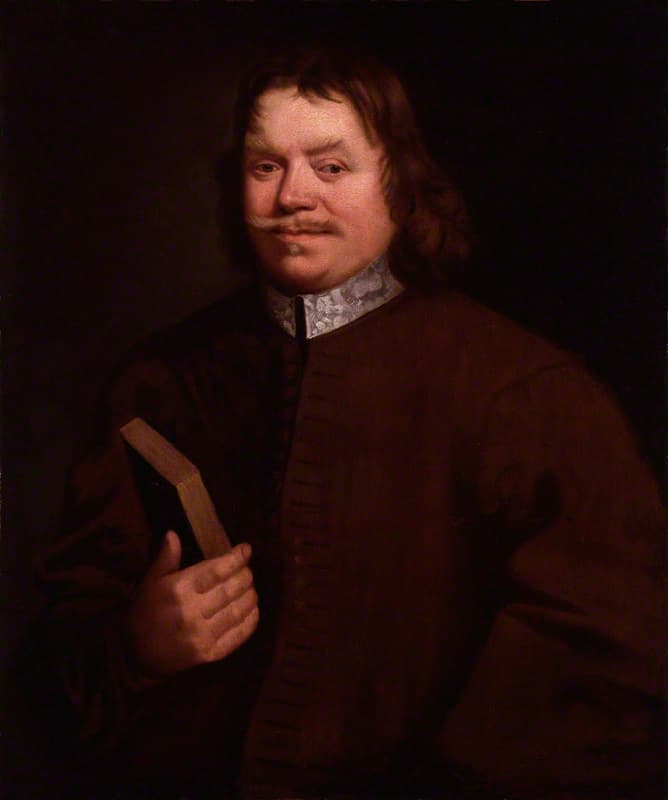
1666 · Story · Shame and Guilt
Grace Abounding
Grace Abounding to the Chief of Sinners is the book in which John Bunyan told the story of his own conversion.
Bunyan sent the book from prison to the people he had taught as "a drop of that honey that I have taken out of the carcase of a lion".
This is a trustworthy saying, worthy of full acceptance: Christ Jesus came into the world to save sinners, of whom I am the worst.
- When
- 1628 to 1688 AD
Summary
Bunyan's guilt fastened on single verses of Scripture, which seized him one after another and either condemned or comforted him. The answer came from Scripture as well, and it turned his eyes from himself to Christ. Readers have taken his torments as the conviction of sin that leads to conversion, and some, since William James, as the distress of a troubled mind.
- John Bunyan (1628 to 1688) was a brazier of Elstow in Bedfordshire who became the pastor of a nonconformist congregation at Bedford.
- The fear that he had given Christ up, and the account of Esau's lost blessing in Hebrews 12, held him in despair.
- His peace came when he saw that his righteousness stood before God in Christ and could not be changed by his own changing feelings.
- He spent twelve years in the county gaol at Bedford, from 1660 to 1672.
A Book Written in Bedford Gaol
The title borrows Paul's description of himself in 1 Timothy 1:15.
This study asks how a man convinced that his sin could never be forgiven came to rest in Christ, as Bunyan tells it in his own words. His account belongs to the trial of shame and guilt, because guilt is the burden the book describes from its first pages to its last.
It follows the book's own order and sets out how readers since have judged his torments. It also gives the dates of his life and the doctrine on which his relief turned.
The Religious Tract Society edition of 1905 prints the text of the eighth edition, which Bunyan corrected a few weeks before he died, in 339 numbered paragraphs, by which the book is cited.
Bunyan's Life in Dates
The dates run from his baptism at Elstow in 1628 to his death in London in 1688.
Grace Abounding appeared in the sixth year of Bunyan's imprisonment.
To scale: 11 of 11 stops dated; a mark that would lie on another stands in a lane under the axis.
- Bunyan is baptized at Elstow, the month of his birth30 November 1628 ADknownThe Elstow parish register, as the Dictionary of National Biography reports it
- His mother dies, and his father marries again within two monthsJune 1644 ADknownThe Dictionary of National Biography
- He serves as a soldier in the civil war1644 ADprobableThe Dictionary of National Biography, which judges the parliamentary side more likely
- His years of spiritual conflict end and he joins the congregation at Bedford1653 ADprobableThe Dictionary of National Biography; A Continuation of the Author's Life gives 1655
- He is arrested while leading a meeting at Samsell, by Harlington12 November 1660 ADknownBunyan's own Relation of his imprisonment
- Grace Abounding to the Chief of Sinners is published1666 ADknownThe Dictionary of National Biography
- He is released for a short time and arrested again1666 ADprobableThe Dictionary of National Biography and A Continuation of the Author's Life
- The Bedford congregation calls him as its pastor21 January 1672 ADprobableThe Dictionary of National Biography; A Continuation of the Author's Life gives 12 December 1671
- He leaves prison, twelve years after his first committal1672 ADknownThe Dictionary of National Biography
- The first edition of The Pilgrim's Progress appears1678 ADknownThe Dictionary of National Biography
- He dies at the house of John Strudwick in London31 August 1688 ADknownThe Dictionary of National Biography and the note of the 1905 edition
A timeline of eleven dated events, each row giving its certainty and the source that fixes its date.
He is released for a short time and arrested again, The Bedford congregation calls him as its pastor, He leaves prison, twelve years after his first committal, The first edition of The Pilgrim's Progress appears, He dies at the house of John Strudwick in London
The Story Told in Order
Four scenes take Bunyan from a Sabbath game to a field where his fear left him.
A voice in the middle of a gameGrace Abounding, paragraphs 20 to 24
The parson of his parish once preached on the evil of breaking the Sabbath day with labour or sports, and Bunyan went home "with a great burthen upon my spirit". Before he had finished his dinner the trouble left him, and he went back to his sports (paragraphs 20 and 21).
In a game of cat that same day, as he was about to strike the second blow, "a voice did suddenly dart from heaven into my soul". It asked whether he would leave his sins and go to heaven or have his sins and go to hell. He concluded that it was too late for him and went back to his play in despair (paragraphs 22 to 24).
The temptation to sell ChristGrace Abounding, paragraphs 135 to 140
Later a thought ran through his mind at meals and at work: "Sell Christ for this, or sell Christ for that; sell Him, sell Him". He resisted it in his mind and even with his hands and elbows (paragraphs 135 to 137). One morning in bed, worn out with resisting, he felt the words "Let Him go, if He will" pass through his heart and believed he had consented.
"Now was the battle won," he writes, "and down fell I as a bird that is shot from the top of a tree, into great guilt, and fearful despair" (paragraph 140).
Esau's lost blessingGrace Abounding, paragraphs 141 to 145
See to it that no one is sexually immoral, or is godless like Esau, who for a single meal sold his birthright. For you know that afterward, when he wanted to inherit the blessing, he was rejected. He could find no ground for repentance, though he sought the blessing with tears.Bunyan took Esau's sale of his birthright as a picture of what he had done, and the verse that follows it as his sentence.
Bunyan describes the weight that passage laid on him.
“Now was I as one bound, I felt myself shut up unto the judgment to come; nothing now, for two years together, would abide with me, but damnation, and an expectation of damnation.”
John Bunyan · Grace Abounding to the Chief of Sinners · on Hebrews 12:16 to 17English Puritan
Relief came for two or three hours when the sentence "The blood of Christ remits all guilt" rushed in on him under a hedge, and then he sank again (paragraphs 143 and 144). The verse about Esau, he says, "would lie all day long, all the week long" in his mind, and all the year long (paragraph 145).
A sentence in the fieldGrace Abounding, paragraphs 228 to 230
By paragraph 228 only "the hinder part of the tempest" remained, though "Every little touch would hurt my tender conscience". Then, as he passed through a field, a sentence fell upon his soul which told him that his righteousness was in heaven (paragraph 229).
"Now did my chains fall off my legs indeed," he wrote, and he went home rejoicing. There he searched for the sentence and "could not find such a saying", and his heart began to sink until 1 Corinthians 1:30 came to his mind (paragraph 230).
Prison and The Pilgrim's Progress
The Pilgrim's Progress followed Grace Abounding and carries its burden to the cross.
At his trial the court sentenced him to banishment because he refused to conform to the worship of the Church of England (paragraph 319). In The Pilgrim's Progress the pilgrim Christian carries a burden on his back. Then, "just as Christian came up with the cross, his burden loosed from off his shoulders, and fell from off his back".
His Righteousness in Christ
Bunyan's relief turned on where he looked for his righteousness.
He saw with the eyes of his soul "Jesus Christ at God’s right hand", and that God could never say of him that he lacked righteousness, "for my righteousness was Jesus Christ Himself" (paragraph 229).
It is because of Him that you are in Christ Jesus, who has become for us wisdom from God: our righteousness, holiness, and redemption.This is the verse that confirmed the sentence Bunyan could not find, since it names Christ Jesus as our righteousness.
He compared the graces he could see in himself to small coins in a purse while the gold stays at home: "Oh! I saw my gold was in my trunk at home! In Christ my Lord and Saviour" (paragraph 232). The doctrine he describes, Christ's righteousness counted to the believer, is called imputation.
Conviction or a Troubled Mind?
Two readings of Bunyan's years of fear, with their holders and the objection each must answer.
The conviction of sin that leads to conversionJohn Bunyan; A Continuation of the Author's Life; Edmund Venables
Bunyan himself read his story so, and in the preface he calls the book a relation of "my castings down, and risings up: for He woundeth, and His hands make whole".
The Continuation printed with the book says that "he was sensibly convicted of the wicked state of his life, and converted". Edmund Venables wrote in the Dictionary of National Biography (1886) that at the end of the conflict "His temptations ceased, his spiritual conflict was over".
The objection is that Bunyan himself says that he once took the devil's impulses for commands from God, so by his own account some of what troubled him came from the tempter (paragraph 138).
The distress of a troubled mindWilliam James
William James, in The Varieties of Religious Experience (1902), read the book in his lectures on the sick soul. He called Bunyan "sensitive of conscience to a diseased degree, beset by doubts, fears, and insistent ideas". In his lecture on the divided self he added that Bunyan's "life was turned to active use".
The objection is that James read the book from Bunyan's own words alone, more than two centuries later. Bunyan dates the end of his terror to a truth he found in Scripture, after which he lived "very sweetly at peace with God through Christ" (paragraph 231).
A reader whose guilt or despair will not lift should seek pastoral and medical care beside prayer.
Grace to the Chief of Sinners
Bunyan closed his preface with a word to readers in despair.
He reminded the congregation at Bedford of the barns and stables where God had visited their souls, and of the word on which the Lord had caused them to hope.
“if you have sinned against light, if you are tempted to blaspheme, if you are drowned in despair, if you think God fights against you, or if heaven is hid from your eyes; remember it was thus with your father; but out of them all the Lord delivered me.”
John Bunyan · Grace Abounding to the Chief of Sinners, the preface · on 2 Timothy 3:11English Puritan
The grace his title claims for himself is the grace he holds out to them.
Sources
Scripture is the Berean Standard Bible.
- John Bunyan, Grace Abounding to the Chief of Sinners (first edition London, 1666), in the Religious Tract Society edition (London, 1905), which prints the eighth edition, with the author's preface and his Relation of his imprisonment.
- A Continuation of the Author's Life, bound with the same 1905 London printing of Grace Abounding, with the editor's note on the date of his death.
- Edmund Venables, Bunyan, John, in the Dictionary of National Biography, volume 7 (London, 1886), pages 275 to 279.
- John Bunyan, The Pilgrim's Progress from This World to That Which Is to Come (first edition London, 1678)
- William James, The Varieties of Religious Experience: A Study in Human Nature (1902), Lectures VI and VII, The Sick Soul, and Lecture VIII, The Divided Self.
- John Bunyan, Grace Abounding to the Chief of Sinners (1666), paragraph 142 and the preface.
Keep Studying
Studies1
In this trial6
People and groups2
Doctrines1