
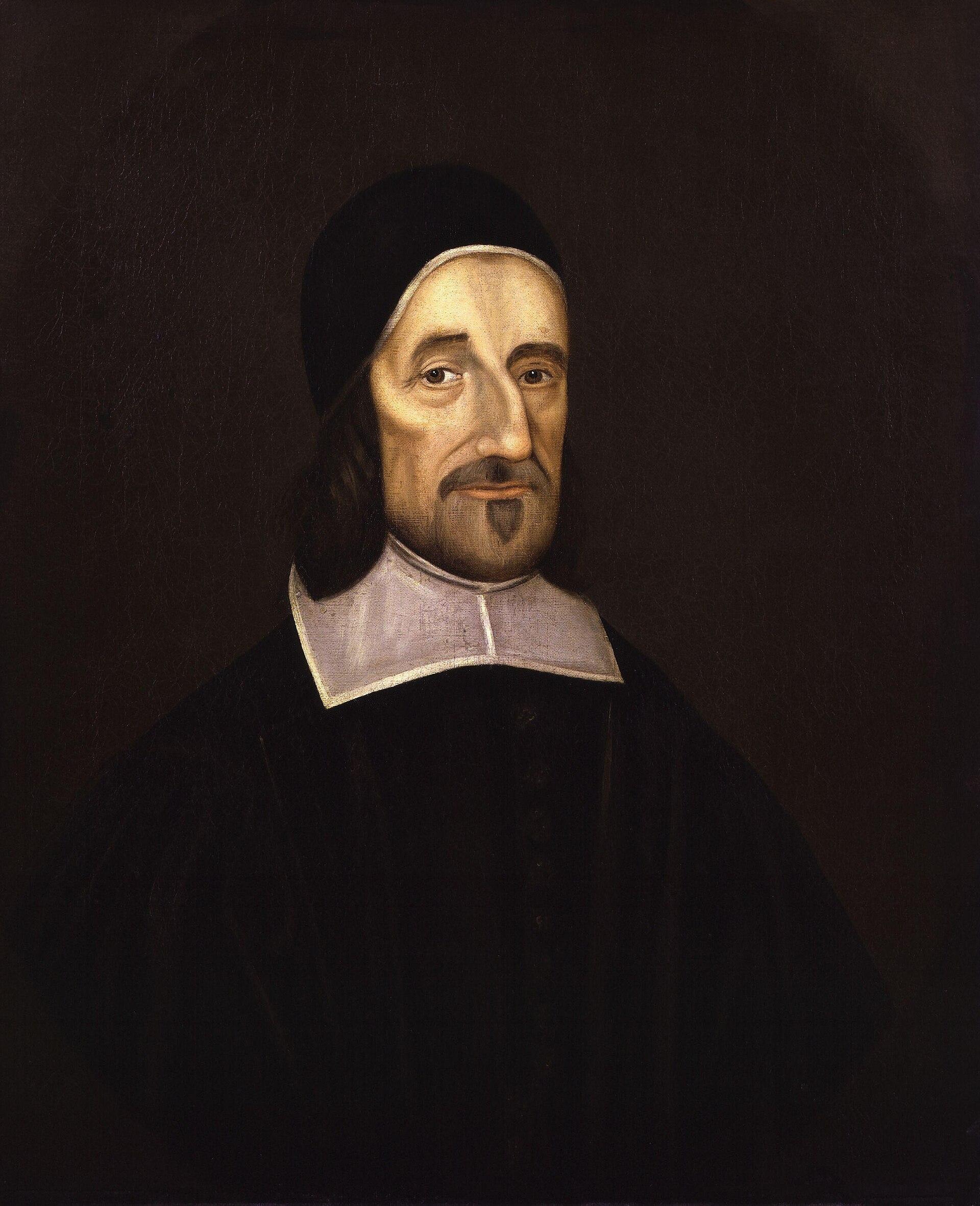
Robert White, Richard Baxter, 1670. Public domain.
Kidderminster and London, to 1691 · Person · Featured Study
Richard Baxter
He catechized the families of Kidderminster house by house and stood trial before Judge Jeffreys in 1685.
When he came to the town, about one family in a street called on God. When he left, some streets had no poor family that did not.
Keep watch over yourselves and the entire flock of which the Holy Spirit has made you overseers. Be shepherds of the church of God, which He purchased with His own blood.
- Born
- 12 November 1615 at Rowton in Shropshire
- Died
- 8 December 1691 in London
- Family
- wife: Margaret Charlton
- Places
- Rowton, Eaton-Constantine, Dudley, Bridgnorth, Kidderminster, Acton, London
Summary
The Bishop of Worcester ordained Richard Baxter about 1638. In 1641 he came to preach in a market town of Worcestershire. War took him away as a chaplain to Colonel Whalley's regiment. He came back for about fourteen years of preaching and of teaching families at home. He wrote a book to show other ministers how. He refused a bishopric in 1660, and in 1662 he left his place in the Church of England.
- His own story of his life came out in 1696, after his death.
- He kept writing through years of illness, and a book of his brought him to trial.
- The account of Kidderminster's change comes from his own pen.
The Text of His Book
Acts 20:28 is the charge he expounded to the ministers of Worcestershire, and Acts 20:20 names the method.
He prepared The Reformed Pastor for a day of humiliation of the Worcestershire ministers at Worcester, in December 1655. Its first chapter is headed with the verse. He printed it as a call to take the work of private instruction into the houses of the parish.
The question of this life is what one sick man could do in one town with a catechism and two days a week. It is also how far his own report of it can be trusted.
I did not shrink back from declaring anything that was helpful to you as I taught you publicly and from house to house,Paul taught from house to house, which is what Baxter set out to do.
The Life in Order
Nearly every date comes from Baxter's own narrative as William Orme printed it in 1831.
His Kidderminster years were broken by the war.
- 12 November 1615He was born at Rowton in ShropshireOrme
- About 1638Bishop Thornborough ordained him at Worcester, and he took the school at DudleyOrme
- April 1641He was appointed lecturer at KidderminsterOrme
- June 1645He visited Naseby Field two days after the battle, and then joined Whalley's regimentBaxter, in Orme
- After a bleeding from the noseHe lay ill at Rous-Lench and wrote The Saints' Everlasting RestBaxter, in Orme
- April 1656He signed the dedication of The Reformed PastorThe 1860 reprint
- 1660He declined the bishopric of HerefordBaxter, in Orme
- 1662He gave up his pulpit before the Act of Uniformity took effectBaxter, in Orme
- 10 September 1662He married Margaret Charlton in Bennet-Fink churchBaxter, in Orme
- 1685He stood trial before Judge Jeffreys for his Paraphrase on the New TestamentOrme
- 24 November 1686A warrant discharged him from the King's Bench prisonOrme
- 8 December 1691He died about four in the morningOrme
Each step of the life stands with its witness.
1660, 1662, 10 September 1662, 1685, 24 November 1686, 8 December 1691
From Rowton to the Charterhouse Yard
He tells it himself through most of its length, and his friends finish it.
He grew up at Eaton-Constantine, where a reader of eighty who never preached held two livings and his sight was failing. Baxter was offered the school at Dudley about 1638, went to Worcester and took orders, and moved on to Bridgnorth as an assistant.
Richard Baxter came to Kidderminster in 1641 as a young minister in a rough weaving town, and stayed long enough to change it. His method was plain. He and his assistant worked through the parish register household by household. They spent an hour with each family, roughly fourteen families a week, until they had covered some eight hundred homes a year. He wrote The Reformed Pastor to explain it to other ministers, and pastors have been reading it ever since.
Then the war came and broke that ministry in two. After Naseby he went to Cromwell's army to find his friends, and he was troubled to find soldiers disputing against the king and the church. He took a chaplaincy with Whalley's regiment to reason with them, and he argued with them until his health broke.
He was often ill and often expected to die, which is how The Saints' Everlasting Rest got written. By his account he bled a gallon of blood through the nose, and he wrote the book at Sir Thomas Rous's house at Rous-Lench. He came back to Kidderminster and worked there until 1660.
When the Act of Uniformity came in 1662 he refused to conform and lost his living along with roughly two thousand other ministers. Bishop Morley silenced him at Kidderminster, and Sir Ralph Clare helped to keep him from returning. He married Margaret Charlton, a convert of his preaching, that September, and they moved between London and Acton.
He kept writing anyway. In 1685 an aging Baxter was hauled before Judge Jeffreys and jailed for eighteen months on a charge of libeling the church. After his release he preached and wrote from a house in the Charterhouse Yard until he could not rise.
The Trial before Jeffreys
A letter from one who was present, and Calamy's report, are the only accounts Orme could find.
The charge rested on passages of his Paraphrase on the New Testament. Orme says Sir Roger L'Estrange and others picked them out and applied them to the bishops. Baxter was about seventy and in constant pain.
When he tried to speak, the Lord Chief Justice called him an old fellow and an old knave who had written books enough to load a cart. He also called Baxter a hypocritical villain, and he told Baxter's counsel Pollexfen that he should not sit there to hear him preach.
Baxter was fined five hundred marks, to lie in prison until he paid it and be bound to good behaviour for seven years. Orme says Jeffreys proposed a whipping through the city and his brother judges would not agree.
In Their Own Words
The five sayings come from a poem, the preface to his book, his own narrative and his deathbed.
Richard Baxter (1615 to 1691)
Poetical Fragments (London, 1681), Love Breathing Thanks and Praise
As a dying man to dying men
“Still thinking I had little time to live, My fervent heart to win mens Souls did strive. I Preach'd, as never sure to Preach again, And as a dying man to dying men!”
Puritan
About this saying1 paragraph
He printed this in Poetical Fragments in 1681, looking back on his preaching.
Richard Baxter
Gildas Salvianus: The Reformed Pastor, the preface
More success than the pulpit
“And I find more outward signs of success with most that come, than of all my public preaching to them.”
Puritan
About this saying1 paragraph
He wrote this in the preface to The Reformed Pastor of 1656, of the catechizing at Kidderminster.
Richard Baxter
Reliquiae Baxterianae, part 1, section 136
A hundred families singing
“On the Lord's days there was no disorder to be seen in the streets; but you might hear a hundred families singing psalms and repeating sermons as you passed through them.”
Puritan
About this saying1 paragraph
He looks back here on the town as it stood before 1660, and Orme gives it in modern spelling.
Richard Baxter
Reliquiae Baxterianae, as Orme gives the narrative of 1660
His answer to Colonel Birch
“I told him that I was resolved never to be bishop of Hereford, and that I did not think I should ever see cause to take any bishopric”
Puritan
About this saying1 paragraph
Birch came to him privately in 1660 to learn whether he would take a bishopric.
Richard Baxter
His last words, as a friend at his bedside recorded them, the account of his death
His last words
“The Lord teach you how to die.”
Puritan
About this saying1 paragraph
A friend at his bedside in December 1691 recorded these, and Orme prints the account.
The People Around Him
The witnesses name those who helped him, those who silenced him and the woman who married him.
His friends and his opponents both held office.
| Person | Tie to Baxter | The witness |
|---|---|---|
| Bishop Thornborough | He ordained Baxter at Worcester. | Orme |
| Colonel Edward Whalley | He took Baxter as chaplain to his regiment. | Baxter, in Orme |
| Oliver Cromwell | He sent for Baxter to speak with him. | Baxter, in Orme |
| Sir Thomas Rous | He took Baxter in during the long illness. | Baxter, in Orme |
| Richard Serjeant | He served Kidderminster in Baxter's absence and then worked as his assistant. | Baxter, in Orme |
| Margaret Charlton | She married him in 1662. | Baxter, in Orme |
| Bishop Morley | He silenced Baxter and took the Kidderminster lecture in hand. | Baxter, in Orme |
| Sir Matthew Hale | He lived near Baxter at Acton and befriended him. | Baxter, in Orme |
| George Jeffreys | He tried Baxter in 1685. | Calamy and a letter, in Orme |
Bishop Morley, Sir Matthew Hale, George Jeffreys
The Places of His Life
His life runs from Shropshire and Worcestershire to the army's quarters and to London.
Kidderminster held his chief work, and London and Acton his later years.
| Place | What the witnesses say | The witness |
|---|---|---|
| Rowton | He was born there and spent his first ten years with his grandfather. | Orme |
| Eaton-Constantine | His father's home was there, and the reader there was eighty. | Orme |
| Dudley | He taught in the new school about a year. | Orme |
| Bridgnorth | His ministry began there. | Orme |
| Kidderminster | He had to build five galleries in its church. | Baxter, in Orme |
| Naseby | After the battle there he went among the soldiers. | Baxter, in Orme |
| Acton | He wrote there in the years of silence. | Baxter, in Orme |
| The King's Bench | He lay in that prison until the warrant of November 1686. | Orme |
| The Charterhouse Yard | He moved there in February 1687. | Orme |
Acton, The King's Bench, The Charterhouse Yard
Why the House Mattered
He argued that conversation in the home reached what the sermon could not.
His narrative gives the procedure. The minister hears each person recite the catechism, asks what the words mean, and urges the practice. If someone is stalled by ignorance or shyness, he stops asking and turns to instruction.
His reason was practical. A man who comes on purpose, he wrote, will let the minister examine him more closely than one met by chance. Before others, plain dealing is not taken so well. By his report in the preface, no family had yet refused to come.
How the Key Verse Was Taught
John Wesley and the commentary of Jamieson, Fausset and Brown read the charge to the elders.
John Wesley (1703 to 1791)
Explanatory Notes upon the New Testament
John Wesley wrote what the blood says of how precious the church is.
“To do this is the peculiar work of the Holy Ghost: to feed the Church of God - That is, the believing, loving, holy children of God; which he hath purchased - How precious is it then in his sight! with his own blood - For it is the blood of the only begotten Son of God, 1 John i, 7.”
on Acts 20:28Evangelical
Jamieson, Fausset & Brown (1802 to 1910)
Commentary Critical and Explanatory on the Whole Bible
Jamieson, Fausset and Brown weighed what the verse says of Christ's death and His person.
“And as the sacrificial atoning character of Christ's death is here plainly expressed, so His supreme dignity is implied as clearly by the second reading as it is expressed by the first.”
on Acts 20:28Reformed
What the Witnesses Leave Open
Readers differ on the town's change, the count of families, his leaving and the record of his trial.
How far the town changedBaxter himself
The count of families at prayer, the galleries and the singing all come from his own narrative. Each rests on his word alone.
How many families a weekthe Reformed Pastor; the Reliquiae Baxterianae
The narrative as Orme prints it gives the smaller number. The preface of 1656 says about fifteen or sixteen.
Whether he stopped too soonBaxter; his critics; William Orme
He ceased three months before Bartholomew's Day of 1662, and he says many censured him for a while. He gives his reasons, chiefly that all should know in time he would not conform. Orme writes that most will think he carried his scruples too far.
The record of the trialEdmund Calamy; an unnamed letter-writer; William Orme
Orme says no printed report exists beyond Calamy's abridgment, and that the State Trials merely copies it. He adds a letter from someone present, sent to Sylvester, and says it agrees with Calamy as far as it runs.
Books to Read Next
Reliquiae Baxterianae
Richard Baxter, edited by Matthew Sylvester · 1696
This is his own narrative of his life and times.
Read the Reliquiae free at the Internet ArchiveGildas Salvianus: The Reformed Pastor
Richard Baxter · 1656
This is the book on catechizing, on Acts 20:28.
Read an 1860 reprint free at the Internet ArchiveThe Life and Times of the Rev. Richard Baxter
William Orme · 1831
Orme sets the narrative in order, in modern spelling.
Read Orme free at the Internet ArchiveWhat Baxter Left
Baxter left a method of teaching families at home, his book on it, and his long record of a divided age.
Sources
Scripture is the Berean Standard Bible.
- The Holy Bible, Berean Standard Bible (read 2026)
- William Orme, The Life and Times of the Rev. Richard Baxter, volume 1 (Boston: Crocker and Brewster, 1831), printing Baxter's narrative from the Reliquiae Baxterianae of 1696.
- Richard Baxter, Gildas Salvianus: The Reformed Pastor (1656), in an 1860 reprint.
- Richard Baxter, Reliquiae Baxterianae (London, 1696), part 1, section 136.
- John Wesley, Explanatory Notes upon the New Testament, on Acts 20:28.
- Jamieson, Fausset and Brown, Commentary Critical and Explanatory on the Whole Bible, on Acts 20:28.
Keep Studying
Read it1
People and groups11
Subjects1
Church history1