
Numbers 21:5
in Numbers 21and spoke against God and against Moses: “Why have you led us up out of Egypt to die in the wilderness? There is no bread or water, and we detest this wretched food!”
BSB
The same verse in ASV and KJV ▾
ASV
And the people spake against God, and against Moses, Wherefore have ye brought us up out of Egypt to die in the wilderness? for there is no bread, and there is no water; and our soul loatheth this light bread.
KJV
And the people spake against God, and against Moses, Wherefore have ye brought us up out of Egypt to die in the wilderness? for there is no bread, neither is there any water; and our soul loatheth this light bread.
⋯
This verse in Numbers 21
Commentary
13 notes on this verseThis light bread - הקלקל hakkelokel, a word of excessive scorn; as if they had said, This innutritive, unsubstantial, cheat - stomach stuff.
This site's exposition
the soul of the people was much discouraged
on Numbers 21:4-5
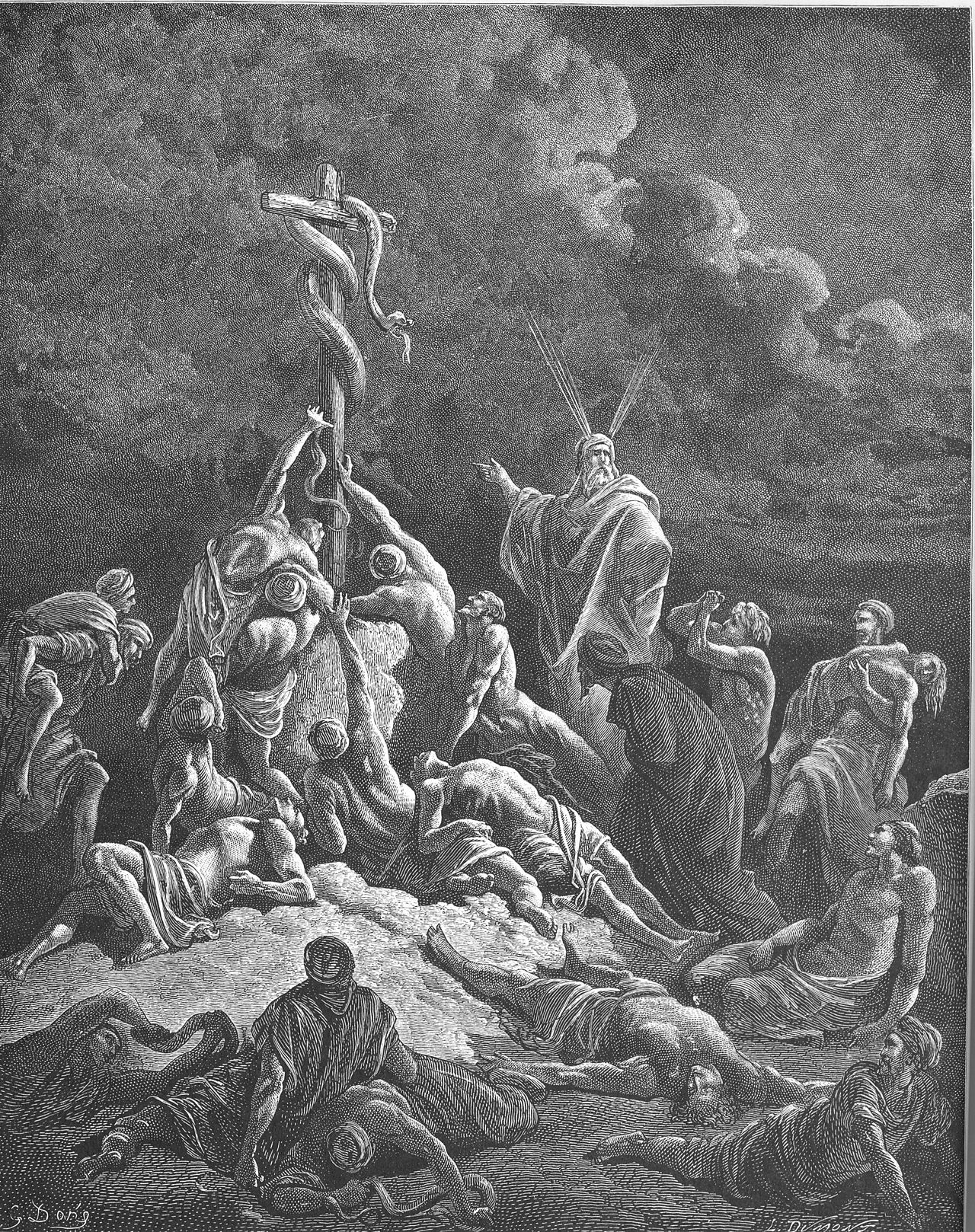
The long way around Edom is what Edom's refusal at 20:21 cost them, and it turns the march back south toward the Red sea. The complaint holds two things at once, that there is no bread and that they loathe the bread they have, since the light bread is the manna of Exodus 16. In Exodus a complaint of this kind was answered with food or water, and from Numbers 11:1 onward the same complaints are answered with fire, with plague, and here with serpents.
The record, by era
The Puritans and the Awakening5 voices
Against God - Against Christ, their chief conductor, whom they tempted, 1 Cor. x, 19. Thus contemptuously did they speak of Manna, whereas it appears it yielded excellent nourishment, because in the strength of it they were able to go so many and such tedious journeys.
Christ was lifted up by the rulers of the Jews, who were the successors of Moses. (3.) That which cured was shaped in the likeness of that which wounded. So Christ, though perfectly free from sin himself, yet was made in the likeness of sinful flesh ( Rom. viii.
quarantine:debris (2026-07-29) — unbalanced-parens
And the people spake against God,....
Thus those who have long enjoyed the means of grace are apt to surfeit even on the heavenly manna, and to call it light bread. But let not the contempt which some cast upon the word of God cause us to value it the less: it is the bread of life, substantial bread, and will nourish those who by faith feed upon it to eternal life, whoever calls it light bread.
That artillery is now turned against them which had formerly been made use of in their defence against the Egyptians. He that brought quails to feast them let them know that he could bring serpents to bite them; the whole creation is at war with those that are in arms against God. Their repentance and supplication to God under this judgment,
6 more voices on this verse
The Nineteenth Century6 voices
A commentator
Jamieson, Fausset & Brown1802–1910
Commentary Critical and Explanatory on the Whole Bible (1871)
proposed
our soul loatheth this light bread--that is, bread without substance or nutritious quality. The refutation of this calumny appears in the fact, that on the strength of this food they performed for forty years so many and toilsome journeys.
quarantine:debris (2026-07-29) — starts-lowercase
I HAVE frequently expounded to you the type of the bronze serpent as our Lord interprets it in the third of John. I thought it meet, tonight, to take that type in its connection and look at the original circumstances which led to the setting of it up—for while the general doctrine of looking for salvation to Christ as the bronze serpent is always to be preached and is most usefully set forth in the midst of the unconverted—yet I take it that its original institution teaches us much which ought not to be overlooked.
I HAVE frequently expounded to you the type of the bronze serpent as our Lord interprets it in the third of John. I thought it meet, tonight, to take that type in its connection and look at the original circumstances which led to the setting of it up—for while the general doctrine of looking for salvation to Christ as the bronze serpent is always to be preached and is most usefully set forth in the midst of the unconverted—yet I take it that its original institution teaches us much which ought not to be overlooked. It is very clear that this type has its first voice to the people of God, for it was among Israel—among the nominal people of God—that this bronze serpent was first needed and first set up. And while the instruction which it gives is wide as the universe, for whoever looks shall live, nevertheless it has an inner circle to which it, first of all, addresses itself—the professed members of the Church of God. The Book of Numbers might be called, without any impropriety, "Moses' Pilgrim's Progress." It contains a full account of the progress of the pilgrims through the wilderness until they came to the promised land. And, like Bunyan's "Pilgrim's Progress," it is not only a history of any one person or nation, but it is the picture of the life of all God's people. Probably no one among us will pass through all the troubles of the Israelites, so as to become in one person an epitome of all wilderness experience, and yet even this may be, for so it was with David, and so it has been with others by whom the Lord would instruct His Church. This, however, is exceptional. But, take the whole of us together as the Church of God, and you will find that our lives are mirrored, pictured and foreseen in the travels of God's chosen people from the land of Egypt to Canaan. I am afraid that many of us can see ourselves even in the passage before us.
A commentator
Charles Spurgeon1834–1892
The Metropolitan Tabernacle Pulpit, Sermon No. 3214: “Two Wilderness Incidents” (lightly modernized text, CCEL edition) · Written before 1892.
proposed
OUR text is a long one, but we must have it all in order to get the sense of the passage, so as to contrast the two wilderness incidents which are here mentioned and to learn how we may use them to our own spiritual profit. I. So, in the first place, LET US CONTRAST THESE TWO WILDERNESS INCIDENTS. First of all, let us examine the details of the first incident. We learn, from this part of the narrative, that the children of Israel were in real danger.
A commentator
Charles Spurgeon1834–1892
The Metropolitan Tabernacle Pulpit, Sermon No. 3214: “Two Wilderness Incidents” (lightly modernized text, CCEL edition) · Written before 1892.
proposed
OUR text is a long one, but we must have it all in order to get the sense of the passage, so as to contrast the two wilderness incidents which are here mentioned and to learn how we may use them to our own spiritual profit. I. So, in the first place, LET US CONTRAST THESE TWO WILDERNESS INCIDENTS. First of all, let us examine the details of the first incident. We learn, from this part of the narrative, that the children of Israel were in real danger. They were attacked by a ferocious foe who, being probably aware that he was doomed to destruction, determined to anticipate the contest by fighting against the Israelites while they were unprepared, and so injuring them as much as he could. Arad appears to have been a king of some considerable power and his skill in warfare is proved by the fact that he was at least partially successful against the Israelites, for he, "took some of them prisoners." So that the people were in real danger. And have you not noticed, dear Friends, that God's people often behave best when they are in their worst case? Usually, when they are in imminent peril, they cry to their God to deliver them, and so they soon obtain relief—but when they make trouble for themselves by a willful fretfulness of spirit—then it is that they lose their confidence in God and, instead of playing the man, they play the fool! You must have noticed how often accidents happen to people when they are engaged in play rather than when they are at work. I always warn our friends to be especially careful when they are leaving for a holiday, for I have observed how frequently they come back with signs of having suffered injuries of one kind or another, though they have been perfectly well while occupied with their usual avocations. It is very much the same in spiritual things.
A commentator
Albert Barnes1798–1870
Notes, Explanatory and Practical, on the Old and New Testaments (1832-1869)
proposed
This light bread - i. e. “this vile, contemptible bread.”
The words behind it
18 Hebrew wordsEvery Hebrew word of this verse in the order it stands, with what it means and the door to its own study. The last column counts the times a word stands in the whole Bible: the rarer the word, the more the places it appears belong together.
| Hebrew | Sound | Meaning | Word study | In the Bible |
|---|---|---|---|---|
| וַיְדַבֵּ֣ר | vaydaber | and it spoke | H1696 → | 1141 times |
| הָעָ֗ם | haam | the people | H5971 → | 1873 times |
| בֵּֽאלֹהִים֮ | belohim | against God | H430 → | 2601 times |
| וּבְמֹשֶׁה֒ | uvemosheh | and against Moses | H4872 → | 765 times |
| לָמָ֤ה | lamah | <to> why? | H4100 → | 752 times |
| הֶֽעֱלִיתֻ֙נוּ֙ | heelitunu | have you brought up us | H5927 → | 890 times |
| מִמִּצְרַ֔יִם | mimitzrayim | from Egypt | H4714 → | 641 times |
| לָמ֖וּת | lamut | to die | H4191 → | 839 times |
| בַּמִּדְבָּ֑ר | bamidbar | in the wilderness | H4057 → | 270 times |
| כִּ֣י | ki | for | H3588 → | 4482 times |
| אֵ֥ין | ʾein | there not | H369 → | 789 times |
| לֶ֙חֶם֙ | lechem | [is] food | H3899 → | 298 times |
| וְאֵ֣ין | veein | and there not | H369 → | 789 times |
| מַ֔יִם | mayim | [is] water | H4325 → | 581 times |
| וְנַפְשֵׁ֣נוּ | venafshenu | and self our | H5315 → | 754 times |
| קָ֔צָה | katzah | it loathes | H6973 → | |
| בַּלֶּ֖חֶם | balechem | <in> the food | H3899 → | 298 times |
| הַקְּלֹקֵֽל׃ | hakelokel | <the> worthless | H7052 → |
וַיְדַבֵּ֣רand it spoke
vaydaberH1696 →1141 times
הָעָ֗םthe people
haamH5971 →1873 times
בֵּֽאלֹהִים֮against God
belohimH430 →2601 times
וּבְמֹשֶׁה֒and against Moses
uvemoshehH4872 →765 times
לָמָ֤ה<to> why?
lamahH4100 →752 times
הֶֽעֱלִיתֻ֙נוּ֙have you brought up us
heelitunuH5927 →890 times
מִמִּצְרַ֔יִםfrom Egypt
mimitzrayimH4714 →641 times
לָמ֖וּתto die
lamutH4191 →839 times
בַּמִּדְבָּ֑רin the wilderness
bamidbarH4057 →270 times
כִּ֣יfor
kiH3588 →4482 times
אֵ֥יןthere not
ʾeinH369 →789 times
לֶ֙חֶם֙[is] food
lechemH3899 →298 times
וְאֵ֣יןand there not
veeinH369 →789 times
מַ֔יִם[is] water
mayimH4325 →581 times
וְנַפְשֵׁ֣נוּand self our
venafshenuH5315 →754 times
קָ֔צָהit loathes
katzahH6973 →
בַּלֶּ֖חֶם<in> the food
balechemH3899 →298 times
הַקְּלֹקֵֽל׃<the> worthless
hakelokelH7052 →
A shaded row is a word that stands 400 times or fewer in the Bible.
The walk
8 stopsEach card is a verse this one points to, and under it the verses that one points to in turn. Where several paths arrive at the same place, that place is listed first: the text keeps returning to it.
Through
Psalms 78:19They spoke against God, saying, “Can God really prepare a table in the wilderness?
it leads to
- Numbers 11:4
Meanwhile, the rabble among them had a strong craving for other food, and again the Israelites wept and said, “Who will feed us meat?
- Exodus 16:3
“If only we had died by the LORD’s hand in the land of Egypt!” they said. “There we sat by pots of meat and ate our fill of bread, but you have brought us…
- Exodus 16:8–10
And Moses added, “The LORD will give you meat to eat this evening and bread to fill you in the morning, for He has heard your grumbling against Him. Who are we? Your grumblings…
- Psalms 23:5
You prepare a table before me in the presence of my enemies. You anoint my head with oil; my cup overflows.
- Numbers 20:3
The people quarreled with Moses and said, “If only we had perished with our brothers before the LORD!
- Numbers 11:4
Through
Numbers 16:41The next day the whole congregation of Israel grumbled against Moses and Aaron, saying, “You have killed the LORD’s people!”
it leads to
- Numbers 16:1–7
Now Korah son of Izhar, the son of Kohath son of Levi, along with some Reubenites—Dathan and Abiram, sons of Eliab, and On son of Peleth—conducted
- Psalms 106:25–48
They grumbled in their tents and did not listen to the voice of the LORD.
- Psalms 106:23
So He said He would destroy them— had not Moses His chosen one stood before Him in the breach to divert His wrath from destroying them.
- Numbers 16:1–7
Where this verse is studied
On this page
Studies3
On this verse
On this chapter
About Numbers
Who and where
2 names in this verse with a page on the site.
This page draws on 9 works. Open the list of works
This page draws on Adam Clarke, Commentary on the Bible; Albert Barnes, Notes, Explanatory and Practical, on the Old and New Testaments (1832-1869); Charles Spurgeon, The Metropolitan Tabernacle Pulpit, Sermon No. 1722: “The First Setting Up of the Bronze Serpent” (lightly modernized text, CCEL edition); Charles Spurgeon, The Metropolitan Tabernacle Pulpit, Sermon No. 3214: “Two Wilderness Incidents” (lightly modernized text, CCEL edition); Jamieson, Fausset & Brown, Commentary Critical and Explanatory on the Whole Bible; John Gill, Exposition of the Old Testament (1748-1763); John Wesley, Explanatory Notes upon the Old Testament; Keil and Delitzsch, Biblical Commentary on the Old Testament: The Pentateuch and Matthew Henry, Commentary on the Whole Bible.