
Matthew 2:13
in Matthew 2When the Magi had gone, an angel of the Lord appeared to Joseph in a dream. “Get up!” he said. “Take the Child and His mother and flee to Egypt. Stay there until I tell you, for Herod is going to search for the Child to kill Him.”
BSB
The same verse in ASV and KJV ▾
ASV
Now when they were departed, behold, an angel of the Lord appeareth to Joseph in a dream, saying, Arise and take the young child and his mother, and flee into Egypt, and be thou there until I tell thee: for Herod will seek the young child to destroy him.
KJV
And when they were departed, behold, the angel of the Lord appeareth to Joseph in a dream, saying, Arise, and take the young child and his mother, and flee into Egypt, and be thou there until I bring thee word: for Herod will seek the young child to destroy him.
⋯
This verse in Matthew 2
Commentary
25 notes on this verseAnd when they were departed,.... That is immediately, or as soon as they were gone, or in a very little time after, probably the same night, behold, the Angel of the Lord appeareth to Joseph in a dream; it is very likely the same angel who appeared to him in such sort, Mat 1:20 "saying arise", awake out of sleep, and rise from thy bed directly, and take the young child and his mother. The angel does not say take thy wife and son; for though Mary was properly his wife, yet Christ was not properly his son.
This site's exposition
flee into Egypt
on Matthew 2:13-15
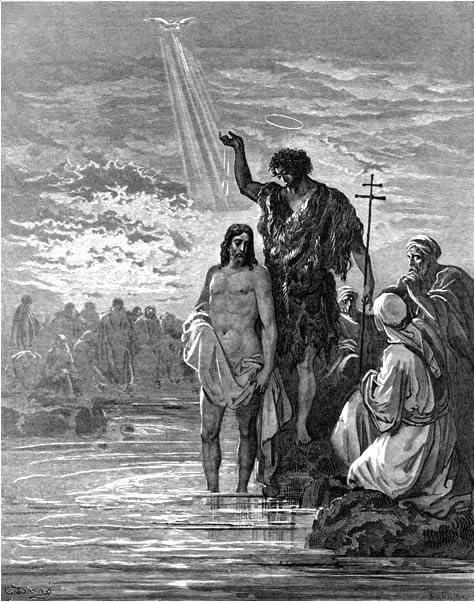
Flee into Egypt reverses the oldest road in Israel's memory, and verse 15 makes the reversal the point: that it might be fulfilled, Out of Egypt have I called my son. The citation is Hosea 11:1, and in Hosea the son is Israel in the exodus; Matthew is not misreading the prophet but stating his hermeneutic openly, that Jesus is the true Israel who retraces the nation's steps and gets them right, down into Egypt under threat of a child-killing king, and out again at God's call. The exposition states this as Matthew's own typology, the same pattern that carries him through the water at 3:13-17 and into forty wilderness days at 4:1-11 answering forty years, armed with three quotations from Deuteronomy's wilderness chapters.
The record, by era
The Church Fathers5 voices
(Vers. 13, 14.) Behold, an angel of the Lord appeared to Joseph in a dream, saying: Rise and take the child and his mother, and flee into Egypt, and stay there until I tell you. For it will come to pass that Herod will seek the child to destroy him. So Joseph rose and took the child and his mother by night, and went to Egypt; and he stayed there until the death of Herod.
(Serm. 218. App.) Hear the sacrament of a great mystery. Moses before had shut up the light of day from the traitors the Egyptians; Christ by going down thither brought back light to them that sate in darkness. He fled that he might enlighten them, not that he might escape his foes. The miserable tyrant supposed that by the Saviour's coming he should be thrust from his royal throne. But it was not so; Christ came not to hurt others' dignity, but to bestow His own on others.
The first time when he would teach Joseph that she was lawfully espoused, the Angel called the Virgin his espoused wife; but after the birth she is only spoken of as the Mother of Jesus. As wedlock was rightfully imputed to her in her virginity, so virginity is esteemed venerable in her as the mother of Jesus.
In Joseph is figured the order of preachers, in Mary Holy Scripture; by the Child the knowledge of the Saviour; by the cruelty of Herod the persecution which the Church suffered in Jerusalem; by Joseph's flight into Egypt the passing of the preachers to the unbelieving Gentiles, (for Egypt signifies darkness;) by the time that he abode in Egypt the space of time between the ascension of the Lord and the coming of Anti Christ; by Herod's death the extinction of jealousy in the hearts of the Jews.
By this that the Angel appears always to Joseph in sleep, is mystically signified that they who rest from mundane cares and secular pursuits, deserve angelic visitations.
18 more voices on this verse
The Church Fathers8 voices
When he takes the Child and His mother to go into Egypt, it is in the night and darkness, when to return into Judæa, the Gospel speaks of no light, no darkness.
He says not, 'the Mother and her young Child,' but, the young Child and His mother; for the Child was not born for the mother, but the mother prepared for the Child. How is this that the Son of God flies from the face of man? or who shall deliver from the enemy's hand, if He Himself fears His enemies? First; He ought to observe, even in this, the law of that human nature which He took on Him; and human nature and infancy must flee before threatening power. Next, that Christians when persecution makes it necessary should not be ashamed to fly.
Rather, however, both the people and the patriarch, going down thither, and coming up thence, were together completing the type of this His return. Thus, as they went down to avoid death by famine, so He death by conspiracy. But whereas they on their arrival were for the time delivered from the famine, this man, when He had gone down, sanctified the whole land, by setting His foot thereon. At least it is observable how, in the midst of His humiliations, the tokens of His Godhead are disclosed. Thus, first of all, the angel saying, "Flee into Egypt," did not promise to journey with them, either in their descent or return; intimating that they have a great fellow-traveller, the Child that had been born; such an one as actually changed all things immediately on His appearing, and wrought so that His enemies should minister in many ways to this Economy. Thus magi and barbarians, leaving the superstition of their fathers, are come to worship: thus Augustus ministers to the birth at Bethlehem by the decree for the taxing; Egypt receives and preserves Him, driven from His home, and plotted against, and obtains a sort of first impulse towards her union unto Him; so that when in after-time she should hear Him preached by the apostles, she might have this at least to glory of, as having received Him first. And yet this privilege did belong unto Palestine alone; but the second proved more fervent than the first.
"And when they were departed, behold, an angel appeareth to Joseph in a dream, saying, Arise, and take the young Child and His mother, and flee into Egypt." There is something here worth inquiring into, both touching the magi, and touching the Child; for if even they were not troubled, but received all with faith, it is worthy of examination on our part, why they and the young Child are not preserved, continuing there, but they as fugitives go into Persia, He with His mother into Egypt. But what? should He have fallen into the hands of Herod, and having fallen, not have been cut off? Nay, He would not have been thought to have taken flesh upon Him; the greatness of the Economy would not have been believed. For if, while these things are taking place, and many circumstances are being ordered mysteriously after the manner of men, some have dared to say that His assumption of our flesh is a fable; in what degree of impiety would they not have been wrecked, had He done all in a manner becoming His Godhead, and according to His own power? As to the wise men, He sends them off quickly, at once both commissioning them as teachers to the land of the Persians, and at the same time intercepting the madness of the king, that he might learn that he was attempting things impossible, and might quench his wrath, and desist from this his vain labor. For not alone openly to subdue His enemies, but also to deceive them with ease, is worthy of His power.
And besides what I have said, there is another lesson also, which we are hereby taught, tending not slightly to true self-command in us. Of what kind then is it? To look from the beginning for temptations and plots. See, for instance, how this was the case even at once from His swaddling clothes. Thus you see at His birth, first a tyrant raging, then flight ensuing, and departure beyond the border; and for no crime His mother is exiled into the land of the barbarians: that thou, hearing these things (supposing thee thought worthy to minister to any spiritual matter, and then to see thyself suffering incurable ills, and enduring countless dangers), shouldest not be greatly troubled, nor say, "What can this be? yet surely I ought to be crowned and celebrated, and be glorious and illustrious for fulfilling the Lord's commandment:" but that having this example, thou mightest bear all things nobly, knowing that this especially is the order of all things spiritual, to have everywhere temptations in the same lot with them.
Now the angel having thus appeared, talks not with Mary, but with Joseph; and what saith he? "Arise, and take the young Child and His mother." Here, he saith not any more, "thy wife," but "His mother." For after that the birth had taken place, and the suspicion was done away, and the husband appeased, thenceforth the angel talks openly, calling neither child nor wife his, but "take the young Child and His mother, and flee into Egypt;" and he mentions the cause of the flight: "For Herod," saith he, "will seek the young Child's life." Joseph, when he had heard these things, was not offended, neither did he say, "The thing is hard to understand: Didst thou not say just now, that He should 'save His people?' and now He saves not even Himself: but we must fly, and go far from home, and be a long time away: the facts are contrary to the promise." Nay, none of these things doth he say (for the man was faithful): neither is he curious about the time of his return; and this though the angel had put it indefinitely thus: "Be thou there until I tell thee." But nevertheless, not even at this did he shudder, but submits and obeys, undergoing all the trials with joy. And this because God, who is full of love to man, did with these hardships mingle things pleasant also; which indeed is His way with regard to all the saints, making neither their dangers nor their refreshment continual, but weaving the life of all righteous men, out of both the one and the other. This very thing He did here also: for consider, Joseph saw the Virgin with child; this cast him into agitation and the utmost trouble, for he was suspecting the damsel of adultery. But straightway the angel was at hand to do away his suspicion, and remove his fears; and seeing the young child born, he reaped the greatest joy. […]
His flight then was not occasioned by fear but by what had come through the mystery of prophecy. The Evangelist planted the seed when he thus spoke: "Take the boy and his mother and flee into Egypt." And later, "that what was written might be …
Was it Herod seeking the child, or the devil working through Herod? When Herod saw the magi for himself, he imagined in his fantasy that they had fled their governors. For Christ, though bound in swaddling clothes, though busy at his mother's breast, though keeping …
The Medieval Church4 voices
Having showed how the Magi bore witness to the newborn Christ, the evangelist now shows how the Innocents gave testimony, not by speaking but by dying. In regard to this he does three things: first, he shows how Christ was concealed; secondly, the murder of …
And when they had departed, behold, the angel of the Lord appeareth to Joseph in a dream, saying, Arise, and take the young Child and His mother. Do you see now the reason why God permitted the Virgin to be betrothed? It is revealed to …
(Hom. in. Nat. Innocent.) The flight into Egypt signifies that the elect are often by the wickedness of the bad driven from their homes, or sentenced to banishment. Thus He, who, we shall see below, gave the command to His own, When they shall persecute you in one city, flee ye to another, first practised what He enjoined, as a man flying before the face of man on earth. He whom but a little before a star had proclaimed to the Magi to be worshipped as from heaven.
Here Matthew omits the day of purification when the first-born must be presented in the Temple with a lamb, or a pair of turtle doves, or pigeons. Their fear of Herod did not make them bold to transgress the Law, that they should not present the Child in the temple. As soon then as the rumour concerning the Child begins to be spread abroad, the Angel is sent to bid Joseph carry Him into Egypt. For when the true light withdraws, they who hate the light are in darkness, when it returns they are again enlightened.
The Puritans and the Awakening1 voice
Joseph, before his alliance to Christ, had not been wont to converse with angels as now. Note, those that are spiritually related to Christ by faith have that communion and correspondence with Heaven which before they were strangers to. Joseph is here told what their danger was: Herod will seek the young child to destroy him.
The Nineteenth Century5 voices
A commentator
Albert Barnes1798–1870
Notes, Explanatory and Practical, on the Old and New Testaments (1832-1869)
The angel appeareth to Joseph in a dream - See Mat 1:20. Flee into Egypt - Egypt is situated to the southwest of Judea, and is distant from Bethlehem perhaps about 60 miles. It was at this time a Roman province. There were many Jews there, who had a temple and synagogues (see the notes at Isa 19:18), and Joseph, therefore, would be among his own countrymen, and yet beyond the reach of Herod. The jurisdiction of Herod extended only to the River Sihon, or “river of Egypt,” and, of course, beyond that Joseph was safe from his designs.
A commentator
Jamieson, Fausset & Brown1802–1910
Commentary Critical and Explanatory on the Whole Bible (1871)
To "the house of bondage?" Well, it once was that. But Egypt was a house of refuge before it was a house of bondage, and now it has but returned to its first use. and be thou there until I bring thee word; for Herod will seek the young child to destroy him--Herod's murderous purpose was formed before the Magi had reached Bethlehem.
Let us observe in this passage how true it is that the rulers of this world are seldom friendly to the cause of God . The Lord Jesus comes down from heaven to save sinners, and at once we are told that Herod the king seeks to destroy him. Greatness and riches are a perilous possession for the soul. Those who seek to have them know not what they seek. They lead men into many temptations. They are likely to fill the heart with pride, and to chain the affections down to things below.
Let us observe in this passage how true it is that the rulers of this world are seldom friendly to the cause of God . The Lord Jesus comes down from heaven to save sinners, and at once we are told that Herod the king seeks to destroy him. Greatness and riches are a perilous possession for the soul. Those who seek to have them know not what they seek. They lead men into many temptations. They are likely to fill the heart with pride, and to chain the affections down to things below. “Not many mighty; not many noble are called.”“How hardly shall they that have riches enter into the kingdom of God.” ( 1 Corinthians 1:26 ; Mark 10:23 ) Do we envy the rich and great? Does our heart sometimes say, “Oh, that I had their place, and rank, and substance?” Let us beware of giving way to such feelings. The very wealth which we admire may be gradually sinking its possessors down into hell. A little more money might be our ruin. Like Herod, we might run into every excess of wickedness and cruelty. “Take heed and beware of covetousness.” “Be content with such things as ye have.” ( Luke 12:15 ; Hebrews 13:5 ) Do we think that Christ’s cause depends on the power and patronage of princes? We are mistaken. They have seldom done much for the advancement true religion; they have far more frequently been the enemies of the truth. “Put not your trust in princes.” ( Psalm 146:3 ) They who are like Herod are many. They who are like Josiah and Edward the Sixth of England are few. Let us observe for another thing how the Lord Jesus was a “Man of Sorrows,” even from His infancy . Trouble awaits Him as soon as He enters into the world. His life is in danger from Herod’s hatred. His mother and Joseph are obliged to take him away by night, and “flee into Egypt.”It was only a type and figure of all his experience upon earth.
Flee into Egypt - Many Jews had settled in Egypt; not only those who had fled thither in the time of Jeremiah, see Jeremiah 48; but many others who had settled there also, on account of the temple which Onias IV. had built at Heliopolis. Those who could speak the Greek tongue enjoyed many advantages in that country: besides, they had the Greek version of the Septuagint, which had been translated nearly 300 years before this time. Egypt was now a Roman province, and the rage of Herod could not pursue the holy family to this place. There is an apocryphal work in Arabic, called the Gospel of the infancy, which pretends to relate all the acts of Jesus and Mary while in Egypt. I have taken the pains to read this through, and have found it to be a piece of gross superstition, having nothing to entitle it to a shadow of credibility.
The words behind it
40 Greek wordsEvery Greek word of this verse in the order it stands, with what it means and the door to its own study. The last column counts the times a word stands in the whole Bible: the rarer the word, the more the places it appears belong together.
| Greek | Sound | Meaning | Word study | In the Bible |
|---|---|---|---|---|
| Ἀναχωρησάντων | anachoresanton | When were withdrawing | G402 → | 14 times |
| δὲ | de | then | G1161 → | 2765 times |
| αὐτῶν | auton | they | G846 → | 5565 times |
| ἰδοὺ | idou | behold | G2400 → | 200 times |
| ἄγγελος | angelos | an angel | G32 → | 175 times |
| κυρίου | kuriou | of [the] Lord | G2962 → | 711 times |
| φαίνεται | phainetai | appears | G5316 → | 30 times |
| κατ᾽ | kat᾽ | in | G2596 → | 468 times |
| ὄναρ | onar | a dream | G3677 → | 6 times |
| τῷ | to | <the> | G3588 → | 19766 times |
| Ἰωσὴφ | ioseph | to Joseph | G2501 → | 35 times |
| λέγων· | legon | saying; | G3004 → | 1325 times |
| ἐγερθεὶς | egertheis | Having arisen | G1453 → | 142 times |
| παράλαβε | paralabe | do take | G3880 → | 49 times |
| τὸ | to | the | G3588 → | 19766 times |
| παιδίον | paidion | Child | G3813 → | 51 times |
| καὶ | kai | and | G2532 → | 9120 times |
| τὴν | ten | the | G3588 → | 19766 times |
| μητέρα | metera | mother | G3384 → | 83 times |
| αὐτοῦ | autou | of Him | G846 → | 5565 times |
| καὶ | kai | and | G2532 → | 9120 times |
| φεῦγε | pheuge | do flee | G5343 → | 29 times |
| εἰς | eis | into | G1519 → | 1755 times |
| Αἴγυπτον | aigupton | Egypt | G125 → | 25 times |
| καὶ | kai | and | G2532 → | 9120 times |
| ἴσθι | isthi | do remain | G1510 → | 2333 times |
| ἐκεῖ | ekei | there | G1563 → | 105 times |
| ἕως | he'os | until | G2193 → | 146 times |
| ἂν | an | when | G302 → | 165 times |
| εἴπω | eipo | I may tell | G2036 → | 925 times |
| σοι· | soi | you; | G4771 → | 2973 times |
| μέλλει | mellei | is about | G3195 → | 109 times |
| γὰρ | gar | for | G1063 → | 1039 times |
| Ἡρῴδης | herodes | Herod | G2264 → | 43 times |
| ζητεῖν | zetein | is to seek | G2212 → | 117 times |
| τὸ | to | the | G3588 → | 19766 times |
| παιδίον | paidion | Child | G3813 → | 51 times |
| τοῦ | tou | <the> | G3588 → | 19766 times |
| ἀπολέσαι | apolesai | to destroy | G622 → | |
| αὐτό. | auto | Him. | G846 → | 5565 times |
ἈναχωρησάντωνWhen were withdrawing
anachoresantonG402 →14 times
δὲthen
deG1161 →2765 times
αὐτῶνthey
autonG846 →5565 times
ἰδοὺbehold
idouG2400 →200 times
ἄγγελοςan angel
angelosG32 →175 times
κυρίουof [the] Lord
kuriouG2962 →711 times
φαίνεταιappears
phainetaiG5316 →30 times
κατ᾽in
kat᾽G2596 →468 times
ὄναρa dream
onarG3677 →6 times
τῷ<the>
toG3588 →19766 times
Ἰωσὴφto Joseph
iosephG2501 →35 times
λέγων·saying;
legonG3004 →1325 times
ἐγερθεὶςHaving arisen
egertheisG1453 →142 times
παράλαβεdo take
paralabeG3880 →49 times
τὸthe
toG3588 →19766 times
παιδίονChild
paidionG3813 →51 times
καὶand
kaiG2532 →9120 times
τὴνthe
tenG3588 →19766 times
μητέραmother
meteraG3384 →83 times
αὐτοῦof Him
autouG846 →5565 times
καὶand
kaiG2532 →9120 times
φεῦγεdo flee
pheugeG5343 →29 times
εἰςinto
eisG1519 →1755 times
ΑἴγυπτονEgypt
aiguptonG125 →25 times
καὶand
kaiG2532 →9120 times
ἴσθιdo remain
isthiG1510 →2333 times
ἐκεῖthere
ekeiG1563 →105 times
ἕωςuntil
he'osG2193 →146 times
ἂνwhen
anG302 →165 times
εἴπωI may tell
eipoG2036 →925 times
σοι·you;
soiG4771 →2973 times
μέλλειis about
melleiG3195 →109 times
γὰρfor
garG1063 →1039 times
ἩρῴδηςHerod
herodesG2264 →43 times
ζητεῖνis to seek
zeteinG2212 →117 times
τὸthe
toG3588 →19766 times
παιδίονChild
paidionG3813 →51 times
τοῦ<the>
touG3588 →19766 times
ἀπολέσαιto destroy
apolesaiG622 →
αὐτό.Him.
autoG846 →5565 times
A shaded row is a word that stands 400 times or fewer in the Bible.
The walk
8 stopsEach card is a verse this one points to, and under it the verses that one points to in turn. Where several paths arrive at the same place, that place is listed first: the text keeps returning to it.
Through
Acts 5:19But during the night an angel of the Lord opened the doors of the jail and brought them out, saying,
it leads to
- Psalms 34:7
The angel of the LORD encamps around those who fear Him, and he delivers them.
Reached by 2 separate paths from here.
- Acts 16:26
Suddenly a strong earthquake shook the foundations of the prison. At once all the doors flew open and everyone’s chains came loose.
- Psalms 34:7
Through
Matthew 1:20But after he had pondered these things, an angel of the Lord appeared to him in a dream and said, “Joseph, son of David, do not be afraid to embrace Mary as your wife,…
it leads to
- Proverbs 3:5–6
Trust in the LORD with all your heart, and lean not on your own understanding;
- Luke 1:19
“I am Gabriel,” replied the angel. “I stand in the presence of God, and I have been sent to speak to you and to bring you this good news.
- Matthew 1:18
This is how the birth of Jesus Christ came about: His mother Mary was pledged in marriage to Joseph, but before they came together, she was found to be with child through the Holy…
- Luke 2:4
So Joseph also went up from Nazareth in Galilee to Judea, to the city of David called Bethlehem, since he was from the house and line of David.
- Proverbs 3:5–6
Through
Acts 12:11Then Peter came to himself and said, “Now I know for sure that the Lord has sent His angel and rescued me from Herod’s grasp and from everything the Jewish people were anticipating.”
it leads to
- Daniel 6:22
My God sent His angel and shut the mouths of the lions. They have not hurt me, for I was found innocent in His sight, and I have done no wrong against you, O…
- Daniel 3:28
Nebuchadnezzar declared, “Blessed be the God of Shadrach, Meshach, and Abednego, who has sent His angel and delivered His servants who trusted in Him. They violated the king’s command and risked their lives rather…
- Daniel 6:22
Where this verse is studied
On this page
About Matthew
Who and where
2 names in this verse with a page on the site.
This page draws on 20 works. Open the list of works
This page draws on Adam Clarke, Commentary on the Bible; Albert Barnes, Notes, Explanatory and Practical, on the Old and New Testaments (1832-1869); Augustine of Hippo, Catena Aurea by Aquinas; Bede, Catena Aurea by Aquinas; Carl Friedrich Keil, Biblical Commentary on the Minor Prophets, on Hosea 11; Hilary of Poitiers, Catena Aurea by Aquinas; J.C. Ryle, Expository Thoughts on the Gospels: Matthew; Jamieson, Fausset & Brown, Commentary Critical and Explanatory on the Whole Bible; Jerome, Commentary on Matthew; Jerome, Catena Aurea by Aquinas; John Chrysostom, Homily on the Gospel of Matthew 8; John Gill, Exposition of the New Testament (1746-1748); Matthew Henry, Commentary on the Whole Bible; Peter Chrysologus, SERMONS 150.11; Peter Chrysologus, SERMONS 150.9; Pseudo-Chrysostom, Catena Aurea by Aquinas; Rabanus Maurus, Catena Aurea by Aquinas; Remigius of Rheims, Catena Aurea by Aquinas; Theophylact of Ohrid, Commentary on Matthew and Thomas Aquinas, Commentary on Matthew.