
Judges 16:17
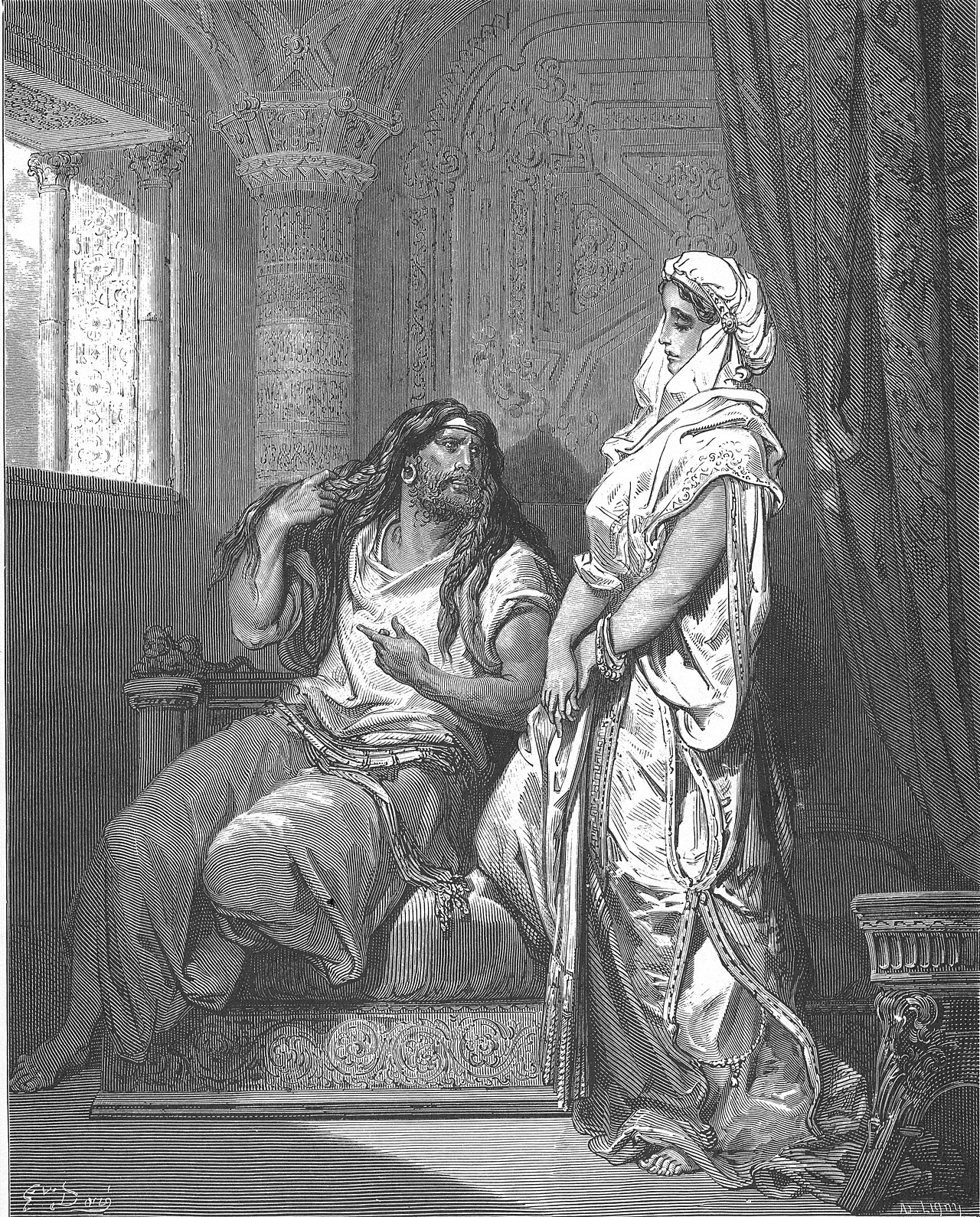
in Judges 16Samson told her all that was in his heart: “My hair has never been cut, because I have been a Nazirite to God from my mother’s womb. If I am shaved, my strength will leave me, and I will become as weak as any other man.”
BSB
The same verse in ASV and KJV ▾
ASV
And he told her all his heart, and said unto her, There hath not come a razor upon my head; for I have been a Nazirite unto God from my mother’s womb: if I be shaven, then my strength will go from me, and I shall become weak, and be like any other man.
KJV
That he told her all his heart, and said unto her, There hath not come a razor upon mine head; for I have been a Nazarite unto God from my mother’s womb: if I be shaven, then my strength will go from me, and I shall become weak, and be like any other man.
⋯
This verse in Judges 16
Commentary
12 notes on this verseIf I be shaven, then my strength will go from me - The miraculous strength of Samson must not be supposed to reside either in his hair or in his muscles, but in that relation in which he stood to God as a Nazarite, such a person being bound by a solemn vow to walk in a strict conformity to the laws of his Maker. It was a part of the Nazarite’s vow to permit no razor to pass on his head; and his long hair was the mark of his Nazirate, and of his vow to God.
This site's exposition
your heart is not with me
on Judges 16:15-17
Her complaint that his “heart is not with me” repeats the one made at 14:16, and so does the pressure. Verse 17 is the one place Samson calls himself “a Nazirite to God”. He recites the vow's terms correctly in the act of giving them away.
This site's exposition
My hair has never been cut
John Wesley reads the uncut hair as the chief condition of the covenant by which God had bound himself to equip Samson for his work. Break the condition and the help is withdrawn. Matthew Henry adds that the strength came by promise to a man set apart.
The record, by era
The Church Fathers5 voices
Is that, then, Samson who broke ropes twisted with thongs, and new cords like weak threads? Is that Samson who did not feel the bonds of his hair fastened to the beam, so long as he had the grace of the Spirit? He, I say, after the Spirit of God departed from him, was greatly changed from that Samson Who returned clothed in the spoils of the aliens, but fallen from his greatness on the knees of a woman, caressed and deceived, is shorn of his hair. Was, then, the hair of his head of such importance that, so long as it remained, his strength should endure unconquered, but when his head was shorn the man should suddenly lose all his strength? It is not so, nor may we think that the hair of his head has such power. There is the hair of religion and faith; the hair of the Nazarite perfect in the Law, consecrated in sparingness and abstinence, with which she (a type of the Church), who poured ointment on the feet of the Lord, wiped the feet of the heavenly Word, for then she knew Christ also after the flesh. That hair it is of which it is said: "Thy hair is as flocks of goats," growing on that head of which it is said: "The head of the man is Christ," and in another place: "His head is as fine gold, and his locks like black pine-trees." And so, also, in the Gospel our Lord, pointing out that some hairs are seen and known, says: "But even the hairs of your head are all numbered," implying, indeed, acts of spiritual virtues, for God does not take care for our hair. Though, indeed, it is not absurd to believe that literally, seeing that according to His divine Majesty nothing can be hidden from Him. But what does it profit me, if God Himself knows all my hairs? That rather abounds and profits me, if the watchful witness of good works reward me with the gift of eternal life. […]
What was the meaning of Samson? If I say he signified Christ, it seems to me that I speak the truth. However, the thought immediately occurs to anyone who reflects: Was Christ overcome by the flattery of a woman? How is Christ understood to have …
Like the famed Samson, whose power lay in the strength of his hair, whose locks were endowed with sacred might, he must throttle and bring low the lion by means of the strong arms of prayers and pluck the sweet fruit of notable victory from …
He was faced with a third battle: he had lost everything he had, that is, his inheritance with his sons; his flesh was enduring wounds; he remained to conquer the temptations of words. No ordinary battle. Adam was deceived by speech, Samson was overcome by words. For nothing penetrates the soul like deceitful speech, and nothing bites as hard as harsh words. Many, after overcoming physical torment, could not endure the harshness of words. Job suffered, but endured, and carried the burden of wounds alongside the burden of words. His agonothetes saw him struggling in the cloud and whirlwind and gave him a helping hand, and declared that those struggling had fallen with a heavy fall, but he declared himself the victor and brought back the crown.
But last of all the wanton woman complaining that she had been so often deceived, and grieving that her lover deemed her unworthy to be entrusted with his secret, and that under her pretext of succour her treacherous purpose was suspected, won his confidence by her tears. By this means, and because also it was ordained that this man of hitherto unshaken fortitude should fall into calamity, Samson was touched and opened to her his heart.
4 more voices on this verse
The Medieval Church1 voice
A commentator
BonaventureCollationes de Septem Donis, Collation 5 · Written in the 13th century.
proposed
It is said that Samson, according to the instruction of the Angel, did not permit a razor to come upon his head; but his hair grew, and he became the strongest of men. It was a wondrous thing that with his hair he was strong, …
The Puritans and the Awakening3 voices
If I be shaven - Not that his hair was in itself the cause of his strength, but because it was the chief condition of that covenant, whereby God was pleased to ingage himself to fit him for, and assist him in that great work to which he called him: but upon his violation of the condition, God justly withdraws his help.
That he told her all his heart,....
His consecration to God was to be his strength, for he was to be strengthened according to the glorious power of that Spirit which wrought in him mightily, that his strength, by promise, not by nature, might be a type and figure of the spiritual strength of believers, Col. i.
How the passage was read
What the Jewish commentators add
On the verses either side of this one
And goaded him. She oppressed him. There is no similar word.
1 more on this passage, in their own words ▾
Delilah saw that he had confided to her. One instinctively recognizes the truth. 2 Sotah,:b
This section is reception history: how the passage was read and kept in the Jewish tradition. Where a reading parts from an essential of the Christian faith, the section says so at that point.
Texts and citation data: Sefaria; each excerpt follows its version’s licence. 5 further sources are cited on this chapter that carry no English text this site may quote or only restate the verse.
The words behind it
27 Hebrew wordsEvery Hebrew word of this verse in the order it stands, with what it means and the door to its own study. The last column counts the times a word stands in the whole Bible: the rarer the word, the more the places it appears belong together.
| Hebrew | Sound | Meaning | Word study | In the Bible |
|---|---|---|---|---|
| וַיַּגֶּד־ | vaiyaged- | and he told | H5046 → | 370 times |
| לָ֣הּ | lah | to <the> her | ||
| אֶת־ | ʾet- | <obj.> | H853 → | 10935 times |
| כָּל־ | kol- | all | H3605 → | 5413 times |
| לִבּ֗וֹ | libo | heart his | H3820 → | 595 times |
| וַיֹּ֤אמֶר | vaiyomer | and he said | H559 → | 5305 times |
| לָהּ֙ | lah | to <the> her | ||
| מוֹרָה֙ | morah | a razor | H4177 → | |
| לֹֽא־ | lo'- | not | H3808 → | 5168 times |
| עָלָ֣ה | ʾalah | it has come up | H5927 → | 890 times |
| עַל־ | ʾal- | on | H5921 → | 5755 times |
| רֹאשִׁ֔י | roshi | head my | H7218 → | 599 times |
| כִּֽי־ | ki- | for | H3588 → | 4482 times |
| נְזִ֧יר | nezir | [am] a Nazirite of | H5139 → | 16 times |
| אֱלֹהִ֛ים | ʾelohim | God | H430 → | 2601 times |
| אֲנִ֖י | ʾani | I | H589 → | 874 times |
| מִבֶּ֣טֶן | mibeten | from [the] womb of | H990 → | 72 times |
| אִמִּ֑י | ʾimi | mother my | H517 → | 220 times |
| אִם־ | ʾim- | if | H518 → | 1069 times |
| גֻּלַּ֙חְתִּי֙ | gulachti | I was shaved | H1548 → | 23 times |
| וְסָ֣ר | vesar | and it will depart | H5493 → | 299 times |
| מִמֶּ֣נִּי | mimeni | from me | H4480 → | 1188 times |
| כֹחִ֔י | khochi | strength my | H3581 → | 126 times |
| וְחָלִ֥יתִי | vechaliti | and I will be weak | H2470 → | 76 times |
| וְהָיִ֖יתִי | vehayiti | and I will be | H1961 → | 3559 times |
| כְּכָל־ | kekhol- | like every | H3605 → | 5413 times |
| הָאָדָֽם׃ | haadam | <the> man | H120 → | 551 times |
וַיַּגֶּד־and he told
vaiyaged-H5046 →370 times
לָ֣הּto <the> her
lah
אֶת־<obj.>
ʾet-H853 →10935 times
כָּל־all
kol-H3605 →5413 times
לִבּ֗וֹheart his
liboH3820 →595 times
וַיֹּ֤אמֶרand he said
vaiyomerH559 →5305 times
לָהּ֙to <the> her
lah
מוֹרָה֙a razor
morahH4177 →
לֹֽא־not
lo'-H3808 →5168 times
עָלָ֣הit has come up
ʾalahH5927 →890 times
עַל־on
ʾal-H5921 →5755 times
רֹאשִׁ֔יhead my
roshiH7218 →599 times
כִּֽי־for
ki-H3588 →4482 times
נְזִ֧יר[am] a Nazirite of
nezirH5139 →16 times
אֱלֹהִ֛יםGod
ʾelohimH430 →2601 times
אֲנִ֖יI
ʾaniH589 →874 times
מִבֶּ֣טֶןfrom [the] womb of
mibetenH990 →72 times
אִמִּ֑יmother my
ʾimiH517 →220 times
אִם־if
ʾim-H518 →1069 times
גֻּלַּ֙חְתִּי֙I was shaved
gulachtiH1548 →23 times
וְסָ֣רand it will depart
vesarH5493 →299 times
מִמֶּ֣נִּיfrom me
mimeniH4480 →1188 times
כֹחִ֔יstrength my
khochiH3581 →126 times
וְחָלִ֥יתִיand I will be weak
vechalitiH2470 →76 times
וְהָיִ֖יתִיand I will be
vehayitiH1961 →3559 times
כְּכָל־like every
kekhol-H3605 →5413 times
הָאָדָֽם׃<the> man
haadamH120 →551 times
A shaded row is a word that stands 400 times or fewer in the Bible.
The walk
8 stopsEach card is a verse this one points to, and under it the verses that one points to in turn. Where several paths arrive at the same place, that place is listed first: the text keeps returning to it.
Through
Micah 7:5Do not rely on a friend; do not trust in a companion. Seal the doors of your mouth from her who lies in your arms.
it leads to
- Jeremiah 9:4
“Let everyone guard against his neighbor; do not trust any brother, for every brother deals craftily, and every friend spreads slander.
- Psalms 118:8–9
It is better to take refuge in the LORD than to trust in man.
- Matthew 10:16
Behold, I am sending you out like sheep among wolves; therefore be as shrewd as snakes and as innocent as doves.
- Job 6:14–15
A despairing man should have the kindness of his friend, even if he forsakes the fear of the Almighty.
- Judges 16:5–20
The lords of the Philistines went to her and said, “Entice him and find out the source of his great strength and how we can overpower him to tie him up and subdue him.…
- Jeremiah 9:4
Through
Judges 13:5For behold, you will conceive and give birth to a son. And no razor shall come over his head, because the boy will be a Nazirite to God from the womb, and he will…
it leads to
- 1 Samuel 1:11
And she made a vow, pleading, “O LORD of Hosts, if only You will look upon the affliction of Your maidservant and remember me, not forgetting Your maidservant but giving her a son, then…
Reached by 2 separate paths from here.
- Numbers 6:5
For the entire period of his vow of separation, no razor shall pass over his head. He must be holy until the time of his separation to the LORD is complete; he must let…
- 1 Samuel 1:11
Through
Acts 18:18Paul remained in Corinth for quite some time before saying goodbye to the brothers. He had his head shaved in Cenchrea to keep a vow he had made, and then he sailed for Syria,…
it leads to
- Acts 21:24
Take these men, purify yourself along with them, and pay their expenses so they can have their heads shaved. Then everyone will know that there is no truth to these rumors about you, but…
- Acts 21:24
Where this verse is studied
On this page
Studies3
On this verse
On this chapter
About Judges
Who and where
1 name in this verse with a page on the site.
This page draws on 11 works. Open the list of works
This page draws on Adam Clarke, Commentary on the Bible; Ambrose of Milan, On the Holy Spirit 2, Introduction 13-16; Ambrose of Milan, The Prayer of Job and David 2.3.8; Ambrose of Milan, Letter 19; Bonaventure, Collationes de Septem Donis, Collation 5; Caesarius of Arles, SERMON 118.3; John Gill, Exposition of the Old Testament (1748-1763); John Wesley, Explanatory Notes upon the Old Testament; Keil and Delitzsch, Biblical Commentary on the Old Testament: Joshua, Judges, Ruth; Matthew Henry, Commentary on the Whole Bible and Paulinus of Nola, POEM 24.529-581.