
Joshua 11:17
in Joshua 11from Mount Halak, which rises toward Seir, as far as Baal-gad in the Valley of Lebanon at the foot of Mount Hermon. He captured all their kings and struck them down, putting them to death.
BSB
The same verse in ASV and KJV ▾
ASV
from mount Halak, that goeth up to Seir, even unto Baal-gad in the valley of Lebanon under mount Hermon: and all their kings he took, and smote them, and put them to death.
KJV
Even from the mount Halak, that goeth up to Seir, even unto Baal–gad in the valley of Lebanon under mount Hermon: and all their kings he took, and smote them, and slew them.
⋯
This verse in Joshua 11
Commentary
3 notes on this verseEven from the mount Halak, that goeth up unto Seir,.... Or the "smooth" and "bald" mountain, which had no trees on it, as some interpret it, observed by Kimchi; it was a mount on the borders of Edom, to which the land of Canaan reached on that side: even unto Baalgad, in the valley of Lebanon, under Mount Hermon; and so describes the northern part of the land conquered by Joshua: and all their kings he took, and smote them, and slew them; both in the southern and northern parts of the land.
This site's exposition
So Joshua took all that
on Joshua 11:16-18
The summary sweeps from mount Halak going up to Seir in the far south to Baalgad under Hermon in the north, which is the length of the country in one line. Verse 18 is the check on reading chapters 10 and 11 as a few weeks of fighting, because it says Joshua made war a long time with all those kings. Caleb supplies the arithmetic at Joshua 14:7-10, forty years old when Moses sent him and eighty-five when he asks for Hebron, and the forty-five years he counts leave about seven years of campaigning after the crossing on the usual reckoning.
The record, by era
The Nineteenth Century1 voice
A commentator
Albert Barnes1798–1870
Notes, Explanatory and Practical, on the Old and New Testaments (1832-1869)
The mount Halak - See the margin and reference. The name serves to mark the southern limit of Joshua’s conquests. It suits equally well several of the ranges near the south border of Palestine, and it is uncertain which of them is the one here indicated. Baal-gad Jos 12:7; Jos 13:5 is probably Paneas, the Caesarea Philippi of later times. The name means “troop or city of Baal,” or a place where Baal was worshipped as the giver of “good luck.” Compare Isa 65:11. It was probably the same as Baal-Hermon (Jdg 3:3; 1Ch 5:23; and see Deu 3:9).
How the passage was read
What the Jewish commentators add
The bare, divided mountain. A smooth mountain. 5 It was so called because there were no trees on it. It was divided between Yaakov and Eisov. The part belonging to Yaakov was bare and smooth as Yaakov himself. See Bereishis:11.
1 more on this passage, in their own words ▾
For many days did Yehoshua. This verse was said to criticize Yehoshua, who intended to delay the conquest of the land, in order to lengthen his days, for it is said, “And you will apportion it to them.
This section is reception history: how the passage was read and kept in the Jewish tradition. Where a reading parts from an essential of the Christian faith, the section says so at that point.
Texts and citation data: Sefaria; each excerpt follows its version’s licence. 4 further sources are cited on this chapter that carry no English text this site may quote or only restate the verse.
The words behind it
19 Hebrew wordsEvery Hebrew word of this verse in the order it stands, with what it means and the door to its own study. The last column counts the times a word stands in the whole Bible: the rarer the word, the more the places it appears belong together.
| Hebrew | Sound | Meaning | Word study | In the Bible |
|---|---|---|---|---|
| מִן־ | min- | from | H4480 → | 1188 times |
| הָהָ֤ר | hahar | the mountain | H2022 → | 546 times |
| הֶֽחָלָק֙ | hechalak | <the> Halak | H2510 → | |
| הָעוֹלֶ֣ה | haoleh | which goes up | H5927 → | 890 times |
| שֵׂעִ֔יר | seir | Seir | H8165 → | 39 times |
| וְעַד־ | vead- | and to | H5704 → | 1261 times |
| בַּ֤עַל | baal | Baal | H1171 → | 6 times |
| גָּד֙ | gad | Gad | H1171 → | 6 times |
| בְּבִקְעַ֣ת | bevikat | in [the] valley of | H1237 → | 20 times |
| הַלְּבָנ֔וֹן | halevanon | <the> Lebanon | H3844 → | 71 times |
| תַּ֖חַת | tachat | under | H8478 → | 505 times |
| הַר־ | har- | [the] mountain of | H2022 → | 546 times |
| חֶרְמ֑וֹן | chermon | Hermon | H2768 → | 13 times |
| וְאֵ֤ת | veet | and <obj.> | H853 → | 10935 times |
| כָּל־ | kol- | all | H3605 → | 5413 times |
| מַלְכֵיהֶם֙ | malkheihem | kings their | H4428 → | 2525 times |
| לָכַ֔ד | lakhad | he captured | H3920 → | 121 times |
| וַיַּכֵּ֖ם | vaiyakem | and he struck them | H5221 → | 499 times |
| וַיְמִיתֵֽם׃ | vaymitem | and he killed them | H4191 → | 839 times |
מִן־from
min-H4480 →1188 times
הָהָ֤רthe mountain
haharH2022 →546 times
הֶֽחָלָק֙<the> Halak
hechalakH2510 →
הָעוֹלֶ֣הwhich goes up
haolehH5927 →890 times
שֵׂעִ֔ירSeir
seirH8165 →39 times
וְעַד־and to
vead-H5704 →1261 times
בַּ֤עַלBaal
baalH1171 →6 times
גָּד֙Gad
gadH1171 →6 times
בְּבִקְעַ֣תin [the] valley of
bevikatH1237 →20 times
הַלְּבָנ֔וֹן<the> Lebanon
halevanonH3844 →71 times
תַּ֖חַתunder
tachatH8478 →505 times
הַר־[the] mountain of
har-H2022 →546 times
חֶרְמ֑וֹןHermon
chermonH2768 →13 times
וְאֵ֤תand <obj.>
veetH853 →10935 times
כָּל־all
kol-H3605 →5413 times
מַלְכֵיהֶם֙kings their
malkheihemH4428 →2525 times
לָכַ֔דhe captured
lakhadH3920 →121 times
וַיַּכֵּ֖םand he struck them
vaiyakemH5221 →499 times
וַיְמִיתֵֽם׃and he killed them
vaymitemH4191 →839 times
A shaded row is a word that stands 400 times or fewer in the Bible.
The walk
8 stopsEach card is a verse this one points to, and under it the verses that one points to in turn. Where several paths arrive at the same place, that place is listed first: the text keeps returning to it.
Through
Deuteronomy 33:2He said: “The LORD came from Sinai and dawned upon us from Seir; He shone forth from Mount Paran and came with myriads of holy ones, with flaming fire at His right hand.
it leads to
- Habakkuk 3:3
God came from Teman, and the Holy One from Mount Paran. Selah His glory covered the heavens, and His praise filled the earth.
- Jude 1:14
Enoch, the seventh from Adam, also prophesied about them: “Behold, the Lord is coming with myriads of His holy ones
- Revelation 5:11
Then I looked, and I heard the voices of many angels and living creatures and elders encircling the throne, and their number was myriads of myriads and thousands of thousands.
- Psalms 68:17
The chariots of God are tens of thousands— thousands of thousands are they; the Lord is in His sanctuary as He was at Sinai.
- Acts 7:53
you who received the law ordained by angels, yet have not kept it.”
- Habakkuk 3:3
Through
Deuteronomy 7:24He will hand their kings over to you, and you will wipe out their names from under heaven. No one will be able to stand against you; you will annihilate them.
it leads to
- Joshua 10:8
The LORD said to Joshua, “Do not be afraid of them, for I have delivered them into your hand. Not one of them shall stand against you.”
- Joshua 23:9
The LORD has driven out great and powerful nations before you, and to this day no one can stand against you.
- Joshua 10:42
And because the LORD, the God of Israel, fought for Israel, Joshua captured all these kings and their land in one campaign.
- Joshua 10:8
Where this verse is studied
On this page
Studies4
About Joshua
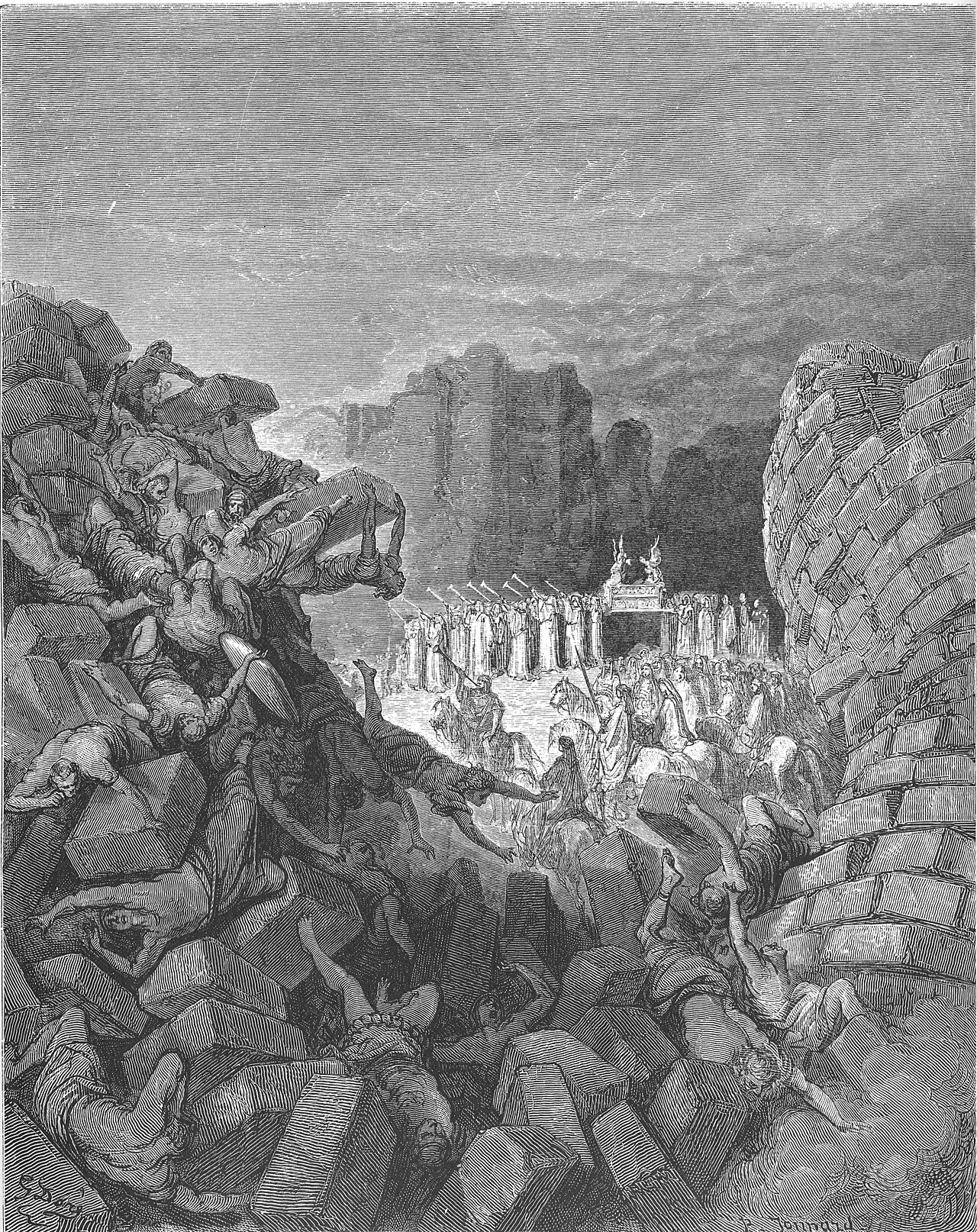
This page draws on Adam Clarke, Commentary on the Bible; Albert Barnes, Notes, Explanatory and Practical, on the Old and New Testaments (1832-1869); John Gill, Exposition of the Old Testament (1748-1763) and Matthew Henry, Commentary on the Whole Bible.