
Judges 16:13
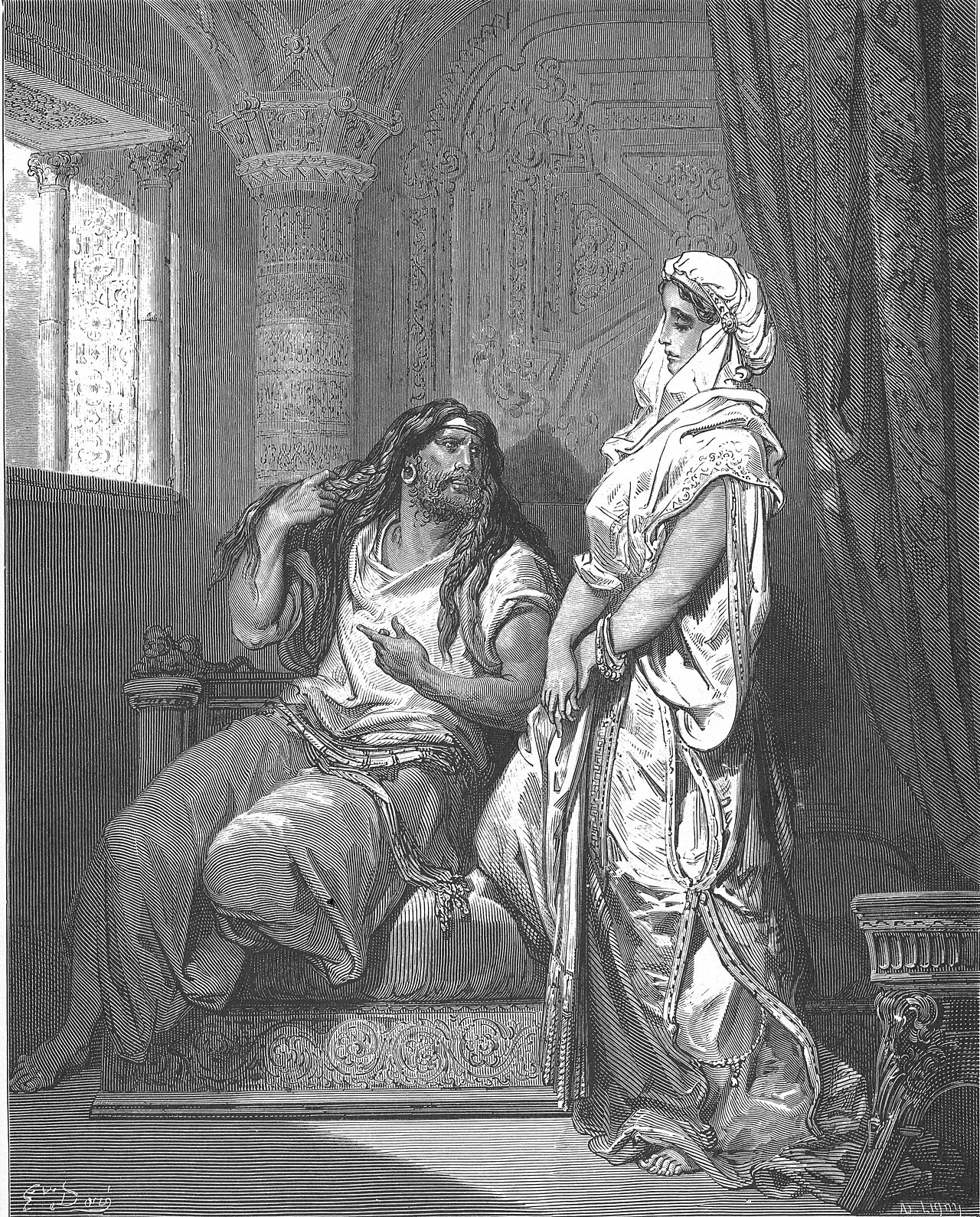
in Judges 16Then Delilah said to Samson, “You have mocked me and lied to me all along! Tell me how you can be tied up.” He told her, “If you weave the seven braids of my head into the web of a loom and tighten it with a pin, I will become as weak as any other man.”
BSB
The same verse in ASV and KJV ▾
ASV
And Delilah said unto Samson, Hitherto thou hast mocked me, and told me lies: tell me wherewith thou mightest be bound. And he said unto her, If thou weavest the seven locks of my head with the web.
KJV
And Delilah said unto Samson, Hitherto thou hast mocked me, and told me lies: tell me wherewith thou mightest be bound. And he said unto her, If thou weavest the seven locks of my head with the web.
⋯
This verse in Judges 16
Commentary
11 notes on this verseThe seven locks of my head - Probably Samson had his long hair plaited into seven divisions, and as his vow of a Nazarite obliged him to wear his hair, so, seven being a number of perfection among the Hebrews, his hair being divided into seven locks might more particularly point out the perfection designed by his Nazarite state. Every person must see that this verse ends abruptly, and does not contain a full sense.
This site's exposition
You have mocked me and lied to me all along
on Judges 16:13-14
The “seven braids of my head” are named here, and the hair enters the bargaining while the vow behind it stays hidden. The Hebrew of verse 13 stops at the web, and the Septuagint carries a longer reading that supplies the pin, the chapter's largest textual difference. Adam Clarke sets the longer reading out in full, and Keil and Delitzsch treat the shorter Hebrew as usable as it stands.
The record, by era
The Church Fathers3 voices
What was the meaning of Samson? If I say he signified Christ, it seems to me that I speak the truth. However, the thought immediately occurs to anyone who reflects: Was Christ overcome by the flattery of a woman? How is Christ understood to have …
Like the famed Samson, whose power lay in the strength of his hair, whose locks were endowed with sacred might, he must throttle and bring low the lion by means of the strong arms of prayers and pluck the sweet fruit of notable victory from …
The third time he disclosed part of the secret, and now drawing nearer to his fall, told her that, if the seven locks of his head were unfastened and woven to about a cubit's length, his strength would depart from him. But herein also he deluded those who were plotting against his life.
The Medieval Church1 voice
A commentator
BonaventureCollationes de Septem Donis, Collation 5 · Written in the 13th century.
proposed
It is said that Samson, according to the instruction of the Angel, did not permit a razor to come upon his head; but his hair grew, and he became the strongest of men. It was a wondrous thing that with his hair he was strong, …
The Puritans and the Awakening1 voice
But first, it is probable, that Samson had in some measure repented of his sin, and begged of God pardon and assistance. 2.This singular strength and courage was not in itself a grace, but a gift, and it was such a gift as did not so much depend on the disposition of his mind, but on the right ordering of his body, by the rule given to him, and others of that order.
4 more voices on this verse
The Puritans and the Awakening3 voices
Web - Or, thread which is woven about a weaver's loom: or, with a weaver's beam. If my hair, which is all divided into seven locks, be fastened about a weaver's beam; or interwoven with weaver's threads: then I shall be weak as another man.
And Delilah said unto Samson,....
The disclosure he at last made of this great secret; and, if the disclosure proved fatal to him, he must thank himself, who had not power to keep his own counsel from one that manifestly sought his ruin. Surely in vain is the net spread in the sight of any bird, but in Samson's sight is the net spread, and yet he is taken in it.
The Nineteenth Century1 voice
A commentator
Jamieson, Fausset & Brown1802–1910
Commentary Critical and Explanatory on the Whole Bible (1871)
If thou weavest the seven locks of my head--braids or tresses, into which, like many in the East, he chose to plait his hair. Working at the loom was a female employment; and Delilah's appears to have been close at hand. It was of a very simple construction; the woof was driven into the warp, not by a reed, but by a wooden spatula.
The words behind it
33 Hebrew wordsEvery Hebrew word of this verse in the order it stands, with what it means and the door to its own study. The last column counts the times a word stands in the whole Bible: the rarer the word, the more the places it appears belong together.
| Hebrew | Sound | Meaning | Word study | In the Bible |
|---|---|---|---|---|
| וַתֹּ֨אמֶר | vatomer | and she said | H559 → | 5305 times |
| דְּלִילָ֜ה | delilah | Delilah | H1807 → | 6 times |
| אֶל־ | ʾel- | to | H413 → | 5510 times |
| שִׁמְשׁ֗וֹן | shimshon | Samson | H8123 → | 38 times |
| עַד־ | ʾad- | until | H5704 → | 1261 times |
| הֵ֜נָּה | henah | now | H2008 → | |
| הֵתַ֤לְתָּ | hetalta | you have deceived | H2048 → | 10 times |
| בִּי֙ | bi | <in> <the> me | ||
| וַתְּדַבֵּ֤ר | vatedaber | and you have spoken | H1696 → | 1141 times |
| אֵלַי֙ | ʾelai | to me | H413 → | 5510 times |
| כְּזָבִ֔ים | kezavim | lies | H3577 → | |
| הַגִּ֣ידָה | hagidah | tell ! | H5046 → | 370 times |
| לִּ֔י | li | to <the> me | ||
| בַּמֶּ֖ה | bameh | <in> how? | H4100 → | 752 times |
| תֵּאָסֵ֑ר | teaser | will you be bound | H631 → | 72 times |
| וַיֹּ֣אמֶר | vaiyomer | and he said | H559 → | 5305 times |
| אֵלֶ֔יהָ | ʾeleiha | to her | H413 → | 5510 times |
| אִם־ | ʾim- | if | H518 → | 1069 times |
| תַּאַרְגִ֗י | taargi | you will weave | H707 → | |
| אֶת־ | ʾet- | <obj.> | H853 → | 10935 times |
| שֶׁ֛בַע | sheva' | seven | H7651 → | 394 times |
| מַחְלְפ֥וֹת | machlefot | [the] plaits of | H4253 → | |
| רֹאשִׁ֖י | roshi | head my | H7218 → | 599 times |
| עִם־ | ʾim- | with | H5973 → | 1050 times |
| הַמַּסָּֽכֶת׃ | hamasakhet | the web | H4545 → | |
| וְתָקַעַתְּ | vetaka'ta | and you will strike | H8628 → | 69 times |
| בְּיָתֵד | beyated | with a pin | H3489 → | 25 times |
| אֶל־ | ʾel- | to | H413 → | 5510 times |
| הַקִּיר | hakir | the wall | H7023 → | |
| וְחָלִיתִי | vechaliti | and I will be weak | H2470 → | 76 times |
| וְהָיִיתִי | vehayiti | and I will be | H1961 → | 3559 times |
| כְּאַחַד | keachad | like one | H259 → | 971 times |
| הָאָדָם׃ | haadam | <the> man | H120 → | 551 times |
וַתֹּ֨אמֶרand she said
vatomerH559 →5305 times
דְּלִילָ֜הDelilah
delilahH1807 →6 times
אֶל־to
ʾel-H413 →5510 times
שִׁמְשׁ֗וֹןSamson
shimshonH8123 →38 times
עַד־until
ʾad-H5704 →1261 times
הֵ֜נָּהnow
henahH2008 →
הֵתַ֤לְתָּyou have deceived
hetaltaH2048 →10 times
בִּי֙<in> <the> me
bi
וַתְּדַבֵּ֤רand you have spoken
vatedaberH1696 →1141 times
אֵלַי֙to me
ʾelaiH413 →5510 times
כְּזָבִ֔יםlies
kezavimH3577 →
הַגִּ֣ידָהtell !
hagidahH5046 →370 times
לִּ֔יto <the> me
li
בַּמֶּ֖ה<in> how?
bamehH4100 →752 times
תֵּאָסֵ֑רwill you be bound
teaserH631 →72 times
וַיֹּ֣אמֶרand he said
vaiyomerH559 →5305 times
אֵלֶ֔יהָto her
ʾeleihaH413 →5510 times
אִם־if
ʾim-H518 →1069 times
תַּאַרְגִ֗יyou will weave
taargiH707 →
אֶת־<obj.>
ʾet-H853 →10935 times
שֶׁ֛בַעseven
sheva'H7651 →394 times
מַחְלְפ֥וֹת[the] plaits of
machlefotH4253 →
רֹאשִׁ֖יhead my
roshiH7218 →599 times
עִם־with
ʾim-H5973 →1050 times
הַמַּסָּֽכֶת׃the web
hamasakhetH4545 →
וְתָקַעַתְּand you will strike
vetaka'taH8628 →69 times
בְּיָתֵדwith a pin
beyatedH3489 →25 times
אֶל־to
ʾel-H413 →5510 times
הַקִּירthe wall
hakirH7023 →
וְחָלִיתִיand I will be weak
vechalitiH2470 →76 times
וְהָיִיתִיand I will be
vehayitiH1961 →3559 times
כְּאַחַדlike one
keachadH259 →971 times
הָאָדָם׃<the> man
haadamH120 →551 times
A shaded row is a word that stands 400 times or fewer in the Bible.
About Judges
Who and where
1 name in this verse with a page on the site.
This page draws on 10 works. Open the list of works
This page draws on Adam Clarke, Commentary on the Bible; Ambrose of Milan, Letter 19; Bonaventure, Collationes de Septem Donis, Collation 5; Caesarius of Arles, SERMON 118.3; Jamieson, Fausset & Brown, Commentary Critical and Explanatory on the Whole Bible; John Gill, Exposition of the Old Testament (1748-1763); John Wesley, Explanatory Notes upon the Old Testament; Keil and Delitzsch, Biblical Commentary on the Old Testament: Joshua, Judges, Ruth; Matthew Henry, Commentary on the Whole Bible and Paulinus of Nola, POEM 24.529-581.