
Isaiah 66:1
in Isaiah 66This is what the LORD says: “Heaven is My throne, and earth is My footstool. What kind of house will you build for Me? Or where will My place of repose be?
BSB
The same verse in ASV and KJV ▾
ASV
Thus saith Jehovah, Heaven is my throne, and the earth is my footstool: what manner of house will ye build unto me? and what place shall be my rest?
KJV
Thus saith the Lord, The heaven is my throne, and the earth is my footstool: where is the house that ye build unto me? and where is the place of my rest?
⋯
This verse in Isaiah 66
Commentary
12 notes on this verseA commentator
Albert Barnes1798–1870
Notes, Explanatory and Practical, on the Old and New Testaments (1832-1869)
The heaven is my throne - (See the notes at Isa 57:15). Here he is represented as having his seat or throne there. He speaks as a king. heaven is the place where he holds his court; from where he dispenses his commands; and from where he surveys all his works (compare 2Ch 6:18; Mat 5:34). The idea here is, that as God dwelt in the vast and distant heavens, no house that could be built on earth could be magnificent enough to be his abode.
This site's exposition
Heaven is My throne, and earth is My footstool
on Isaiah 66:1-2
“Heaven is My throne, and earth is My footstool” is quoted by Stephen at Acts 7:49-50, against a temple trusted as if it could hold the God who made all things. The question of what house could be built for Him weighs any trust placed in a building. The chapter turns from building to character: “This is the one I will esteem: he who is humble and contrite in spirit, who trembles at My word”.
The record, by era
The Church Fathers4 voices
"Heaven is my throne, while the earth is my footstool." … Haven't you also read that other text, "Who measured the heaven with the palm of his hand?" … Whoever sat in the palm of his own hand?…Does the same heaven become wide when he is sitting in it and narrow when he is measuring it? Or is God the same size in his seat as he is in his palm? If that is the case, God did not make us in his own likeness, because we have palms that are much narrower than the part of the body we sit with. But if he is as broad in the palm as he is broad in the beam, then he made very unequal parts for us. No, that is not where the likeness lies. Such an idol should be ashamed of itself in a Christian mind. So then, take "heaven" as standing for all the saints, since earth too stands for all who are on the earth, "Let all the earth worship you."
A commentator
Augustine of HippoEXPLANATIONS OF THE PSALMS 99:8 · Written in the 5th century.
proposed
In hesitation I turn to Christ, since I am herein seeking him; and I discover how the earth may be worshiped without impiety, how his footstool may be worshiped without impiety. For he took on himself earth from earth, and he received flesh from the flesh of Mary. And because he walked here in very flesh and gave that very flesh to us to eat for our salvation, and no one eats that flesh unless he has first worshiped, we have found out in what sense such a footstool of our Lord may be worshiped, and not only that we do not sin in worshiping it but that we sin in not worshiping.
"And worship his footstool for it is holy." What is this footstool of Jesus that is holy? We read in another place: "The heavens are my throne, the earth is my footstool"; and here, "worship his footstool." If earth is Jesus' footstool, and the psalm says worship his footstool, then is earth to be adored? How, then, do we read in the apostle that we must worship the Creator, not the creature? In Scripture, adoration conveys two different notions: worship as an act toward God and worship in the sense of reverence. When we use the word worship in relation to God, we mean the adoration that is proper to God. When, however, we use the term with reference to a human being, as for example, Sarah worshiped Abraham and Elijah worshiped Ahab—a most ungodly king—it does not mean that Elijah worshiped Ahab as if he were God but that this worship was more like a greeting.Now, we are ready to examine the words "and worship his footstool," and [we will] see in which way the word worship is intended. Do we adore God's footstool just as we adore God or in the same sense that we worship and pay respect to a person? We have read in the Lamentations of Jeremiah and in another of the prophets, "How the Lord has hallowed his footstool!" In this passage, his footstool is Jerusalem, or the temple. And so, the reference is historical. We shall now consider the verse "and worship his footstool" from another point of view. If feet rest on a footstool, the words "Let us worship in the place where his feet have stood" likewise refer to a footstool. In that event, we may hold to the letter and mean, for example, that place where he was born, where he was crucified, where he arose from the dead. This is the explanation for beginners.… [Or] Jesus' footstool is the soul of the one who believes. Happy the person in whose heart Jesus sets his feet every day! If only he would set his feet in my heart! […]
He has not even built a house for himself! He has nothing to do with space. Even if it is written that "the heaven is his throne," he is not contained as the words suggest.
The Medieval Church1 voice
Thus says the Lord. Here he determines the manner of execution of the sentence. And first, in particular, as to the Jews; second, universally, as to all: but I know their works, and their thoughts (Isa 66:18). The first is divided into two parts: in …
5 more voices on this verse
The Puritans and the Awakening2 voices
Such a heart is a living temple for God; he dwells there, and it is the place of his rest; it is like heaven and earth, his throne and his footstool. Sacrifices are slighted when they come from ungracious hands. The sacrifice of the wicked is not only unacceptable, but it is an abomination to the Lord ( Prov. xv.
quarantine:debris (2026-07-29) — unbalanced-parens
Thus saith the Lord, the heaven is my throne,....
The Nineteenth Century3 voices
A commentator
Jamieson, Fausset & Brown1802–1910
Commentary Critical and Explanatory on the Whole Bible (1871)
proposed
Re 21:3). where--rather, "what is this house that ye are building, &c.--what place is this for My rest?" [VITRINGA].
quarantine:debris (2026-07-29) — unbalanced-parens
THAT is an excellent answer which was given by a poor man to a skeptic who attempted to ridicule his faith. The scoffer said, "Pray Sir, is your God a great God or a little God?" The poor man replied, "Sir, my God is so great that the Heaven of heavens cannot contain Him and yet He condescends to be so little that He dwells in broken and contrite hearts." Oh, the greatness of God and the condescension of God!
THAT is an excellent answer which was given by a poor man to a skeptic who attempted to ridicule his faith. The scoffer said, "Pray Sir, is your God a great God or a little God?" The poor man replied, "Sir, my God is so great that the Heaven of heavens cannot contain Him and yet He condescends to be so little that He dwells in broken and contrite hearts." Oh, the greatness of God and the condescension of God! I hope we shall be led to think of both this evening while we meditate upon the Words of the text. We have no time nor need of a preface. The text first of all teaches us that God rejects all material temples as the places of His abode. But, secondly, it informs us that God has made a choice of spiritual temples where He will dwell. I. First of all, then, let us think a little of GOD'S REJECTION OF ALL MATERIAL TEMPLES. There was a time when it could be said that there was a House of God on earth. That was a time of symbols, when as yet the Church of God was in her childhood. She was being taught her A B Cs, reading her picture books, for she could not as yet read the Word of God, as it were, in letters. She had need to have pictures put before her, patterns of the heavenly things. Then, even then, the enlightened among the Jews knew right well that God did not dwell between curtains and that it was not possible that He could be encompassed in the Most Holy place within the veil—it was only a symbol of His Presence. The fiery cloudy pillar was merely an indication that He was there in that Tabernacle where He was pleased to say that He peculiarly revealed Himself. But the time of symbols is now passed altogether. In that moment when the Savior bowed His head and said, "It is finished!" the veil of the Temple was torn in two so that the mysteries were laid open.
The words behind it
18 Hebrew wordsEvery Hebrew word of this verse in the order it stands, with what it means and the door to its own study. The last column counts the times a word stands in the whole Bible: the rarer the word, the more the places it appears belong together.
| Hebrew | Sound | Meaning | Word study | In the Bible |
|---|---|---|---|---|
| כֹּ֚ה | koh | thus | H3541 → | 577 times |
| אָמַ֣ר | ʾamar | he says | H559 → | 5305 times |
| יְהוָ֔ה | yahweh | Yahweh | H3068 → | 6520 times |
| הַשָּׁמַ֣יִם | hashamayim | the heavens | H8064 → | 421 times |
| כִּסְאִ֔י | kisi | [are] throne my | H3678 → | 135 times |
| וְהָאָ֖רֶץ | vehaaretz | and the earth | H776 → | 2504 times |
| הֲדֹ֣ם | hadom | [is] [the] footstool of | H1916 → | |
| רַגְלָ֑י | raglai | feet my | H7272 → | 247 times |
| אֵי־ | ʾei- | where? | H335 → | 39 times |
| זֶ֥ה | zeh | this | H2088 → | 1180 times |
| בַ֙יִת֙ | vayit | [is the] house | H1004 → | 2046 times |
| אֲשֶׁ֣ר | ʾasher | which | H834 → | 5497 times |
| תִּבְנוּ־ | tivnu- | you will build | H1129 → | 376 times |
| לִ֔י | li | for me | ||
| וְאֵי־ | veei- | and where? | H335 → | 39 times |
| זֶ֥ה | zeh | this | H2088 → | 1180 times |
| מָק֖וֹם | makom | [is the] place | H4725 → | 401 times |
| מְנוּחָתִֽי׃ | menuchati | rest my | H4496 → | 22 times |
כֹּ֚הthus
kohH3541 →577 times
אָמַ֣רhe says
ʾamarH559 →5305 times
יְהוָ֔הYahweh
yahwehH3068 →6520 times
הַשָּׁמַ֣יִםthe heavens
hashamayimH8064 →421 times
כִּסְאִ֔י[are] throne my
kisiH3678 →135 times
וְהָאָ֖רֶץand the earth
vehaaretzH776 →2504 times
הֲדֹ֣ם[is] [the] footstool of
hadomH1916 →
רַגְלָ֑יfeet my
raglaiH7272 →247 times
אֵי־where?
ʾei-H335 →39 times
זֶ֥הthis
zehH2088 →1180 times
בַ֙יִת֙[is the] house
vayitH1004 →2046 times
אֲשֶׁ֣רwhich
ʾasherH834 →5497 times
תִּבְנוּ־you will build
tivnu-H1129 →376 times
לִ֔יfor me
li
וְאֵי־and where?
veei-H335 →39 times
זֶ֥הthis
zehH2088 →1180 times
מָק֖וֹם[is the] place
makomH4725 →401 times
מְנוּחָתִֽי׃rest my
menuchatiH4496 →22 times
A shaded row is a word that stands 400 times or fewer in the Bible.
The walk
8 stopsEach card is a verse this one points to, and under it the verses that one points to in turn. Where several paths arrive at the same place, that place is listed first: the text keeps returning to it.
Through
Acts 17:24The God who made the world and everything in it is the Lord of heaven and earth and does not live in temples made by human hands.
it leads to
- 2 Chronicles 6:18
But will God indeed dwell with man upon the earth? Even heaven, the highest heaven, cannot contain You, much less this temple I have built.
Reached by 2 separate paths from here.
- 1 Kings 8:27
But will God indeed dwell upon the earth? Even heaven, the highest heaven, cannot contain You, much less this temple I have built.
- Deuteronomy 10:14
Behold, to the LORD your God belong the heavens, even the highest heavens, and the earth and everything in it.
- Acts 7:48
However, the Most High does not dwell in houses made by human hands. As the prophet says:
- Matthew 11:25
At that time Jesus declared, “I praise You, Father, Lord of heaven and earth, because You have hidden these things from the wise and learned, and revealed them to little children.
- 2 Chronicles 6:18
Through
1 Kings 8:27But will God indeed dwell upon the earth? Even heaven, the highest heaven, cannot contain You, much less this temple I have built.
it leads to
- Jeremiah 23:24
“Can a man hide in secret places where I cannot see him?” declares the LORD. “Do I not fill the heavens and the earth?” declares the LORD.
- 2 Chronicles 2:6
But who is able to build a house for Him, since the heavens, even the highest heavens, cannot contain Him? Who then am I, that I should build a house for Him, except as…
- Acts 7:48–49
However, the Most High does not dwell in houses made by human hands. As the prophet says:
- Jeremiah 23:24
About Isaiah
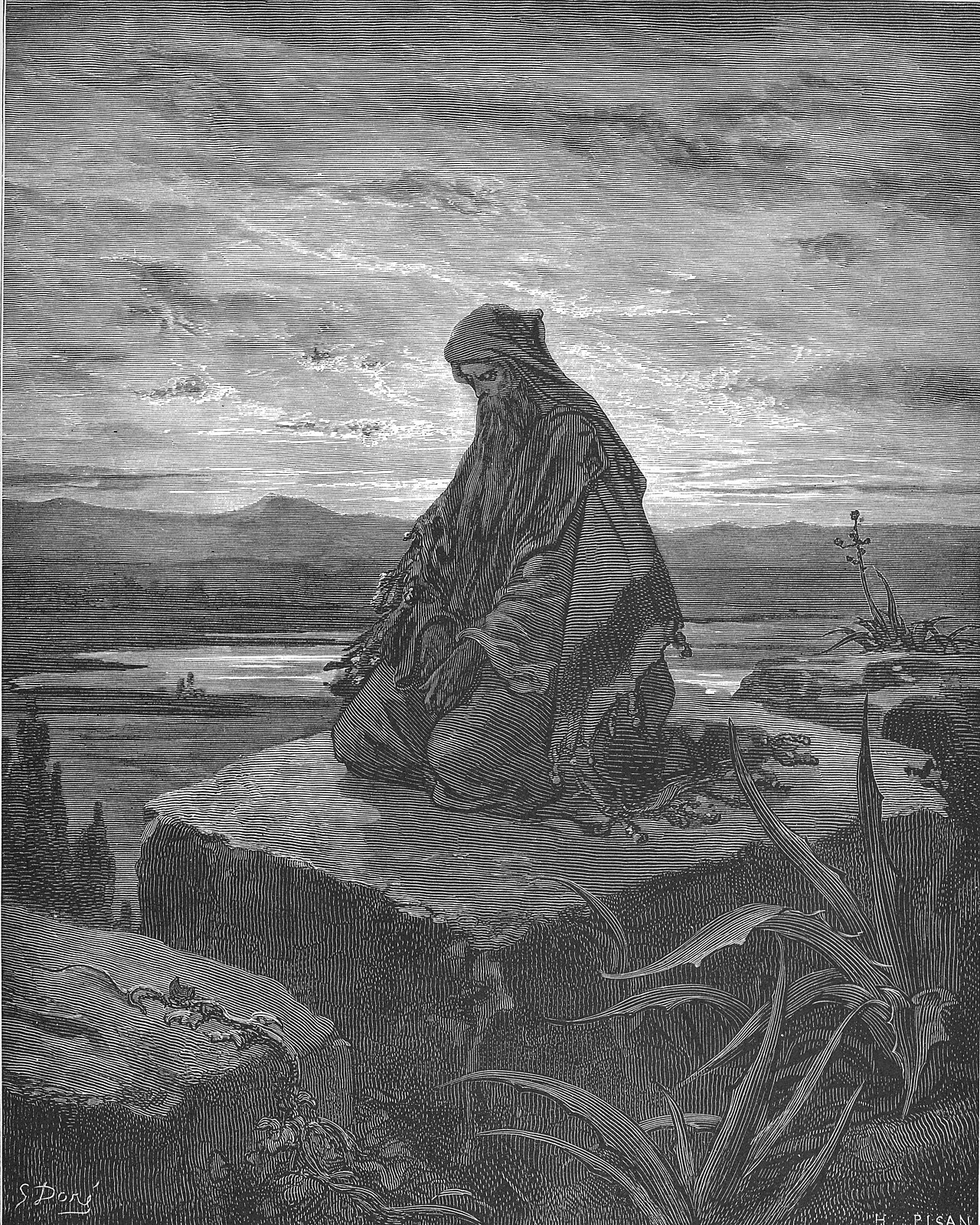
This page draws on 11 works. Open the list of works
This page draws on Albert Barnes, Notes, Explanatory and Practical, on the Old and New Testaments (1832-1869); Albert Barnes, Notes on the Book of Isaiah; Augustine of Hippo, SERMON 53:13-14; Augustine of Hippo, EXPLANATIONS OF THE PSALMS 99:8; Charles Spurgeon, The Metropolitan Tabernacle Pulpit, Sermon No. 1083: “Living Temples for the Living God” (lightly modernized text, CCEL edition); Clement of Alexandria, The Stromata Book 2; Jamieson, Fausset & Brown, Commentary Critical and Explanatory on the Whole Bible; Jerome, HOMILIES ON THE PSALMS 26 (PSALM 99); John Gill, Exposition of the Old Testament (1748-1763); Matthew Henry, Commentary on the Whole Bible and Thomas Aquinas, Commentary on Isaiah.