
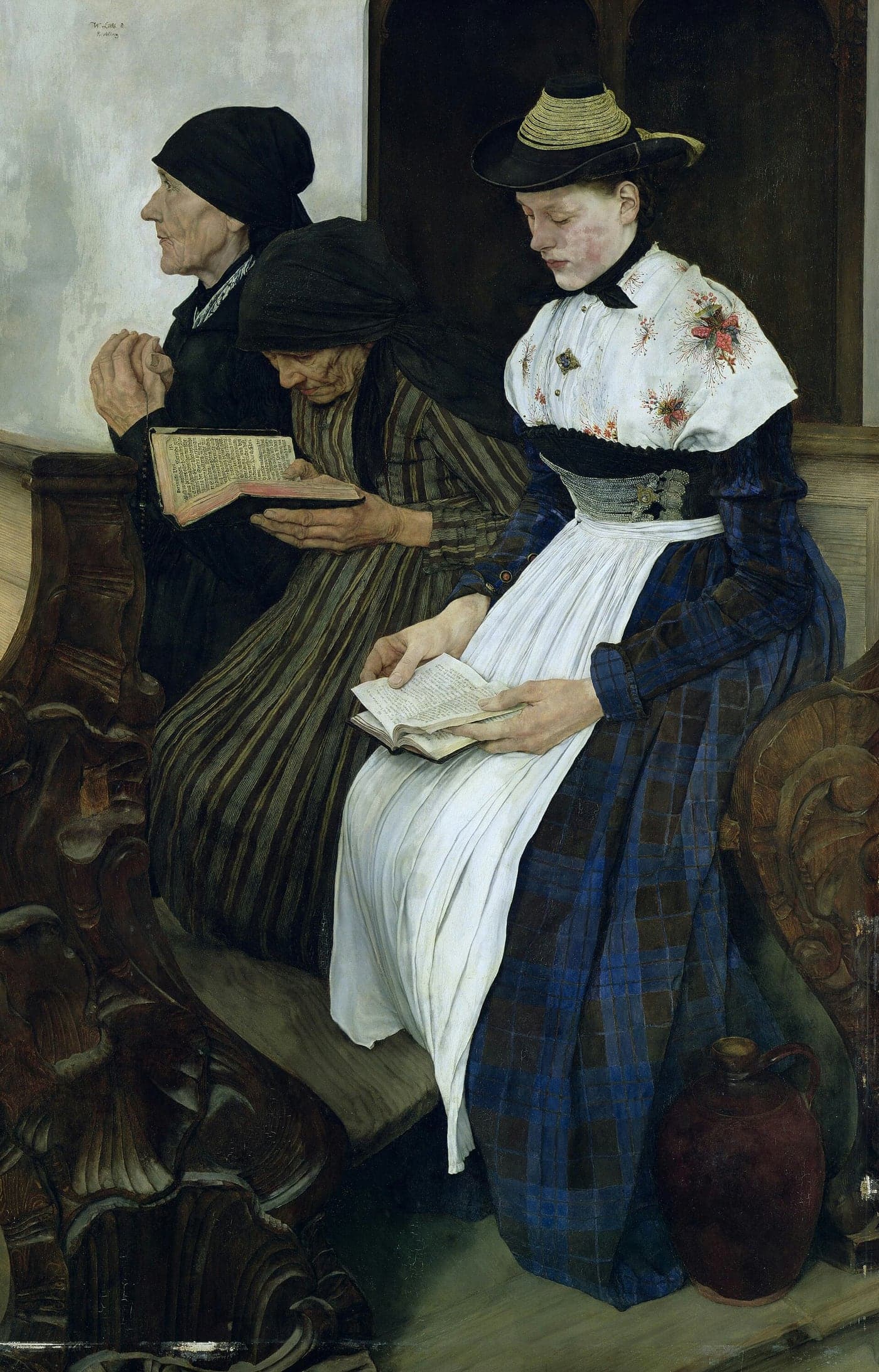
Hebrews 12:28 · Subject · The Fear of the Lord
Reverence in Worship
Scripture calls God's people to worship Him with reverence and awe, from bowed knees to a contrite spirit.
At the burning bush God told Moses to take off his sandals before he came any closer, because the place where he stood was holy ground.
Therefore, since we are receiving an unshakable kingdom, let us be filled with gratitude, and so worship God acceptably with reverence and awe.
- Books
- Hebrews, Ecclesiastes, Leviticus, Psalms, Isaiah
- Hold in memory
- Isaiah 66:2, Psalm 95:6, Ecclesiastes 5:2
Summary
Reverence in worship is the fear of the LORD brought into His presence. Scripture describes it in the body, in bowing, kneeling, lifting hands and falling down, and in the heart, in humility, contrition and trembling at God's word, so that the outward act answers an inward awe. It rests on the holiness of God.
- The letter to the Hebrews grounds acceptable worship in the nature of God, whom it calls a consuming fire (Hebrews 12:29).
- Ecclesiastes 5:1 to 2 tells the worshipper to guard his steps in the house of God, to draw near to listen and to keep his words few.
- Psalm 2:11 joins fear to gladness, telling the nations to serve the LORD with fear and to rejoice with trembling.
- Isaiah 29:13 condemns worship of the lips when the heart is far from God, and Jesus quotes it in Matthew 15:8 to 9.
Reverence and Awe Before a Holy God
Hebrews ends its warnings with a call to acceptable worship and gives the holiness of God as its reason.
The fear of the Lord, the value Scripture calls the beginning of wisdom, shows itself most plainly when God's people come into His presence to worship. It matters to every reader who prays, sings or gathers with the church, because Scripture says that God weighs how His people come before Him.
This study asks what Scripture requires of a worshipper's posture and heart. It sets out the postures Scripture names, reads the texts from Leviticus to Malachi that ground them in God's holiness, and weighs the heart against the outward form. It gives two readings of how quiet reverence and loud praise belong together, and it closes with the worship of every nation in Revelation.
“For our God is a consuming fire.”The writer ends the chapter with a line from the law of Moses, so the call to reverence rests on words Israel already knew.
The Postures of Worship
Scripture shows reverence in the body with bowed heads, bent knees, few words and trembling, and with gladness.
Each posture of reverent worship in Scripture joins an act of the body to a verse that commands or records it.
| Posture | What the worshipper does | The Berean text |
|---|---|---|
| Bowing | Bows toward God's holy temple | “in reverence I will bow down toward Your holy temple” (Psalm 5:7) |
| Kneeling | Kneels before the God who made him | “let us kneel before the LORD our Maker” (Psalm 95:6) |
| Lifted hands and faces to the ground | Answers Ezra's blessing with amen and bows low | “Then they bowed down and worshiped the LORD with their faces to the ground.” (Nehemiah 8:6) |
| Falling facedown | Falls down and confesses that God is present | “he will fall facedown and worship God” (1 Corinthians 14:25) |
| Few words | Speaks to God with care and keeps his words few | “So let your words be few.” (Ecclesiastes 5:2) |
| Silence | Keeps silent before the LORD in His temple | “let all the earth be silent before Him” (Habakkuk 2:20) |
| Trembling | Trembles before the splendor of God's holiness | “tremble before Him, all the earth” (Psalm 96:9) |
| Gladness | Comes before God with joyful songs | “Serve the LORD with gladness; come into His presence with joyful songs.” (Psalm 100:2) |
Trembling, Gladness
The three Hebrew words of Psalm 95:6Adam Clarke, Commentary on the Bible
Adam Clarke wrote on Psalm 95:6 that "Three distinct words are used here to express three different acts of adoration". He read the first as "let us prostrate ourselves", the second as "bending the legs under" and the third as "let us put our knees to the ground".
Reverence from the Tabernacle to the Throne
Leviticus, the Psalms, Isaiah and Malachi each tie the worship God accepts to His holiness.
Aaron's sons Nadab and Abihu died at the altar soon after they were ordained, and their story has its own study.
In the council of the holy ones, God is greatly feared, and awesome above all who surround Him.The psalm sets the fear of God in the council of the holy ones, so reverence belongs first to the worship of heaven.
Matthew Henry drew from this verse a warning for the church's own gatherings.
“In religious assemblies God has promised the presence of his grace, but we must also, in them, have an eye to his glorious presence, that the familiarity we are admitted to may not breed the least contempt; for he is terrible in his holy places, and therefore greatly to be feared.”
Matthew Henry · Commentary on the Whole Bible · on Psalm 89:7Puritan
And they were calling out to one another: “Holy, holy, holy is the LORD of Hosts; all the earth is full of His glory.” At the sound of their voices the doorposts and thresholds shook, and the temple was filled with smoke. Then I said: “Woe is me, for I am ruined, because I am a man of unclean lips dwelling among a people of unclean lips; for my eyes have seen the King, the LORD of Hosts.”Isaiah hears the seraphim call the LORD holy and answers with a confession, so the vision joins God's holiness to the worshipper's sense of his own uncleanness.
Two studies read Isaiah 6 whole, one on the vision of the throne and one on the name the Holy One of Israel.
“A son honors his father, and a servant his master. But if I am a father, where is My honor? And if I am a master, where is your fear of Me?” says the LORD of Hosts to you priests who despise My name. “But you ask, ‘How have we despised Your name?’Malachi uses mora, a Hebrew noun for fear other than the yirah of the phrase the fear of the LORD, and asks the priests where the fear owed to their Master has gone.
Isaiah 6:3 to 5, Malachi 1:6
The Heart Behind the Posture
The Teacher, the prophets and Jesus judge worship by the heart, and God esteems the one who trembles at His word.
Guard your steps when you go to the house of God. Draw near to listen rather than to offer the sacrifice of fools, who do not know that they do wrong.The Teacher sets listening above the offering of fools, so reverence begins in attention before it reaches the hands or the mouth.
Therefore the Lord said: “These people draw near to Me with their mouths and honor Me with their lips, but their hearts are far from Me. Their worship of Me is but rules taught by men.The word the Berean text renders worship is yirah, the fear of God, and Isaiah says that it had become a rule learned from men.
Has not My hand made all these things? And so they came into being,” declares the LORD. “This is the one I will esteem: he who is humble and contrite in spirit, who trembles at My word.The verse stands here because it names the worshipper God values most, and it places that worshipper's awe in his answer to what God has said.
But a time is coming and has now come when the true worshipers will worship the Father in spirit and in truth, for the Father is seeking such as these to worship Him. God is Spirit, and His worshipers must worship Him in spirit and in truth.”The verses stand here because Jesus answered a question about the right mountain for worship with the kind of worshipper the Father seeks.
Charles Spurgeon wrote on Psalm 96:9 in The Treasury of David that holiness "is the only beauty which he cares for in our public services".
Isaiah 66:2, John 4:23 to 24
Few Words or a Joyful Noise
Readers of Ecclesiastes and the Psalms ask whether reverence calls for quiet and few words or for loud and glad praise.
Reverence keeps its words few and weighedJamieson, Fausset and Brown; Gregory of Nyssa
Jamieson, Fausset and Brown read Ecclesiastes 5:2 as a rule for prayer in the house of God, since God is in heaven: "He ought to be approached with carefully weighed words".
Gregory of Nyssa drew a lesson from the same verse in his Answer to Eunomius's Second Book. He wrote that "it is both safer and more reverent to believe the majesty of God to be greater than we can understand".
Against this reading, Psalm 47:1 calls all peoples to clap their hands and to shout to God with a voice of triumph.
Reverence sings with gladness and awe togetherCharles Spurgeon; Augustine of Hippo
Charles Spurgeon, on Psalm 95:6 in The Treasury of David, wrote that "The 'joyful noise' is to be accompanied with lowliest reverence".
Augustine, in his Exposition on Psalm 2, wrote on Psalm 2:11 that "Very excellently is 'rejoice' added, lest 'serve the Lord with fear' should seem to tend to misery".
Against this reading, Ecclesiastes 5:1 to 2 and Habakkuk 2:20 set listening and silence before the worshipper as the first marks of reverence.
The study Order in Worship reads Paul's rules for the gathered church in 1 Corinthians 14.
Every Nation Before the Throne
Revelation sees all nations coming to worship the Lord, who alone is holy.
Who will not fear You, O Lord, and glorify Your name? For You alone are holy. All nations will come and worship before You, for Your righteous acts have been revealed.”The verse stands last on the page because it carries the fear of the Lord to the end of history.
Sources
Scripture is the Berean Standard Bible.
- STEP Bible, Translators Amalgamated Hebrew Old Testament and Greek New Testament, the tagged texts (Tyndale House, Cambridge), CC BY 4.0.
- Matthew Henry, Commentary on the Whole Bible, on Psalm 89:7.
- Adam Clarke, Commentary on the Bible (1832), on Psalm 95:6.
- Albert Barnes, Notes, Explanatory and Practical, on the Old and New Testaments (1832 to 1869), on Hebrews 12:29.
- Charles Spurgeon, The Treasury of David, volume 4, on Psalm 95:6 and Psalm 96:9.
- Jamieson, Fausset and Brown, Commentary Critical and Explanatory on the Whole Bible (1871), on Ecclesiastes 5:2.
- Gregory of Nyssa, Answer to Eunomius's Second Book, on Ecclesiastes 5:2.
- Augustine of Hippo, Exposition on Psalm 2, on Psalm 2:11.
Keep Studying
Read it4
Studies1
In this value2
People and groups12