
Genesis 9:23
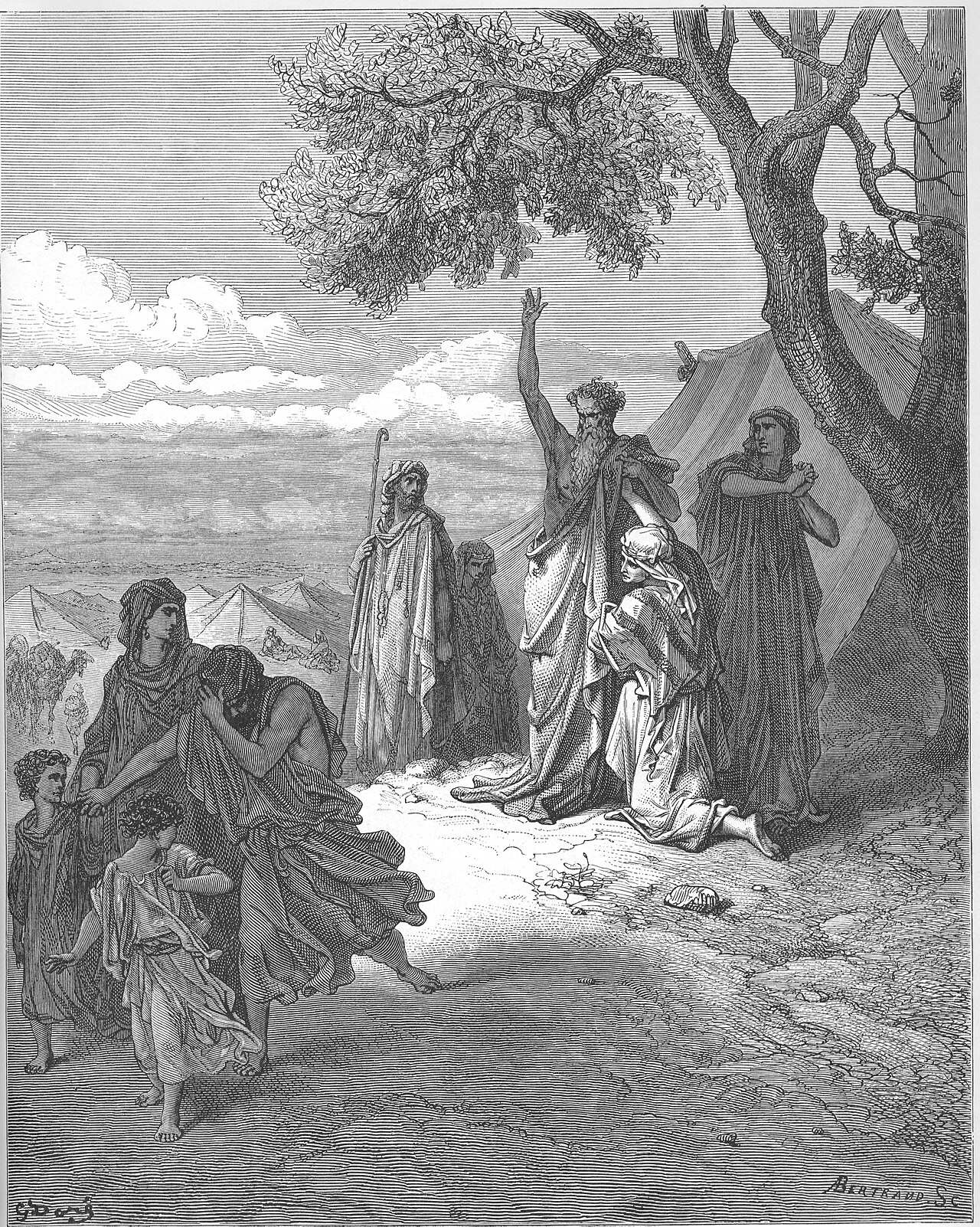
in Genesis 9Then Shem and Japheth took a garment and placed it across their shoulders, and walking backward, they covered their father’s nakedness. Their faces were turned away so that they did not see their father’s nakedness.
BSB
The same verse in ASV and KJV ▾
ASV
And Shem and Japheth took a garment, and laid it upon both their shoulders, and went backward, and covered the nakedness of their father; and their faces were backward, and they saw not their father’s nakedness.
KJV
And Shem and Japheth took a garment, and laid it upon both their shoulders, and went backward, and covered the nakedness of their father; and their faces were backward, and they saw not their father’s nakedness.
⋯
This verse in Genesis 9
Commentary
10 notes on this verseFor another mystery was accomplished and predicted in the days of Noah, of which you are not aware. It is this: in the blessings wherewith Noah blessed his two sons, and in the curse pronounced on his son's son. For the Spirit of prophecy would not curse the son that had been by God blessed along with [his brothers]. But since the punishment of the sin would cleave to the whole descent of the son that mocked at his father's nakedness, he made the curse originate with his son.
This site's exposition
a man of the soil
on Genesis 9:20-23
Noah plants a vineyard, drinks its wine and lies uncovered inside his tent. Ham sees his father's nakedness and goes out to tell it, while Shem and Japheth walk in backward and cover him without looking. The garment they carry on their shoulders answers the garments of skin God made at 3:21, and the beats of Eden run again here, a planting, a fruit, a nakedness and a covering. Canaan was already born, so this falls years after the ark.
This site's exposition
walking backward, they covered
The brothers' care is spelled out step by step: the garment on the shoulders, the backward walk, the turned faces. Matthew Henry saw here a robe of reverence thrown over the faults of parents, beside the love that covers faults in 1 Peter 4. Clement of Alexandria praised the chastity that covered it.
The record, by era
The Church Fathers4 voices
The chaste son could not endure looking upon the immodest nakedness of a good man; chastity covered over what drunkenness had exposed in a transgression committed in ignorance but manifest to all.
When Christ says, "I am the true vine," the blood of Christ is assuredly not water but wine. We are redeemed and made alive by his blood. But in the cup it is not wine as such that redeems but his blood. This is declared by the sacrament and testimony of all the Scriptures. For we find this even in Genesis also, in respect of the sacrament prefigured in Noah. That he drank wine was to them a precursor and figure of the Lord's passion.
A commentator
IrenaeusThe Demonstration of the Apostolic Preaching, Sections 19-21 · Written before 202.
proposed
Now the three sons of Noah were Shem, Ham and Japheth, from whom again the race was multiplied: for these were the beginning of mankind after the flood. Now of these one fell under a curse, and the two (others) inherited a blessing by reason of their works.
Noah cursed Canaan, saying, "Cursed be Canaan. A slave of slaves shall he be to his brothers." But what sin could Canaan have committed even if he had been right behind his father when Ham observed the nakedness of Noah?
The Puritans and the Awakening1 voice
There is a mantle of love to be thrown over the faults of all, 1 Pet. iv. Besides this, there is a robe of reverence to be thrown over the faults of parents and other superiors.
2 more voices on this verse
The Puritans and the Awakening2 voices
And Shem and Japheth took a garment,....
There is a mantle of love to be thrown over the faults of all, 1 Pet. iv. Besides this, there is a robe of reverence to be thrown over the faults of parents and other superiors.
The words behind it
21 Hebrew wordsEvery Hebrew word of this verse in the order it stands, with what it means and the door to its own study. The last column counts the times a word stands in the whole Bible: the rarer the word, the more the places it appears belong together.
| Hebrew | Sound | Meaning | Word study | In the Bible |
|---|---|---|---|---|
| וַיִּקַּח֩ | vaiyikach | and he took | H3947 → | 966 times |
| שֵׁ֨ם | shem | Shem | H8035 → | 17 times |
| וָיֶ֜פֶת | vayefet | and Japheth | H3315 → | 11 times |
| אֶת־ | ʾet- | <obj.> | H853 → | 10935 times |
| הַשִּׂמְלָ֗ה | hasimlah | the garment | H8071 → | 29 times |
| וַיָּשִׂ֙ימוּ֙ | vaiyasimu | and they put [it] | H7760 → | 584 times |
| עַל־ | ʾal- | on | H5921 → | 5755 times |
| שְׁכֶ֣ם | shekhem | [the] shoulder of | H7926 → | 21 times |
| שְׁנֵיהֶ֔ם | sheneihem | both of them | H8147 → | 768 times |
| וַיֵּֽלְכוּ֙ | vaiyelkhu | and they walked | H1980 → | 1546 times |
| אֲחֹ֣רַנִּ֔ית | ʾachoranit | backwards | H322 → | |
| וַיְכַסּ֕וּ | vaykhasu | and they covered | H3680 → | 152 times |
| אֵ֖ת | ʾet | <obj.> | H853 → | 10935 times |
| עֶרְוַ֣ת | ʾervat | [the] nakedness of | H6172 → | 54 times |
| אֲבִיהֶ֑ם | ʾavihem | father their | H1 → | 1212 times |
| וּפְנֵיהֶם֙ | ufeneihem | and faces their | H6440 → | 2123 times |
| אֲחֹ֣רַנִּ֔ית | ʾachoranit | [were] backwards | H322 → | |
| וְעֶרְוַ֥ת | veervat | and [the] nakedness of | H6172 → | 54 times |
| אֲבִיהֶ֖ם | ʾavihem | father their | H1 → | 1212 times |
| לֹ֥א | lo' | not | H3808 → | 5168 times |
| רָאֽוּ׃ | rau | they saw | H7200 → | 1300 times |
וַיִּקַּח֩and he took
vaiyikachH3947 →966 times
שֵׁ֨םShem
shemH8035 →17 times
וָיֶ֜פֶתand Japheth
vayefetH3315 →11 times
אֶת־<obj.>
ʾet-H853 →10935 times
הַשִּׂמְלָ֗הthe garment
hasimlahH8071 →29 times
וַיָּשִׂ֙ימוּ֙and they put [it]
vaiyasimuH7760 →584 times
עַל־on
ʾal-H5921 →5755 times
שְׁכֶ֣ם[the] shoulder of
shekhemH7926 →21 times
שְׁנֵיהֶ֔םboth of them
sheneihemH8147 →768 times
וַיֵּֽלְכוּ֙and they walked
vaiyelkhuH1980 →1546 times
אֲחֹ֣רַנִּ֔יתbackwards
ʾachoranitH322 →
וַיְכַסּ֕וּand they covered
vaykhasuH3680 →152 times
אֵ֖ת<obj.>
ʾetH853 →10935 times
עֶרְוַ֣ת[the] nakedness of
ʾervatH6172 →54 times
אֲבִיהֶ֑םfather their
ʾavihemH1 →1212 times
וּפְנֵיהֶם֙and faces their
ufeneihemH6440 →2123 times
אֲחֹ֣רַנִּ֔ית[were] backwards
ʾachoranitH322 →
וְעֶרְוַ֥תand [the] nakedness of
veervatH6172 →54 times
אֲבִיהֶ֖םfather their
ʾavihemH1 →1212 times
לֹ֥אnot
lo'H3808 →5168 times
רָאֽוּ׃they saw
rauH7200 →1300 times
A shaded row is a word that stands 400 times or fewer in the Bible.
The walk
8 stopsEach card is a verse this one points to, and under it the verses that one points to in turn. Where several paths arrive at the same place, that place is listed first: the text keeps returning to it.
Through
Galatians 6:1Brothers, if someone is caught in a trespass, you who are spiritual should restore him with a spirit of gentleness. But watch yourself, or you also may be tempted.
it leads to
- Romans 15:1
We who are strong ought to bear with the shortcomings of the weak and not to please ourselves.
- 2 Timothy 2:25
He must gently reprove those who oppose him, in the hope that God may grant them repentance leading to a knowledge of the truth.
- 2 Thessalonians 3:15
Yet do not regard him as an enemy, but warn him as a brother.
- James 5:19–20
My brothers, if one of you should wander from the truth and someone should bring him back,
- 1 John 5:16
If anyone sees his brother committing a sin not leading to death, he should ask God, who will give life to those who commit this kind of sin. There is a sin that leads…
- Romans 15:1
Through
Exodus 20:12Honor your father and mother, so that your days may be long in the land that the LORD your God is giving you.
it leads to
- Ephesians 6:1–3
Children, obey your parents in the Lord, for this is right.
- Colossians 3:20
Children, obey your parents in everything, for this is pleasing to the Lord.
- Deuteronomy 5:16
Honor your father and your mother, as the LORD your God has commanded you, so that your days may be long and that it may go well with you in the land that the…
- Ephesians 6:1–3
Where this verse is studied
About Genesis
Who and where
1 name in this verse with a page on the site.
This page draws on Adam Clarke, Commentary on the Bible; Clement of Alexandria, The Instructor Book 2; Cyprian, Epistle LXII.2-3; Ephrem the Syrian, COMMENTARY ON GENESIS 7.3.1-2; Irenaeus, The Demonstration of the Apostolic Preaching, Sections 19-21; John Gill, Exposition of the Old Testament (1748-1763); Justin Martyr, Dialogue with Trypho, Chapter CXXXIX and Matthew Henry, Commentary on the Whole Bible.