
Genesis 9:16
in Genesis 9And whenever the rainbow appears in the clouds, I will see it and remember the everlasting covenant between God and every living creature of every kind that is on the earth.”
BSB
The same verse in ASV and KJV ▾
ASV
And the bow shall be in the cloud; and I will look upon it, that I may remember the everlasting covenant between God and every living creature of all flesh that is upon the earth.
KJV
And the bow shall be in the cloud; and I will look upon it, that I may remember the everlasting covenant between God and every living creature of all flesh that is upon the earth.
⋯
This verse in Genesis 9
Commentary
6 notes on this verseThis site's exposition
Whenever I form clouds over the earth
on Genesis 9:14-17
God says twice that He will see the rainbow and remember the covenant, at verse 15 and verse 16. The keeping of it rests on the one who made it, and the sign is set to appear when the clouds gather, the hour the old fear would come back. Verse 16 calls it the everlasting covenant.
The record, by era
The Puritans and the Awakening3 voices
The rainbow is the reflection of the beams of the sun, which intimates that all the glory and significancy of the seals of the covenant are derived from Christ the Sun of righteousness, who is also described with a rainbow about his throne ( Rev. iv.
quarantine:debris (2026-07-29) — unbalanced-parens
And the bow shall be in the cloud,....
The rainbow is the reflection of the beams of the sun, which intimates that all the glory and significancy of the seals of the covenant are derived from Christ the Sun of righteousness, who is also described with a rainbow about his throne ( Rev. iv.
The Nineteenth Century2 voices
THE story of Noah's preservation in the ark is a suggestive representation of salvation by our Lord Jesus Christ. It is, we think, especially intended to depict that part of our salvation which lies in the washing of regeneration. In the same way as Baptism is the outward symbol of regeneration, so also is the ark, "wherein few, that is, eight souls were saved by water." The ark was immersed in those dreadful rains and awful waterfalls which deluged the earth, and Noah's family were buried in that ark to all the world. But by this burial they were floated out of the old condemned world into the new world of life and Divine Grace. Death to the world and burial in the ark were the means of their safety. "The like figure whereunto," says the Apostle Peter (1 Peter 3:21), "even Baptism does also now save us, (not the putting away of the filth of the flesh, but the answer of a good conscience toward God), by the resurrection of Jesus Christ." Baptism is a most significant picture of regeneration, but it is in no sense the cause of the new birth. And the blunder of the Puseyites lies in considering the outward manifestation of an accomplished fact, as though it were the means of creating that fact. Baptism saves no one, except, as Peter says, in figure. But as a figure, it is eminently full of Divine teaching, for it sets forth the great Truth of God that the Believer, standing today in the old world, is buried to that world, "buried with Jesus Christ by Baptism into death." And his rising from the liquid tomb is the figure of his resurrection in Christ, into a new world, as a new man, "that like as Christ was raised up from the dead by the glory of the Father, even so we also should walk in newness of life" (Rom. 6:4). Would to God that we thought more of being dead with Christ, buried with Him and risen with Him.
THE story of Noah's preservation in the ark is a suggestive representation of salvation by our Lord Jesus Christ. It is, we think, especially intended to depict that part of our salvation which lies in the washing of regeneration. In the same way as Baptism is the outward symbol of regeneration, so also is the ark, "wherein few, that is, eight souls were saved by water." The ark was immersed in those dreadful rains and awful waterfalls which deluged the earth, and Noah's family were buried in that ark to all the world.
The words behind it
18 Hebrew wordsEvery Hebrew word of this verse in the order it stands, with what it means and the door to its own study. The last column counts the times a word stands in the whole Bible: the rarer the word, the more the places it appears belong together.
| Hebrew | Sound | Meaning | Word study | In the Bible |
|---|---|---|---|---|
| וְהָיְתָ֥ה | vehayetah | and it will be | H1961 → | 3559 times |
| הַקֶּ֖שֶׁת | hakeshet | the bow | H7198 → | 76 times |
| בֶּֽעָנָ֑ן | beanan | in the cloud[s] | H6051 → | 87 times |
| וּרְאִיתִ֗יהָ | ureitiha | and I will see it | H7200 → | 1300 times |
| לִזְכֹּר֙ | lizkor | to remember | H2142 → | 230 times |
| בְּרִ֣ית | berit | [the] covenant of | H1285 → | 284 times |
| עוֹלָ֔ם | olam | perpetuity | H5769 → | 438 times |
| בֵּ֣ין | bein | between | H996 → | 407 times |
| אֱלֹהִ֔ים | ʾelohim | God | H430 → | 2601 times |
| וּבֵין֙ | uvein | and between | H996 → | 407 times |
| כָּל־ | kol- | every | H3605 → | 5413 times |
| נֶ֣פֶשׁ | nefesh | creature | H5315 → | 754 times |
| חַיָּ֔ה | chaiyah | living | H2416 → | 498 times |
| בְּכָל־ | bekhol | among all | H3605 → | 5413 times |
| בָּשָׂ֖ר | basar | flesh | H1320 → | 270 times |
| אֲשֶׁ֥ר | ʾasher | which | H834 → | 5497 times |
| עַל־ | ʾal- | [is] on | H5921 → | 5755 times |
| הָאָֽרֶץ׃ | haaretz | the earth | H776 → | 2504 times |
וְהָיְתָ֥הand it will be
vehayetahH1961 →3559 times
הַקֶּ֖שֶׁתthe bow
hakeshetH7198 →76 times
בֶּֽעָנָ֑ןin the cloud[s]
beananH6051 →87 times
וּרְאִיתִ֗יהָand I will see it
ureitihaH7200 →1300 times
לִזְכֹּר֙to remember
lizkorH2142 →230 times
בְּרִ֣ית[the] covenant of
beritH1285 →284 times
עוֹלָ֔םperpetuity
olamH5769 →438 times
בֵּ֣יןbetween
beinH996 →407 times
אֱלֹהִ֔יםGod
ʾelohimH430 →2601 times
וּבֵין֙and between
uveinH996 →407 times
כָּל־every
kol-H3605 →5413 times
נֶ֣פֶשׁcreature
nefeshH5315 →754 times
חַיָּ֔הliving
chaiyahH2416 →498 times
בְּכָל־among all
bekholH3605 →5413 times
בָּשָׂ֖רflesh
basarH1320 →270 times
אֲשֶׁ֥רwhich
ʾasherH834 →5497 times
עַל־[is] on
ʾal-H5921 →5755 times
הָאָֽרֶץ׃the earth
haaretzH776 →2504 times
A shaded row is a word that stands 400 times or fewer in the Bible.
The walk
8 stopsEach card is a verse this one points to, and under it the verses that one points to in turn. Where several paths arrive at the same place, that place is listed first: the text keeps returning to it.
Through
Jeremiah 32:40I will make an everlasting covenant with them: I will never turn away from doing good to them, and I will put My fear in their hearts, so that they will never turn away…
it leads to
- Jeremiah 31:31–33
Behold, the days are coming, declares the LORD, when I will make a new covenant with the house of Israel and with the house of Judah.
- Ezekiel 36:26
I will give you a new heart and put a new spirit within you; I will remove your heart of stone and give you a heart of flesh.
- Jeremiah 24:7
I will give them a heart to know Me, that I am the LORD. They will be My people, and I will be their God, for they will return to Me with all their…
- Hebrews 6:13–18
When God made His promise to Abraham, since He had no one greater to swear by, He swore by Himself,
- James 1:17
Every good and perfect gift is from above, coming down from the Father of the heavenly lights, with whom there is no change or shifting shadow.
- Jeremiah 31:31–33
Through
2 Samuel 23:5Is not my house right with God? For He has established with me an everlasting covenant, ordered and secured in every part. Will He not bring about my full salvation and my every desire?
it leads to
- Isaiah 55:3
Incline your ear and come to Me; listen, so that your soul may live. I will make with you an everlasting covenant—My loving devotion promised to David.
- Isaiah 9:6–7
For unto us a child is born, unto us a son is given, and the government will be upon His shoulders. And He will be called Wonderful Counselor, Mighty God, Everlasting Father, Prince of…
- Isaiah 55:3
Through
Genesis 17:19But God replied, “Your wife Sarah will indeed bear you a son, and you are to name him Isaac. I will establish My covenant with him as an everlasting covenant for his descendants after…
it leads to
- Luke 1:13–20
But the angel said to him, “Do not be afraid, Zechariah, because your prayer has been heard. Your wife Elizabeth will bear you a son, and you are to give him the name John.
- Luke 1:13–20
Where this verse is studied
On this page
Studies6
About Genesis
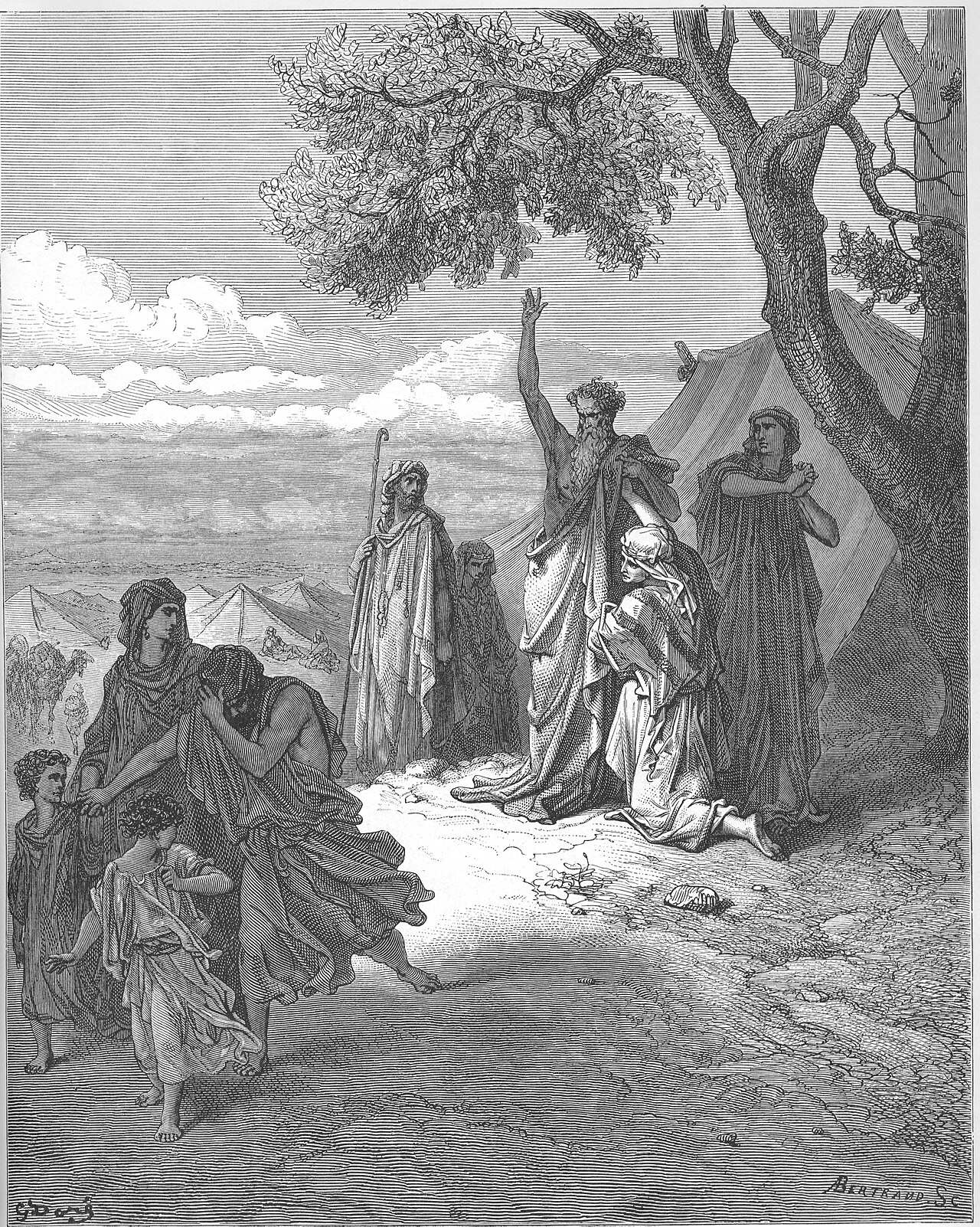
This page draws on Charles Spurgeon, The Metropolitan Tabernacle Pulpit, Sermon No. 517: “The Rainbow” (lightly modernized text, CCEL edition); John Gill, Exposition of the Old Testament; John Gill, Exposition of the Old Testament (1748-1763) and Matthew Henry, Commentary on the Whole Bible.