
Genesis 29:10
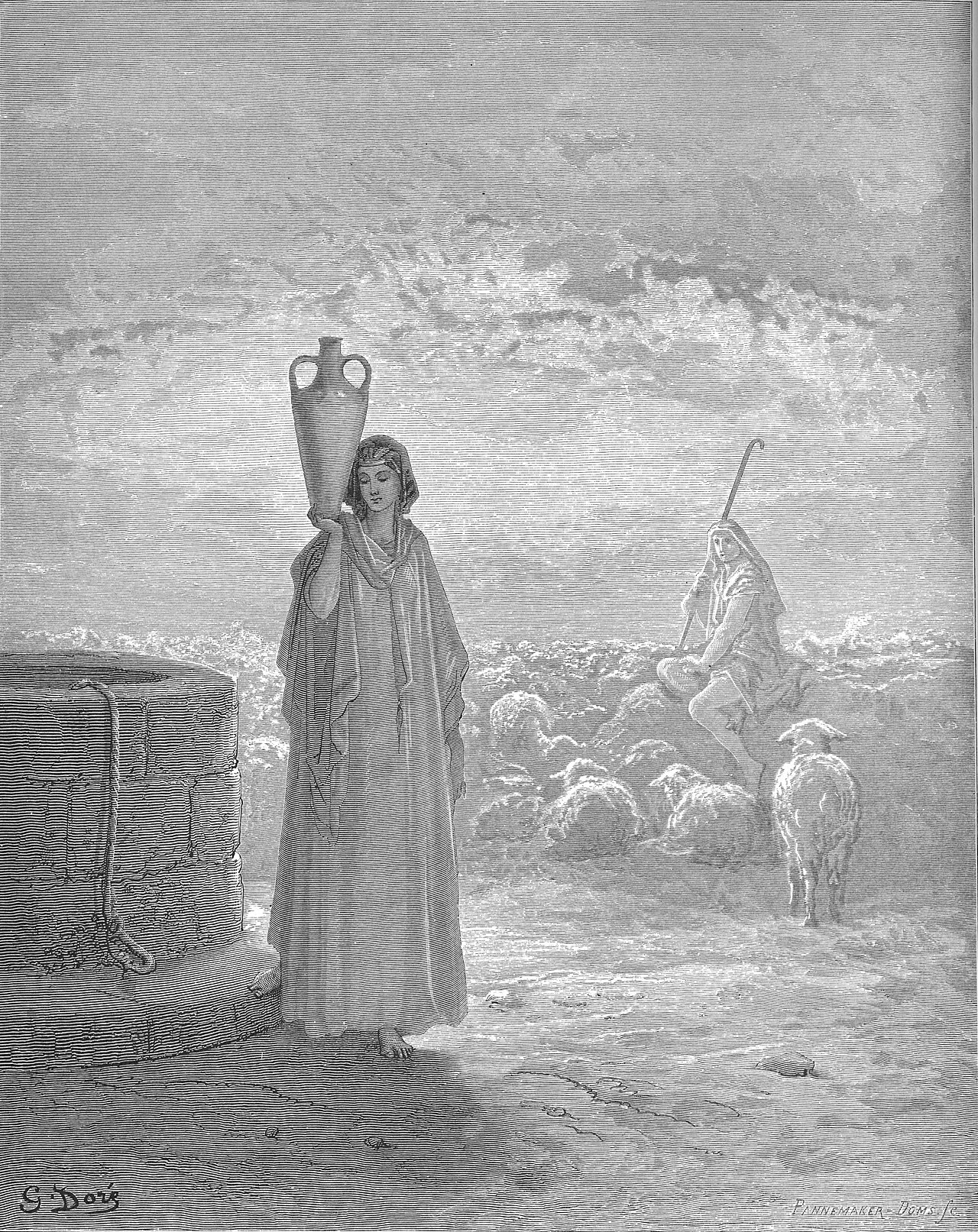
in Genesis 29As soon as Jacob saw Rachel, the daughter of his mother’s brother Laban, with Laban’s sheep, he went up and rolled the stone away from the mouth of the well and watered his uncle’s sheep.
BSB
The same verse in ASV and KJV ▾
ASV
And it came to pass, when Jacob saw Rachel the daughter of Laban his mother’s brother, and the sheep of Laban his mother’s brother, that Jacob went near, and rolled the stone from the well’s mouth, and watered the flock of Laban his mother’s brother.
KJV
And it came to pass, when Jacob saw Rachel the daughter of Laban his mother’s brother, and the sheep of Laban his mother’s brother, that Jacob went near, and rolled the stone from the well’s mouth, and watered the flock of Laban his mother’s brother.
⋯
This verse in Genesis 29
Commentary
6 notes on this verseJacob went near, and rolled the stone - Probably the flock of Laban was the last of those which had a right to the well; that flock being now come, Jacob assisted the shepherds to roll off the stone, (for it is not likely he did it by himself), and so assisted his cousin, to whom he was as yet unknown, to water her flock.
This site's exposition
Rachel arrived with her father's sheep
on Genesis 29:9-11
Rachel arrives with her father's sheep, and Jacob rolls the stone away by himself and waters Laban's flock. Then he kisses her and weeps aloud. Chapter 24 ran the same scene for his mother: a traveller reaches the family's country, stops at a well, a woman comes to draw, and she runs home with the news. Moses meets his wife at a well in Midian at Exodus 2:16 to 21.
This site's exposition
rolled the stone away from the mouth
Adam Clarke doubts that Jacob moved the stone alone and thinks he helped the shepherds once Laban's flock had come. The verse ties Rachel, the sheep and the flock to his mother's brother, three times over in the Hebrew. Kinship drives the scene.
The record, by era
The Puritans and the Awakening2 voices
Laban, it seems, was so taken with Jacob's ingenuity and industry about his flocks that he was desirous he should continue with him, and very fairly reasons thus: " Because thou art my brother, shouldst thou therefore serve me for nought?
quarantine:debris (2026-07-29) — odd-straight-quotes
And it came to pass, when Jacob saw Rachel, the daughter of Laban his mother's brother,....
The Nineteenth Century1 voice
A commentator
Jamieson, Fausset & Brown1802–1910
Commentary Critical and Explanatory on the Whole Bible (1871)
proposed
Watering them, which is done twice a day, is a work of time and labor, and Jacob rendered no small service in volunteering his aid to the young shepherdess. The interview was affecting, the reception welcome, and Jacob forgot all his toils in the society of his Mesopotamian relatives.
The words behind it
29 Hebrew wordsEvery Hebrew word of this verse in the order it stands, with what it means and the door to its own study. The last column counts the times a word stands in the whole Bible: the rarer the word, the more the places it appears belong together.
| Hebrew | Sound | Meaning | Word study | In the Bible |
|---|---|---|---|---|
| וַיְהִ֡י | vayhi | and it was | H1961 → | 3559 times |
| כַּאֲשֶׁר֩ | kaasher | just as | H834 → | 5497 times |
| רָאָ֨ה | raah | he saw | H7200 → | 1300 times |
| יַעֲקֹ֜ב | yaako | Jacob | H3290 → | 350 times |
| אֶת־ | ʾet- | <obj.> | H853 → | 10935 times |
| רָחֵ֗ל | rachel | Rachel | H7354 → | 47 times |
| בַּת־ | bat- | [the] daughter of | H1323 → | 588 times |
| לָבָן֙ | lavan | Laban | H3837 → | 55 times |
| אֲחִ֣י | ʾachi | [the] brother of | H251 → | 630 times |
| אִמּ֔וֹ | ʾimo | mother his | H517 → | 220 times |
| וְאֶת־ | veet | and <obj.> | H853 → | 10935 times |
| צֹ֥אן | tzon | [the] sheep of | H6629 → | 274 times |
| לָבָ֖ן | lavan | Laban | H3837 → | 55 times |
| אֲחִ֣י | ʾachi | [the] brother of | H251 → | 630 times |
| אִמּ֑וֹ | ʾimo | mother his | H517 → | 220 times |
| וַיִּגַּ֣שׁ | vaiyigash | and he drew near | H5066 → | 125 times |
| יַעֲקֹ֗ב | yaako | Jacob | H3290 → | 350 times |
| וַיָּ֤גֶל | vaiyagel | and he rolled | H1556 → | 18 times |
| אֶת־ | ʾet- | <obj.> | H853 → | 10935 times |
| הָאֶ֙בֶן֙ | haeven | the stone | H68 → | 273 times |
| מֵעַל֙ | meal | from over | H5921 → | 5755 times |
| פִּ֣י | pi | [the] mouth of | H6310 → | 498 times |
| הַבְּאֵ֔ר | habeer | the well | H875 → | 38 times |
| וַיַּ֕שְׁקְ | vaiyashk | and he watered | H8248 → | 61 times |
| אֶת־ | ʾet- | <obj.> | H853 → | 10935 times |
| צֹ֥אן | tzon | [the] sheep of | H6629 → | 274 times |
| לָבָ֖ן | lavan | Laban | H3837 → | 55 times |
| אֲחִ֥י | ʾachi | [the] brother of | H251 → | 630 times |
| אִמּֽוֹ׃ | ʾimo | mother his | H517 → | 220 times |
וַיְהִ֡יand it was
vayhiH1961 →3559 times
כַּאֲשֶׁר֩just as
kaasherH834 →5497 times
רָאָ֨הhe saw
raahH7200 →1300 times
יַעֲקֹ֜בJacob
yaakoH3290 →350 times
אֶת־<obj.>
ʾet-H853 →10935 times
רָחֵ֗לRachel
rachelH7354 →47 times
בַּת־[the] daughter of
bat-H1323 →588 times
לָבָן֙Laban
lavanH3837 →55 times
אֲחִ֣י[the] brother of
ʾachiH251 →630 times
אִמּ֔וֹmother his
ʾimoH517 →220 times
וְאֶת־and <obj.>
veetH853 →10935 times
צֹ֥אן[the] sheep of
tzonH6629 →274 times
לָבָ֖ןLaban
lavanH3837 →55 times
אֲחִ֣י[the] brother of
ʾachiH251 →630 times
אִמּ֑וֹmother his
ʾimoH517 →220 times
וַיִּגַּ֣שׁand he drew near
vaiyigashH5066 →125 times
יַעֲקֹ֗בJacob
yaakoH3290 →350 times
וַיָּ֤גֶלand he rolled
vaiyagelH1556 →18 times
אֶת־<obj.>
ʾet-H853 →10935 times
הָאֶ֙בֶן֙the stone
haevenH68 →273 times
מֵעַל֙from over
mealH5921 →5755 times
פִּ֣י[the] mouth of
piH6310 →498 times
הַבְּאֵ֔רthe well
habeerH875 →38 times
וַיַּ֕שְׁקְand he watered
vaiyashkH8248 →61 times
אֶת־<obj.>
ʾet-H853 →10935 times
צֹ֥אן[the] sheep of
tzonH6629 →274 times
לָבָ֖ןLaban
lavanH3837 →55 times
אֲחִ֥י[the] brother of
ʾachiH251 →630 times
אִמּֽוֹ׃mother his
ʾimoH517 →220 times
A shaded row is a word that stands 400 times or fewer in the Bible.
The walk
3 stopsEach card is a verse this one points to, and under it the verses that one points to in turn. Where several paths arrive at the same place, that place is listed first: the text keeps returning to it.
Through
Exodus 2:17And when some shepherds came along and drove them away, Moses rose up to help them and watered their flock.
it leads to
- Genesis 21:25
But when Abraham complained to Abimelech about a well that Abimelech’s servants had seized,
- Genesis 26:15–22
So the Philistines took dirt and stopped up all the wells that his father’s servants had dug in the days of his father Abraham.
- Exodus 2:12
After looking this way and that and seeing no one, he struck down the Egyptian and hid his body in the sand.
- Genesis 21:25
Where this verse is studied
On this page
Studies2
On this verse
On this chapter
About Genesis
Who and where
2 names in this verse with a page on the site.
This page draws on Adam Clarke, Commentary on the Bible; Jamieson, Fausset & Brown, Commentary Critical and Explanatory on the Whole Bible; John Gill, Exposition of the Old Testament (1748-1763) and Matthew Henry, Commentary on the Whole Bible.