
Genesis 29:13
in Genesis 29When Laban heard the news about his sister’s son Jacob, he ran out to meet him. He embraced him and kissed him and brought him to his home, where Jacob told him all that had happened.
BSB
The same verse in ASV and KJV ▾
ASV
And it came to pass, when Laban heard the tidings of Jacob his sister’s son, that he ran to meet him, and embraced him, and kissed him, and brought him to his house. And he told Laban all these things.
KJV
And it came to pass, when Laban heard the tidings of Jacob his sister’s son, that he ran to meet him, and embraced him, and kissed him, and brought him to his house. And he told Laban all these things.
⋯
This verse in Genesis 29
Commentary
3 notes on this verseThis site's exposition
she ran and told her father
on Genesis 29:12-14
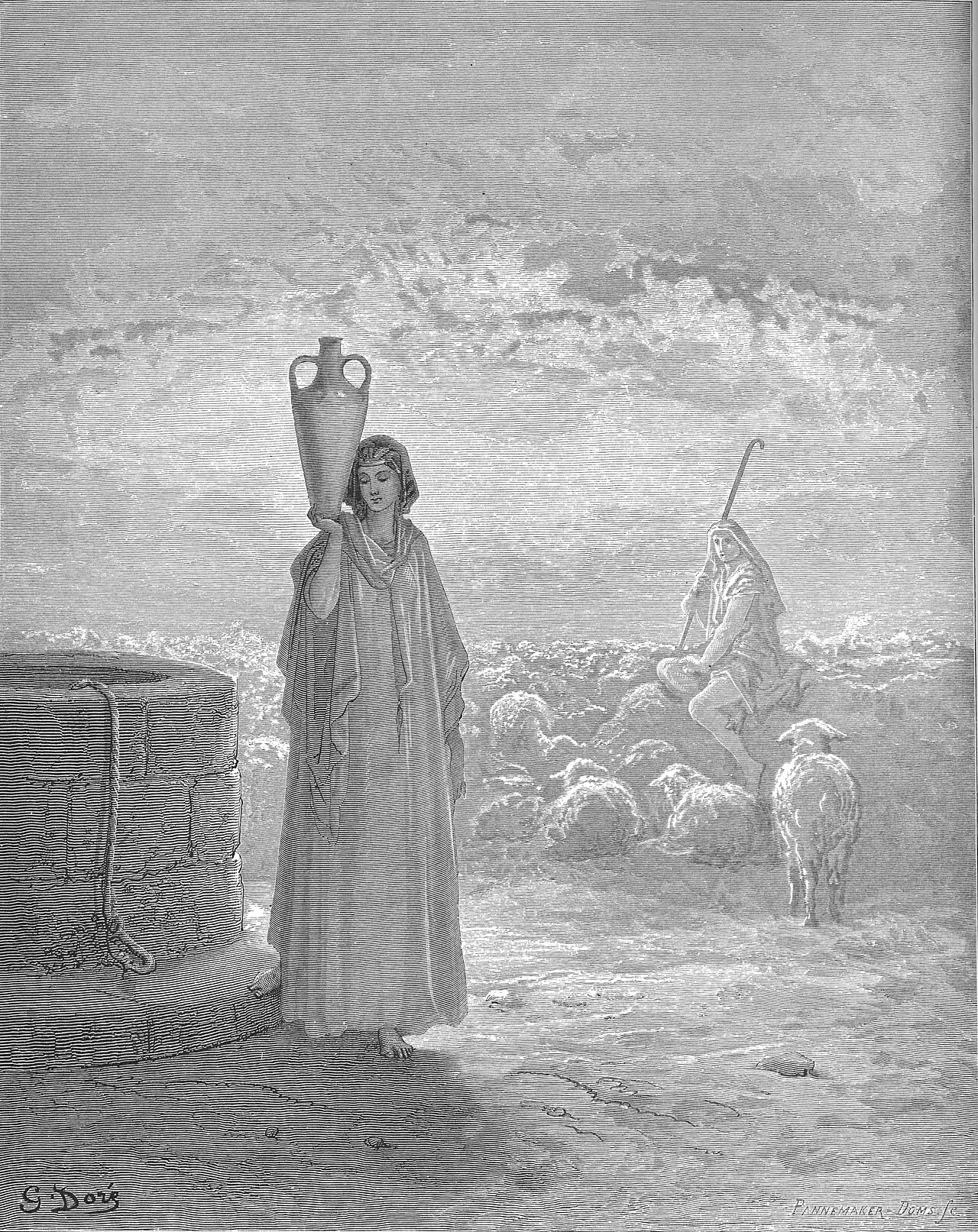
Jacob tells Rachel he is Rebekah's son, a relative of her father, and she runs and tells him. Laban runs out to meet him, embraces him, and brings him home. In chapter 24 Laban ran out to a servant who had ten camels and gold, and Jacob comes with nothing.
This site's exposition
he ran out to meet him
What Jacob told Laban goes unrecorded. Jamieson, Fausset and Brown note, on verse 12, that brother in Eastern speech covered any near kinsman, uncle, cousin or nephew. Laban's own greeting in verse 14 claims the same bond.
The record, by era
The Puritans and the Awakening1 voice
And it came to pass, when Laban heard the tidings of Jacob his sister's son,.... That there was such a man at the well, thus related to him, and what he had done there, had rolled away the stone, and watered his flock.
How the passage was read
What the Jewish commentators add
On the verses either side of this one
I have already explained the meaning of chodesh yamin (the space of a month). 16 According to I.E. it means a full month. Cf.
This section is reception history: how the passage was read and kept in the Jewish tradition. Where a reading parts from an essential of the Christian faith, the section says so at that point.
Texts and citation data: Sefaria; each excerpt follows its version’s licence. 6 further sources are cited on this chapter that carry no English text this site may quote or only restate the verse.
The words behind it
23 Hebrew wordsEvery Hebrew word of this verse in the order it stands, with what it means and the door to its own study. The last column counts the times a word stands in the whole Bible: the rarer the word, the more the places it appears belong together.
| Hebrew | Sound | Meaning | Word study | In the Bible |
|---|---|---|---|---|
| וַיְהִי֩ | vayhi | and it was | H1961 → | 3559 times |
| כִשְׁמֹ֨עַ | khishmoa' | when heard | H8085 → | 1159 times |
| לָבָ֜ן | lavan | Laban | H3837 → | 55 times |
| אֶת־ | ʾet- | <obj.> | H853 → | 10935 times |
| שֵׁ֣מַע׀ | shema' | [the] report of | H8088 → | |
| יַעֲקֹ֣ב | yaako | Jacob | H3290 → | 350 times |
| בֶּן־ | ben- | [the] son of | H1121 → | 4930 times |
| אֲחֹת֗וֹ | ʾachoto | sister his | H269 → | 114 times |
| וַיָּ֤רָץ | vaiyarotz | and he ran | H7323 → | 103 times |
| לִקְרָאתוֹ֙ | likrato | to meet him | H7122 → | 139 times |
| וַיְחַבֶּק־ | vaychabek- | and he embraced | H2263 → | 13 times |
| לוֹ֙ | lo | <to> <the> him | ||
| וַיְנַשֶּׁק־ | vaynashek- | and he kissed | H5401 → | 35 times |
| ל֔וֹ | lo | <to> <the> him | ||
| וַיְבִיאֵ֖הוּ | vayviehu | and he brought him | H935 → | 2568 times |
| אֶל־ | ʾel- | to | H413 → | 5510 times |
| בֵּית֑וֹ | beito | house his | H1004 → | 2046 times |
| וַיְסַפֵּ֣ר | vaysaper | and he recounted | H5608 → | 159 times |
| לְלָבָ֔ן | lelavan | to Laban | H3837 → | 55 times |
| אֵ֥ת | ʾet | <obj.> | H853 → | 10935 times |
| כָּל־ | kol- | all | H3605 → | 5413 times |
| הַדְּבָרִ֖ים | hadevarim | the things | H1697 → | 1440 times |
| הָאֵֽלֶּה׃ | haeleh | <the> these | H428 → | 746 times |
וַיְהִי֩and it was
vayhiH1961 →3559 times
כִשְׁמֹ֨עַwhen heard
khishmoa'H8085 →1159 times
לָבָ֜ןLaban
lavanH3837 →55 times
אֶת־<obj.>
ʾet-H853 →10935 times
שֵׁ֣מַע׀[the] report of
shema'H8088 →
יַעֲקֹ֣בJacob
yaakoH3290 →350 times
בֶּן־[the] son of
ben-H1121 →4930 times
אֲחֹת֗וֹsister his
ʾachotoH269 →114 times
וַיָּ֤רָץand he ran
vaiyarotzH7323 →103 times
לִקְרָאתוֹ֙to meet him
likratoH7122 →139 times
וַיְחַבֶּק־and he embraced
vaychabek-H2263 →13 times
לוֹ֙<to> <the> him
lo
וַיְנַשֶּׁק־and he kissed
vaynashek-H5401 →35 times
ל֔וֹ<to> <the> him
lo
וַיְבִיאֵ֖הוּand he brought him
vayviehuH935 →2568 times
אֶל־to
ʾel-H413 →5510 times
בֵּית֑וֹhouse his
beitoH1004 →2046 times
וַיְסַפֵּ֣רand he recounted
vaysaperH5608 →159 times
לְלָבָ֔ןto Laban
lelavanH3837 →55 times
אֵ֥ת<obj.>
ʾetH853 →10935 times
כָּל־all
kol-H3605 →5413 times
הַדְּבָרִ֖יםthe things
hadevarimH1697 →1440 times
הָאֵֽלֶּה׃<the> these
haelehH428 →746 times
A shaded row is a word that stands 400 times or fewer in the Bible.
The walk
8 stopsEach card is a verse this one points to, and under it the verses that one points to in turn. Where several paths arrive at the same place, that place is listed first: the text keeps returning to it.
Through
Romans 16:16Greet one another with a holy kiss. All the churches of Christ send you greetings.
it leads to
- 1 Corinthians 16:20
All the brothers here send you greetings. Greet one another with a holy kiss.
Reached by 2 separate paths from here.
- 2 Corinthians 13:12
Greet one another with a holy kiss.
Reached by 2 separate paths from here.
- 1 Thessalonians 5:26
Greet all the brothers with a holy kiss.
- 1 Peter 5:14
Greet one another with a kiss of love. Peace to all of you who are in Christ.
- Acts 20:37
They all wept openly as they embraced Paul and kissed him.
- 1 Corinthians 16:20
Through
Genesis 24:29Now Rebekah had a brother named Laban, and he rushed out to the man at the spring.
it leads to
- Genesis 29:5
“Do you know Laban the grandson of Nahor?” Jacob asked. “We know him,” they replied.
- Genesis 29:5
Through
Exodus 4:27Meanwhile, the LORD had said to Aaron, “Go and meet Moses in the wilderness.” So he went and met Moses at the mountain of God and kissed him.
it leads to
- Exodus 3:1
Meanwhile, Moses was shepherding the flock of his father-in-law Jethro, the priest of Midian. He led the flock to the far side of the wilderness and came to Horeb, the mountain of God.
- Exodus 3:1
Through
Acts 20:37They all wept openly as they embraced Paul and kissed him.
it leads to
- 2 Timothy 1:4
Recalling your tears, I long to see you so that I may be filled with joy.
- 2 Timothy 1:4
Where this verse is studied
About Genesis
Who and where
1 name in this verse with a page on the site.
This page draws on Jamieson, Fausset & Brown, Commentary Critical and Explanatory on the Whole Bible; John Gill, Exposition of the Old Testament (1748-1763) and Matthew Henry, Commentary on the Whole Bible.