
Ezra 2:38
in Ezra 2the descendants of Pashhur, 1,247;
BSB
The same verse in ASV and KJV ▾
ASV
The children of Pashhur, a thousand two hundred forty and seven.
KJV
The children of Pashur, a thousand two hundred forty and seven.
⋯
This verse in Ezra 2
Commentary
4 notes on this verseThis site's exposition
The descendants of Jedaiah
on Ezra 2:36-42
Priests come first, then Levites, then the singers descended from Asaph, then the gatekeepers. John Gill notes that the Levites number only 74, against the thirty-eight thousand who served in David's day. The same order, priests before singers before gatekeepers, returns in worship once the altar stands in chapter 3.
This site's exposition
the descendants of Pashhur, 1,247
Pashhur's 1,247 is the largest of the four priestly houses. Nehemiah 7:41 gives the same figure. Together the priests number 4,289, John Gill's total, about one in ten of the whole assembly of 42,360 in verse 64.
The record, by era
The Puritans and the Awakening1 voice
If these were of the posterity of that Pashur that abused Jeremiah ( Jer. xx. 1 ), it is strange that so bad a man should have so good a seed, and so numerous. I cannot but wonder at the small number of them, for, taking in both the singers and the porters (
quarantine:debris (2026-07-29) — unbalanced-parens
The Nineteenth Century1 voice
A commentator
Jamieson, Fausset & Brown1802–1910
Commentary Critical and Explanatory on the Whole Bible (1871)
proposed
The priests--Each of their families was ranged under its prince or head, like those of the other tribes. It will be remembered that the whole body was divided into twenty-four courses, one of which, in rotation, discharged the sacerdotal duties every week, and each division was called after the name of its first prince or chief.
The words behind it
6 Hebrew wordsEvery Hebrew word of this verse in the order it stands, with what it means and the door to its own study. The last column counts the times a word stands in the whole Bible: the rarer the word, the more the places it appears belong together.
| Hebrew | Sound | Meaning | Word study | In the Bible |
|---|---|---|---|---|
| בְּנֵ֣י | benei | [the] descendants of | H1121 → | 4930 times |
| פַשְׁח֔וּר | fashchur | Pashhur | H6583 → | |
| אֶ֕לֶף | ʾelef | one thousand | H505 → | 505 times |
| מָאתַ֖יִם | matayim | two hundred | H3967 → | 581 times |
| אַרְבָּעִ֥ים | ʾarbaim | forty | H705 → | 136 times |
| וְשִׁבְעָֽה׃ ס | veshivah | and seven | H7651 → | 394 times |
בְּנֵ֣י[the] descendants of
beneiH1121 →4930 times
פַשְׁח֔וּרPashhur
fashchurH6583 →
אֶ֕לֶףone thousand
ʾelefH505 →505 times
מָאתַ֖יִםtwo hundred
matayimH3967 →581 times
אַרְבָּעִ֥יםforty
ʾarbaimH705 →136 times
וְשִׁבְעָֽה׃ סand seven
veshivahH7651 →394 times
A shaded row is a word that stands 400 times or fewer in the Bible.
The walk
8 stopsEach card is a verse this one points to, and under it the verses that one points to in turn. Where several paths arrive at the same place, that place is listed first: the text keeps returning to it.
Through
Nehemiah 7:41the descendants of Pashhur, 1,247;
it leads to
- 1 Chronicles 9:12
Adaiah son of Jeroham, the son of Pashhur, the son of Malchijah; Maasai son of Adiel, the son of Jahzerah, the son of Meshullam, the son of Meshillemith, the son of Immer;
Reached by 2 separate paths from here.
- 1 Chronicles 24:9
the fifth to Malchijah, the sixth to Mijamin,
- Ezra 10:22
From the descendants of Pashhur: Elioenai, Maaseiah, Ishmael, Nethanel, Jozabad, and Elasah.
- 1 Chronicles 9:12
Through
1 Chronicles 9:12Adaiah son of Jeroham, the son of Pashhur, the son of Malchijah; Maasai son of Adiel, the son of Jahzerah, the son of Meshullam, the son of Meshillemith, the son of Immer;
it leads to
- Nehemiah 11:12–13
and their associates who did the work at the temple—822 men;
- 1 Chronicles 24:14
the fifteenth to Bilgah, the sixteenth to Immer,
- Nehemiah 7:40
the descendants of Immer, 1,052;
- Ezra 2:37
the descendants of Immer, 1,052;
- Nehemiah 11:12–13
Through
Ezra 10:22From the descendants of Pashhur: Elioenai, Maaseiah, Ishmael, Nethanel, Jozabad, and Elasah.
it leads to
- Nehemiah 7:41
the descendants of Pashhur, 1,247;
- Nehemiah 7:41
Where this verse is studied
On this page
About Ezra
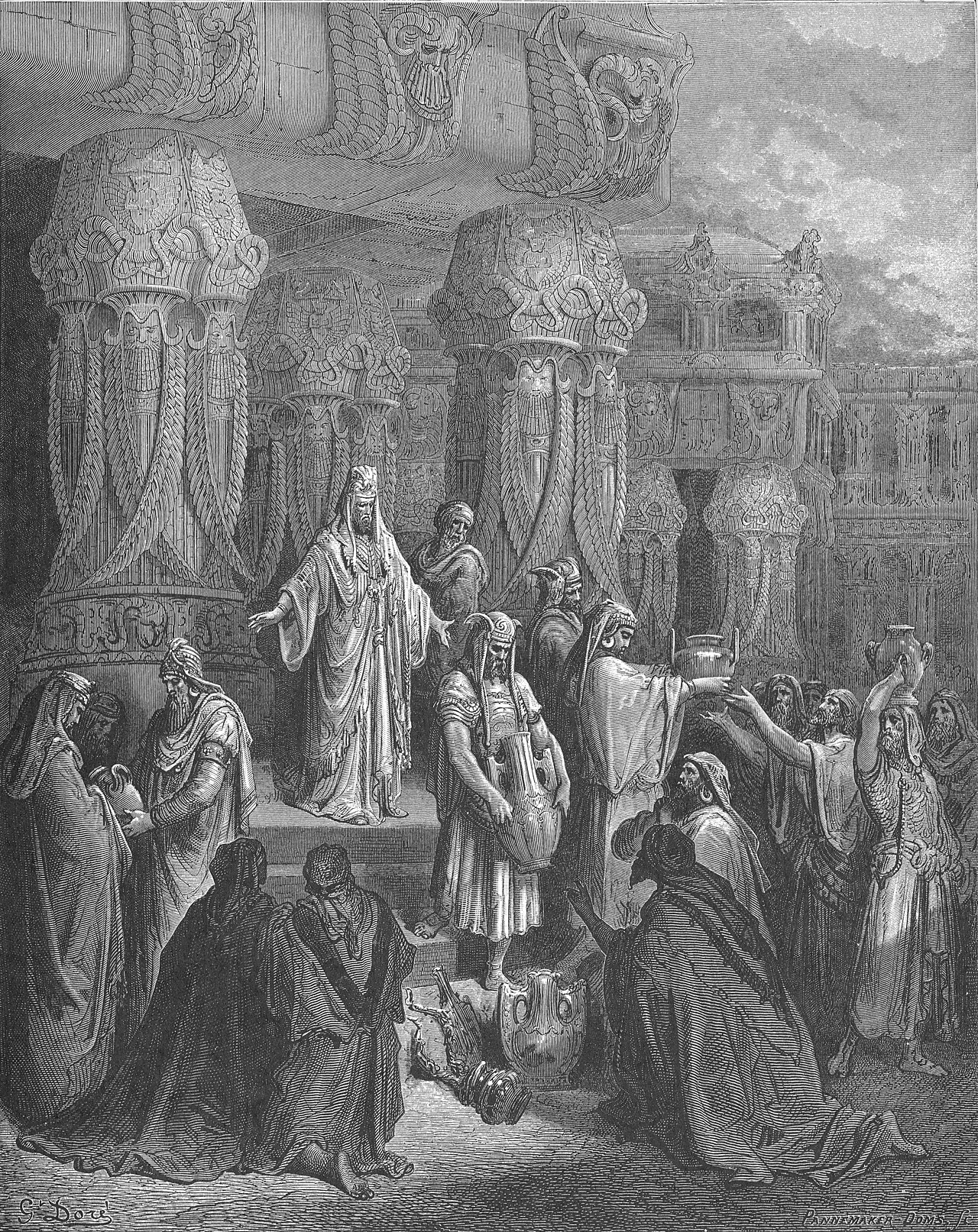
This page draws on Berean Standard Bible, Nehemiah 7:41, the parallel register; Berean Standard Bible, Ezra 2; Jamieson, Fausset & Brown, Commentary Critical and Explanatory on the Whole Bible; John Gill, Exposition of the Old Testament; Keil, The Books of Ezra, Nehemiah, and Esther and Matthew Henry, Commentary on the Whole Bible.