
Exodus 9:32
in Exodus 9but the wheat and spelt were not destroyed, because they are late crops.)
BSB
The same verse in ASV and KJV ▾
ASV
But the wheat and the spelt were not smitten: for they were not grown up.
KJV
But the wheat and the rie were not smitten: for they were not grown up.
⋯
This verse in Exodus 9
Commentary
4 notes on this verseBut the wheat and the rye were not smitten - Wheat, חטה chittah, which Mr. Parkhurst thinks should be derived from the Chaldee and Samaritan חטי chati, which signifies tender, delicious, delicate, because of the superiority of its flavor, etc., to every other kind of grain. But this term in Scripture appears to mean any kind of bread-corn. Rye, כסמת cussemeth, from כסם casam, to have long hair; and hence, though the particular species is not known, the word must mean some bearded grain.
This site's exposition
the flax and the barley was smitten
on Exodus 9:31-32
The narrator stops the account to say which crops were standing, and this is the only agricultural date in the whole plague narrative. Barley in the ear and flax in bud puts the hail near the end of the Egyptian winter, which is where Clarke and Keil place it in January or February, and the wheat and the rie were still low enough to come through. What survived here is what the locusts eat in the next chapter.
The record, by era
The Puritans and the Awakening2 voices
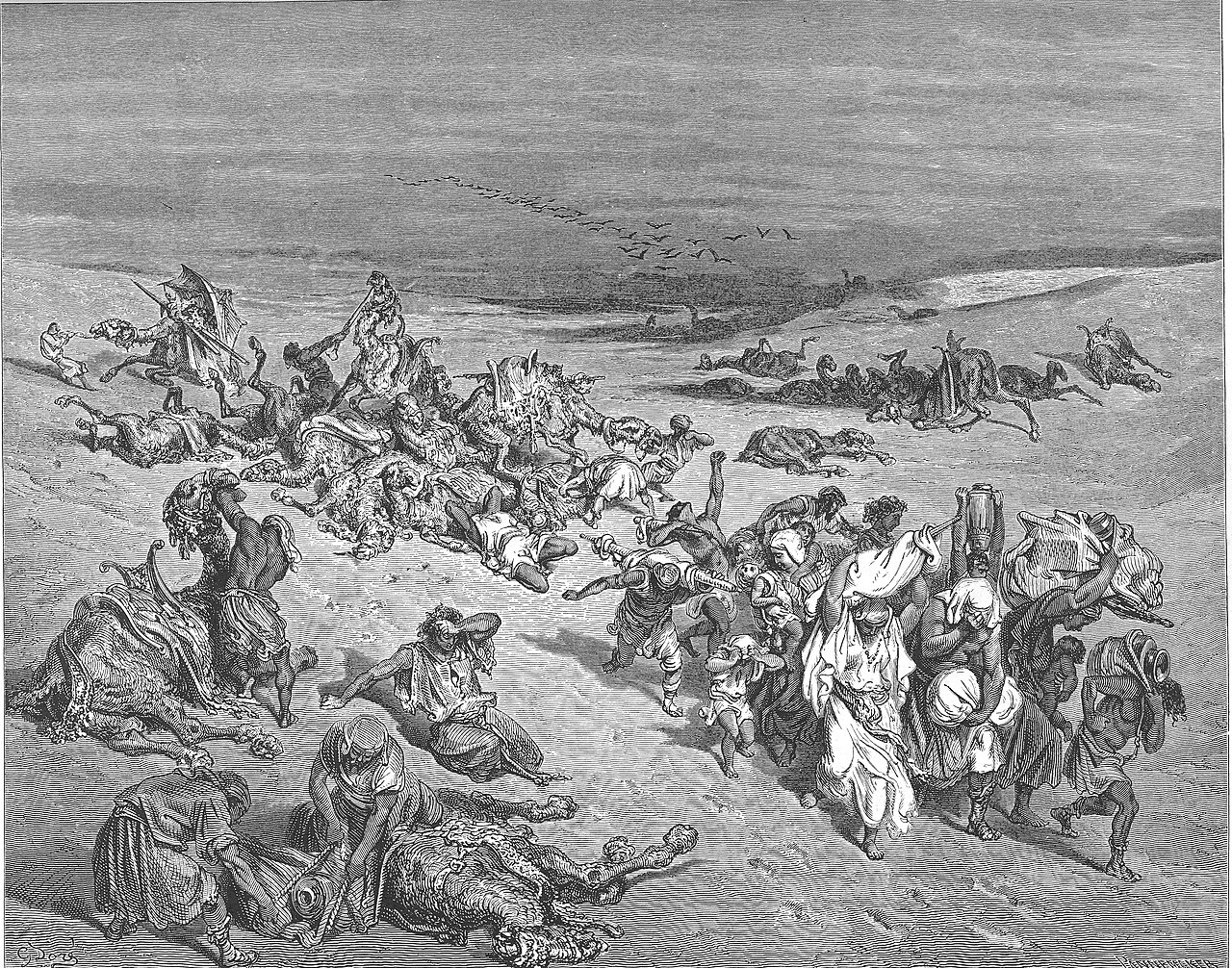
In this plague the hot thunderbolts, as well as the hail, are said to destroy their flocks, Ps. lxxviii. Perhaps David alludes to this when, describing God's glorious appearances for the discomfiture of his enemies, he speaks of the hailstones and coals of fire he threw among them, Ps. xviii. And there is a plan reference to it on the pouring out of the seventh vial, Rev. xvi.
But the wheat and the rye were not smitten,....
The words behind it
7 Hebrew wordsEvery Hebrew word of this verse in the order it stands, with what it means and the door to its own study. The last column counts the times a word stands in the whole Bible: the rarer the word, the more the places it appears belong together.
| Hebrew | Sound | Meaning | Word study | In the Bible |
|---|---|---|---|---|
| וְהַחִטָּ֥ה | vehachitah | and the wheat | H2406 → | 30 times |
| וְהַכֻּסֶּ֖מֶת | vehakkusemet | and the spelt | H3698 → | |
| לֹ֣א | lo' | not | H3808 → | 5168 times |
| נֻכּ֑וּ | nuku | they were struck | H5221 → | 499 times |
| כִּ֥י | ki | for | H3588 → | 4482 times |
| אֲפִילֹ֖ת | ʾafilot | [are] late [crops] | H648 → | |
| הֵֽנָּה׃ | henah | they | H2007 → | 30 times |
וְהַחִטָּ֥הand the wheat
vehachitahH2406 →30 times
וְהַכֻּסֶּ֖מֶתand the spelt
vehakkusemetH3698 →
לֹ֣אnot
lo'H3808 →5168 times
נֻכּ֑וּthey were struck
nukuH5221 →499 times
כִּ֥יfor
kiH3588 →4482 times
אֲפִילֹ֖ת[are] late [crops]
ʾafilotH648 →
הֵֽנָּה׃they
henahH2007 →30 times
A shaded row is a word that stands 400 times or fewer in the Bible.
The walk
5 stopsEach card is a verse this one points to, and under it the verses that one points to in turn. Where several paths arrive at the same place, that place is listed first: the text keeps returning to it.
Through
Exodus 10:22So Moses stretched out his hand toward heaven, and total darkness covered all the land of Egypt for three days.
it leads to
- Psalms 105:28
He sent darkness, and it became dark— yet they defied His words.
- Revelation 16:10
And the fifth angel poured out his bowl on the throne of the beast, and its kingdom was plunged into darkness, and men began to gnaw their tongues in anguish
- Amos 4:13
For behold, He who forms the mountains, who creates the wind and reveals His thoughts to man, who turns the dawn to darkness and strides on the heights of the earth—the LORD, the God…
- Exodus 20:21
And the people stood at a distance as Moses approached the thick darkness where God was.
- Joel 2:2
a day of darkness and gloom, a day of clouds and blackness. Like the dawn overspreading the mountains a great and strong army appears, such as never was of old, nor will ever be…
- Psalms 105:28
About Exodus
This page draws on Adam Clarke, Commentary on the Bible; John Gill, Exposition of the Old Testament (1748-1763); Keil and Delitzsch, Biblical Commentary on the Old Testament: The Pentateuch and Matthew Henry, Commentary on the Whole Bible.