
Exodus 9:10
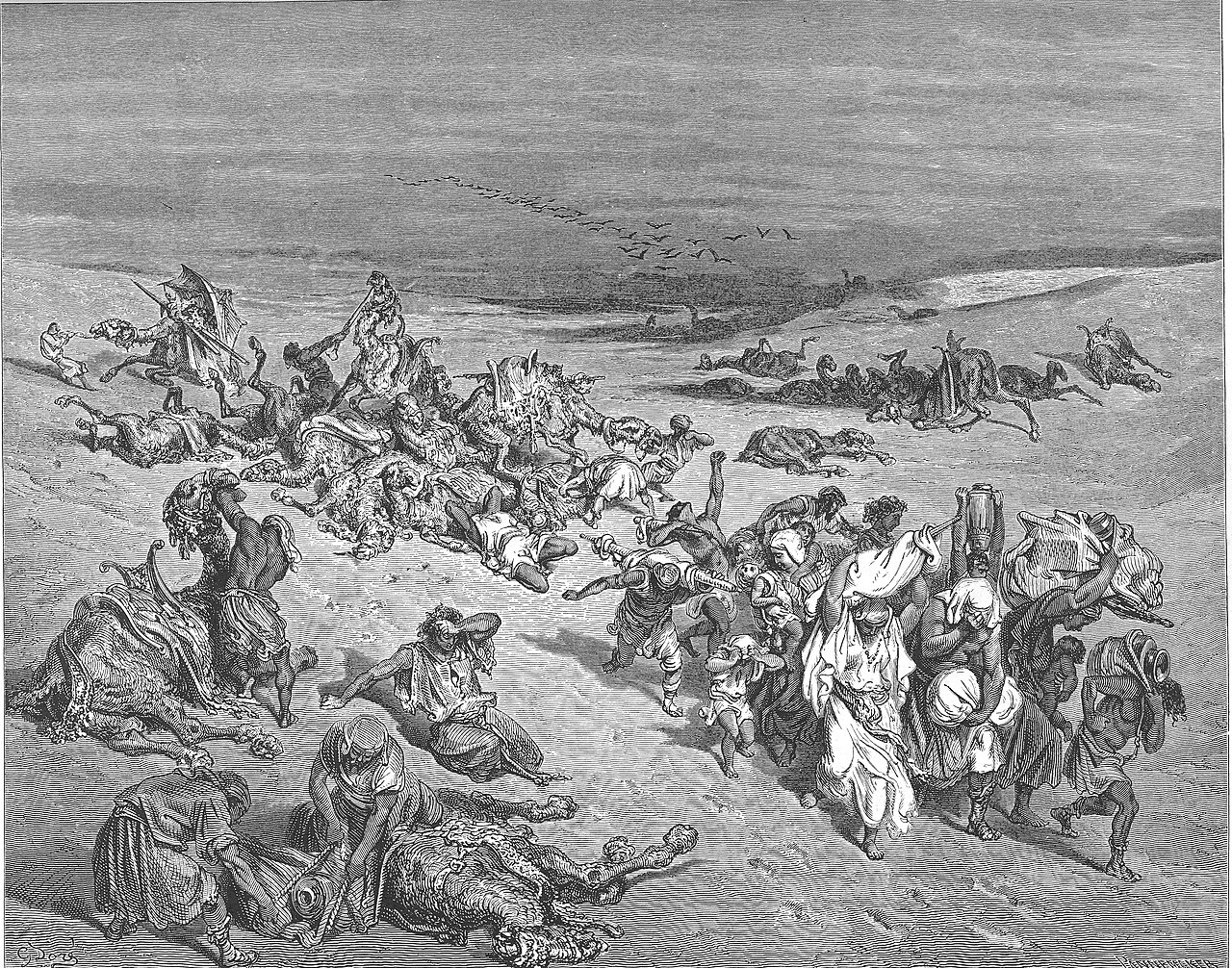
in Exodus 9So they took soot from the furnace and stood before Pharaoh. Moses tossed it into the air, and festering boils broke out on man and beast.
BSB
The same verse in ASV and KJV ▾
ASV
And they took ashes of the furnace, and stood before Pharaoh; and Moses sprinkled it up toward heaven; and it became a boil breaking forth with blains upon man and upon beast.
KJV
And they took ashes of the furnace, and stood before Pharaoh; and Moses sprinkled it up toward heaven; and it became a boil breaking forth with blains upon man, and upon beast.
⋯
This verse in Exodus 9
Commentary
5 notes on this verseA commentator
Jamieson, Fausset & Brown1802–1910
Commentary Critical and Explanatory on the Whole Bible (1871)
Moses took ashes from the furnace--Hebrew, "brick-kiln." The magicians, being sufferers in their own persons, could do nothing, though they had been called; and as the brick-kiln was one of the principal instruments of oppression to the Israelites [De 4:20; Jer 11:4], it was now converted into a means of chastisement to the Egyptians, who were made to read their sin in their punishment.
This site's exposition
they took ashes of the furnace, and stood before Pharaoh
on Exodus 9:10-11
The magicians reach the end of their part in three stages. They copied the rod, the blood and the frogs at 7:11, 7:22 and 8:7, they failed at the lice and told Pharaoh this is the finger of God at 8:19, and now they cannot stand in the room because the boils are on them. Egypt's own experts leave the account here and the book does not mention them again.
The record, by era
The Puritans and the Awakening3 voices
This is afterwards called the botch of Egypt ( Deut. xxviii. 27 ), as if it were some new disease, never heard of before, and known ever after by that name, Note, Sores in the body are to be looked upon as the punishments of sin, and to be hearkened to as calls to repentance.
Ashes of the furnace - Sometimes God shews men their sin in their punishment: they had oppressed Israel in the furnaces, and now the ashes of the furnace are made as much a terror to them as ever their task-masters had been to the Israelites.
And they took ashes of the furnace,....
How the passage was read
What the Jewish commentators add
Each as earlier noted took handfuls of soot and Moses threw all of it heavenward. 45 As clearly stated in verse.
1 more on this passage, in their own words ▾
They were ashamed, and confounded, and covered their heads. Jeremiah:3. since they were full of boils and could not rescue themselves. Therefore they made no appearance in the royal palace, nor did they appear before Moses in the streets. And so they were imprisoned in their homes.
This section is reception history: how the passage was read and kept in the Jewish tradition. Where a reading parts from an essential of the Christian faith, the section says so at that point.
Texts and citation data: Sefaria; each excerpt follows its version’s licence. 3 further sources are cited on this chapter that carry no English text this site may quote or only restate the verse.
The words behind it
17 Hebrew wordsEvery Hebrew word of this verse in the order it stands, with what it means and the door to its own study. The last column counts the times a word stands in the whole Bible: the rarer the word, the more the places it appears belong together.
| Hebrew | Sound | Meaning | Word study | In the Bible |
|---|---|---|---|---|
| וַיִּקְח֞וּ | vaiyikchu | and they took | H3947 → | 966 times |
| אֶת־ | ʾet- | <obj.> | H853 → | 10935 times |
| פִּ֣יחַ | piach | [the] soot of | H6368 → | |
| הַכִּבְשָׁ֗ן | hakivshan | the furnace | H3536 → | 4 times |
| וַיַּֽעַמְדוּ֙ | vaiyaamdu | and they stood | H5975 → | 521 times |
| לִפְנֵ֣י | lifnei | <to> before | H6440 → | 2123 times |
| פַרְעֹ֔ה | faroh | Pharaoh | H6547 → | 274 times |
| וַיִּזְרֹ֥ק | vaiyizrok | and he sprinkled | H2236 → | 35 times |
| אֹת֛וֹ | ʾoto | <obj.> it | H853 → | 10935 times |
| מֹשֶׁ֖ה | mosheh | Moses | H4872 → | 765 times |
| הַשָּׁמָ֑יְמָה | hashamayemah | the heavens towards | H8064 → | 421 times |
| וַיְהִ֗י | vayhi | and it became | H1961 → | 3559 times |
| שְׁחִין֙ | shechin | boil[s] | H7822 → | 13 times |
| אֲבַעְבֻּעֹ֔ת | ʾava'buot | blisters | H76 → | |
| פֹּרֵ֕חַ | poreach | breaking out | H6524 → | |
| בָּאָדָ֖ם | baadam | on <the> humankind | H120 → | 551 times |
| וּבַבְּהֵמָֽה׃ | uvabehemah | and on the livestock | H929 → | 190 times |
וַיִּקְח֞וּand they took
vaiyikchuH3947 →966 times
אֶת־<obj.>
ʾet-H853 →10935 times
פִּ֣יחַ[the] soot of
piachH6368 →
הַכִּבְשָׁ֗ןthe furnace
hakivshanH3536 →4 times
וַיַּֽעַמְדוּ֙and they stood
vaiyaamduH5975 →521 times
לִפְנֵ֣י<to> before
lifneiH6440 →2123 times
פַרְעֹ֔הPharaoh
farohH6547 →274 times
וַיִּזְרֹ֥קand he sprinkled
vaiyizrokH2236 →35 times
אֹת֛וֹ<obj.> it
ʾotoH853 →10935 times
מֹשֶׁ֖הMoses
moshehH4872 →765 times
הַשָּׁמָ֑יְמָהthe heavens towards
hashamayemahH8064 →421 times
וַיְהִ֗יand it became
vayhiH1961 →3559 times
שְׁחִין֙boil[s]
shechinH7822 →13 times
אֲבַעְבֻּעֹ֔תblisters
ʾava'buotH76 →
פֹּרֵ֕חַbreaking out
poreachH6524 →
בָּאָדָ֖םon <the> humankind
baadamH120 →551 times
וּבַבְּהֵמָֽה׃and on the livestock
uvabehemahH929 →190 times
A shaded row is a word that stands 400 times or fewer in the Bible.
The walk
5 stopsEach card is a verse this one points to, and under it the verses that one points to in turn. Where several paths arrive at the same place, that place is listed first: the text keeps returning to it.
Through
Deuteronomy 28:27The LORD will afflict you with the boils of Egypt, with tumors and scabs and itch from which you cannot be cured.
it leads to
- 1 Samuel 5:6
Now the hand of the LORD was heavy on the people of Ashdod and its vicinity, ravaging them and afflicting them with tumors.
- Leviticus 21:20
or who is a hunchback or dwarf, or who has an eye defect, a festering rash, scabs, or a crushed testicle.
- Exodus 15:26
saying, “If you will listen carefully to the voice of the LORD your God, and do what is right in His eyes, and pay attention to His commands, and keep all His statutes, then…
- Deuteronomy 28:35
The LORD will afflict you with painful, incurable boils on your knees and thighs, from the soles of your feet to the top of your head.
- Exodus 9:9
It will become fine dust over all the land of Egypt, and festering boils will break out on man and beast throughout the land.”
- 1 Samuel 5:6
About Exodus
Who and where
1 name in this verse with a page on the site.
This page draws on Jamieson, Fausset & Brown, Commentary Critical and Explanatory on the Whole Bible; John Gill, Exposition of the Old Testament; John Gill, Exposition of the Old Testament (1748-1763); John Wesley, Explanatory Notes upon the Old Testament and Matthew Henry, Commentary on the Whole Bible.