
Exodus 2:10
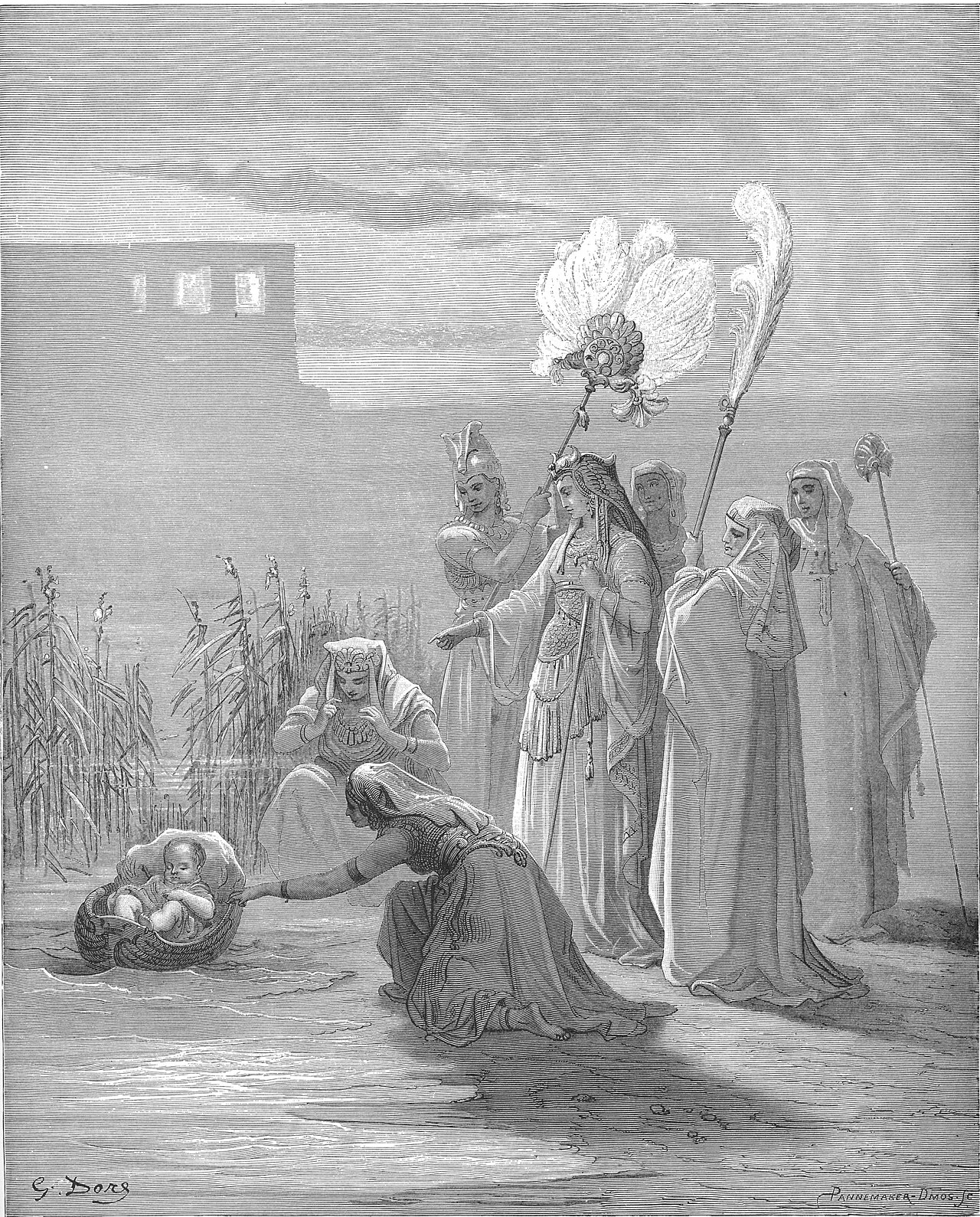
in Exodus 2When the child had grown older, she brought him to Pharaoh’s daughter, and he became her son. She named him Moses and explained, “I drew him out of the water.”
BSB
The same verse in ASV and KJV ▾
ASV
And the child grew, and she brought him unto Pharaoh’s daughter, and he became her son. And she called his name Moses, and said, Because I drew him out of the water.
KJV
And the child grew, and she brought him unto Pharaoh’s daughter, and he became her son. And she called his name Moses: and she said, Because I drew him out of the water.
⋯
This verse in Exodus 2
Commentary
2 notes on this verseAnd he became her son - From this time of his being brought home by his nurse his education commenced, and he was learned in all the wisdom of the Egyptians, Act 7:22, who in the knowledge of nature probably exceeded all the nations then on the face of the earth. And she called his name - משה mosheh, because מן המים min hammayim, out of the waters משיתהו meshithihu, have I drawn him. משה mashah signifies to draw out; and mosheh is the person drawn out; the word is used in the same sense Psa 18:16, and 2Sa 22:
This site's exposition
she called his name Moses
An Egyptian princess gives the name and the verse explains it in Hebrew, Because I drew him out of the water, from a root meaning to draw out. Egyptian names built on the element mes were common in the period, Ahmose and Thutmose among them, and commentators have long read this name from both languages at once. Acts 7:22 says he was learned in all the wisdom of the Egyptians, and the child drawn out of water will take a nation through it in chapter 14.
How the passage was read
What the Jewish commentators add
On the verses either side of this one
This is to be understood that he grew to manhood. It has already been said, And the child grew, 80 Verse. which means that it was no longer necessary to wean him, and then the mother.
This section is reception history: how the passage was read and kept in the Jewish tradition. Where a reading parts from an essential of the Christian faith, the section says so at that point.
Texts and citation data: Sefaria; each excerpt follows its version’s licence. 4 further sources are cited on this chapter that carry no English text this site may quote or only restate the verse.
The words behind it
16 Hebrew wordsEvery Hebrew word of this verse in the order it stands, with what it means and the door to its own study. The last column counts the times a word stands in the whole Bible: the rarer the word, the more the places it appears belong together.
| Hebrew | Sound | Meaning | Word study | In the Bible |
|---|---|---|---|---|
| וַיִגְדַּ֣ל | vayigdal | and he grew up | H1431 → | |
| הַיֶּ֗לֶד | haiyeled | the child | H3206 → | 89 times |
| וַתְּבִאֵ֙הוּ֙ | vateviehu | and she took him | H935 → | 2568 times |
| לְבַת־ | levat- | to [the] daughter of | H1323 → | 588 times |
| פַּרְעֹ֔ה | paroh | Pharaoh | H6547 → | 274 times |
| וַֽיְהִי־ | vayhi- | and he became | H1961 → | 3559 times |
| לָ֖הּ | lah | to her | ||
| לְבֵ֑ן | leven | <into> a son | H1121 → | 4930 times |
| וַתִּקְרָ֤א | vatikra' | and she called | H7121 → | 733 times |
| שְׁמוֹ֙ | shemo | name his | H8034 → | 864 times |
| מֹשֶׁ֔ה | mosheh | Moses | H4872 → | 765 times |
| וַתֹּ֕אמֶר | vatomer | and she said | H559 → | 5305 times |
| כִּ֥י | ki | that | H3588 → | 4482 times |
| מִן־ | min- | from | H4480 → | 1188 times |
| הַמַּ֖יִם | hamayim | the water | H4325 → | 581 times |
| מְשִׁיתִֽהוּ׃ | meshitihu | I drew him | H4871 → |
וַיִגְדַּ֣לand he grew up
vayigdalH1431 →
הַיֶּ֗לֶדthe child
haiyeledH3206 →89 times
וַתְּבִאֵ֙הוּ֙and she took him
vateviehuH935 →2568 times
לְבַת־to [the] daughter of
levat-H1323 →588 times
פַּרְעֹ֔הPharaoh
parohH6547 →274 times
וַֽיְהִי־and he became
vayhi-H1961 →3559 times
לָ֖הּto her
lah
לְבֵ֑ן<into> a son
levenH1121 →4930 times
וַתִּקְרָ֤אand she called
vatikra'H7121 →733 times
שְׁמוֹ֙name his
shemoH8034 →864 times
מֹשֶׁ֔הMoses
moshehH4872 →765 times
וַתֹּ֕אמֶרand she said
vatomerH559 →5305 times
כִּ֥יthat
kiH3588 →4482 times
מִן־from
min-H4480 →1188 times
הַמַּ֖יִםthe water
hamayimH4325 →581 times
מְשִׁיתִֽהוּ׃I drew him
meshitihuH4871 →
A shaded row is a word that stands 400 times or fewer in the Bible.
The walk
8 stopsEach card is a verse this one points to, and under it the verses that one points to in turn. Where several paths arrive at the same place, that place is listed first: the text keeps returning to it.
Through
Galatians 4:5to redeem those under the law, that we might receive our adoption as sons.
it leads to
- Hebrews 9:15
Therefore Christ is the mediator of a new covenant, so that those who are called may receive the promised eternal inheritance, now that He has died to redeem them from the transgressions committed under…
- Ephesians 1:5
He predestined us for adoption as His sons through Jesus Christ, according to the good pleasure of His will,
- 1 Peter 1:18–20
For you know that it was not with perishable things such as silver or gold that you were redeemed from the empty way of life you inherited from your forefathers,
- Ephesians 1:7
In Him we have redemption through His blood, the forgiveness of our trespasses, according to the riches of His grace
- Revelation 5:9
And they sang a new song: “Worthy are You to take the scroll and open its seals, because You were slain, and by Your blood You purchased for God those from every tribe and…
- Hebrews 9:15
Through
Genesis 16:11The angel of the LORD proceeded: “Behold, you have conceived and will bear a son. And you shall name him Ishmael, for the LORD has heard your cry of affliction.
it leads to
- Exodus 2:23–24
After a long time, the king of Egypt died. The Israelites groaned and cried out under their burden of slavery, and their cry for deliverance from bondage ascended to God.
- Exodus 3:7
The LORD said, “I have indeed seen the affliction of My people in Egypt. I have heard them crying out because of their oppressors, and I am aware of their sufferings.
- Isaiah 7:14
Therefore the Lord Himself will give you a sign: Behold, the virgin will be with child and will give birth to a son, and will call Him Immanuel.
- Exodus 2:23–24
Where this verse is studied
About Exodus
Who and where
1 name in this verse with a page on the site.
This page draws on Adam Clarke, Commentary on the Bible and Keil and Delitzsch, Biblical Commentary on the Old Testament: The Pentateuch.