
Exodus 10:23
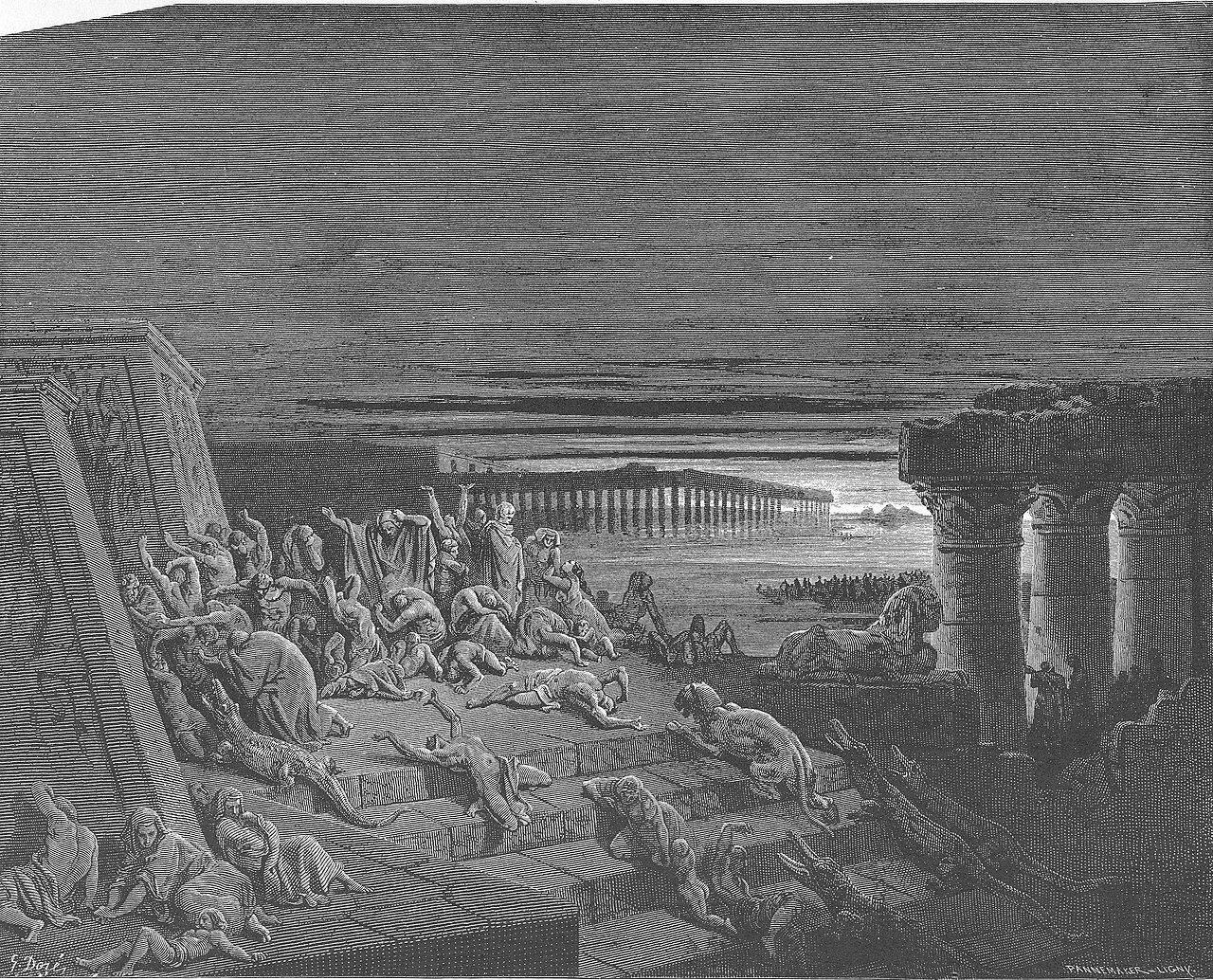
in Exodus 10No one could see anyone else, and for three days no one left his place. Yet all the Israelites had light in their dwellings.
BSB
The same verse in ASV and KJV ▾
ASV
they saw not one another, neither rose any one from his place for three days: but all the children of Israel had light in their dwellings.
KJV
They saw not one another, neither rose any from his place for three days: but all the children of Israel had light in their dwellings.
⋯
This verse in Exodus 10
Commentary
8 notes on this verseA commentator
Albert Barnes1798–1870
Notes, Explanatory and Practical, on the Old and New Testaments (1832-1869)
Had light in their dwellings - The sandstorm, if such were the cause, may not have extended to the district of Goshen; but the expression clearly denotes a miraculous intervention, whether accomplished or not by natural agencies.
This site's exposition
They saw not one another
Egypt is stopped where it stands for three days while the children of Israel have light in their dwellings, and the division between the two peoples has now been stated at four plagues running, at 8:22, 9:4, 9:26 and here. The line is drawn by dwelling rather than by desert, which is the shape the blood on the door takes at 12:13, where the sign is what God sees and not who is inside. The chapter says nothing about how the light in Goshen was kept.
The record, by era
The Puritans and the Awakening4 voices
), They saw not one another. It is threatened to the wicked ( Job xviii. 5, 6 ) that the spark of his fire shall not shine (even the sparks of his own kindling, as they are called, Isa. l.
quarantine:debris (2026-07-29) — leading-punctuation
They saw not one another,....
Now Pharaoh had time to consider, if he would have improved it. Spiritual darkness is spiritual bondage; while Satan blinds men's eyes that they see not, he binds them hands and feet that they work not for God, nor move towards heaven. It was a righteous thing with God thus to punish them.
(2.) Of the particular favour he bears to his people: they walk in the light when others wander endlessly in thick darkness; wherever there is an Israelite indeed, though in this dark world, there is light, there is a child of light, one for whom light is sown, and whom the day-spring from on high visits.
The Nineteenth Century1 voice
A commentator
Jamieson, Fausset & Brown1802–1910
Commentary Critical and Explanatory on the Whole Bible (1871)
proposed
The appalling character of this calamity consisted in this, that the sun was an object of Egyptian idolatry; that the pure and serene sky of that country was never marred by the appearance of a cloud.
1 more voice on this verse
The Nineteenth Century1 voice
They saw not one another - So deep was the obscurity, and probably such was its nature, that no artificial light could be procured; as the thick clammy vapors would prevent lamps, etc., from burning, or if they even could be ignited, the light through the palpable obscurity, could diffuse itself to no distance from the burning body. The author of the book of The Wisdom of Solomon 17:2-19, gives a fearful description of this plague. He says, “The Egyptians were shut up in their houses, the prisoners of darkness: and were fettered with the bonds of a long night. They were scattered under a dark veil of forgetfulness, being horribly astonished and troubled with strange apparitions; for neither might the corner that held them keep them from fear; but noises as of waters falling down sounded about them; and sad visions appeared unto them with heavy countenances. No power of the fire could give them light - only there appeared unto them a fire kindled of itself very dreadful; for being much terrified, they thought the things which they saw to be worse than the sight they saw not. For though no terrible thing did scare them, yet being scared with beasts that passed by, and hissing of serpents, they died for fear: for whether he were husbandman, or shepherd, or a laborer in the field, he was overtaken; for they were all bound with one chain of darkness. […]
The words behind it
17 Hebrew wordsEvery Hebrew word of this verse in the order it stands, with what it means and the door to its own study. The last column counts the times a word stands in the whole Bible: the rarer the word, the more the places it appears belong together.
| Hebrew | Sound | Meaning | Word study | In the Bible |
|---|---|---|---|---|
| לֹֽא־ | lo'- | not | H3808 → | 5168 times |
| רָא֞וּ | rau | they saw | H7200 → | 1300 times |
| אִ֣ישׁ | ʾish | each | H376 → | 1663 times |
| אֶת־ | ʾet- | <obj.> | H853 → | 10935 times |
| אָחִ֗יו | ʾachiv | brother his | H251 → | 630 times |
| וְלֹא־ | velo'- | and not | H3808 → | 5168 times |
| קָ֛מוּ | kamu | they rose | H6965 → | 628 times |
| אִ֥ישׁ | ʾish | anyone | H376 → | 1663 times |
| מִתַּחְתָּ֖יו | mitachtav | from under him | H8478 → | 505 times |
| שְׁלֹ֣שֶׁת | sheloshet | three | H7969 → | 432 times |
| יָמִ֑ים | yamim | days | H3117 → | 2304 times |
| וּֽלְכָל־ | ulekhol- | and to all | H3605 → | 5413 times |
| בְּנֵ֧י | benei | [the] people | H1121 → | 4930 times |
| יִשְׂרָאֵ֛ל | yisrael | Israel | H3478 → | 2507 times |
| הָ֥יָה | hayah | it be[longed] | H1961 → | 3559 times |
| א֖וֹר | ʾor | light | H216 → | |
| בְּמוֹשְׁבֹתָֽם׃ | bemoshevotam | in dwelling places their | H4186 → | 44 times |
לֹֽא־not
lo'-H3808 →5168 times
רָא֞וּthey saw
rauH7200 →1300 times
אִ֣ישׁeach
ʾishH376 →1663 times
אֶת־<obj.>
ʾet-H853 →10935 times
אָחִ֗יוbrother his
ʾachivH251 →630 times
וְלֹא־and not
velo'-H3808 →5168 times
קָ֛מוּthey rose
kamuH6965 →628 times
אִ֥ישׁanyone
ʾishH376 →1663 times
מִתַּחְתָּ֖יוfrom under him
mitachtavH8478 →505 times
שְׁלֹ֣שֶׁתthree
sheloshetH7969 →432 times
יָמִ֑יםdays
yamimH3117 →2304 times
וּֽלְכָל־and to all
ulekhol-H3605 →5413 times
בְּנֵ֧י[the] people
beneiH1121 →4930 times
יִשְׂרָאֵ֛לIsrael
yisraelH3478 →2507 times
הָ֥יָהit be[longed]
hayahH1961 →3559 times
א֖וֹרlight
ʾorH216 →
בְּמוֹשְׁבֹתָֽם׃in dwelling places their
bemoshevotamH4186 →44 times
A shaded row is a word that stands 400 times or fewer in the Bible.
The walk
8 stopsEach card is a verse this one points to, and under it the verses that one points to in turn. Where several paths arrive at the same place, that place is listed first: the text keeps returning to it.
Through
1 Peter 2:9But you are a chosen people, a royal priesthood, a holy nation, a people for God’s own possession, to proclaim the virtues of Him who called you out of darkness into His marvelous light.
it leads to
- Exodus 19:5–6
Now if you will indeed obey My voice and keep My covenant, you will be My treasured possession out of all the nations—for the whole earth is Mine.
- Deuteronomy 7:6
For you are a people holy to the LORD your God. The LORD your God has chosen you to be a people for His prized possession out of all peoples on the face of…
- Revelation 1:6
who has made us to be a kingdom, priests to His God and Father—to Him be the glory and power forever and ever! Amen.
- Revelation 5:10
You have made them to be a kingdom and priests to serve our God, and they will reign upon the earth.”
- Isaiah 61:6
But you will be called the priests of the LORD; they will speak of you as ministers of our God; you will feed on the wealth of nations, and you will boast in their…
- Exodus 19:5–6
Through
Isaiah 42:16I will lead the blind by a way they did not know; I will guide them on unfamiliar paths. I will turn darkness into light before them and rough places into level ground. These…
it leads to
- Isaiah 30:21
And whether you turn to the right or to the left, your ears will hear this command behind you: “This is the way. Walk in it.”
- Luke 3:5
Every valley shall be filled in, and every mountain and hill made low. The crooked ways shall be made straight, and the rough ways smooth.
- Isaiah 35:8
And there will be a highway called the Way of Holiness. The unclean will not travel it—only those who walk in the Way—and fools will not stray onto it.
- Isaiah 30:21
About Exodus
This page draws on Adam Clarke, Commentary on the Bible; Albert Barnes, Notes, Explanatory and Practical, on the Old and New Testaments (1832-1869); Jamieson, Fausset & Brown, Commentary Critical and Explanatory on the Whole Bible; John Gill, Exposition of the Old Testament (1748-1763); Keil and Delitzsch, Biblical Commentary on the Old Testament: The Pentateuch and Matthew Henry, Commentary on the Whole Bible.