
Ecclesiastes 2:21
in Ecclesiastes 2When there is a man who has labored with wisdom, knowledge, and skill, and he must give his portion to a man who has not worked for it, this too is futile and a great evil.
BSB
The same verse in ASV and KJV ▾
ASV
For there is a man whose labor is with wisdom, and with knowledge, and with skilfulness; yet to a man that hath not labored therein shall he leave it for his portion. This also is vanity and a great evil.
KJV
For there is a man whose labour is in wisdom, and in knowledge, and in equity; yet to a man that hath not laboured therein shall he leave it for his portion. This also is vanity and a great evil.
⋯
This verse in Ecclesiastes 2
Commentary
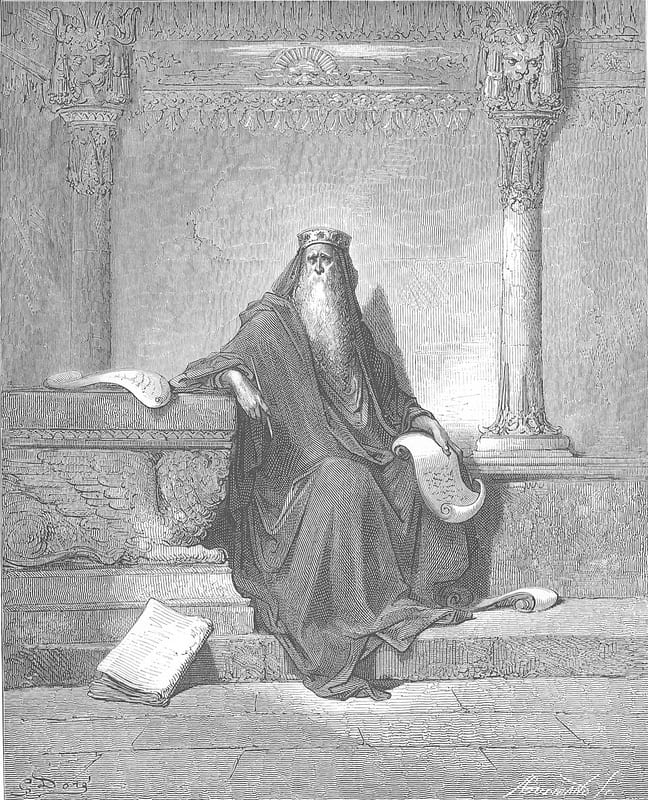
9 notes on this verseFor there is a man - Does he not allude to himself? As if he had said, “I have labored to cultivate my mind in wisdom and in science, in knowledge of men and things, and have endeavored to establish equity and dispense justice. And now I find I shall leave all the fruits of my labor to a man that hath not labored therein, and consequently cannot prize what I have wrought.” Does he not refer to his son Rehoboam?
This site's exposition
I hated all for which I had toiled
on Ecclesiastes 2:18-21
The labor must be left to the man who comes after me, and who knows whether that man will be wise or foolish. The Teacher calls it futile and a great evil, the sharpest language the chapter uses against a single finding.
This site's exposition
labored with wisdom, knowledge, and skill
The word for skill also means success, and Jamieson, Fausset and Brown compare its use in 11:6. Clarke hears Solomon speaking of himself, a man who governed with wisdom and must leave the fruit to one who never labored. Henry says a gracious soul finds no grief in this.
The record, by era
The Church Fathers1 voice
"So I turned my heart to despair of all that I had achieved by toiling under the sun. For there is a man who laboured with wisdom, knowledge and skill, yet he must hand on his portion to one who has not toiled for it. This too is vanity and a great evil. For what has a man in return for all his toil and his stress, which he toils beneath the sun? For all his days are painful, and his business is a vexation; even at night his mind has no rest. This, too, is vanity!"
The Medieval Church1 voice
A commentator
BonaventureCommentary on Ecclesiastes, Chapter 2 · Written in the 13th century.
proposed
And he repeats the reason why he ceased: "For when another labors in wisdom," in the heart; "and in doctrine," in the mouth; "and in solicitude," in deed; "he leaves what was acquired to an idle man." And from this he concludes vanity: "and this …
The Puritans and the Awakening3 voices
It was rational business, which related to the government of his kingdom and the advancement of its interests. It was labour managed by the dictates of wisdom, of natural and acquired knowledge, and the directions of justice. It was labour at the council-board and in the courts of justice.
For there is a man whose labour is in wisdom, and in knowledge, and in equity,....
Never was land lost for want of an heir. To a gracious soul this is no uneasiness at all; why should we grudge others their turn in the enjoyments of this world, and not rather be pleased that, when we are gone, those that come after us shall fare the better for our wisdom and industry?
1 more voice on this verse
The Nineteenth Century1 voice
A commentator
Jamieson, Fausset & Brown1802–1910
Commentary Critical and Explanatory on the Whole Bible (1871)
Suppose "there is a man," &c. equity--rather "with success," as the Hebrew is rendered (Ec 11:6), "prosper," though Margin gives "right" [HOLDEN and MAURER]. evil--not in itself, for this is the ordinary course of things, but "evil," as regards the chief good, that one should have toiled so fruitlessly.
The words behind it
18 Hebrew wordsEvery Hebrew word of this verse in the order it stands, with what it means and the door to its own study. The last column counts the times a word stands in the whole Bible: the rarer the word, the more the places it appears belong together.
| Hebrew | Sound | Meaning | Word study | In the Bible |
|---|---|---|---|---|
| כִּי־ | ki- | if | H3588 → | 4482 times |
| יֵ֣שׁ | yesh | there | H3426 → | 140 times |
| אָדָ֗ם | ʾadam | [was] a person | H120 → | 551 times |
| שֶׁעֲמָל֛וֹ | sheamalo | who toil his | H5999 → | 55 times |
| בְּחָכְמָ֥ה | bechakhemah | [was] with wisdom | H2451 → | 153 times |
| וּבְדַ֖עַת | uvedaat | and with knowledge | H1847 → | 92 times |
| וּבְכִשְׁר֑וֹן | uvekhishron | and with skill | H3788 → | 3 times |
| וּלְאָדָ֞ם | uleadam | and to a person | H120 → | 551 times |
| שֶׁלֹּ֤א | shelo' | who not | H3808 → | 5168 times |
| עָֽמַל־ | ʾamal- | he toiled | H5998 → | 11 times |
| בּוֹ֙ | bo | in <the> it | ||
| יִתְּנֶ֣נּוּ | yitenenu | he will give it | H5414 → | 2011 times |
| חֶלְק֔וֹ | chelko | portion his | H2506 → | 67 times |
| גַּם־ | gam- | also | H1571 → | 769 times |
| זֶ֥ה | zeh | this | H2088 → | 1180 times |
| הֶ֖בֶל | hevel | [is] futility | H1892 → | 73 times |
| וְרָעָ֥ה | veraah | and an evil | H7451 → | 662 times |
| רַבָּֽה׃ | rabah | great | H7227 → | 454 times |
כִּי־if
ki-H3588 →4482 times
יֵ֣שׁthere
yeshH3426 →140 times
אָדָ֗ם[was] a person
ʾadamH120 →551 times
שֶׁעֲמָל֛וֹwho toil his
sheamaloH5999 →55 times
בְּחָכְמָ֥ה[was] with wisdom
bechakhemahH2451 →153 times
וּבְדַ֖עַתand with knowledge
uvedaatH1847 →92 times
וּבְכִשְׁר֑וֹןand with skill
uvekhishronH3788 →3 times
וּלְאָדָ֞םand to a person
uleadamH120 →551 times
שֶׁלֹּ֤אwho not
shelo'H3808 →5168 times
עָֽמַל־he toiled
ʾamal-H5998 →11 times
בּוֹ֙in <the> it
bo
יִתְּנֶ֣נּוּhe will give it
yitenenuH5414 →2011 times
חֶלְק֔וֹportion his
chelkoH2506 →67 times
גַּם־also
gam-H1571 →769 times
זֶ֥הthis
zehH2088 →1180 times
הֶ֖בֶל[is] futility
hevelH1892 →73 times
וְרָעָ֥הand an evil
veraahH7451 →662 times
רַבָּֽה׃great
rabahH7227 →454 times
A shaded row is a word that stands 400 times or fewer in the Bible.
The walk
8 stopsEach card is a verse this one points to, and under it the verses that one points to in turn. Where several paths arrive at the same place, that place is listed first: the text keeps returning to it.
Through
Jeremiah 22:15Does it make you a king to excel in cedar? Did not your father have food and drink? He administered justice and righteousness, and so it went well with him.
it leads to
- 2 Kings 23:25
Neither before nor after Josiah was there any king like him, who turned to the LORD with all his heart and with all his soul and with all his strength, according to all the…
- Isaiah 3:10
Tell the righteous it will be well with them, for they will enjoy the fruit of their labor.
- Ecclesiastes 10:17
Blessed are you, O land whose king is a son of nobles, and whose princes feast at the proper time—for strength and not for drunkenness.
- Proverbs 25:5
Remove the wicked from the king’s presence, and his throne will be established in righteousness.
- Proverbs 29:4
By justice a king brings stability to the land, but a man who exacts tribute demolishes it.
- 2 Kings 23:25
Through
Ecclesiastes 9:18Wisdom is better than weapons of war, but one sinner destroys much good.
it leads to
- Joshua 7:11–12
Israel has sinned; they have transgressed My covenant that I commanded them, and they have taken some of what was devoted to destruction. Indeed, they have stolen and lied, and they have put these…
- Joshua 7:1
The Israelites, however, acted unfaithfully regarding the things devoted to destruction. Achan son of Carmi, the son of Zabdi, the son of Zerah, of the tribe of Judah, took some of what was set…
- 2 Timothy 2:16–18
But avoid irreverent, empty chatter, which will only lead to more ungodliness,
- Joshua 7:11–12
Where this verse is studied
On this page
Studies2
On this verse
On this chapter
About Ecclesiastes
This page draws on Adam Clarke, Commentary on the Bible; Bonaventure, Commentary on Ecclesiastes, Chapter 2; Jamieson, Fausset & Brown, Commentary Critical and Explanatory on the Whole Bible; Jerome, Commentary on Ecclesiastes; John Gill, Exposition of the Old Testament (1748-1763); John Wesley, Explanatory Notes upon the Old Testament and Matthew Henry, Commentary on the Whole Bible.