
Acts 1:13
in Acts 1When they arrived, they went to the upper room where they were staying: Peter and John, James and Andrew, Philip and Thomas, Bartholomew and Matthew, James son of Alphaeus, Simon the Zealot, and Judas son of James.
BSB
The same verse in ASV and KJV ▾
ASV
And when they were come in, they went up into the upper chamber, where they were abiding; both Peter and John and James and Andrew, Philip and Thomas, Bartholomew and Matthew, James the son of Alphæus, and Simon the Zealot, and Judas the son of James.
KJV
And when they were come in, they went up into an upper room, where abode both Peter, and James, and John, and Andrew, Philip, and Thomas, Bartholomew, and Matthew, James the son of Alpheus, and Simon Zelotes, and Judas the brother of James.
⋯
This verse in Acts 1
Commentary
16 notes on this verseThey went up into the upper room - The upper rooms, so frequently mentioned in Scripture, were chambers in the highest part of the house, set apart by the Jews for private prayer.
This site's exposition
a sabbath day’s journey
on Acts 1:12-14
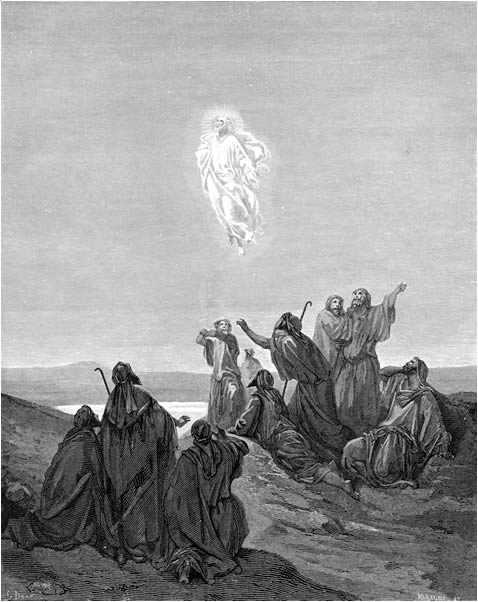
The distance from Olivet to Jerusalem is measured by the rabbinic sabbath limit, roughly a half mile the disciples would have known by habit rather than calculation, one small mark of the eyewitness detail running through this book. The eleven are named in the upper room, the same room the bench generally identifies with the site of the last supper, and the company includes the women, Mary the mother of Jesus, and his brethren, the family that had once doubted him now praying alongside the apostles. These all continued with one accord in prayer and supplication, the posture the whole church will keep through the waiting that follows, prayer named here before any of the growth this book will describe.
The record, by era
The Church Fathers5 voices
Peter, interpreting or knowing: James, supplanter of labor. John, by the grace of God: Andrew, becoming powerful or condemned: Philip, the mouth of widows or the mouth of the lamp: Thomas, the abyss or twin or doubting. Bartholomew, son of him who suspends waters: Matthew, …
He does not compile a list of the disciples in vain: but wishing to show that they had suffered something human, yet had not remained in apostasy. For indeed Peter, who had denied, was absolved from his denial by bitter tears, as is made evident …
A commentator
Philoxenus of Mabbug13 Ascetic Discourses, Discourse 11 -- On Abstinence · Written before 523.
proposed
Now although they lived beforehand the life of freedom, as a pledge, yet they did not receive this freedom in themselves until they had first of all laboured in the life of abstinence, for it is written concerning them that immediately our Redeemer was taken …
"And when they were come in," it says, "they went up into an upper room, where they were making their abode:" so they then remained in Jerusalem after the Resurrection: "both Peter, and James, and John:" no longer is only the latter together with his brother mentioned, but together with Peter the two: "and Andrew, and Philip, and Thomas, Bartholomew, and Matthew, and James (the son) of Alphaeus, and Simon Zelotes, and Judas, (the brother) of James." He has done well to mention the disciples: for since one had betrayed Christ, and another had been unbelieving, he thereby shows that, except the first, all of them were preserved. They durst not appear in the town. They also did well to go up into an upper room, as it became less easy to arrest them at once.
[Daniel 6:10] "Now when Daniel learned of it, that is, of the law which had been enacted, he entered his house, and with the windows in his upper room opened up in the direction of Jerusalem, he continued to bow his knees three times a day and worshipped, and made confession before his God just as he was previously accustomed to do."
9 more voices on this verse
The Medieval Church4 voices
He prudently enumerates the disciples. Since one of them betrayed, another denied, and a third did not believe, he shows that, apart from the betrayer, all were present.
And when they had entered the upper room, they went up where they were staying. It designates a place on high, because they had already ascended from earthly conversation of the Sabbath to the higher realms of knowledge and virtue.
James of Alphaeus, and Simon the Zealot, and Judas of James. Some think that there were two apostles called James, namely James of Zebedee and James of Alphaeus, and that the third James, the brother of the Lord, was not an apostle but the bishop …
And when they had entered the upper room, they went up where they were staying. For in Greek the order of words is also placed thus: And when they had gone into the upper room, they went up where they were staying—Peter and John, and …
The Puritans and the Awakening3 voices
Here was the beginning of the Christian church: this hundred and twenty was the grain of mustard-seed that grew into a tree, the leaven that leavened the whole lump.
"Into it", as the Arabic version reads; that is, into the city of Jerusalem, and into some house in that city; but what house it was is needless to inquire, since it cannot be known.
With a particular account of the filling up of the vacancy that was made in the sacred college by the death of Judas, by the electing of Matthias in his room,
The Nineteenth Century2 voices
They went up into an upper room - This was either a room in the temple, or in the house of one of the disciples, where this holy company was accustomed to meet. In Luk 24:53, it is said that, after their return from Mount Olivet, they were continually in the temple, praising and blessing God: it is probable, therefore, that the upper room mentioned in this verse is that apartment of the temple mentioned above. But still it is not certain that this place should be so understood; as we have the fullest proofs that the upper rooms in private houses were used for the purpose of reading the law, and conferring together on religious matters. See several proofs in Lightfoot. Add to this, that the room here mentioned seems to have been the place where all the apostles lodged, οὑ ησαν καταμενοντες, and therefore most probably a private house.
A commentator
Albert Barnes1798–1870
Notes, Explanatory and Practical, on the Old and New Testaments (1832-1869)
proposed
Were come in - To Jerusalem.
The words behind it
34 Greek wordsEvery Greek word of this verse in the order it stands, with what it means and the door to its own study. The last column counts the times a word stands in the whole Bible: the rarer the word, the more the places it appears belong together.
| Greek | Sound | Meaning | Word study | In the Bible |
|---|---|---|---|---|
| καὶ | kai | And | G2532 → | 9120 times |
| ὅτε | hote | when | G3753 → | 103 times |
| εἰσῆλθον, | eiselthon | they had entered | G1525 → | 194 times |
| εἰς | eis | into | G1519 → | 1755 times |
| τὸ | to | the | G3588 → | 19766 times |
| ὑπερῷον | huperoon | upper room | G5253 → | 4 times |
| ἀνέβησαν | anebesan | they went up | G305 → | 82 times |
| οὗ | hou | where | G3757 → | 24 times |
| ἦσαν | esan | they were | G1510 → | 2333 times |
| καταμένοντες, | katamenontes | staying, | G2650 → | |
| ὅ | ho | <the> | G3588 → | 19766 times |
| τε | te | both | G5037 → | 213 times |
| Πέτρος | petros | Peter | G4074 → | 155 times |
| καὶ | kai | and | G2532 → | 9120 times |
| Ἰωάννης | ioannes | John | G2491 → | 134 times |
| καὶ | kai | and | G2532 → | 9120 times |
| Ἰάκωβος | iakobos | James | G2385 → | 42 times |
| καὶ | kai | and | G2532 → | 9120 times |
| Ἀνδρέας, | andreas | Andrew, | G406 → | |
| Φίλιππος | philippos | Philip | G5376 → | 36 times |
| καὶ | kai | and | G2532 → | 9120 times |
| Θωμᾶς, | thomas | Thomas, | G2381 → | |
| Βαρθολομαῖος | bartholomaios | Bartholomew | G918 → | |
| καὶ | kai | and | G2532 → | 9120 times |
| Μαθθαῖος, | maththaios | Matthew, | G3156 → | |
| Ἰάκωβος | iakobos | James [son] | G2385 → | 42 times |
| Ἁλφαίου | halphaiou | of Alphaeus | G256 → | |
| καὶ | kai | and | G2532 → | 9120 times |
| Σίμων | simon | Simon | G4613 → | 75 times |
| ὁ | ho | the | G3588 → | 19766 times |
| ζηλωτὴς | zelotes | Zealot | G2208 → | |
| καὶ | kai | and | G2532 → | 9120 times |
| Ἰούδας | ioudas | Judas [son] | G2455 → | 41 times |
| Ἰακώβου.¶ | iakobou | of James. | G2385 → | 42 times |
καὶAnd
kaiG2532 →9120 times
ὅτεwhen
hoteG3753 →103 times
εἰσῆλθον,they had entered
eiselthonG1525 →194 times
εἰςinto
eisG1519 →1755 times
τὸthe
toG3588 →19766 times
ὑπερῷονupper room
huperoonG5253 →4 times
ἀνέβησανthey went up
anebesanG305 →82 times
οὗwhere
houG3757 →24 times
ἦσανthey were
esanG1510 →2333 times
καταμένοντες,staying,
katamenontesG2650 →
ὅ<the>
hoG3588 →19766 times
τεboth
teG5037 →213 times
ΠέτροςPeter
petrosG4074 →155 times
καὶand
kaiG2532 →9120 times
ἸωάννηςJohn
ioannesG2491 →134 times
καὶand
kaiG2532 →9120 times
ἸάκωβοςJames
iakobosG2385 →42 times
καὶand
kaiG2532 →9120 times
Ἀνδρέας,Andrew,
andreasG406 →
ΦίλιπποςPhilip
philipposG5376 →36 times
καὶand
kaiG2532 →9120 times
Θωμᾶς,Thomas,
thomasG2381 →
ΒαρθολομαῖοςBartholomew
bartholomaiosG918 →
καὶand
kaiG2532 →9120 times
Μαθθαῖος,Matthew,
maththaiosG3156 →
ἸάκωβοςJames [son]
iakobosG2385 →42 times
Ἁλφαίουof Alphaeus
halphaiouG256 →
καὶand
kaiG2532 →9120 times
ΣίμωνSimon
simonG4613 →75 times
ὁthe
hoG3588 →19766 times
ζηλωτὴςZealot
zelotesG2208 →
καὶand
kaiG2532 →9120 times
ἸούδαςJudas [son]
ioudasG2455 →41 times
Ἰακώβου.¶of James.
iakobouG2385 →42 times
A shaded row is a word that stands 400 times or fewer in the Bible.
The walk
8 stopsEach card is a verse this one points to, and under it the verses that one points to in turn. Where several paths arrive at the same place, that place is listed first: the text keeps returning to it.
Through
Mark 2:14As He was walking along, He saw Levi son of Alphaeus sitting at the tax booth. “Follow Me,” He told him, and Levi got up and followed Him.
it leads to
- Luke 5:27–32
After this, Jesus went out and saw a tax collector named Levi sitting at the tax booth. “Follow Me,” He told him,
- Luke 6:15
Matthew and Thomas; James son of Alphaeus and Simon called the Zealot;
- Luke 5:27–32
Through
Mark 14:15And he will show you a large upper room, furnished and ready. Make preparations for us there.”
it leads to
- John 21:17
Jesus asked a third time, “Simon son of John, do you love Me?” Peter was deeply hurt that Jesus had asked him a third time, “Do you love Me?” “Lord, You know all things,”…
Reached by 2 separate paths from here.
- Proverbs 21:1–2
The king’s heart is a waterway in the hand of the LORD; He directs it where He pleases.
- Psalms 110:3
Your people shall be willing on Your day of battle. Arrayed in holy splendor, from the womb of the dawn, to You belongs the dew of Your youth.
- John 21:17
Through
Luke 22:12And he will show you a large upper room, already furnished. Make preparations there.”
it leads to
- Acts 20:8
Now there were many lamps in the upper room where we were gathered.
Reached by 2 separate paths from here.
- Acts 16:14–15
Among those listening was a woman named Lydia, a dealer in purple cloth from the city of Thyatira, who was a worshiper of God. The Lord opened her heart to respond to Paul’s message.
- Acts 20:8
Through
Acts 20:8Now there were many lamps in the upper room where we were gathered.
it leads to
- Luke 22:12
And he will show you a large upper room, already furnished. Make preparations there.”
- Luke 22:12
Where this verse is studied
On this page
Studies12
On this verse
About Acts
Who and where
3 names in this verse with a page on the site.
- PersonPhilipA disciple from Bethsaida who brought Nathanael to Jesus and asked "Show us the Father" (John 1:43-46; 14:8).
- PersonAndrewSimon Peter's brother, first a disciple of the Baptist; he brought Peter to Jesus and found the boy with the loaves (John 1:40; 6:…
- PersonThomasThe disciple who doubted until he saw, then made the Gospel's highest confession: "My Lord and my God" (John 20:28).
This page draws on 12 works. Open the list of works
This page draws on Adam Clarke, Commentary on the Bible; Albert Barnes, Notes, Explanatory and Practical, on the Old and New Testaments (1832-1869); Bede, Commentary on Acts; Bede, Retractions on Acts; Jerome, St. Jerome, Commentary on Daniel, CHAPTER SIX; John Chrysostom, Homily on Acts 3; John Gill, Exposition of the New Testament (1746-1748); John Wesley, Explanatory Notes upon the New Testament; Matthew Henry, Commentary on the Whole Bible; Oecumenius, Commentary on Acts; Philoxenus of Mabbug, 13 Ascetic Discourses, Discourse 11 -- On Abstinence and Theophylact of Ohrid, Commentary on Acts.