
2 Samuel 23:17
in 2 Samuel 23saying, “Far be it from me, O LORD, to do this! Is this not the blood of the men who risked their lives?” So he refused to drink it. Such were the exploits of the three mighty men.
BSB
The same verse in ASV and KJV ▾
ASV
And he said, Be it far from me, O Jehovah, that I should do this: shall I drink the blood of the men that went in jeopardy of their lives? therefore he would not drink it. These things did the three mighty men.
KJV
And he said, Be it far from me, O Lord, that I should do this: is not this the blood of the men that went in jeopardy of their lives? therefore he would not drink it. These things did these three mighty men.
⋯
This verse in 2 Samuel 23
Commentary
9 notes on this verseFinally, whom among men shall we consider better and stronger than the holy David, who could not take for himself the water he desired from the Bethlehem lake, which was cut off by the enemy army, but could he mitigate it? For we cannot find that it was lacking for others.
This site's exposition
came to David in the harvest time
on 2 Samuel 23:13-17
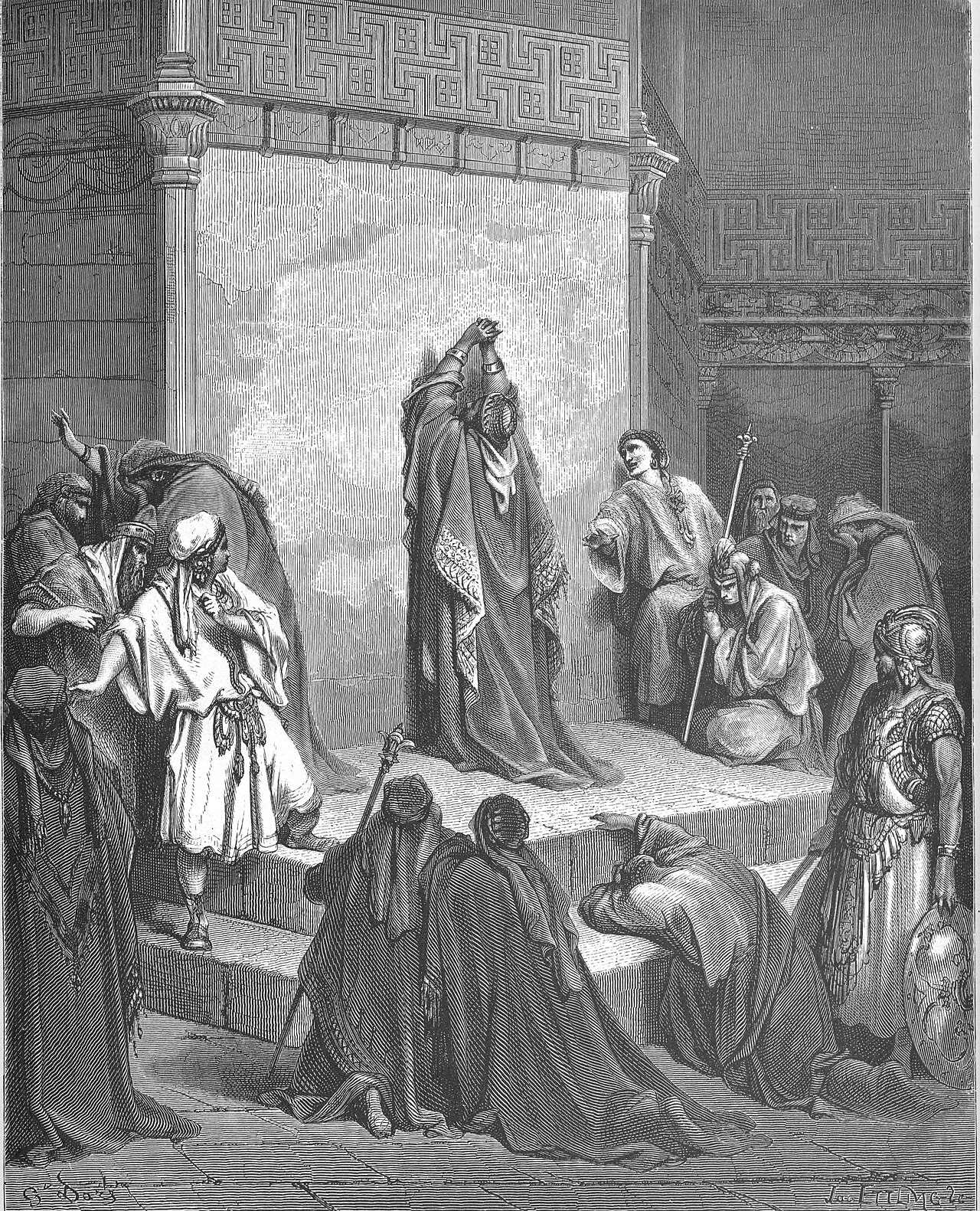
The scene is set in the outlaw years, the cave of Adullam, with a Philistine garrison holding Bethlehem and their troop camped in the valley of Rephaim, the valley that bears the giants' name. David speaks a longing for the water of his home well and three men treat it as an order, breaking through the host to draw it. He will not drink what cost blood to fetch and pours it out unto the LORD, the only offering fit for a devotion that great, and the older writers read the scene as the measure of what his men would do for him unasked.
This site's exposition
the blood of the men
Matthew Henry ties the act to the law of blood: if the water was these men's blood, it belonged to God, for the blood was always His (Leviticus 17:11). The water became an offering. Augustine of Hippo cites David's blame of his own craving for water in his lessons on desire.
The record, by era
The Church Fathers2 voices
I do not fear the uncleanness of food but only the uncleanness of uncontrolled desire. I know that Noah was permitted to eat every kind of meat which was edible; that Elijah was nourished on meat; that John, endowed with a marvelous abstinence, was not made unclean by partaking of living things, namely, the locusts which happened to be available as food. And I know that Esau was led into error by his greed for lentils; that David blamed himself for his craving for water; and that our King was tempted not by flesh but by bread. Further, the people in the desert deserved to be reprimanded, not because they desired meat but because they murmured against the Lord as a result of this desire for meat. Having been placed among these temptations, then, I struggle daily against undisciplined desire in eating and drinking.
And certainly when we are disturbed at this very anger because it has stolen upon us against our brother, and we angrily cast out its deadly suggestions and do not permit it to maintain its noxious lair in the recesses of our heart. To be angry in this latter way is also taught us by that prophet who so eradicated this from his mind that he did not even want to take revenge on his own enemies, who had in fact been handed over to him by God, when he said, "Be angry and do not sin." For when he wanted water from a well in Bethlehem and had been brought it by strong men from the midst of enemy troops, he at once poured it out on the ground and, angrily extinguishing his wanton and passionate desire in this way, he offered it as a libation to the Lord, rejecting his yearning and desire with the words "May the Lord be gracious to me, lest I do this. Shall I drink the blood of those men who went out and the danger of their souls?"
The Medieval Church2 voices
A fish is caught by being enticed with a hook. A bird falls into a net while trying to get food. Animals that are tough by nature's endowment fall into a pit from desire to eat, and what nature does not soften, food deceives. Therefore, …
When long afterward David sat against the battle lines of enemies, he wished from desire to drink water from the cistern of Bethlehem. His chosen soldiers, breaking through the midst of the opposing forces, brought back unharmed the water the king had desired. But the man instructed by scourges immediately reproached himself for having desired water at the peril of his soldiers, and pouring it out, he offered it to the Lord, as it is written there: He poured it out to the Lord.
The Puritans and the Awakening1 voice
Fifthly, Thus he would honour God and give glory to him. The water purchased at this rate he thought too precious for his own drinking and fit only to be poured out to God as a drink-offering. If it was the blood of these men, it was God's due, for the blood was always his.
1 more voice on this verse
The Puritans and the Awakening1 voice
And he said, be it far from me, O Lord, that one should do this,....
The words behind it
17 Hebrew wordsEvery Hebrew word of this verse in the order it stands, with what it means and the door to its own study. The last column counts the times a word stands in the whole Bible: the rarer the word, the more the places it appears belong together.
| Hebrew | Sound | Meaning | Word study | In the Bible |
|---|---|---|---|---|
| וַיֹּ֡אמֶר | vaiyomer | and he said | H559 → | 5305 times |
| חָלִילָה֩ | chalilah | far be it | H2486 → | 21 times |
| לִּ֨י | li | to <the> me | ||
| יְהוָ֜ה | yahweh | O Yahweh | H3068 → | 6520 times |
| מֵעֲשֹׂ֣תִי | measoti | than to do I | H6213 → | 2628 times |
| זֹ֗את | zot | this [thing] | H2063 → | 603 times |
| הֲדַ֤ם | hadam | ¿ [the] blood of | H1818 → | 360 times |
| הָֽאֲנָשִׁים֙ | haanashim | the men | H582 → | 566 times |
| הַהֹלְכִ֣ים | haholekhim | who went | H1980 → | 1546 times |
| בְּנַפְשׁוֹתָ֔ם | benafshotam | with lives their | H5315 → | 754 times |
| וְלֹ֥א | velo' | and not | H3808 → | 5168 times |
| אָבָ֖ה | ʾavah | he was willing | H14 → | 54 times |
| לִשְׁתּוֹתָ֑ם | lishtotam | to drink them | H8354 → | 217 times |
| אֵ֣לֶּה | ʾeleh | these [things] | H428 → | 746 times |
| עָשׂ֔וּ | ʾasu | they did | H6213 → | 2628 times |
| שְׁלֹ֖שֶׁת | sheloshet | [the] three | H7969 → | 432 times |
| הַגִּבֹּרִֽים׃ ס | hagiborim | the warriors | H1368 → | 158 times |
וַיֹּ֡אמֶרand he said
vaiyomerH559 →5305 times
חָלִילָה֩far be it
chalilahH2486 →21 times
לִּ֨יto <the> me
li
יְהוָ֜הO Yahweh
yahwehH3068 →6520 times
מֵעֲשֹׂ֣תִיthan to do I
measotiH6213 →2628 times
זֹ֗אתthis [thing]
zotH2063 →603 times
הֲדַ֤ם¿ [the] blood of
hadamH1818 →360 times
הָֽאֲנָשִׁים֙the men
haanashimH582 →566 times
הַהֹלְכִ֣יםwho went
haholekhimH1980 →1546 times
בְּנַפְשׁוֹתָ֔םwith lives their
benafshotamH5315 →754 times
וְלֹ֥אand not
velo'H3808 →5168 times
אָבָ֖הhe was willing
ʾavahH14 →54 times
לִשְׁתּוֹתָ֑םto drink them
lishtotamH8354 →217 times
אֵ֣לֶּהthese [things]
ʾelehH428 →746 times
עָשׂ֔וּthey did
ʾasuH6213 →2628 times
שְׁלֹ֖שֶׁת[the] three
sheloshetH7969 →432 times
הַגִּבֹּרִֽים׃ סthe warriors
hagiborimH1368 →158 times
A shaded row is a word that stands 400 times or fewer in the Bible.
The walk
8 stopsEach card is a verse this one points to, and under it the verses that one points to in turn. Where several paths arrive at the same place, that place is listed first: the text keeps returning to it.
Through
Matthew 26:28This is My blood of the covenant, which is poured out for many for the forgiveness of sins.
it leads to
- Leviticus 17:11
For the life of the flesh is in the blood, and I have given it to you to make atonement for your souls upon the altar; for it is the blood that makes atonement…
Reached by 2 separate paths from here.
- Hebrews 10:4–14
because it is impossible for the blood of bulls and goats to take away sins.
- Hebrews 9:14–22
how much more will the blood of Christ, who through the eternal Spirit offered Himself unblemished to God, purify our consciences from works of death, so that we may serve the living God!
- Matthew 20:28
just as the Son of Man did not come to be served, but to serve, and to give His life as a ransom for many.”
- Exodus 24:7–8
Then he took the Book of the Covenant and read it to the people, who replied, “All that the LORD has spoken we will do, and we will be obedient.”
- Leviticus 17:11
Through
Psalms 72:14He will redeem them from oppression and violence, for their blood is precious in his sight.
it leads to
- Psalms 116:15
Precious in the sight of the LORD is the death of His saints.
- Psalms 116:15
Through
Leviticus 17:10If anyone from the house of Israel or a foreigner living among them eats any blood, I will set My face against that person and cut him off from among his people.
it leads to
- Deuteronomy 12:16
but you must not eat the blood; pour it on the ground like water.
- Leviticus 3:17
This is a permanent statute for the generations to come, wherever you live: You must not eat any fat or any blood.”
- Deuteronomy 12:16
Where this verse is studied
On this page
About 2 Samuel
This page draws on 9 works. Open the list of works
This page draws on Alfred Edersheim, Bible History: Old Testament; Ambrose of Milan, On Jacob and the Blessed Life 1.1.4; Augustine of Hippo, Confessions 10.31.46-47; Gregory the Dialogist, Forty Gospel Homilies, Homily 34; John Cassian, INSTITUTES 8.8; John Gill, Exposition of the Old Testament (1748-1763); Leander of Seville, THE TRAINING OF NUNS 13; Matthew Henry, Commentary on the Whole Bible and W. G. Blaikie, The Second Book of Samuel (Expositor's Bible).