
2 Samuel 23:16
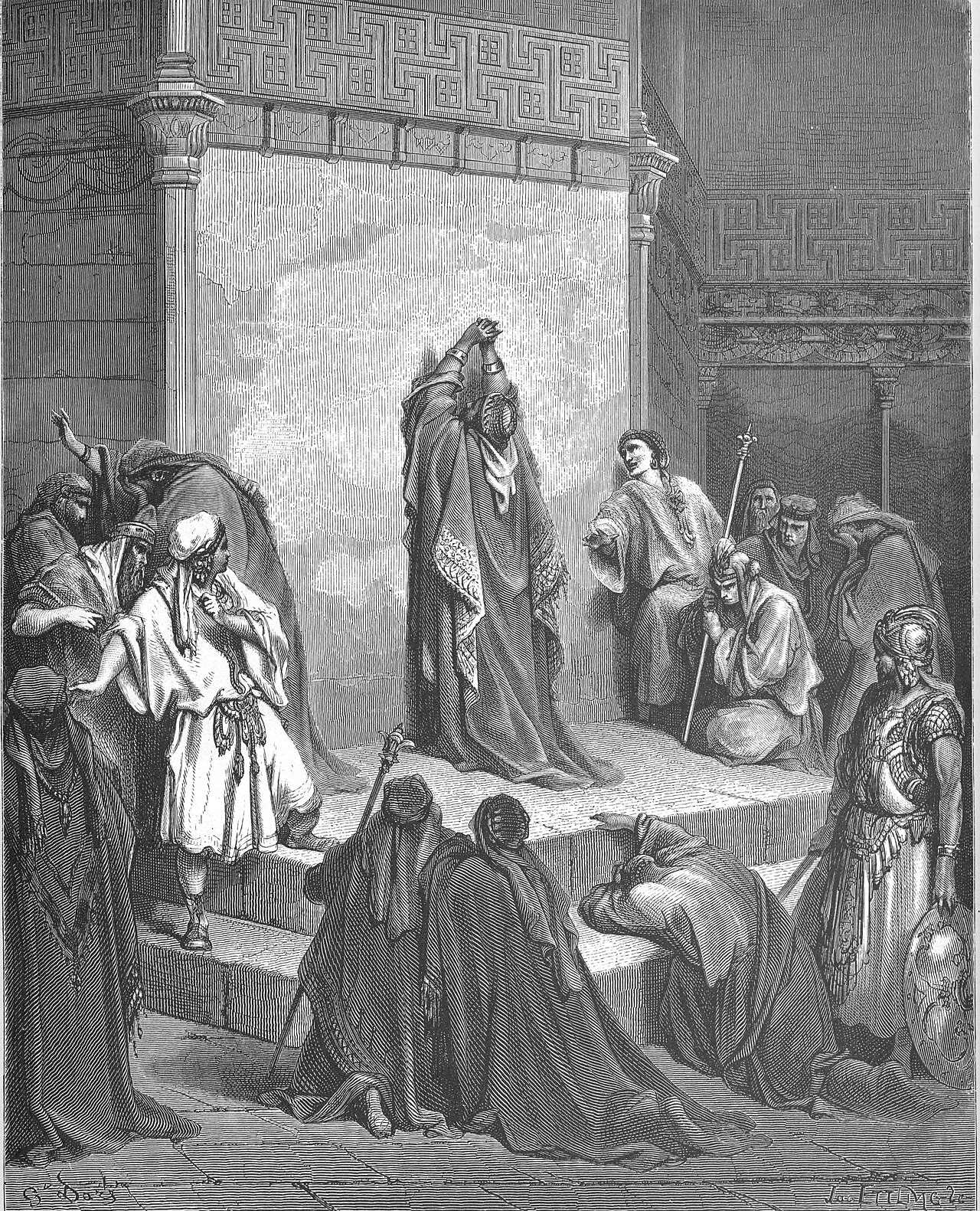
in 2 Samuel 23So the three mighty men broke through the Philistine camp, drew water from the well near the gate of Bethlehem, and brought it back to David. But he refused to drink it; instead, he poured it out to the LORD,
BSB
The same verse in ASV and KJV ▾
ASV
And the three mighty men brake through the host of the Philistines, and drew water out of the well of Beth-lehem, that was by the gate, and took it, and brought it to David: but he would not drink thereof, but poured it out unto Jehovah.
KJV
And the three mighty men brake through the host of the Philistines, and drew water out of the well of Beth–lehem, that was by the gate, and took it, and brought it to David: nevertheless he would not drink thereof, but poured it out unto the Lord.
⋯
This verse in 2 Samuel 23
Commentary
11 notes on this verseWhen long afterward David sat against the battle lines of enemies, he wished from desire to drink water from the cistern of Bethlehem. His chosen soldiers, breaking through the midst of the opposing forces, brought back unharmed the water the king had desired. But the man instructed by scourges immediately reproached himself for having desired water at the peril of his soldiers, and pouring it out, he offered it to the Lord, as it is written there: He poured it out to the Lord.
This site's exposition
came to David in the harvest time
on 2 Samuel 23:13-17
The scene is set in the outlaw years, the cave of Adullam, with a Philistine garrison holding Bethlehem and their troop camped in the valley of Rephaim, the valley that bears the giants' name. David speaks a longing for the water of his home well and three men treat it as an order, breaking through the host to draw it. He will not drink what cost blood to fetch and pours it out unto the LORD, the only offering fit for a devotion that great, and the older writers read the scene as the measure of what his men would do for him unasked.
This site's exposition
poured it out to the LORD
John Wesley reads it as a drink offering. Albert Barnes notes that the road from Adullam to Bethlehem crossed the Valley of Rephaim, where the Philistine camp stood. Gregory the Dialogist reads David, taught by earlier chastening, reproaching himself for a wish that put his three mighty men in danger.
The record, by era
The Church Fathers2 voices
And certainly when we are disturbed at this very anger because it has stolen upon us against our brother, and we angrily cast out its deadly suggestions and do not permit it to maintain its noxious lair in the recesses of our heart. To be angry in this latter way is also taught us by that prophet who so eradicated this from his mind that he did not even want to take revenge on his own enemies, who had in fact been handed over to him by God, when he said, "Be angry and do not sin." For when he wanted water from a well in Bethlehem and had been brought it by strong men from the midst of enemy troops, he at once poured it out on the ground and, angrily extinguishing his wanton and passionate desire in this way, he offered it as a libation to the Lord, rejecting his yearning and desire with the words "May the Lord be gracious to me, lest I do this. Shall I drink the blood of those men who went out and the danger of their souls?"
A commentator
Philoxenus of Mabbug13 Ascetic Discourses, Discourse 11 -- On Abstinence · Written before 523.
proposed
And that even the drinking of cold water with lust is reprehensible David, the wise man of God, shall prove unto thee, for when he lusted to drink water from the great cistern which was in Bethlehem, and those who did hear him obeyed and …
The Medieval Church1 voice
A fish is caught by being enticed with a hook. A bird falls into a net while trying to get food. Animals that are tough by nature's endowment fall into a pit from desire to eat, and what nature does not soften, food deceives. Therefore, …
The Puritans and the Awakening2 voices
Poured it - As a kind of drink offering, and acknowledgment of God's goodness in preserving the lives of his captains in so dangerous an enterprize; and to shew, that he esteemed it as a sacred thing, which it was not fit for him to drink.
And the three mighty men brake through the host of the Philistines,....
3 more voices on this verse
The Puritans and the Awakening1 voice
Let us be willing to venture in the cause of Christ, even when it is a suffering cause, as those who are assured that it will prevail and that we shall not lose by it at last.
The Nineteenth Century2 voices
Poured it out unto the Lord - To make libations, both of water and wine, was a frequent custom among the heathens.
A commentator
Albert Barnes1798–1870
Notes, Explanatory and Practical, on the Old and New Testaments (1832-1869)
proposed
Brake through the host - Their camp was pitched in the valley of Rephaim 2Sa 23:13; 1Ch 11:15. It follows from this that the way from Adullam to Bethlehem lay through or across the valley of Rephaim. Poured it out unto the Lord - It was too costly for his own use, none but the Lord was worthy of it. For libations, see Jdg 6:20 note.
The words behind it
22 Hebrew wordsEvery Hebrew word of this verse in the order it stands, with what it means and the door to its own study. The last column counts the times a word stands in the whole Bible: the rarer the word, the more the places it appears belong together.
| Hebrew | Sound | Meaning | Word study | In the Bible |
|---|---|---|---|---|
| וַיִּבְקְעוּ֩ | vaiyivkeu | and they broke through | H1234 → | |
| שְׁלֹ֨שֶׁת | sheloshet | [the] three | H7969 → | 432 times |
| הַגִּבֹּרִ֜ים | hagiborim | the warriors | H1368 → | 158 times |
| בְּמַחֲנֵ֣ה | bemachaneh | in [the] camp of | H4264 → | 215 times |
| פְלִשְׁתִּ֗ים | felishtim | [the] Philistines | H6430 → | 287 times |
| וַיִּֽשְׁאֲבוּ־ | vaiyishavu- | and they drew | H7579 → | |
| מַ֙יִם֙ | mayim | water | H4325 → | 581 times |
| מִבֹּ֤אר | mibor | from [the] well of | H877 → | |
| בֵּֽית־ | beit- | Beth- | H1035 → | 82 times |
| לֶ֙חֶם֙ | lechem | -lehem | H1035 → | 82 times |
| אֲשֶׁ֣ר | ʾasher | which | H834 → | 5497 times |
| בַּשַּׁ֔עַר | bashaar | [was] at the gate | H8179 → | 374 times |
| וַיִּשְׂא֖וּ | vaiyisu | and they carried [it] | H5375 → | 656 times |
| וַיָּבִ֣אוּ | vaiyaviu | and they brought [it] | H935 → | 2568 times |
| אֶל־ | ʾel- | to | H413 → | 5510 times |
| דָּוִ֑ד | david | David | H1732 → | 999 times |
| וְלֹ֤א | velo' | and not | H3808 → | 5168 times |
| אָבָה֙ | ʾavah | he was willing | H14 → | 54 times |
| לִשְׁתּוֹתָ֔ם | lishtotam | to drink them | H8354 → | 217 times |
| וַיַּסֵּ֥ךְ | vaiyasekh | and he poured out | H5258 → | |
| אֹתָ֖ם | ʾotam | <obj.> them | H853 → | 10935 times |
| לַֽיהוָֽה׃ | layahweh | to Yahweh | H3068 → | 6520 times |
וַיִּבְקְעוּ֩and they broke through
vaiyivkeuH1234 →
שְׁלֹ֨שֶׁת[the] three
sheloshetH7969 →432 times
הַגִּבֹּרִ֜יםthe warriors
hagiborimH1368 →158 times
בְּמַחֲנֵ֣הin [the] camp of
bemachanehH4264 →215 times
פְלִשְׁתִּ֗ים[the] Philistines
felishtimH6430 →287 times
וַיִּֽשְׁאֲבוּ־and they drew
vaiyishavu-H7579 →
מַ֙יִם֙water
mayimH4325 →581 times
מִבֹּ֤ארfrom [the] well of
miborH877 →
בֵּֽית־Beth-
beit-H1035 →82 times
לֶ֙חֶם֙-lehem
lechemH1035 →82 times
אֲשֶׁ֣רwhich
ʾasherH834 →5497 times
בַּשַּׁ֔עַר[was] at the gate
bashaarH8179 →374 times
וַיִּשְׂא֖וּand they carried [it]
vaiyisuH5375 →656 times
וַיָּבִ֣אוּand they brought [it]
vaiyaviuH935 →2568 times
אֶל־to
ʾel-H413 →5510 times
דָּוִ֑דDavid
davidH1732 →999 times
וְלֹ֤אand not
velo'H3808 →5168 times
אָבָה֙he was willing
ʾavahH14 →54 times
לִשְׁתּוֹתָ֔םto drink them
lishtotamH8354 →217 times
וַיַּסֵּ֥ךְand he poured out
vaiyasekhH5258 →
אֹתָ֖ם<obj.> them
ʾotamH853 →10935 times
לַֽיהוָֽה׃to Yahweh
layahwehH3068 →6520 times
A shaded row is a word that stands 400 times or fewer in the Bible.
The walk
8 stopsEach card is a verse this one points to, and under it the verses that one points to in turn. Where several paths arrive at the same place, that place is listed first: the text keeps returning to it.
Through
2 Corinthians 5:14For Christ’s love compels us, because we are convinced that One died for all, therefore all died.
it leads to
- Galatians 2:20
I have been crucified with Christ, and I no longer live, but Christ lives in me. The life I live in the body, I live by faith in the Son of God, who loved…
- Romans 14:7–9
For none of us lives to himself alone, and none of us dies to himself alone.
- Matthew 10:37–38
Anyone who loves his father or mother more than Me is not worthy of Me; anyone who loves his son or daughter more than Me is not worthy of Me;
- 1 Peter 1:8
Though you have not seen Him, you love Him; and though you do not see Him now, you believe in Him and rejoice with an inexpressible and glorious joy,
- Romans 5:15
But the gift is not like the trespass. For if the many died by the trespass of the one man, how much more did God’s grace and the gift that came by the grace…
- Galatians 2:20
Through
Romans 5:7Very rarely will anyone die for a righteous man, though for a good man someone might possibly dare to die.
it leads to
- John 15:13
Greater love has no one than this, that he lay down his life for his friends.
- 1 John 3:16
By this we know what love is: Jesus laid down His life for us, and we ought to lay down our lives for our brothers.
- Romans 16:4
who have risked their lives for me. Not only I but all the churches of the Gentiles are grateful to them.
- John 15:13
Where this verse is studied
On this page
About 2 Samuel
Who and where
2 names in this verse with a page on the site.
This page draws on 11 works. Open the list of works
This page draws on Adam Clarke, Commentary on the Bible; Albert Barnes, Notes, Explanatory and Practical, on the Old and New Testaments (1832-1869); Alfred Edersheim, Bible History: Old Testament; Gregory the Dialogist, Forty Gospel Homilies, Homily 34; John Cassian, INSTITUTES 8.8; John Gill, Exposition of the Old Testament (1748-1763); John Wesley, Explanatory Notes upon the Old Testament; Leander of Seville, THE TRAINING OF NUNS 13; Matthew Henry, Commentary on the Whole Bible; Philoxenus of Mabbug, 13 Ascetic Discourses, Discourse 11 -- On Abstinence and W. G. Blaikie, The Second Book of Samuel (Expositor's Bible).