
2 Kings 5:13
in 2 Kings 5Naaman’s servants, however, approached him and said, “My father, if the prophet had told you to do some great thing, would you not have done it? How much more, then, when he tells you, ‘Wash and be cleansed’?”
BSB
The same verse in ASV and KJV ▾
ASV
And his servants came near, and spake unto him, and said, My father, if the prophet had bid thee do some great thing, wouldest thou not have done it? how much rather then, when he saith to thee, Wash, and be clean?
KJV
And his servants came near, and spake unto him, and said, My father, if the prophet had bid thee do some great thing, wouldest thou not have done it? how much rather then, when he saith to thee, Wash, and be clean?
⋯
This verse in 2 Kings 5
Commentary
8 notes on this verseMy father - A title of the highest respect and affection. Had bid thee do some great thing - If the prophet had appointed thee to do something very difficult in itself, and very expensive to thee, wouldst thou not have done it? With much greater reason shouldst thou do what will occupy little time, be no expense, and is easy to be performed.
This site's exposition
My father, if the prophet
Naaman's own servants reason him back with a plain argument: he would have done some great thing without complaint, so a small one deserves no less obedience. They address him as father, a servant's term of respect, and win where royal letters and talents of silver could not. The turn in the story comes from men with no rank at all, the second time in the chapter that a servant's word carries more weight than a king's.
The record, by era
The Church Fathers1 voice
Let us further see what blessed Elisha commanded Naaman the Syrian. "Go," he says, "and wash seven times in the Jordan." When Naaman heard that he was to wash seven times in the Jordan, he was indignant and did not want to comply, but accepting …
The Puritans and the Awakening3 voices
One would have expected that Elisha's servant should be a saint (even Ahab's servant, Obadiah, was), but even Christ himself had a Judas among his followers. The means of grace cannot give grace.
And wilt thou not submit to so easy a method as this, Wash and be clean?" Observe, 1. His own servants gave him this reproof and counsel, which was no more disparagement to him than that he had intelligence of one that could cure him from his wife's maid,
quarantine:debris (2026-07-29) — odd-straight-quotes
And his servant came near, and spake unto him, and said, my father,....
The Nineteenth Century1 voice
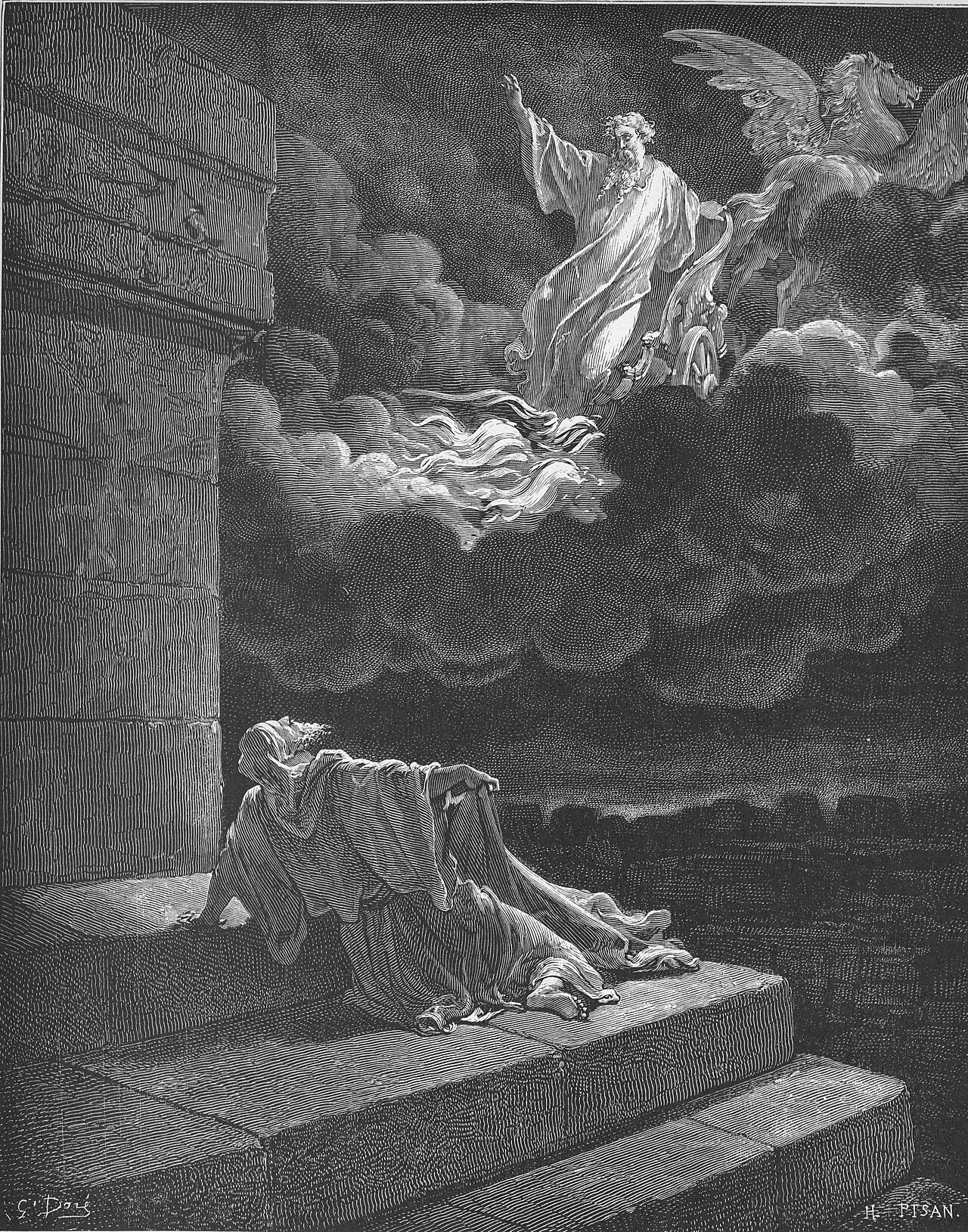
I am somewhat, myself, in the position of Elijah, when Naaman, the Syrian, came dashing up with his horses and with his chariot and stood at the door of the house of the Prophet. There are before me in this house, I fear, many who are spiritually diseased. Your motive for coming up to this assembly should be to hear the Gospel and to discover the remedy by which your spiritual disease may be removed. But what, let me ask, are really the thoughts that occupy your minds? I can suppose that you are looking for different things from me. One, perhaps, imagines that something will be said odd and strange that shall provoke a smile. Another imagines that I shall labor to make some display of elocution and speak tender words softly, like flakes of feathered snow melting as they fall and so draw forth the silent, graceful tear. When both of these are, alike, disappointed, you will probably say to yourselves, "Well, it is only the old story we used to hear when we went to Sunday school. It is just what we have listened to Sunday after Sunday, till we turn away disgusted with it. It is, 'Believe in Jesus Christ and live.' There is nothing fresh or new to stimulate our intellect— nothing original to whet our curiosity. In whatever shape the preacher puts it, whatever illustrations he uses to enforce it, it comes to just what we have always heard—'believe and live.'" And you take offense. Because it is so simple and so plain, you will not attend to it. I will therefore suppose myself to mingle in the crowd as you retire and come up to you, one by one, and kindly take you by the hand and say, "If the preacher had told you of some new and strange thing, some difficult matter, you would have inclined your ear and devoted your heart to it.
1 more voice on this verse
The Nineteenth Century1 voice
I am somewhat, myself, in the position of Elijah, when Naaman, the Syrian, came dashing up with his horses and with his chariot and stood at the door of the house of the Prophet. There are before me in this house, I fear, many who are spiritually diseased. Your motive for coming up to this assembly should be to hear the Gospel and to discover the remedy by which your spiritual disease may be removed. But what, let me ask, are really the thoughts that occupy your minds? I can suppose that you are looking for different things from me.
The words behind it
19 Hebrew wordsEvery Hebrew word of this verse in the order it stands, with what it means and the door to its own study. The last column counts the times a word stands in the whole Bible: the rarer the word, the more the places it appears belong together.
| Hebrew | Sound | Meaning | Word study | In the Bible |
|---|---|---|---|---|
| וַיִּגְּשׁ֣וּ | vaiyigeshu | and they drew near | H5066 → | 125 times |
| עֲבָדָיו֮ | ʾavadav | servants his | H5650 → | 799 times |
| וַיְדַבְּר֣וּ | vaydaberu | and they spoke | H1696 → | 1141 times |
| אֵלָיו֒ | ʾelav | to him | H413 → | 5510 times |
| וַיֹּאמְר֗וּ | vaiyomeru | and they said | H559 → | 5305 times |
| אָבִי֙ | ʾavi | would that | H1 → | 1212 times |
| דָּבָ֣ר | davar | a thing | H1697 → | 1440 times |
| גָּד֗וֹל | gadol | great | H1419 → | 526 times |
| הַנָּבִ֛יא | hanavi' | the prophet | H5030 → | 314 times |
| דִּבֶּ֥ר | diber | he spoke | H1696 → | 1141 times |
| אֵלֶ֖יךָ | ʾeleikha | to you | H413 → | 5510 times |
| הֲל֣וֹא | halo' | ¿ not | H3808 → | 5168 times |
| תַעֲשֶׂ֑ה | taaseh | will you do [it] | H6213 → | 2628 times |
| וְאַ֛ף | veaf | and indeed? | H637 → | |
| כִּֽי־ | ki- | if | H3588 → | 4482 times |
| אָמַ֥ר | ʾamar | he has said | H559 → | 5305 times |
| אֵלֶ֖יךָ | ʾeleikha | to you | H413 → | 5510 times |
| רְחַ֥ץ | rechatz | wash | H7364 → | 72 times |
| וּטְהָֽר׃ | utehar | and be clean | H2891 → | 94 times |
וַיִּגְּשׁ֣וּand they drew near
vaiyigeshuH5066 →125 times
עֲבָדָיו֮servants his
ʾavadavH5650 →799 times
וַיְדַבְּר֣וּand they spoke
vaydaberuH1696 →1141 times
אֵלָיו֒to him
ʾelavH413 →5510 times
וַיֹּאמְר֗וּand they said
vaiyomeruH559 →5305 times
אָבִי֙would that
ʾaviH1 →1212 times
דָּבָ֣רa thing
davarH1697 →1440 times
גָּד֗וֹלgreat
gadolH1419 →526 times
הַנָּבִ֛יאthe prophet
hanavi'H5030 →314 times
דִּבֶּ֥רhe spoke
diberH1696 →1141 times
אֵלֶ֖יךָto you
ʾeleikhaH413 →5510 times
הֲל֣וֹא¿ not
halo'H3808 →5168 times
תַעֲשֶׂ֑הwill you do [it]
taasehH6213 →2628 times
וְאַ֛ףand indeed?
veafH637 →
כִּֽי־if
ki-H3588 →4482 times
אָמַ֥רhe has said
ʾamarH559 →5305 times
אֵלֶ֖יךָto you
ʾeleikhaH413 →5510 times
רְחַ֥ץwash
rechatzH7364 →72 times
וּטְהָֽר׃and be clean
uteharH2891 →94 times
A shaded row is a word that stands 400 times or fewer in the Bible.
The walk
8 stopsEach card is a verse this one points to, and under it the verses that one points to in turn. Where several paths arrive at the same place, that place is listed first: the text keeps returning to it.
Through
Revelation 7:14“Sir,” I answered, “you know.” So he replied, “These are the ones who have come out of the great tribulation; they have washed their robes and made them white in the blood of the…
it leads to
- 1 John 1:7
But if we walk in the light as He is in the light, we have fellowship with one another, and the blood of Jesus His Son cleanses us from all sin.
- Revelation 22:14
Blessed are those who wash their robes, so that they may have the right to the tree of life and may enter the city by its gates.
- Hebrews 13:12
And so Jesus also suffered outside the city gate, to sanctify the people by His own blood.
- Revelation 1:5
and from Jesus Christ, the faithful witness, the firstborn from the dead, and the ruler of the kings of the earth. To Him who loves us and has released us from our sins by…
- Revelation 12:11
They have conquered him by the blood of the Lamb and by the word of their testimony. And they did not love their lives so as to shy away from death.
- 1 John 1:7
Through
2 Kings 13:14When Elisha had fallen sick with the illness from which he would die, Jehoash king of Israel came down to him and wept over him, saying, “My father, my father, the chariots and horsemen…
it leads to
- 2 Kings 2:12
As Elisha watched, he cried out, “My father, my father, the chariots and horsemen of Israel!” And he saw Elijah no more. So taking hold of his own clothes, he tore them in two.
Reached by 2 separate paths from here.
- Philippians 2:26
For he has been longing for all of you and is distressed because you heard he was ill.
- 2 Kings 2:12
Through
2 Kings 2:12As Elisha watched, he cried out, “My father, my father, the chariots and horsemen of Israel!” And he saw Elijah no more. So taking hold of his own clothes, he tore them in two.
it leads to
- 2 Kings 13:14
When Elisha had fallen sick with the illness from which he would die, Jehoash king of Israel came down to him and wept over him, saying, “My father, my father, the chariots and horsemen…
- 2 Kings 13:14
Where this verse is studied
On this page
Studies3
On this verse
On this chapter
About 2 Kings
This page draws on Adam Clarke, Commentary on the Bible; Caesarius of Arles, SERMON 129.4-5; Charles Spurgeon, The Metropolitan Tabernacle Pulpit, Sermon No. 892: “A Serious Reprimand” (lightly modernized text, CCEL edition); John Gill, Exposition of the Old Testament; John Gill, Exposition of the Old Testament (1748-1763) and Matthew Henry, Commentary on the Whole Bible.