
2 Kings 19:23
in 2 Kings 19Through your servants you have taunted the Lord, and you have said: “With my many chariots I have ascended to the heights of the mountains, to the remote peaks of Lebanon. I have cut down its tallest cedars, the finest of its cypresses. I have reached its farthest outposts, the densest of its forests.
BSB
The same verse in ASV and KJV ▾
ASV
By thy messengers thou hast defied the Lord, and hast said, With the multitude of my chariots am I come up to the height of the mountains, to the innermost parts of Lebanon; and I will cut down the tall cedars thereof, and the choice fir-trees thereof; and I will enter into his farthest lodging-place, the forest of his fruitful field.
KJV
By thy messengers thou hast reproached the Lord, and hast said, With the multitude of my chariots I am come up to the height of the mountains, to the sides of Lebanon, and will cut down the tall cedar trees thereof, and the choice fir trees thereof: and I will enter into the lodgings of his borders, and into the forest of his Carmel.
⋯
This verse in 2 Kings 19
Commentary
5 notes on this verseA commentator
Albert Barnes1798–1870
Notes, Explanatory and Practical, on the Old and New Testaments (1832-1869)
And hast said - Isaiah clothes in words the thoughts of Sennacherib’s heart - thoughts of the most extreme self-confidence. Compare Isa 10:7-14, where, probably at an earlier date, the same overweening pride is ascribed to this king. With the multitude of my chariots - There are two readings here, which give, however, nearly the same sense. The more difficult and more poetical of the two is to be preferred.
This site's exposition
even against the Holy One of Israel
on 2 Kings 19:22-24
The Holy One of Israel is Isaiah's own signature title for God, used across his book far more than any other prophet uses it, and it turns Sennacherib's boasting into blasphemy aimed at a named person rather than at an abstraction. The king's own words are quoted back at him, felling the cedars of Lebanon, entering the forest of his Carmel, the same mountain where a different contest had already been settled by fire in 1 Ki 18. Assyrian royal inscriptions do record kings boasting of cutting Lebanon's cedar for building projects, so the oracle answers Sennacherib in language his own scribes actually used.
The record, by era
The Puritans and the Awakening2 voices
Lebanon - An high hill, famous for cedars and fir-trees. Cut down - I will cut down the trees that hinder my march, and plane the way for my numerous army and chariots. Lodgings - Those cities (which he calls lodgings in way of contempt) which are in his utmost borders.
Nothing could stand before him or be withheld from him; no hills too high for him to climb, no trees too strong for him to fell, no waters too deep for him to dry up; as if he had the power of a God, to speak and it is done. (2.) He took to himself the glory of doing these great things, whereas they were all the Lord's doing,
The Nineteenth Century1 voice
The tall cedar trees - the choice fir trees - Probably meaning the princes and nobles of the country. The forest of his Carmel - Better in the margin: the forest and his fruitful field.
The words behind it
23 Hebrew wordsEvery Hebrew word of this verse in the order it stands, with what it means and the door to its own study. The last column counts the times a word stands in the whole Bible: the rarer the word, the more the places it appears belong together.
| Hebrew | Sound | Meaning | Word study | In the Bible |
|---|---|---|---|---|
| בְּיַ֣ד | beyad | by [the] hand of | H3027 → | 1618 times |
| מַלְאָכֶיךָ֮ | malakheikha | messengers your | H4397 → | 213 times |
| חֵרַ֣פְתָּ׀ | cherafta | you have taunted | H2778 → | 41 times |
| אֲדֹנָי֒ | ʾadonai | [the] Lord | H136 → | |
| וַתֹּ֗אמֶר | vatomer | and you have said | H559 → | 5305 times |
| בְּרֹ֥ב | berechev | with [the] abundance of | H7230 → | |
| רִכְבִּ֛י | rikhbi | chariotry my | H7393 → | 119 times |
| אֲנִ֥י | ʾani | I | H589 → | 874 times |
| עָלִ֛יתִי | ʾaliti | I have gone up | H5927 → | 890 times |
| מְר֥וֹם | merom | [the] height[s] of | H4791 → | |
| הָרִ֖ים | harim | mountains | H2022 → | 546 times |
| יַרְכְּתֵ֣י | yarketei | [the] remotest parts of | H3411 → | |
| לְבָנ֑וֹן | levanon | Lebanon | H3844 → | 71 times |
| וְאֶכְרֹ֞ת | veekhrot | so I may cut down | H3772 → | 288 times |
| קוֹמַ֤ת | komat | [the] height of | H6967 → | 45 times |
| אֲרָזָיו֙ | ʾarazav | cedars its | H730 → | |
| מִבְח֣וֹר | mivchor | [the] choice of | H4004 → | |
| בְּרֹשָׁ֔יו | beroshav | pines its | H1265 → | |
| וְאָב֙וֹאָה֙ | veavoah | and I went | H935 → | 2568 times |
| מְל֣וֹן | melon | [the] lodging place of | H4411 → | |
| קִצּ֔וֹ | kitzo | end its | H7093 → | |
| יַ֖עַר | yaar | [the] forest of | H3293 → | |
| כַּרְמִלּֽוֹ׃ | karmilo | plantation its | H3759 → |
בְּיַ֣דby [the] hand of
beyadH3027 →1618 times
מַלְאָכֶיךָ֮messengers your
malakheikhaH4397 →213 times
חֵרַ֣פְתָּ׀you have taunted
cheraftaH2778 →41 times
אֲדֹנָי֒[the] Lord
ʾadonaiH136 →
וַתֹּ֗אמֶרand you have said
vatomerH559 →5305 times
בְּרֹ֥בwith [the] abundance of
berechevH7230 →
רִכְבִּ֛יchariotry my
rikhbiH7393 →119 times
אֲנִ֥יI
ʾaniH589 →874 times
עָלִ֛יתִיI have gone up
ʾalitiH5927 →890 times
מְר֥וֹם[the] height[s] of
meromH4791 →
הָרִ֖יםmountains
harimH2022 →546 times
יַרְכְּתֵ֣י[the] remotest parts of
yarketeiH3411 →
לְבָנ֑וֹןLebanon
levanonH3844 →71 times
וְאֶכְרֹ֞תso I may cut down
veekhrotH3772 →288 times
קוֹמַ֤ת[the] height of
komatH6967 →45 times
אֲרָזָיו֙cedars its
ʾarazavH730 →
מִבְח֣וֹר[the] choice of
mivchorH4004 →
בְּרֹשָׁ֔יוpines its
beroshavH1265 →
וְאָב֙וֹאָה֙and I went
veavoahH935 →2568 times
מְל֣וֹן[the] lodging place of
melonH4411 →
קִצּ֔וֹend its
kitzoH7093 →
יַ֖עַר[the] forest of
yaarH3293 →
כַּרְמִלּֽוֹ׃plantation its
karmiloH3759 →
A shaded row is a word that stands 400 times or fewer in the Bible.
The walk
8 stopsEach card is a verse this one points to, and under it the verses that one points to in turn. Where several paths arrive at the same place, that place is listed first: the text keeps returning to it.
Through
Psalms 20:7Some trust in chariots and others in horses, but we trust in the name of the LORD our God.
it leads to
- Isaiah 31:1
Woe to those who go down to Egypt for help, who rely on horses, who trust in their abundance of chariots and in their multitude of horsemen. They do not look to the Holy…
- Jeremiah 17:5
This is what the LORD says: “Cursed is the man who trusts in mankind, who makes the flesh his strength and turns his heart from the LORD.
- Proverbs 21:31
A horse is prepared for the day of battle, but victory is of the LORD.
- Psalms 33:16–17
No king is saved by his vast army; no warrior is delivered by his great strength.
- 2 Chronicles 32:8
With him is only the arm of flesh, but with us is the LORD our God to help us and to fight our battles.” So the people were strengthened by the words of Hezekiah…
- Isaiah 31:1
Through
2 Kings 18:17Nevertheless, the king of Assyria sent the Tartan, the Rabsaris, and the Rabshakeh, along with a great army, from Lachish to King Hezekiah at Jerusalem. They advanced up to Jerusalem and stationed themselves by…
it leads to
- Isaiah 20:1
Before the year that the chief commander, sent by Sargon king of Assyria, came to Ashdod and attacked and captured it,
- 2 Kings 20:20
As for the rest of the acts of Hezekiah, along with all his might and how he constructed the pool and the tunnel to bring water into the city, are they not written in…
- Isaiah 7:3
Then the LORD said to Isaiah, “Go out with your son Shear-jashub to meet Ahaz at the end of the aqueduct that feeds the upper pool, on the road to the Launderer’s Field,
- Isaiah 20:1
Where this verse is studied
On this page
Studies1
About 2 Kings
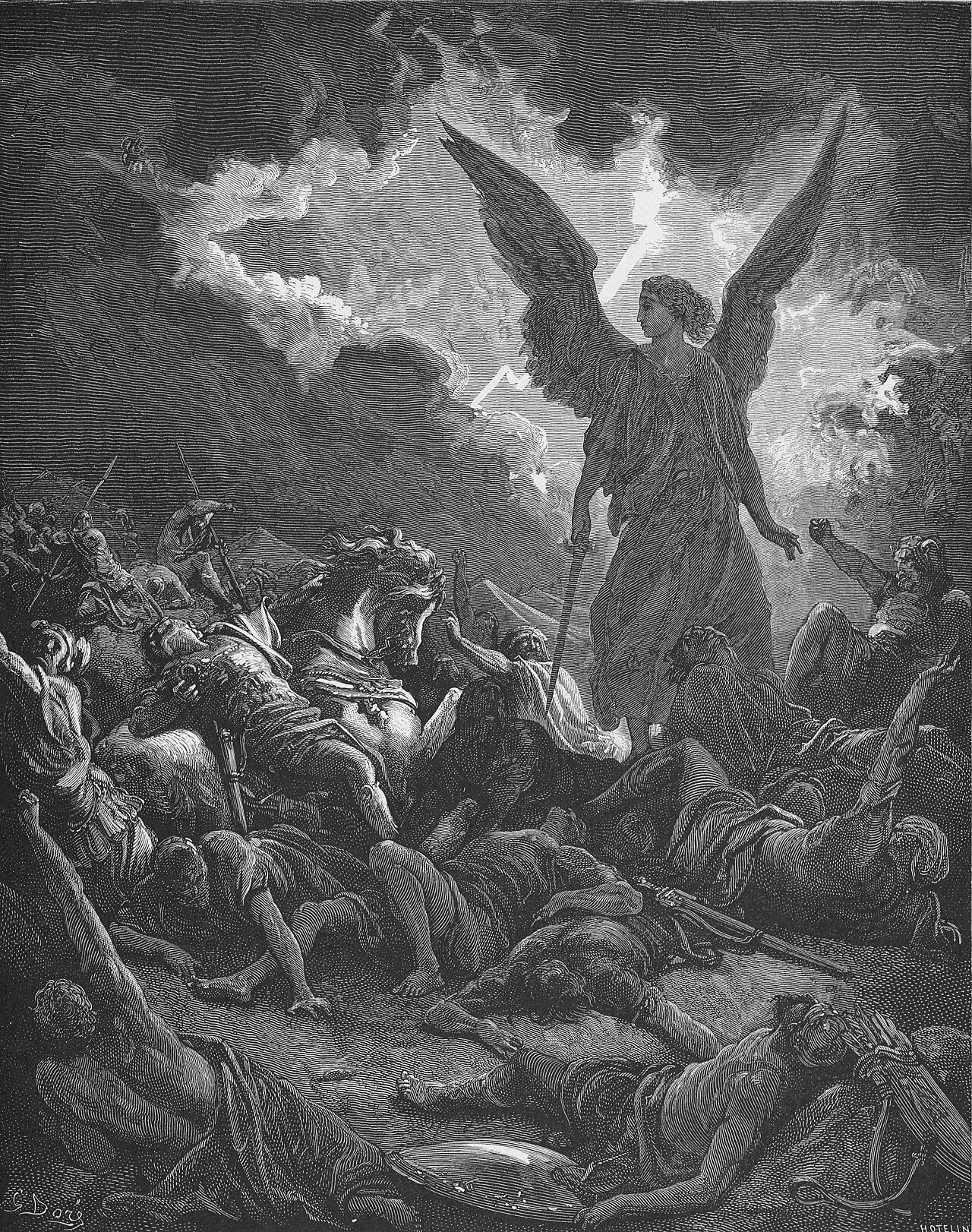
This page draws on Adam Clarke, Commentary on the Bible; Albert Barnes, Notes, Explanatory and Practical, on the Old and New Testaments (1832-1869); Alfred Edersheim, Bible History: Old Testament; John Wesley, Explanatory Notes upon the Old Testament; Keil, The Books of the Kings and Matthew Henry, Commentary on the Whole Bible.