
2 Kings 19:32
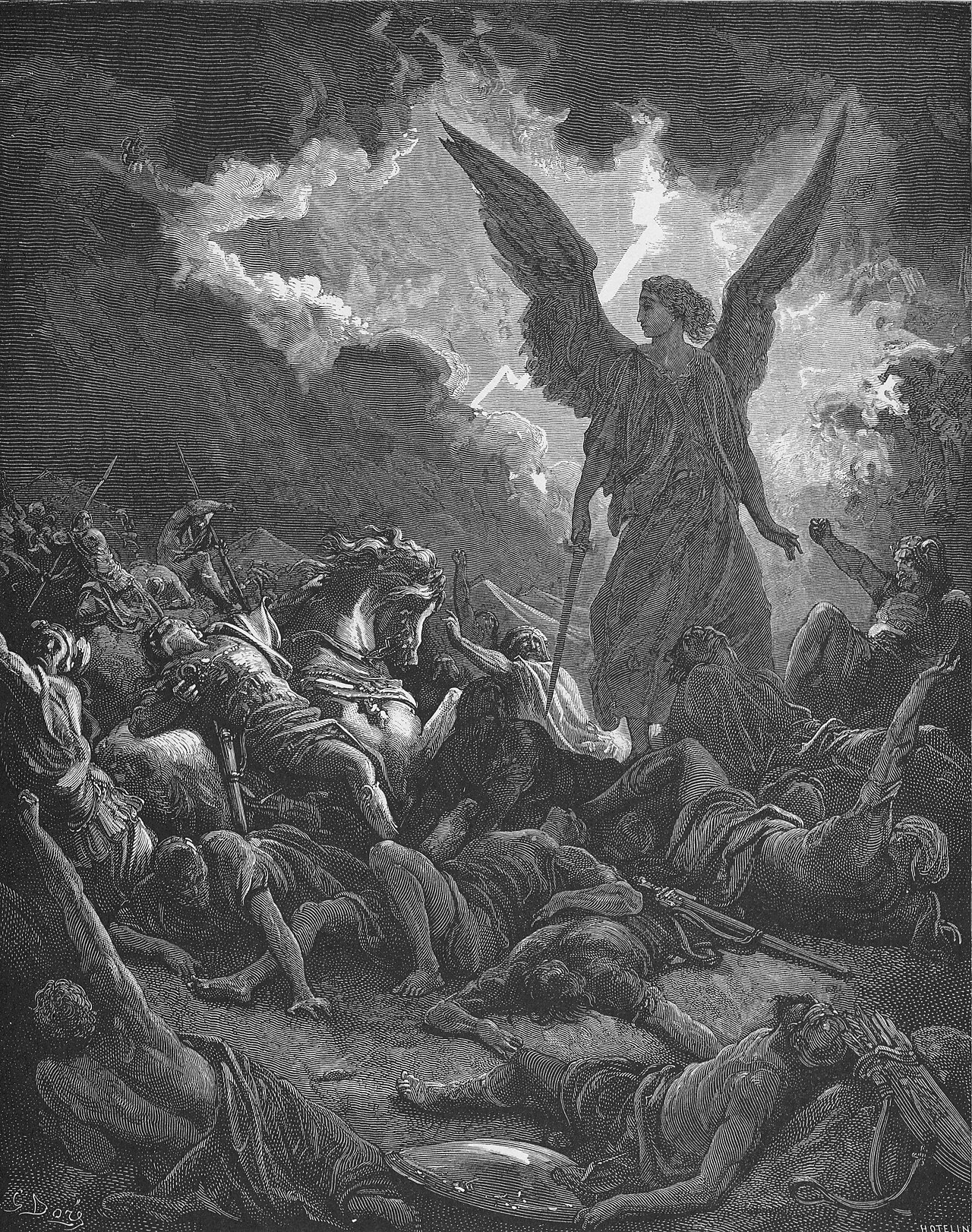
in 2 Kings 19So this is what the LORD says about the king of Assyria: ‘He will not enter this city or shoot an arrow into it. He will not come before it with a shield or build up a siege ramp against it.
BSB
The same verse in ASV and KJV ▾
ASV
Therefore thus saith Jehovah concerning the king of Assyria, He shall not come unto this city, nor shoot an arrow there, neither shall he come before it with shield, nor cast up a mound against it.
KJV
Therefore thus saith the Lord concerning the king of Assyria, He shall not come into this city, nor shoot an arrow there, nor come before it with shield, nor cast a bank against it.
⋯
This verse in 2 Kings 19
Commentary
3 notes on this verseHe shall not, etc. - Here follow the fullest proofs that Jerusalem shall not be taken by the Assyrians. 1. He shall not come into this city; 2. He shall not be able to get so near as to shoot an arrow into it; 3. He shall not be able to bring an army before it, 4. Nor shall he be able to raise any redoubt or mound against it; 5. No; not even an Assyrian shield shall be seen in the country; not even a foraging party shall come near the city.
This site's exposition
He will not enter this city
on 2 Kings 19:32-33
The oracle promises a siege that never happens: he will not "shoot an arrow into it". Sennacherib's Taylor Prism boasts of shutting Hezekiah up and never claims the city fell. That silence fits the oracle as evidence short of proof, since an inscription keeps silent about a failure.
The record, by era
The Nineteenth Century1 voice
A commentator
Albert Barnes1798–1870
Notes, Explanatory and Practical, on the Old and New Testaments (1832-1869)
proposed
Nor come before it with shield - The “shields” of the Assyrians are very conspicuous in the sculptures, and were of great importance in a siege, since the assailing archers were in most instances defended, as they shot their weapons, by a comrade, who held before himself and his friend a shield of an enormous size. It was made of a framework of wood, filled in with wattling, and perhaps lined with skin; it was rested upon the ground, and it generally curved backward toward the top; ordinarily it somewhat exceeded the height of a man. From the safe covert afforded by these large defenses the archers were able to take deliberate aim, and deliver their volleys with effect. Nor cast a bank against it - “Mounds” or “banks” were among the most common of the means used by the Assyrians against a besieged town. They were thrown up against the walls, and consisted of loose earth, trees, brushwood, stones, and rubbish. Sometimes the surface of the mound was regularly paved with several layers of stone or brick, which formed a solid road or causeway capable of bearing a great weight. The intention was not so much to bring the mounds to a level with the top of the walls, as to carry them to such a height as should enable the battering-ram to work effectively. Walls were made very solid toward their base, for the purpose of resisting the ram; halfway up their structure was comparatively weak and slight. The engines of the assailants, rams and catapults, where therefore far more serviceable if they could attack the upper and weaker portion of the defenses; and it was to enable them to reach these portions that the “mounds” were raised.
The words behind it
23 Hebrew wordsEvery Hebrew word of this verse in the order it stands, with what it means and the door to its own study. The last column counts the times a word stands in the whole Bible: the rarer the word, the more the places it appears belong together.
| Hebrew | Sound | Meaning | Word study | In the Bible |
|---|---|---|---|---|
| לָכֵ֗ן | lakhen | <to> therefore | H3651 → | 771 times |
| כֹּֽה־ | koh- | thus | H3541 → | 577 times |
| אָמַ֤ר | ʾamar | he says | H559 → | 5305 times |
| יְהוָה֙ | yahweh | Yahweh | H3068 → | 6520 times |
| אֶל־ | ʾel- | concerning | H413 → | 5510 times |
| מֶ֣לֶךְ | melekh | [the] king of | H4428 → | 2525 times |
| אַשּׁ֔וּר | ʾashur | Assyria | H804 → | 151 times |
| לֹ֤א | lo' | not | H3808 → | 5168 times |
| יָבֹא֙ | yavo' | he will come | H935 → | 2568 times |
| אֶל־ | ʾel- | into | H413 → | 5510 times |
| הָעִ֣יר | hair | the city | H5892 → | 1090 times |
| הַזֹּ֔את | hazot | <the> this | H2063 → | 603 times |
| וְלֹֽא־ | velo'- | and not | H3808 → | 5168 times |
| יוֹרֶ֥ה | yoreh | he will shoot | H3384 → | 80 times |
| שָׁ֖ם | sham | there | H8033 → | 834 times |
| חֵ֑ץ | chetz | an arrow | H2671 → | 53 times |
| וְלֹֽא־ | velo'- | and not | H3808 → | 5168 times |
| יְקַדְּמֶ֣נָּה | yekaddemenah | he will confront it | H6923 → | |
| מָגֵ֔ן | magen | a shield | H4043 → | |
| וְלֹֽא־ | velo'- | and not | H3808 → | 5168 times |
| יִשְׁפֹּ֥ךְ | yishpokh | he will pour out | H8210 → | 114 times |
| עָלֶ֖יהָ | ʾaleiha | on it | H5921 → | 5755 times |
| סֹלְלָֽה׃ | solelah | a mound | H5550 → |
לָכֵ֗ן<to> therefore
lakhenH3651 →771 times
כֹּֽה־thus
koh-H3541 →577 times
אָמַ֤רhe says
ʾamarH559 →5305 times
יְהוָה֙Yahweh
yahwehH3068 →6520 times
אֶל־concerning
ʾel-H413 →5510 times
מֶ֣לֶךְ[the] king of
melekhH4428 →2525 times
אַשּׁ֔וּרAssyria
ʾashurH804 →151 times
לֹ֤אnot
lo'H3808 →5168 times
יָבֹא֙he will come
yavo'H935 →2568 times
אֶל־into
ʾel-H413 →5510 times
הָעִ֣ירthe city
hairH5892 →1090 times
הַזֹּ֔את<the> this
hazotH2063 →603 times
וְלֹֽא־and not
velo'-H3808 →5168 times
יוֹרֶ֥הhe will shoot
yorehH3384 →80 times
שָׁ֖םthere
shamH8033 →834 times
חֵ֑ץan arrow
chetzH2671 →53 times
וְלֹֽא־and not
velo'-H3808 →5168 times
יְקַדְּמֶ֣נָּהhe will confront it
yekaddemenahH6923 →
מָגֵ֔ןa shield
magenH4043 →
וְלֹֽא־and not
velo'-H3808 →5168 times
יִשְׁפֹּ֥ךְhe will pour out
yishpokhH8210 →114 times
עָלֶ֖יהָon it
ʾaleihaH5921 →5755 times
סֹלְלָֽה׃a mound
solelahH5550 →
A shaded row is a word that stands 400 times or fewer in the Bible.
The walk
8 stopsEach card is a verse this one points to, and under it the verses that one points to in turn. Where several paths arrive at the same place, that place is listed first: the text keeps returning to it.
Through
Ezekiel 21:22In his right hand appears the portent for Jerusalem, where he is to set up battering rams, to call for the slaughter, to lift a battle cry, to direct the battering rams against the…
it leads to
- Ezekiel 4:2
Then lay siege against it: Construct a siege wall, build a ramp to it, set up camps against it, and place battering rams around it on all sides.
- Ezekiel 26:9
He will direct the blows of his battering rams against your walls and tear down your towers with his axes.
- Joshua 6:10
But Joshua had commanded the people: “Do not give a battle cry or let your voice be heard; do not let one word come out of your mouth until the day I tell you…
- Ezekiel 4:2
Through
2 Samuel 20:15And Joab’s troops came and besieged Sheba in Abel-beth-maacah and built a siege ramp against the outer rampart of the city. As all the troops with Joab were battering the wall to topple it,
it leads to
- Jeremiah 32:24
See how the siege ramps are mounted against the city to capture it. And by sword and famine and plague, the city has been given into the hands of the Chaldeans who are fighting…
- 1 Kings 15:20
And Ben-hadad listened to King Asa and sent the commanders of his armies against the cities of Israel, conquering Ijon, Dan, Abel-beth-maacah, and the whole land of Naphtali, including the region of Chinnereth.
- Isaiah 37:33
So this is what the LORD says about the king of Assyria: ‘He will not enter this city or shoot an arrow into it. He will not come before it with a shield or…
- 2 Kings 15:29
In the days of Pekah king of Israel, Tiglath-pileser king of Assyria came and captured Ijon, Abel-beth-maacah, Janoah, Kedesh, Hazor, Gilead, and Galilee, including all the land of Naphtali, and he took the people…
- Jeremiah 6:6
For this is what the LORD of Hosts says: “Cut down the trees and raise a siege ramp against Jerusalem. This city must be punished; there is nothing but oppression in her midst.
- Jeremiah 32:24
Where this verse is studied
On this page
Studies5
On this verse
On this chapter
About 2 Kings
Who and where
1 name in this verse with a page on the site.
This page draws on Adam Clarke, Commentary on the Bible; Albert Barnes, Notes, Explanatory and Practical, on the Old and New Testaments (1832-1869); Alfred Edersheim, Bible History: Old Testament and F. W. Farrar, The Second Book of Kings (Expositor's Bible).