
2 Kings 19:4
in 2 Kings 19Perhaps the LORD your God will hear all the words of the Rabshakeh, whom his master the king of Assyria has sent to defy the living God, and He will rebuke him for the words that the LORD your God has heard. Therefore lift up a prayer for the remnant that still survives.”
BSB
The same verse in ASV and KJV ▾
ASV
It may be Jehovah thy God will hear all the words of Rabshakeh, whom the king of Assyria his master hath sent to defy the living God, and will rebuke the words which Jehovah thy God hath heard: wherefore lift up thy prayer for the remnant that is left.
KJV
It may be the Lord thy God will hear all the words of Rab–shakeh, whom the king of Assyria his master hath sent to reproach the living God; and will reprove the words which the Lord thy God hath heard: wherefore lift up thy prayer for the remnant that are left.
⋯
This verse in 2 Kings 19
Commentary
7 notes on this verseThe remnant that are left - That is, the Jews; the ten tribes having been already carried away captive by the kings of Assyria.
This site's exposition
to defy the living God
on 2 Kings 19:4-7
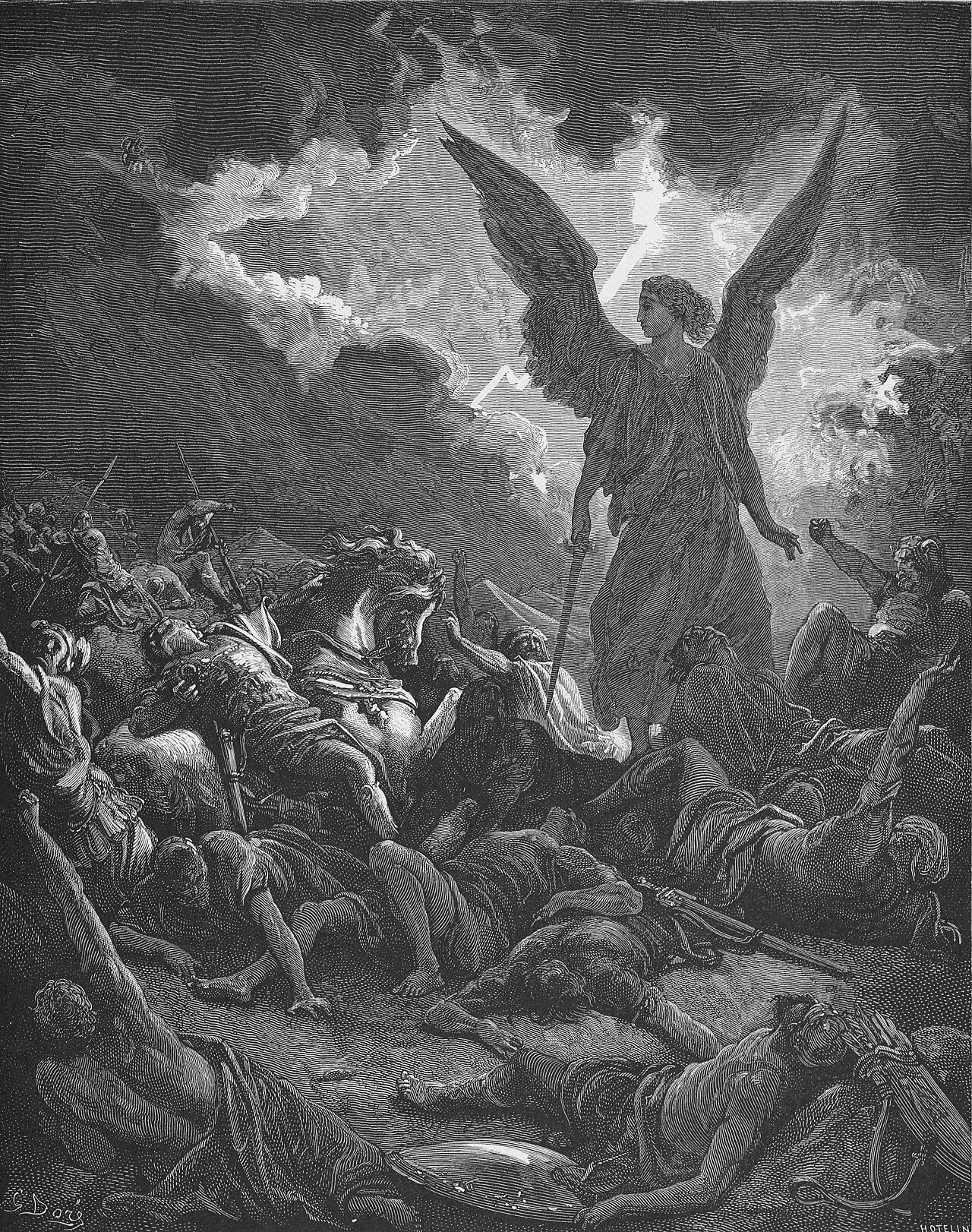
Hezekiah's plea leans on one title, "the living God", set against gods of wood and stone. Isaiah's answer is short: "Do not be afraid", for God has heard the blasphemy Himself. The oracle promises a rumor that sends Sennacherib home and a sword that finds him there.
The record, by era
The Puritans and the Awakening3 voices
We have begun an happy reformation, and are hindered by this insolent Assyrian, from bringing it to perfection. For the remnant - For Judah, which is but a remnant, now the ten tribes are gone: for Jerusalem, which is but a remnant, now the defensed cities of Judah are taken.
The great prophet is the great intercessor. (4.) Those are likely to prevail with God that lift up their prayers, that is, that lift up their hearts in prayer. (5.) When the interests of God's church are brought very low, so that there is but a remnant left, few friends, and those weak and at a loss, then it is time to lift up our prayer for that remnant.
"He is the Lord thy God," say they to Isaiah--" thine, whose glory thou art concerned for, and whose favour thou art interested in. He has heard and known the blasphemous words of Rabshakeh, and therefore, it may be, he will hear and rebuke them. Help us with thy prayers to bring the cause before him, and then we are content to leave it with him." IV.
The Nineteenth Century2 voices
A commentator
Jamieson, Fausset & Brown1802–1910
Commentary Critical and Explanatory on the Whole Bible (1871)
proposed
the living God--"The living God" is a most significant expression taken in connection with the senseless deities that Rab-shakeh boasted were unable to resist his master's victorious arms.
quarantine:debris (2026-07-29) — starts-lowercase
A commentator
Albert Barnes1798–1870
Notes, Explanatory and Practical, on the Old and New Testaments (1832-1869)
proposed
Will hear - i. e., “will show that he has heard - will notice and punish.” The living God - See 1Sa 17:26 note. And will reprove the words - Rather, “will reprove him for the words.” The remnant - i. e., for the kingdom of Judah, the only remnant of God’s people that was now left, after Galilee and Gilead and Samaria had all been carried away captive.
The words behind it
28 Hebrew wordsEvery Hebrew word of this verse in the order it stands, with what it means and the door to its own study. The last column counts the times a word stands in the whole Bible: the rarer the word, the more the places it appears belong together.
| Hebrew | Sound | Meaning | Word study | In the Bible |
|---|---|---|---|---|
| אוּלַ֡י | ʾulai | perhaps | H194 → | |
| יִשְׁמַע֩ | yishma' | he will hear | H8085 → | 1159 times |
| יְהוָ֨ה | yahweh | Yahweh | H3068 → | 6520 times |
| אֱלֹהֶ֜יךָ | ʾeloheikha | God your | H430 → | 2601 times |
| אֵ֣ת׀ | ʾet | <obj.> | H853 → | 10935 times |
| כָּל־ | kol- | all | H3605 → | 5413 times |
| דִּבְרֵ֣י | divrei | [the] words of | H1697 → | 1440 times |
| רַב־ | rav- | [the] chief | H7262 → | 32 times |
| שָׁקֵ֗ה | shakeh | commander | H7262 → | 32 times |
| אֲשֶׁר֩ | ʾasher | whom | H834 → | 5497 times |
| שְׁלָח֨וֹ | shelacho | he sent him | H7971 → | 845 times |
| מֶֽלֶךְ־ | melekh- | [the] king of | H4428 → | 2525 times |
| אַשּׁ֤וּר׀ | ʾashur | Assyria | H804 → | 151 times |
| אֲדֹנָיו֙ | ʾadonav | master<s> his | H113 → | 333 times |
| לְחָרֵף֙ | lecharef | to taunt | H2778 → | 41 times |
| אֱלֹהִ֣ים | ʾelohim | [the] God | H430 → | 2601 times |
| חַ֔י | chai | living | H2416 → | 498 times |
| וְהוֹכִ֙יחַ֙ | vehokhiach | and he will rebuke | H3198 → | |
| בַּדְּבָרִ֔ים | badevarim | <in> the words | H1697 → | 1440 times |
| אֲשֶׁ֥ר | ʾasher | which | H834 → | 5497 times |
| שָׁמַ֖ע | shama' | he has heard | H8085 → | 1159 times |
| יְהוָ֣ה | yahweh | Yahweh | H3068 → | 6520 times |
| אֱלֹהֶ֑יךָ | ʾeloheikha | God your | H430 → | 2601 times |
| וְנָשָׂ֣אתָ | venasata | and you will lift up | H5375 → | 656 times |
| תְפִלָּ֔ה | tefilah | prayer | H8605 → | |
| בְּעַ֥ד | bead | for | H1157 → | 105 times |
| הַשְּׁאֵרִ֖ית | hasheerit | the remnant | H7611 → | 66 times |
| הַנִּמְצָאָֽה׃ | hanimtzaah | which is found | H4672 → | 455 times |
אוּלַ֡יperhaps
ʾulaiH194 →
יִשְׁמַע֩he will hear
yishma'H8085 →1159 times
יְהוָ֨הYahweh
yahwehH3068 →6520 times
אֱלֹהֶ֜יךָGod your
ʾeloheikhaH430 →2601 times
אֵ֣ת׀<obj.>
ʾetH853 →10935 times
כָּל־all
kol-H3605 →5413 times
דִּבְרֵ֣י[the] words of
divreiH1697 →1440 times
רַב־[the] chief
rav-H7262 →32 times
שָׁקֵ֗הcommander
shakehH7262 →32 times
אֲשֶׁר֩whom
ʾasherH834 →5497 times
שְׁלָח֨וֹhe sent him
shelachoH7971 →845 times
מֶֽלֶךְ־[the] king of
melekh-H4428 →2525 times
אַשּׁ֤וּר׀Assyria
ʾashurH804 →151 times
אֲדֹנָיו֙master<s> his
ʾadonavH113 →333 times
לְחָרֵף֙to taunt
lecharefH2778 →41 times
אֱלֹהִ֣ים[the] God
ʾelohimH430 →2601 times
חַ֔יliving
chaiH2416 →498 times
וְהוֹכִ֙יחַ֙and he will rebuke
vehokhiachH3198 →
בַּדְּבָרִ֔ים<in> the words
badevarimH1697 →1440 times
אֲשֶׁ֥רwhich
ʾasherH834 →5497 times
שָׁמַ֖עhe has heard
shama'H8085 →1159 times
יְהוָ֣הYahweh
yahwehH3068 →6520 times
אֱלֹהֶ֑יךָGod your
ʾeloheikhaH430 →2601 times
וְנָשָׂ֣אתָand you will lift up
venasataH5375 →656 times
תְפִלָּ֔הprayer
tefilahH8605 →
בְּעַ֥דfor
beadH1157 →105 times
הַשְּׁאֵרִ֖יתthe remnant
hasheeritH7611 →66 times
הַנִּמְצָאָֽה׃which is found
hanimtzaahH4672 →455 times
A shaded row is a word that stands 400 times or fewer in the Bible.
The walk
8 stopsEach card is a verse this one points to, and under it the verses that one points to in turn. Where several paths arrive at the same place, that place is listed first: the text keeps returning to it.
Through
Romans 9:27Isaiah cries out concerning Israel: “Though the number of the Israelites is like the sand of the sea, only the remnant will be saved.
it leads to
- Isaiah 10:20–23
On that day the remnant of Israel and the survivors of the house of Jacob will no longer depend on him who struck them, but they will truly rely on the LORD, the Holy…
- Romans 11:4–6
And what was the divine reply to him? “I have reserved for Myself seven thousand men who have not bowed the knee to Baal.”
- Isaiah 1:9
Unless the LORD of Hosts had left us a few survivors, we would have become like Sodom, we would have resembled Gomorrah.
- Isaiah 10:20–23
Through
2 Samuel 16:12Perhaps the LORD will see my affliction and repay me with good for the cursing I receive today.”
it leads to
- Hebrews 12:10
Our fathers disciplined us for a short time as they thought best, but God disciplines us for our good, so that we may share in His holiness.
- Deuteronomy 23:5
Yet the LORD your God would not listen to Balaam, and the LORD your God turned the curse into a blessing for you, because the LORD your God loves you.
- Exodus 2:24–25
So God heard their groaning, and He remembered His covenant with Abraham, Isaac, and Jacob.
- Psalms 25:18
Consider my affliction and trouble, and take away all my sins.
- Hebrews 12:10
Through
Joshua 14:12Now therefore give me this hill country that the LORD promised me on that day, for you yourself heard then that the Anakim were there, with great and fortified cities. Perhaps with the LORD’s…
it leads to
- Hebrews 11:33
who through faith conquered kingdoms, administered justice, and gained what was promised; who shut the mouths of lions,
- Hebrews 11:33
Where this verse is studied
On this page
About 2 Kings
Who and where
1 name in this verse with a page on the site.
This page draws on Adam Clarke, Commentary on the Bible; Albert Barnes, Notes, Explanatory and Practical, on the Old and New Testaments (1832-1869); Jamieson, Fausset & Brown, Commentary Critical and Explanatory on the Whole Bible; John Gill, Exposition of the Old Testament; John Wesley, Explanatory Notes upon the Old Testament; Keil, The Books of the Kings and Matthew Henry, Commentary on the Whole Bible.