
2 Kings 19:6
in 2 Kings 19who replied, “Tell your master that this is what the LORD says: ‘Do not be afraid of the words you have heard, with which the servants of the king of Assyria have blasphemed Me.
BSB
The same verse in ASV and KJV ▾
ASV
And Isaiah said unto them, Thus shall ye say to your master, Thus saith Jehovah, Be not afraid of the words that thou hast heard, wherewith the servants of the king of Assyria have blasphemed me.
KJV
And Isaiah said unto them, Thus shall ye say to your master, Thus saith the Lord, Be not afraid of the words which thou hast heard, with which the servants of the king of Assyria have blasphemed me.
⋯
This verse in 2 Kings 19
Commentary
5 notes on this verseA commentator
Jamieson, Fausset & Brown1802–1910
Commentary Critical and Explanatory on the Whole Bible (1871)
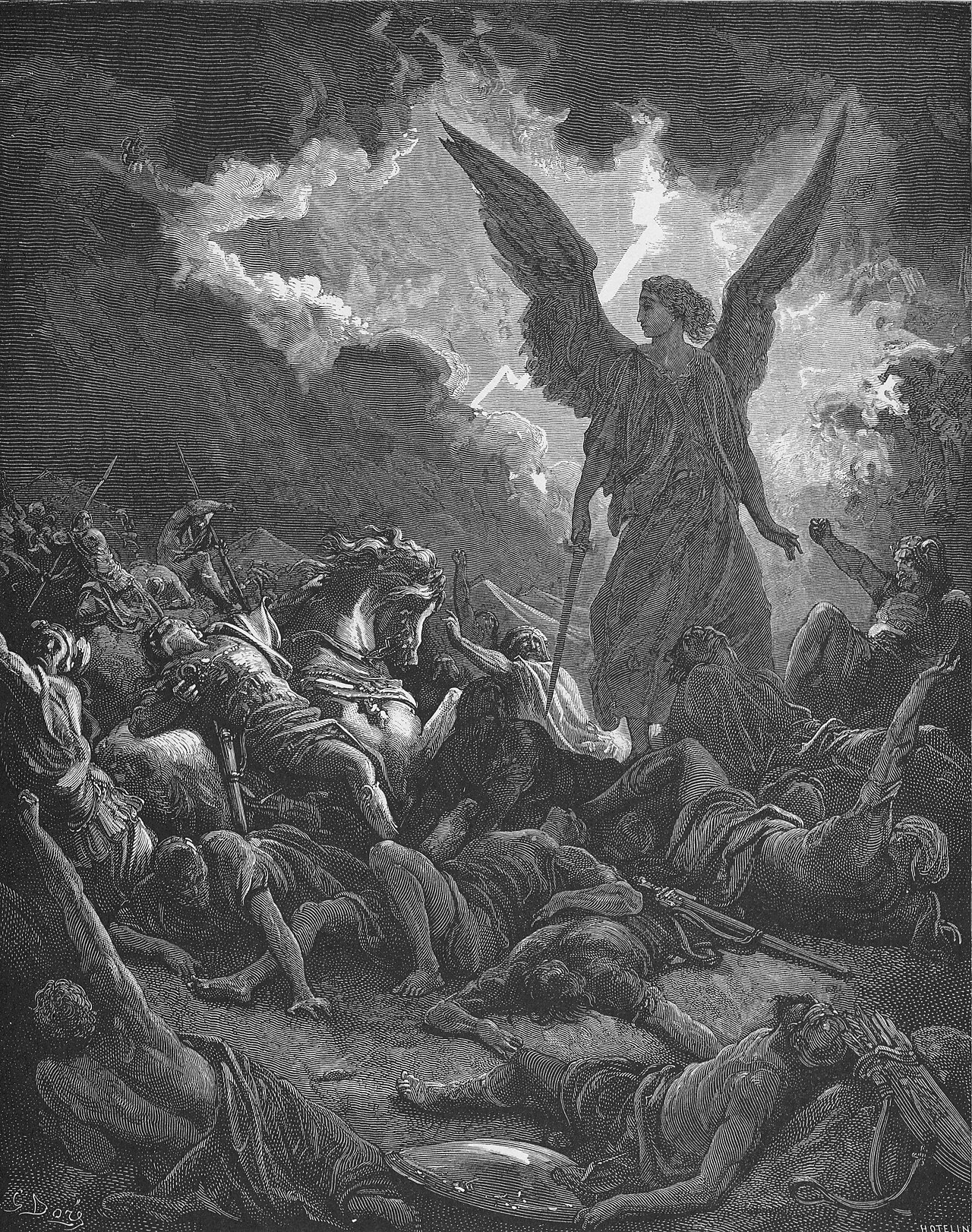
The blast, the rumor, the fall by the sword, contained a brief prediction that was soon fulfilled in all the three particulars--namely, the alarm that hastened his retreat, the destruction that overtook his army, and the violent death that suddenly ended his career.
This site's exposition
to defy the living God
on 2 Kings 19:4-7
Hezekiah's plea leans on one title, "the living God", set against gods of wood and stone. Isaiah's answer is short: "Do not be afraid", for God has heard the blasphemy Himself. The oracle promises a rumor that sends Sennacherib home and a sword that finds him there.
This site's exposition
Do not be afraid
Hezekiah had ordered the people to stay silent before Rabshakeh at 18:36, and here the LORD answers the words Himself. Matthew Henry's comment is that words are but wind. The same words are the blasphemy the LORD takes up at verse 22.
The record, by era
The Puritans and the Awakening2 voices
God interested himself in the cause: They have blasphemed me. He encouraged Hezekiah, who was much dismayed: Be not afraid of the words which thou hast heard; they are but words (though swelling and fiery words), and words are but wind.
), one would think, was an answer sufficient to his prayer; but, that he might have strong consolation, he was encouraged by two immutable things, in which it was impossible for God to lie, Heb. vi. In general, God assured him that his prayer was heard, his prayer against Sennacherib,
quarantine:debris (2026-07-29) — leading-punctuation+unbalanced-parens
The words behind it
22 Hebrew wordsEvery Hebrew word of this verse in the order it stands, with what it means and the door to its own study. The last column counts the times a word stands in the whole Bible: the rarer the word, the more the places it appears belong together.
| Hebrew | Sound | Meaning | Word study | In the Bible |
|---|---|---|---|---|
| וַיֹּ֤אמֶר | vaiyomer | and he said | H559 → | 5305 times |
| לָהֶם֙ | lahem | to them | ||
| יְשַֽׁעְיָ֔הוּ | yesha'yahu | Isaiah | H3470 → | 39 times |
| כֹּ֥ה | koh | thus | H3541 → | 577 times |
| תֹאמְר֖וּן | tomrun | you will say ! | H559 → | 5305 times |
| אֶל־ | ʾel- | to | H413 → | 5510 times |
| אֲדֹֽנֵיכֶ֑ם | ʾadoneikhem | master<s> your | H113 → | 333 times |
| כֹּ֣ה׀ | koh | thus | H3541 → | 577 times |
| אָמַ֣ר | ʾamar | he says | H559 → | 5305 times |
| יְהוָ֗ה | yahweh | Yahweh | H3068 → | 6520 times |
| אַל־ | ʾal- | may not | H408 → | 724 times |
| תִּירָא֙ | tira' | you be afraid | H3372 → | 315 times |
| מִפְּנֵ֤י | mipenei | of <the face of> | H6440 → | 2123 times |
| הַדְּבָרִים֙ | hadevarim | the words | H1697 → | 1440 times |
| אֲשֶׁ֣ר | ʾasher | which | H834 → | 5497 times |
| שָׁמַ֗עְתָּ | shama'ta | you have heard | H8085 → | 1159 times |
| אֲשֶׁ֧ר | ʾasher | which | H834 → | 5497 times |
| גִּדְּפ֛וּ | gidefu | they have blasphemed | H1442 → | |
| נַעֲרֵ֥י | naarei | [the] servants of | H5288 → | 239 times |
| מֶֽלֶךְ־ | melekh- | [the] king of | H4428 → | 2525 times |
| אַשּׁ֖וּר | ʾashur | Assyria | H804 → | 151 times |
| אֹתִֽי׃ | ʾoti | <obj.> me | H853 → | 10935 times |
וַיֹּ֤אמֶרand he said
vaiyomerH559 →5305 times
לָהֶם֙to them
lahem
יְשַֽׁעְיָ֔הוּIsaiah
yesha'yahuH3470 →39 times
כֹּ֥הthus
kohH3541 →577 times
תֹאמְר֖וּןyou will say !
tomrunH559 →5305 times
אֶל־to
ʾel-H413 →5510 times
אֲדֹֽנֵיכֶ֑םmaster<s> your
ʾadoneikhemH113 →333 times
כֹּ֣ה׀thus
kohH3541 →577 times
אָמַ֣רhe says
ʾamarH559 →5305 times
יְהוָ֗הYahweh
yahwehH3068 →6520 times
אַל־may not
ʾal-H408 →724 times
תִּירָא֙you be afraid
tira'H3372 →315 times
מִפְּנֵ֤יof <the face of>
mipeneiH6440 →2123 times
הַדְּבָרִים֙the words
hadevarimH1697 →1440 times
אֲשֶׁ֣רwhich
ʾasherH834 →5497 times
שָׁמַ֗עְתָּyou have heard
shama'taH8085 →1159 times
אֲשֶׁ֧רwhich
ʾasherH834 →5497 times
גִּדְּפ֛וּthey have blasphemed
gidefuH1442 →
נַעֲרֵ֥י[the] servants of
naareiH5288 →239 times
מֶֽלֶךְ־[the] king of
melekh-H4428 →2525 times
אַשּׁ֖וּרAssyria
ʾashurH804 →151 times
אֹתִֽי׃<obj.> me
ʾotiH853 →10935 times
A shaded row is a word that stands 400 times or fewer in the Bible.
The walk
8 stopsEach card is a verse this one points to, and under it the verses that one points to in turn. Where several paths arrive at the same place, that place is listed first: the text keeps returning to it.
Through
2 Chronicles 20:15And he said, “Listen, all you people of Judah and Jerusalem! Listen, King Jehoshaphat! This is what the LORD says: ‘Do not be afraid or discouraged because of this vast army, for the battle…
it leads to
- 2 Chronicles 32:7–8
“Be strong and courageous! Do not be afraid or discouraged before the king of Assyria and the vast army with him, for there is a greater One with us than with him.
- Deuteronomy 31:6
Be strong and courageous; do not be afraid or terrified of them, for it is the LORD your God who goes with you; He will never leave you nor forsake you.”
- Exodus 14:13–14
But Moses told the people, “Do not be afraid. Stand firm and you will see the LORD’s salvation, which He will accomplish for you today; for the Egyptians you see today, you will never…
- 1 Samuel 17:47
And all those assembled here will know that it is not by sword or spear that the LORD saves; for the battle is the LORD’s, and He will give all of you into our…
- Deuteronomy 31:8
The LORD Himself goes before you; He will be with you. He will never leave you nor forsake you. Do not be afraid or discouraged.”
- 2 Chronicles 32:7–8
Through
Leviticus 26:8Five of you will pursue a hundred, and a hundred of you will pursue ten thousand, and your enemies will fall by the sword before you.
it leads to
- Joshua 23:10
One of you can put a thousand to flight, because the LORD your God fights for you, just as He promised.
- Deuteronomy 28:7
The LORD will cause the enemies who rise up against you to be defeated before you. They will march out against you in one direction but flee from you in seven.
- Deuteronomy 32:30
How could one man pursue a thousand, or two put ten thousand to flight, unless their Rock had sold them, unless the LORD had given them up?
- Joshua 23:10
Where this verse is studied
On this page
About 2 Kings
Who and where
1 name in this verse with a page on the site.
This page draws on Jamieson, Fausset & Brown, Commentary Critical and Explanatory on the Whole Bible; John Gill, Exposition of the Old Testament; Keil, The Books of the Kings and Matthew Henry, Commentary on the Whole Bible.