
2 Samuel 2:26
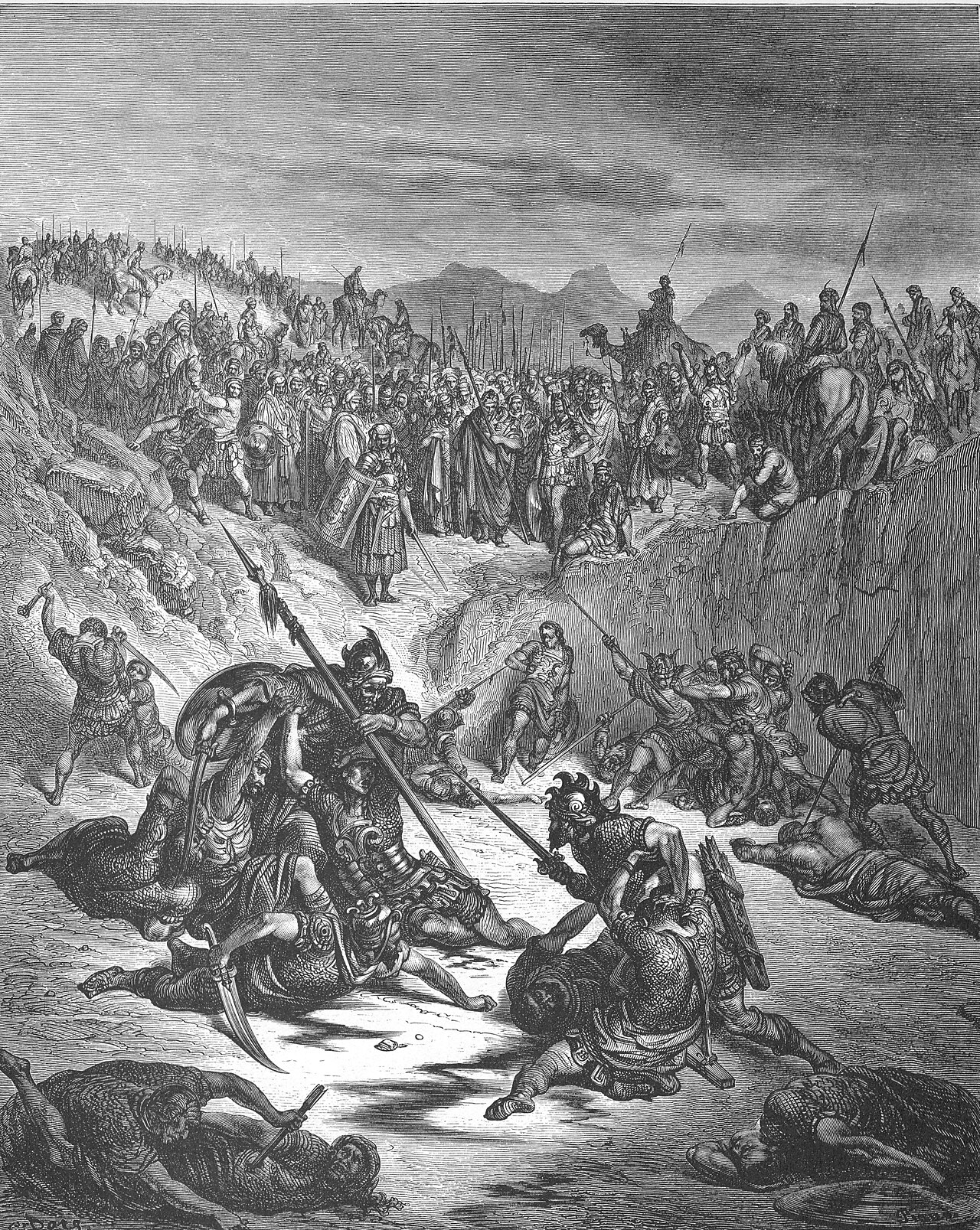
in 2 Samuel 2Then Abner called out to Joab: “Must the sword devour forever? Do you not realize that this will only end in bitterness? How long before you tell the troops to stop pursuing their brothers?”
BSB
The same verse in ASV and KJV ▾
ASV
Then Abner called to Joab, and said, Shall the sword devour for ever? knowest thou not that it will be bitterness in the latter end? how long shall it be then, ere thou bid the people return from following their brethren?
KJV
Then Abner called to Joab, and said, Shall the sword devour for ever? knowest thou not that it will be bitterness in the latter end? how long shall it be then, ere thou bid the people return from following their brethren?
⋯
This verse in 2 Samuel 2
Commentary
4 notes on this verseA commentator
Jamieson, Fausset & Brown1802–1910
Commentary Critical and Explanatory on the Whole Bible (1871)
Asahel pursued after Abner--To gain the general's armor was deemed the grandest trophy. Asahel, ambitious of securing Abner's, had outstripped all other pursuers, and was fast gaining on the retreating commander. Abner, conscious of possessing more physical power, and unwilling that there should be "blood" between himself and Joab, Asahel's brother, twice urged him to desist.
This site's exposition
Must the sword devour forever?
on 2 Samuel 2:26-28
Abner calls out to Joab, whether the sword must devour forever, and whether Joab does not see “that this will only end in bitterness”. Joab answers that the people would have stood down at morning regardless, then blows the trumpet himself, and the fighting stops for that day.
The record, by era
The Puritans and the Awakening2 voices
He that was most forward to fight was the first that had enough of it. He that made a jest of bloodshed ( Let the young men arise and play before us,
quarantine:debris (2026-07-29) — unbalanced-parens
Then Abner called to Joab,.... For having now a troop of men with him, he could stop with the greater safety; and being on an hill, and perhaps Joab on one opposite to him, could call to him, so as to be heard: and said, shall the sword devour for ever? slay men, and devour their blood. See Jer 46:
The words behind it
22 Hebrew wordsEvery Hebrew word of this verse in the order it stands, with what it means and the door to its own study. The last column counts the times a word stands in the whole Bible: the rarer the word, the more the places it appears belong together.
| Hebrew | Sound | Meaning | Word study | In the Bible |
|---|---|---|---|---|
| וַיִּקְרָ֨א | vaiyikra' | and he called out | H7121 → | 733 times |
| אַבְנֵ֜ר | ʾavner | Abner | H74 → | 63 times |
| אֶל־ | ʾel- | to | H413 → | 5510 times |
| יוֹאָ֗ב | yoav | Joab | H3097 → | 144 times |
| וַיֹּ֙אמֶר֙ | vaiyomer | and he said | H559 → | 5305 times |
| הֲלָנֶ֙צַח֙ | halanetzach | ¿ to perpetuity | H5331 → | |
| תֹּ֣אכַל | tokhal | will it devour | H398 → | 810 times |
| חֶ֔רֶב | cherev | [the] sword | H2719 → | 413 times |
| הֲל֣וֹא | halo' | ¿ not | H3808 → | 5168 times |
| יָדַ֔עְתָּה | yada'tah | do you know ? | H3045 → | 945 times |
| כִּֽי־ | ki- | that | H3588 → | 4482 times |
| מָרָ֥ה | marah | bitter | H4751 → | |
| תִהְיֶ֖ה | tihyeh | it will be | H1961 → | 3559 times |
| בָּאַחֲרוֹנָ֑ה | baacharonah | at the last | H314 → | 51 times |
| וְעַד־ | vead- | and until | H5704 → | 1261 times |
| מָתַי֙ | matai | when? | H4970 → | |
| לֹֽא־ | lo'- | not | H3808 → | 5168 times |
| תֹאמַ֣ר | tomar | will you say | H559 → | 5305 times |
| לָעָ֔ם | laam | to the people | H5971 → | 1873 times |
| לָשׁ֖וּב | lashuv | to turn back | H7725 → | 1056 times |
| מֵאַחֲרֵ֥י | meacharei | from after | H310 → | 715 times |
| אֲחֵיהֶֽם׃ | ʾacheihem | brothers their | H251 → | 630 times |
וַיִּקְרָ֨אand he called out
vaiyikra'H7121 →733 times
אַבְנֵ֜רAbner
ʾavnerH74 →63 times
אֶל־to
ʾel-H413 →5510 times
יוֹאָ֗בJoab
yoavH3097 →144 times
וַיֹּ֙אמֶר֙and he said
vaiyomerH559 →5305 times
הֲלָנֶ֙צַח֙¿ to perpetuity
halanetzachH5331 →
תֹּ֣אכַלwill it devour
tokhalH398 →810 times
חֶ֔רֶב[the] sword
cherevH2719 →413 times
הֲל֣וֹא¿ not
halo'H3808 →5168 times
יָדַ֔עְתָּהdo you know ?
yada'tahH3045 →945 times
כִּֽי־that
ki-H3588 →4482 times
מָרָ֥הbitter
marahH4751 →
תִהְיֶ֖הit will be
tihyehH1961 →3559 times
בָּאַחֲרוֹנָ֑הat the last
baacharonahH314 →51 times
וְעַד־and until
vead-H5704 →1261 times
מָתַי֙when?
mataiH4970 →
לֹֽא־not
lo'-H3808 →5168 times
תֹאמַ֣רwill you say
tomarH559 →5305 times
לָעָ֔םto the people
laamH5971 →1873 times
לָשׁ֖וּבto turn back
lashuvH7725 →1056 times
מֵאַחֲרֵ֥יfrom after
meachareiH310 →715 times
אֲחֵיהֶֽם׃brothers their
ʾacheihemH251 →630 times
A shaded row is a word that stands 400 times or fewer in the Bible.
The walk
8 stopsEach card is a verse this one points to, and under it the verses that one points to in turn. Where several paths arrive at the same place, that place is listed first: the text keeps returning to it.
Through
Psalms 4:2How long, O men, will my honor be maligned? How long will you love vanity and seek after lies? Selah
it leads to
- Proverbs 1:22
“How long, O simple ones, will you love your simple ways? How long will scoffers delight in their scorn and fools hate knowledge?
- Hosea 4:7
The more they multiplied, the more they sinned against Me; they exchanged their Glory for a thing of disgrace.
- Psalms 3:3
But You, O LORD, are a shield around me, my glory, and the One who lifts my head.
- Psalms 106:20
They exchanged their Glory for the image of a grass-eating ox.
- Jeremiah 2:11
Has a nation ever changed its gods, though they are no gods at all? Yet My people have exchanged their Glory for useless idols.
- Proverbs 1:22
Through
Jeremiah 46:10For that day belongs to the Lord GOD of Hosts, a day of vengeance against His foes. The sword will devour until it is satisfied, until it is quenched with their blood. For the…
it leads to
- Deuteronomy 32:42
I will make My arrows drunk with blood, while My sword devours flesh—the blood of the slain and captives, the heads of the enemy leaders.”
- Deuteronomy 32:42
Through
Acts 7:26The next day he came upon two Israelites who were fighting, and he tried to reconcile them, saying, ‘Men, you are brothers. Why are you mistreating each other?’
it leads to
- Exodus 2:13–15
The next day Moses went out and saw two Hebrews fighting. He asked the one in the wrong, “Why are you attacking your companion?”
- Exodus 2:13–15
Through
Jeremiah 12:12Over all the barren heights in the wilderness the destroyers have come, for the sword of the LORD devours from one end of the earth to the other. No flesh has peace.
it leads to
- Amos 9:4
Though they are driven by their enemies into captivity, there I will command the sword to slay them. I will fix My eyes upon them for harm and not for good.”
- Amos 9:4
Where this verse is studied
On this page
About 2 Samuel
This page draws on Albert Barnes, Notes on the Old Testament; Jamieson, Fausset & Brown, Commentary Critical and Explanatory on the Whole Bible; John Gill, Exposition of the Old Testament; John Gill, Exposition of the Old Testament (1748-1763) and Matthew Henry, Commentary on the Whole Bible.