
2 Samuel 2:23
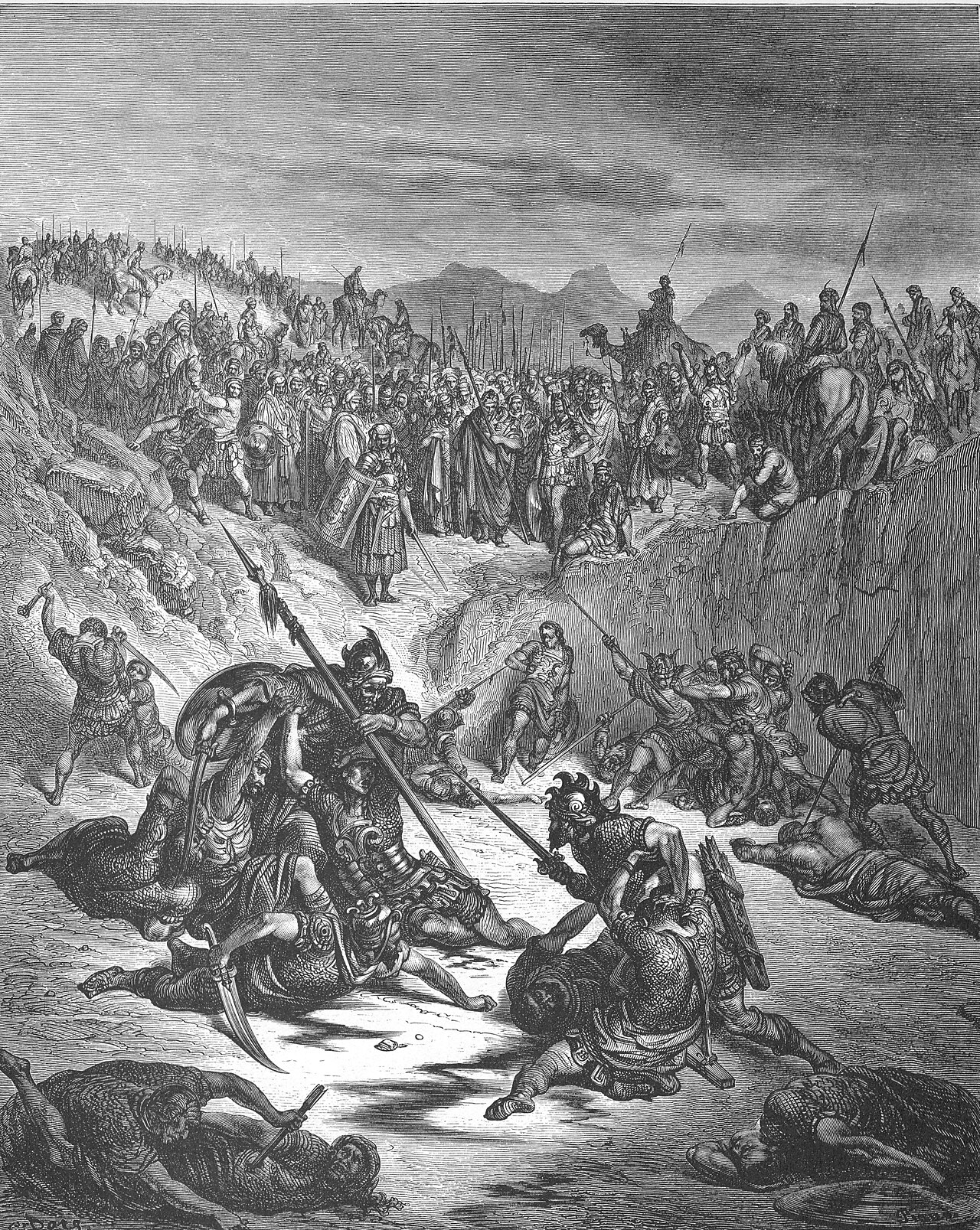
in 2 Samuel 2But Asahel refused to turn away; so Abner thrust the butt of his spear into his stomach, and it came out his back, and he fell dead on the spot. And every man paused when he came to the place where Asahel had fallen and died.
BSB
The same verse in ASV and KJV ▾
ASV
Howbeit he refused to turn aside: wherefore Abner with the hinder end of the spear smote him in the body, so that the spear came out behind him; and he fell down there, and died in the same place: and it came to pass, that as many as came to the place where Asahel fell down and died stood still.
KJV
Howbeit he refused to turn aside: wherefore Abner with the hinder end of the spear smote him under the fifth rib, that the spear came out behind him; and he fell down there, and died in the same place: and it came to pass, that as many as came to the place where Asahel fell down and died stood still.
⋯
This verse in 2 Samuel 2
Commentary
7 notes on this verseHowbeit, he refused to turn aside,.... Determined on making him his captive if possible. Wherefore Abner, with the hinder end of the spear; he had in his hand, which seems to have had a pike at both ends; so that with the hinder end of it, next to Asahel, he thrust it at him, without turning to him: and smote him under the fifth rib; the place where hang the gall and liver, as the Jewish commentators from their Talmud (i) observe.
This site's exposition
Is that you, Asahel?
on 2 Samuel 2:20-23
Abner twice tells Asahel to “seize one of the young men, and take his equipment for yourself”, and twice Asahel refuses. Abner thrusts “the butt of his spear into his stomach”, and Asahel falls dead. Joab collects the debt, and a killing in battle becomes the ground for a murder.
This site's exposition
the butt of his spear
Albert Barnes notes that the butt of a spear was pointed so it could stand in the ground, as at 1 Samuel 26:7. The Hebrew word for stomach means the belly, from a verb for being fat. Every man who came to the place paused.
The record, by era
The Medieval Church1 voice
A commentator
Gregory the DialogistThe Book of Pastoral Rule, Part 3, Chapter 16 · Written before 604.
But when the passionate so attack others that they cannot be altogether shunned, they should be smitten, not with open rebuke, but sparingly with a certain respectful cautiousness. And this we shall shew better if we bring forward what was done by Abner. For, when Asahel attacked him with the violence of inconsiderate haste, it is written, "Abner spake unto Asahel, saying. Turn thee aside from following me, lest I be driven to smite thee to the ground. Howbeit he scorned to listen, and refused to turn aside.
The Puritans and the Awakening1 voice
): He smote him with the hinder end of his spear, from which he feared no danger. This was a pass which Asahel was not acquainted with, nor had learned to stand upon his guard against; but Abner, perhaps, had formerly used it, and done execution with it; and here it did effectual execution.
quarantine:debris (2026-07-29) — leading-punctuation+unbalanced-parens
The Nineteenth Century2 voices
A commentator
Albert Barnes1798–1870
Notes, Explanatory and Practical, on the Old and New Testaments (1832-1869)
With the hinder end ... - i. e. the wooden end, which was more or less pointed to enable the owner to stick it in the ground 1Sa 26:7. The fifth rib - The word so rendered here (and in marginal references) means the abdomen, and is not etymologically connected with the Hebrew for five, as the translation “fifth rib” supposes, but with a verb meaning to be fat, or strong.
A commentator
Jamieson, Fausset & Brown1802–1910
Commentary Critical and Explanatory on the Whole Bible (1871)
Asahel pursued after Abner--To gain the general's armor was deemed the grandest trophy. Asahel, ambitious of securing Abner's, had outstripped all other pursuers, and was fast gaining on the retreating commander. Abner, conscious of possessing more physical power, and unwilling that there should be "blood" between himself and Joab, Asahel's brother, twice urged him to desist.
The words behind it
26 Hebrew wordsEvery Hebrew word of this verse in the order it stands, with what it means and the door to its own study. The last column counts the times a word stands in the whole Bible: the rarer the word, the more the places it appears belong together.
| Hebrew | Sound | Meaning | Word study | In the Bible |
|---|---|---|---|---|
| וַיְמָאֵ֣ן | vaymaen | and he refused | H3985 → | |
| לָס֗וּר | lasur | to turn aside | H5493 → | 299 times |
| וַיַּכֵּ֣הוּ | vaiyakehu | and he struck him | H5221 → | 499 times |
| אַבְנֵר֩ | ʾavner | Abner | H74 → | 63 times |
| בְּאַחֲרֵ֨י | beacharei | with [the] back end<s> of | H310 → | 715 times |
| הַחֲנִ֜ית | hachanit | the spear | H2595 → | 47 times |
| אֶל־ | ʾel- | into | H413 → | 5510 times |
| הַחֹ֗מֶשׁ | hachomesh | the belly | H2570 → | 4 times |
| וַתֵּצֵ֤א | vatetze' | and it went out | H3318 → | 1067 times |
| הַֽחֲנִית֙ | hachanit | the spear | H2595 → | 47 times |
| מֵאַחֲרָ֔יו | meacharav | from behind him | H310 → | 715 times |
| וַיִּפָּל־ | vaiyipol- | and he fell | H5307 → | 435 times |
| שָׁ֖ם | sham | there | H8033 → | 834 times |
| וַיָּ֣מָת | vaiyamot | and he died | H4191 → | 839 times |
| תַּחְתָּ֑יו | tachatov | in place his | H8478 → | 505 times |
| וַיְהִ֡י | vayhi | and it was | H1961 → | 3559 times |
| כָּל־ | kol- | every [one] | H3605 → | 5413 times |
| הַבָּ֣א | haba' | who came | H935 → | 2568 times |
| אֶֽל־ | ʾel- | to | H413 → | 5510 times |
| הַמָּקוֹם֩ | hamakom | the place | H4725 → | 401 times |
| אֲשֶׁר־ | ʾasher- | where | H834 → | 5497 times |
| נָ֨פַל | nafal | he fell | H5307 → | 435 times |
| שָׁ֧ם | sham | there | H8033 → | 834 times |
| עֲשָׂהאֵ֛ל | ʾasahel | Asahel | H6214 → | 24 times |
| וַיָּמֹ֖ת | vaiyamot | and he died | H4191 → | 839 times |
| וַֽיַּעֲמֹֽדוּ׃ | vaiyaamodu | and they stood still | H5975 → | 521 times |
וַיְמָאֵ֣ןand he refused
vaymaenH3985 →
לָס֗וּרto turn aside
lasurH5493 →299 times
וַיַּכֵּ֣הוּand he struck him
vaiyakehuH5221 →499 times
אַבְנֵר֩Abner
ʾavnerH74 →63 times
בְּאַחֲרֵ֨יwith [the] back end<s> of
beachareiH310 →715 times
הַחֲנִ֜יתthe spear
hachanitH2595 →47 times
אֶל־into
ʾel-H413 →5510 times
הַחֹ֗מֶשׁthe belly
hachomeshH2570 →4 times
וַתֵּצֵ֤אand it went out
vatetze'H3318 →1067 times
הַֽחֲנִית֙the spear
hachanitH2595 →47 times
מֵאַחֲרָ֔יוfrom behind him
meacharavH310 →715 times
וַיִּפָּל־and he fell
vaiyipol-H5307 →435 times
שָׁ֖םthere
shamH8033 →834 times
וַיָּ֣מָתand he died
vaiyamotH4191 →839 times
תַּחְתָּ֑יוin place his
tachatovH8478 →505 times
וַיְהִ֡יand it was
vayhiH1961 →3559 times
כָּל־every [one]
kol-H3605 →5413 times
הַבָּ֣אwho came
haba'H935 →2568 times
אֶֽל־to
ʾel-H413 →5510 times
הַמָּקוֹם֩the place
hamakomH4725 →401 times
אֲשֶׁר־where
ʾasher-H834 →5497 times
נָ֨פַלhe fell
nafalH5307 →435 times
שָׁ֧םthere
shamH8033 →834 times
עֲשָׂהאֵ֛לAsahel
ʾasahelH6214 →24 times
וַיָּמֹ֖תand he died
vaiyamotH4191 →839 times
וַֽיַּעֲמֹֽדוּ׃and they stood still
vaiyaamoduH5975 →521 times
A shaded row is a word that stands 400 times or fewer in the Bible.
The walk
8 stopsEach card is a verse this one points to, and under it the verses that one points to in turn. Where several paths arrive at the same place, that place is listed first: the text keeps returning to it.
Through
2 Samuel 20:10Amasa was not on guard against the dagger in Joab’s hand, and Joab stabbed him in the stomach and spilled out his intestines on the ground. And Joab did not need to strike him…
it leads to
- 2 Samuel 3:27
When Abner returned to Hebron, Joab pulled him aside into the gateway, as if to speak to him privately, and there Joab stabbed him in the stomach. So Abner died on account of the…
Reached by 2 separate paths from here.
- Judges 3:21
And Ehud reached with his left hand, pulled the sword from his right thigh, and plunged it into Eglon’s belly.
- 2 Samuel 3:27
Through
2 Samuel 3:27When Abner returned to Hebron, Joab pulled him aside into the gateway, as if to speak to him privately, and there Joab stabbed him in the stomach. So Abner died on account of the…
it leads to
- 2 Samuel 20:9–10
“Are you well, my brother?” Joab asked Amasa. And with his right hand Joab grabbed Amasa by the beard to kiss him.
- 1 Kings 2:5
Moreover, you know what Joab son of Zeruiah did to me—what he did to Abner son of Ner and Amasa son of Jether, the two commanders of the armies of Israel. He killed them…
- 1 Kings 2:32
The LORD will bring his bloodshed back upon his own head, for without the knowledge of my father David he struck down two men more righteous and better than he when he put to…
- Deuteronomy 27:24
‘Cursed is he who strikes down his neighbor in secret.’ And let all the people say, ‘Amen!’
- 2 Samuel 20:9–10
Through
2 Samuel 5:6Now the king and his men marched to Jerusalem against the Jebusites who inhabited the land. The Jebusites said to David: “You will never get in here. Even the blind and lame can repel…
it leads to
- Judges 1:8
Then the men of Judah fought against Jerusalem and captured it. They put the city to the sword and set it on fire.
- Joshua 18:28
Zelah, Haeleph, Jebus (that is, Jerusalem), Gibeah, and Kiriath-jearim—fourteen cities, along with their villages. This was the inheritance of the clans of the tribe of Benjamin.
- Judges 1:8
Where this verse is studied
On this page
About 2 Samuel
This page draws on Albert Barnes, Notes on the Old Testament; Albert Barnes, Notes, Explanatory and Practical, on the Old and New Testaments (1832-1869); Gregory the Dialogist, The Book of Pastoral Rule, Part 3, Chapter 16; Jamieson, Fausset & Brown, Commentary Critical and Explanatory on the Whole Bible; John Gill, Exposition of the Old Testament (1748-1763); Keil and Delitzsch, Biblical Commentary on the Books of Samuel and Matthew Henry, Commentary on the Whole Bible.