
1 Samuel 19:18
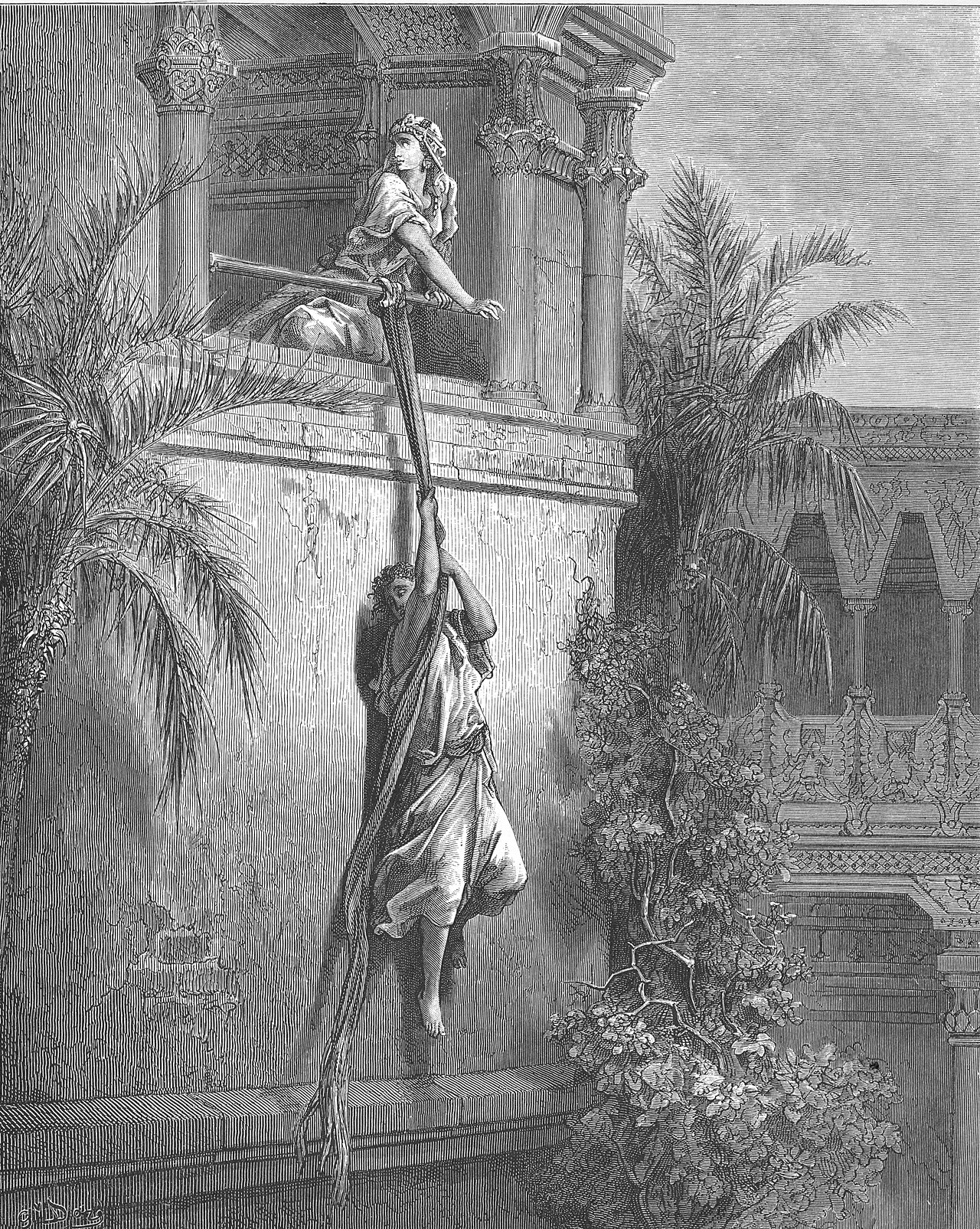
in 1 Samuel 19So David ran away and escaped. And he went to Samuel at Ramah and told him all that Saul had done to him. Then he and Samuel went to Naioth and stayed there.
BSB
The same verse in ASV and KJV ▾
ASV
Now David fled, and escaped, and came to Samuel to Ramah, and told him all that Saul had done to him. And he and Samuel went and dwelt in Naioth.
KJV
So David fled, and escaped, and came to Samuel to Ramah, and told him all that Saul had done to him. And he and Samuel went and dwelt in Naioth.
⋯
This verse in 1 Samuel 19
Commentary
13 notes on this verseDavid fled, and escaped - to Samuel - He, no doubt, came to this holy man to ask advice; and Samuel thought it best to retain him for the present, with himself at Naioth, where it is supposed he had a school of prophets.
This site's exposition
And he went to Samuel at Ramah
on 1 Samuel 19:18-19
David runs to Samuel, the prophet who anointed him in chapter 16, and the two settle at Naioth, a name meaning dwellings, among the prophets Samuel leads. The prophets first appeared at 10:5 and 10:10, when the Spirit came on Saul at the start of his reign, so the fugitive comes where the first king’s story with prophecy began. Word of it reaches Saul.
The record, by era
The Church Fathers2 voices
Moreover the perfect soul turns away from matter, shuns and rejects everything that is excessive or inconstant or wicked, and neither sees nor approaches this earthly defilement and corruption. It is attentive to things divine but shuns earthly matter. But its flight is not to depart from the earth but to remain on earth, to hold to justice and temperance, to renounce the vices in material goods, not their use. Holy David fled from the face of Saul, not indeed to depart from the earth but to turn away from the contagion of a cruel, disobedient and treacherous man.
Therefore let us not be ashamed to flee, for this flight is a glorious one, to flee from the face of sin.… Thus did David, too, flee from the face of King Saul, and from the face of Absalom. Indeed, in his flight he brought about an increase of holiness, for he spared a treacherous assailant and sought after a parricide.
The Medieval Church3 voices
David was allotted the kingdom of the Israelites in place of Saul. He was a humble, innocent and gentle exile, yet he was for a long time tormented by [Saul's] unjust persecution.… Whoever upon hearing these things begins to strive after humility and innocence and …
David, however, fleeing, was saved, etc. Ramathaim meaning heights, Naioth interpreted as beauty, which is a place in Ramah. Therefore, with Saul's messengers seeing only the image and goatskin in David's bed, David himself fleeing is saved; and with the Jews during the time of …
It was announced to Saul by those saying, Behold, David is in Naioth in Ramah, etc. Which also concerning the second messengers, as well as the third, are related in similar order. It was announced to the Jews by the apostles and the disciples of …
6 more voices on this verse
The Puritans and the Awakening4 voices
11 ), All men are liars ("not only Saul that promised me my life, but Samuel himself that promised me the throne"), whither should he go but to Samuel, for such encouragements, in this day of distress, as would support his faith?
quarantine:debris (2026-07-29) — leading-citation-number+unbalanced-parens
To Samuel - Both for comfort and direction in his distress; and for safety, supposing that Saul would be ashamed to execute his bloody designs in the presence of so venerable a person as Samuel.
So David fled and escaped,....
And Jonathan brought David to Saul, and he was in his presence, as in times past. Saul and Jonathan appear here in their different characters, with reference to David. Never was enemy so unreasonably cruel as Saul.
The Nineteenth Century2 voices
A commentator
Jamieson, Fausset & Brown1802–1910
Commentary Critical and Explanatory on the Whole Bible (1871)
It was a retreat congenial to the mind of David; but Saul, having found out his asylum, sent three successive bodies of men to apprehend him. The character of the place and the influence of the sacred exercises produced such an effect on them that they were incapable of discharging their commission, and were led, by a resistless impulse, to join in singing the praises of God.
A commentator
Albert Barnes1798–1870
Notes, Explanatory and Practical, on the Old and New Testaments (1832-1869)
proposed
No such place as Naioth (or Nevaioth) is known, but the word means “dwellings.” Hence, it is considered that Naioth was the name of the collegiate residence of the prophets, in, or just outside, Ramah, to which Samuel removed with David from his own house, for greater safety, owing to the sanctity of the place and company.
How the passage was read
What the Jewish commentators add
On the verses either side of this one
He said to me… You delivered me into the hands of a bandit. 1 She placed the blame for Dovid’s escape on Shaul. He drew his sword at me until I let him leave.
This section is reception history: how the passage was read and kept in the Jewish tradition. Where a reading parts from an essential of the Christian faith, the section says so at that point.
Texts and citation data: Sefaria; each excerpt follows its version’s licence. 6 further sources are cited on this chapter that carry no English text this site may quote or only restate the verse.
The words behind it
20 Hebrew wordsEvery Hebrew word of this verse in the order it stands, with what it means and the door to its own study. The last column counts the times a word stands in the whole Bible: the rarer the word, the more the places it appears belong together.
| Hebrew | Sound | Meaning | Word study | In the Bible |
|---|---|---|---|---|
| וְדָוִ֨ד | vedavid | and David | H1732 → | 999 times |
| בָּרַ֜ח | barach | he fled | H1272 → | 63 times |
| וַיִּמָּלֵ֗ט | vaiyimalet | and he escaped | H4422 → | 95 times |
| וַיָּבֹ֤א | vaiyavo' | and he went | H935 → | 2568 times |
| אֶל־ | ʾel- | to | H413 → | 5510 times |
| שְׁמוּאֵל֙ | shemuel | Samuel | H8050 → | 141 times |
| הָרָמָ֔תָה | haramatah | <the> Ramah towards | H7414 → | 36 times |
| וַיַּ֨גֶּד־ | vaiyaged- | and he told | H5046 → | 370 times |
| ל֔וֹ | lo | to <the> him | ||
| אֵ֛ת | ʾet | <obj.> | H853 → | 10935 times |
| כָּל־ | kol- | all | H3605 → | 5413 times |
| אֲשֶׁ֥ר | ʾasher | that | H834 → | 5497 times |
| עָֽשָׂה־ | ʾasah- | he had done | H6213 → | 2628 times |
| ל֖וֹ | lo | to <the> him | ||
| שָׁא֑וּל | shaul | Saul | H7586 → | 402 times |
| וַיֵּ֤לֶךְ | vaiyelekh | and he went | H1980 → | 1546 times |
| הוּא֙ | hu' | he | H1931 → | 1879 times |
| וּשְׁמוּאֵ֔ל | ushemuel | and Samuel | H8050 → | 141 times |
| וַיֵּשְׁב֖וּ | vaiyeshevu | and they dwelt | H3427 → | 1079 times |
| בְּנָֽיוֹת׃ | benoit | at Naioth | H5121 → | 6 times |
וְדָוִ֨דand David
vedavidH1732 →999 times
בָּרַ֜חhe fled
barachH1272 →63 times
וַיִּמָּלֵ֗טand he escaped
vaiyimaletH4422 →95 times
וַיָּבֹ֤אand he went
vaiyavo'H935 →2568 times
אֶל־to
ʾel-H413 →5510 times
שְׁמוּאֵל֙Samuel
shemuelH8050 →141 times
הָרָמָ֔תָה<the> Ramah towards
haramatahH7414 →36 times
וַיַּ֨גֶּד־and he told
vaiyaged-H5046 →370 times
ל֔וֹto <the> him
lo
אֵ֛ת<obj.>
ʾetH853 →10935 times
כָּל־all
kol-H3605 →5413 times
אֲשֶׁ֥רthat
ʾasherH834 →5497 times
עָֽשָׂה־he had done
ʾasah-H6213 →2628 times
ל֖וֹto <the> him
lo
שָׁא֑וּלSaul
shaulH7586 →402 times
וַיֵּ֤לֶךְand he went
vaiyelekhH1980 →1546 times
הוּא֙he
hu'H1931 →1879 times
וּשְׁמוּאֵ֔לand Samuel
ushemuelH8050 →141 times
וַיֵּשְׁב֖וּand they dwelt
vaiyeshevuH3427 →1079 times
בְּנָֽיוֹת׃at Naioth
benoitH5121 →6 times
A shaded row is a word that stands 400 times or fewer in the Bible.
The walk
5 stopsEach card is a verse this one points to, and under it the verses that one points to in turn. Where several paths arrive at the same place, that place is listed first: the text keeps returning to it.
Through
James 5:16Therefore confess your sins to each other and pray for each other so that you may be healed. The prayer of a righteous man has great power to prevail.
it leads to
- Jeremiah 29:12–13
Then you will call upon Me and come and pray to Me, and I will listen to you.
- Proverbs 15:29
The LORD is far from the wicked, but He hears the prayer of the righteous.
- Matthew 21:22
If you believe, you will receive whatever you ask for in prayer.”
- Psalms 34:15
The eyes of the LORD are on the righteous, and His ears are inclined to their cry.
- John 9:31
We know that God does not listen to sinners, but He does listen to the one who worships Him and does His will.
- Jeremiah 29:12–13
Where this verse is studied
On this page
About 1 Samuel
Who and where
4 names in this verse with a page on the site.
- PersonUnited MonarchyDavidSecond king of united Israel, shepherd-turned-monarch, ancestor of the Messiah, and traditional author of many Psalms.
- PersonJudges to monarchySamuelAsked of God by Hannah and lent to the LORD at Shiloh; the last judge and first of the prophets after Moses, who anointed both Sau…
- PersonUnited monarchySaulIsrael's first king, head and shoulders above the people; began in humility, ended in rejection — sparing what God devoted, consul…
- PlaceHill country of EphraimRamahSamuel's home town, the seat of his circuit as judge, the place David fled to, and the prophet's burial place.
This page draws on 10 works. Open the list of works
This page draws on Adam Clarke, Commentary on the Bible; Albert Barnes, Notes, Explanatory and Practical, on the Old and New Testaments (1832-1869); Ambrose of Milan, On Isaac and the Soul, 3.6; Ambrose of Milan, FLIGHT FROM THE WORLD 4.19; Bede, Homilies on the Gospels 1.14; Bede, Commentary on Samuel; Jamieson, Fausset & Brown, Commentary Critical and Explanatory on the Whole Bible; John Gill, Exposition of the Old Testament (1748-1763); John Wesley, Explanatory Notes upon the Old Testament and Matthew Henry, Commentary on the Whole Bible.