
1 Samuel 17:1
in 1 Samuel 17Now the Philistines gathered their forces for war at Socoh in Judah, and they camped between Socoh and Azekah in Ephes-dammim.
BSB
The same verse in ASV and KJV ▾
ASV
Now the Philistines gathered together their armies to battle; and they were gathered together at Socoh, which belongeth to Judah, and encamped between Socoh and Azekah, in Ephes-dammim.
KJV
Now the Philistines gathered together their armies to battle, and were gathered together at Shochoh, which belongeth to Judah, and pitched between Shochoh and Azekah, in Ephes–dammim.
⋯
This verse in 1 Samuel 17
Commentary
7 notes on this verseA commentator
Albert Barnes1798–1870
Notes, Explanatory and Practical, on the Old and New Testaments (1832-1869)
The narrative reverts to the Philistine wars 1Sa 14:52; the other introductory details concerning Saul’s rejection, and David’s introduction upon the stage of the history, having been disposed of in the intermediate chapters. Shochoh which belongeth to Judah - See the marginal reference which places Shochoh and Azekah in the “Shephelah” or maritime plain, and 2Ch 28:18, “Shochoh” now “Shuweikeh,” “nine miles from Eleutheropolis,” Jerome. Ephes-dammim - Called “Happas-dammim” (Pas-dammim, 1Ch 11:13), “the end of bloodshed,” now “Damun,” about 4 miles northeast of Shuweikeh.
This site's exposition
pitched between Shochoh and Azekah
on 1 Samuel 17:1-2
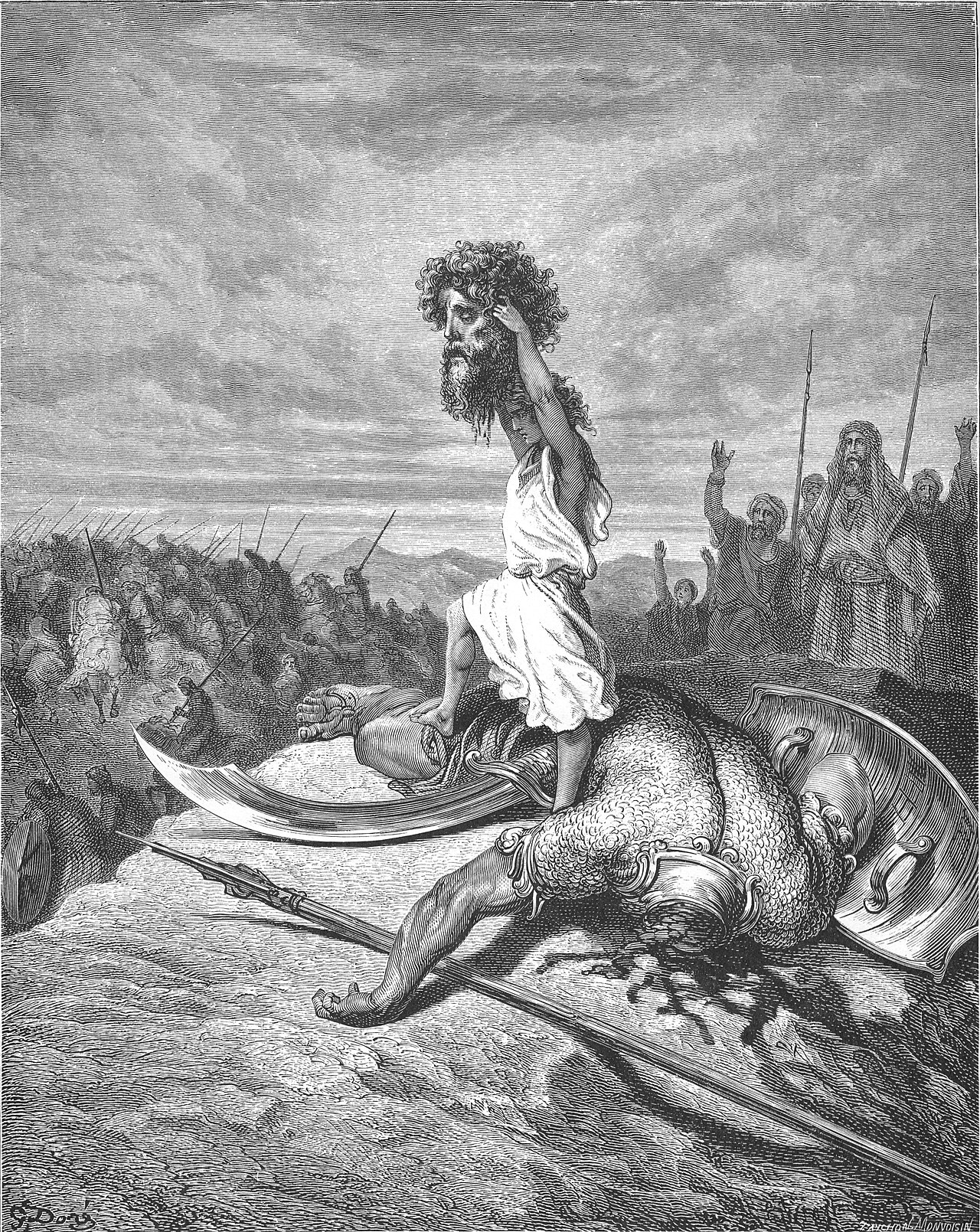
The Philistines have pushed twelve miles into Judah's own hill country, and the name of their camp ground, Ephes-dammim, means boundary of blood. Israel answers from the valley of Elah, the terebinth valley, on ground a visitor can still walk today. The war of this chapter is fought inside the tribe that Goliath's own city was left to trouble, for Joshua 11:22 had said the Anakim remained only in Gaza, in Gath, and in Ashdod.
The record, by era
The Puritans and the Awakening3 voices
Gathered, &c. - Probably they had heard, that Samuel had forsaken Saul, and that Saul himself was unfit for business. The enemies of the church are watchful to take all advantages, and they never have greater advantage, than when her protectors have provoked God's Spirit and prophets to leave them.
Now the Philistines gathered together their armies to battle,....
They made a descent upon the Israelites' country, and possessed themselves, as it should seem, of some part of it, for they encamped in a place which belonged to Judah. Israel's ground would never have been footing for Philistine-armies if Israel had been faithful to their God.
The Nineteenth Century2 voices
A commentator
Jamieson, Fausset & Brown1802–1910
Commentary Critical and Explanatory on the Whole Bible (1871)
proposed
Shocoh--now Shuweikeh, a town in the western plains of Judah (Jos 15:35), nine Roman miles from Eleutheropolis, toward Jerusalem [ROBINSON]. Azekah--a small place in the neighborhood. Ephes-dammim--or, "Pas-dammim" (1Ch 11:13), "the portion" or "effusion of blood," situated between the other two.
Now the Philistines gathered together - Calmet thinks that this war happened eight years after the anointing of David, and ten or twelve years after the war with the Amalekites. We have already seen that there was war between Saul and the Philistines all his days. See 1Sa 14:52. Shochoh and Azekah - Places which lay to the south of Jerusalem and to the west of Bethlehem; about five leagues from the former. Ephes-dammim was somewhere in the vicinity, but it is not known where. See Calmet.
How the passage was read
What the Jewish commentators add
At Ephes Damim. This was the name of the place. 1 It literally means ‘no more blood’ because it was there that the bloodshed between the Bnei Yisroel and the Philistines ceased.—Radak
This section is reception history: how the passage was read and kept in the Jewish tradition. Where a reading parts from an essential of the Christian faith, the section says so at that point.
Texts and citation data: Sefaria; each excerpt follows its version’s licence. 3 further sources are cited on this chapter that carry no English text this site may quote or only restate the verse.
The words behind it
16 Hebrew wordsEvery Hebrew word of this verse in the order it stands, with what it means and the door to its own study. The last column counts the times a word stands in the whole Bible: the rarer the word, the more the places it appears belong together.
| Hebrew | Sound | Meaning | Word study | In the Bible |
|---|---|---|---|---|
| וַיַּאַסְפ֨וּ | vaiyaasfu | and they gathered | H622 → | 200 times |
| פְלִשְׁתִּ֤ים | felishtim | [the] Philistines | H6430 → | 287 times |
| אֶת־ | ʾet- | <obj.> | H853 → | 10935 times |
| מַֽחֲנֵיהֶם֙ | machaneihem | armies their | H4264 → | 215 times |
| לַמִּלְחָמָ֔ה | lamilchamah | for <the> battle | H4421 → | 320 times |
| וַיֵּאָ֣סְפ֔וּ | vaiyeasefu | and they were gathered | H622 → | 200 times |
| שֹׂכֹ֖ה | sokhoh | Socoh | H7755 → | |
| אֲשֶׁ֣ר | ʾasher | which | H834 → | 5497 times |
| לִיהוּדָ֑ה | lihudah | [belongs] to Judah | H3063 → | 819 times |
| וַֽיַּחֲנ֛וּ | vaiyachanu | and they encamped | H2583 → | 143 times |
| בֵּין־ | bein- | between | H996 → | 407 times |
| שׂוֹכֹ֥ה | sokhoh | Socoh | H7755 → | |
| וּבֵין־ | uvein- | and between | H996 → | 407 times |
| עֲזֵקָ֖ה | ʾazekah | Azekah | H5825 → | |
| בְּאֶ֥פֶס | beefes | in Ephes | H658 → | |
| דַּמִּֽים׃ | damim | Dammim | H658 → |
וַיַּאַסְפ֨וּand they gathered
vaiyaasfuH622 →200 times
פְלִשְׁתִּ֤ים[the] Philistines
felishtimH6430 →287 times
אֶת־<obj.>
ʾet-H853 →10935 times
מַֽחֲנֵיהֶם֙armies their
machaneihemH4264 →215 times
לַמִּלְחָמָ֔הfor <the> battle
lamilchamahH4421 →320 times
וַיֵּאָ֣סְפ֔וּand they were gathered
vaiyeasefuH622 →200 times
שֹׂכֹ֖הSocoh
sokhohH7755 →
אֲשֶׁ֣רwhich
ʾasherH834 →5497 times
לִיהוּדָ֑ה[belongs] to Judah
lihudahH3063 →819 times
וַֽיַּחֲנ֛וּand they encamped
vaiyachanuH2583 →143 times
בֵּין־between
bein-H996 →407 times
שׂוֹכֹ֥הSocoh
sokhohH7755 →
וּבֵין־and between
uvein-H996 →407 times
עֲזֵקָ֖הAzekah
ʾazekahH5825 →
בְּאֶ֥פֶסin Ephes
beefesH658 →
דַּמִּֽים׃Dammim
damimH658 →
A shaded row is a word that stands 400 times or fewer in the Bible.
The walk
8 stopsEach card is a verse this one points to, and under it the verses that one points to in turn. Where several paths arrive at the same place, that place is listed first: the text keeps returning to it.
Through
1 Samuel 13:5Now the Philistines assembled to fight against Israel with three thousand chariots, six thousand horsemen, and troops as numerous as the sand on the seashore. They went up and camped at Michmash, east of…
it leads to
- Joshua 11:4
So these kings came out with all their armies, a multitude as numerous as the sand on the seashore, along with a great number of horses and chariots.
- 1 Samuel 14:23
So the LORD saved Israel that day, and the battle moved on beyond Beth-aven.
- Joshua 11:4
Through
Joshua 15:35Jarmuth, Adullam, Socoh, Azekah,
it leads to
- 1 Samuel 22:1
So David left Gath and took refuge in the cave of Adullam. When his brothers and the rest of his father’s household heard about it, they went down to him there.
- Joshua 10:3
Therefore Adoni-zedek king of Jerusalem sent word to Hoham king of Hebron, Piram king of Jarmuth, Japhia king of Lachish, and Debir king of Eglon, saying,
- 1 Samuel 22:1
Through
2 Chronicles 28:18The Philistines had also raided the cities of the foothills and the Negev of Judah, capturing and occupying Beth-shemesh, Aijalon, and Gederoth, as well as Soco, Timnah, and Gimzo with their villages.
it leads to
- Ezekiel 16:57
before your wickedness was uncovered? Even so, you are now scorned by the daughters of Edom and all those around her, and by the daughters of the Philistines—all those around you who despise you.
- Ezekiel 16:27
Therefore I stretched out My hand against you and reduced your portion. I gave you over to the desire of those who hate you, the daughters of the Philistines, who were ashamed of your…
- Ezekiel 16:57
Through
Judges 3:3the five rulers of the Philistines, all the Canaanites, the Sidonians, and the Hivites who lived in the mountains of Lebanon from Mount Baal-hermon to Lebo-hamath.
it leads to
- Joshua 13:3
All the territory of the Philistines and the Geshurites, from the Shihor east of Egypt to the territory of Ekron on the north (considered to be Canaanite territory)—that of the five Philistine rulers of…
- Joshua 13:5
the land of the Gebalites; and all Lebanon to the east, from Baal-gad below Mount Hermon to Lebo-hamath.
- Joshua 13:3
Where this verse is studied
About 1 Samuel
Who and where
1 name in this verse with a page on the site.
This page draws on Adam Clarke, Commentary on the Bible; Albert Barnes, Notes, Explanatory and Practical, on the Old and New Testaments (1832-1869); Jamieson, Fausset & Brown, Commentary Critical and Explanatory on the Whole Bible; John Gill, Exposition of the Old Testament (1748-1763); John Wesley, Explanatory Notes upon the Old Testament; Matthew Henry, Commentary on the Whole Bible and W. G. Blaikie, The First Book of Samuel (Expositor's Bible).