
1 Kings 18:13
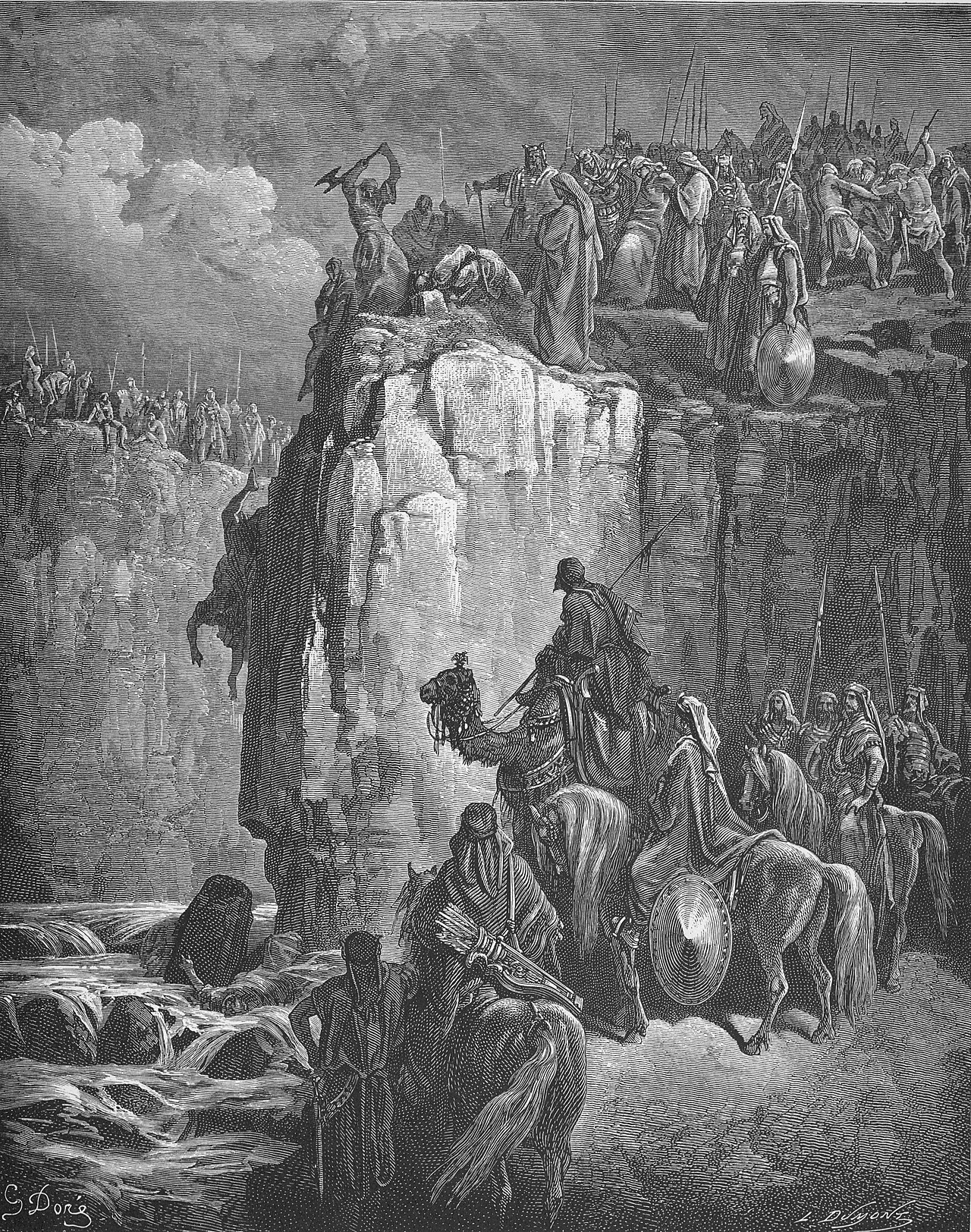
in 1 Kings 18Was it not reported to my lord what I did when Jezebel slaughtered the prophets of the LORD? I hid a hundred prophets of the LORD, fifty men per cave, and I provided them with food and water.
BSB
The same verse in ASV and KJV ▾
ASV
Was it not told my lord what I did when Jezebel slew the prophets of Jehovah, how I hid a hundred men of Jehovah’s prophets by fifty in a cave, and fed them with bread and water?
KJV
Was it not told my lord what I did when Jezebel slew the prophets of the Lord, how I hid an hundred men of the Lord’s prophets by fifty in a cave, and fed them with bread and water?
⋯
This verse in 1 Kings 18
Commentary
7 notes on this verseWhen Jezebel slew the prophets - This persecution was probably during the dearth, for as this bad woman would attribute the public calamity to Elijah, not being able to find him, she would naturally wreak her vengeance on the prophets of Jehovah who were within her reach.
This site's exposition
Art thou that my lord Elijah
on 1 Kings 18:7-14
Obadiah's long protest is the chapter's measure of Elijah's reputation: no nation or kingdom where Ahab has not sought him, oaths taken from kings that he was not there, and the standing assumption that the Spirit of the LORD carries the prophet where no messenger can follow. A man who has spent three years hiding prophets by fifty is still afraid that this errand will cost his head. The fear is reasonable, and the text lets it speak at full length before Elijah answers it.
This site's exposition
I hid a hundred prophets of the LORD
Matthew Henry notes that Obadiah lived up to his name, which means servant of the LORD. Adam Clarke places the slaughter during the drought, when Jezebel, unable to find Elijah, turned on the prophets she could reach. His place at court gave him the means.
The record, by era
The Puritans and the Awakening3 voices
Yet, bad as things were, (1.) There was one very good man, who was a great man at court, Obadiah, who answered his name-- a servant of the Lord, one who feared God and was faithful to him, and yet was steward of the household to Ahab.
), Was it not told my lord how I hid the prophets? He mentions this, not in pride or ostentation, but to convince Elijah that though he was Ahab's servant he was not in his interest, and therefore deserved not to be bantered as one of the tools of his persecution.
quarantine:debris (2026-07-29) — leading-punctuation+unbalanced-parens
Was it not told my lord what I did when Jezebel slew the prophets of the Lord? how I hid one hundred men of the Lord's prophets by fifty in a cave, and fed them with bread and water? See Gill on 1Ki 18:4, this he said not in a way of ostentation, but to show that it would be very ungenerous and ungrateful, as well as impolitic, to sacrifice such a friend at court to the Lord's prophets as he had been, and might still continue to be.
The Nineteenth Century1 voice
A commentator
Jamieson, Fausset & Brown1802–1910
Commentary Critical and Explanatory on the Whole Bible (1871)
proposed
Art thou he that troubleth Israel--A violent altercation took place. Ahab thought to awe him into submission, but the prophet boldly and undisguisedly told the king that the national calamity was traceable chiefly to his own and his family's patronage and practice of idolatry. But, while rebuking the sins, Elijah paid all due respect to the high rank of the offender.
The words behind it
23 Hebrew wordsEvery Hebrew word of this verse in the order it stands, with what it means and the door to its own study. The last column counts the times a word stands in the whole Bible: the rarer the word, the more the places it appears belong together.
| Hebrew | Sound | Meaning | Word study | In the Bible |
|---|---|---|---|---|
| הֲלֹֽא־ | halo'- | ¿ not | H3808 → | 5168 times |
| הֻגַּ֤ד | hugad | has it been told | H5046 → | 370 times |
| לַֽאדֹנִי֙ | ladoni | to lord my | H113 → | 333 times |
| אֵ֣ת | ʾet | <obj.> | H853 → | 10935 times |
| אֲשֶׁר־ | ʾasher- | [that] which | H834 → | 5497 times |
| עָשִׂ֔יתִי | ʾasiti | I did | H6213 → | 2628 times |
| בַּהֲרֹ֣ג | baharog | when killed | H2026 → | 167 times |
| אִיזֶ֔בֶל | ʾizevel | Jezebel | H348 → | 22 times |
| אֵ֖ת | ʾet | <obj.> | H853 → | 10935 times |
| נְבִיאֵ֣י | neviei | [the] prophets of | H5030 → | 314 times |
| יְהוָ֑ה | yahweh | Yahweh | H3068 → | 6520 times |
| וָאַחְבִּא֩ | vaachbi' | and I hid | H2244 → | |
| מִנְּבִיאֵ֨י | mineviei | of [the] prophets of | H5030 → | 314 times |
| יְהוָ֜ה | yahweh | Yahweh | H3068 → | 6520 times |
| מֵ֣אָה | meah | one hundred | H3967 → | 581 times |
| אִ֗ישׁ | ʾish | man | H376 → | 1663 times |
| חֲמִשִּׁ֨ים | chamishim | fifty | H2572 → | 163 times |
| חֲמִשִּׁ֥ים | chamishim | fifty | H2572 → | 163 times |
| אִישׁ֙ | ʾish | man | H376 → | 1663 times |
| בַּמְּעָרָ֔ה | bamearah | in the cave | H4631 → | 37 times |
| וָאֲכַלְכְּלֵ֖ם | vaakhalkelem | and I supplied them | H3557 → | 38 times |
| לֶ֥חֶם | lechem | food | H3899 → | 298 times |
| וָמָֽיִם׃ | vamayim | and water | H4325 → | 581 times |
הֲלֹֽא־¿ not
halo'-H3808 →5168 times
הֻגַּ֤דhas it been told
hugadH5046 →370 times
לַֽאדֹנִי֙to lord my
ladoniH113 →333 times
אֵ֣ת<obj.>
ʾetH853 →10935 times
אֲשֶׁר־[that] which
ʾasher-H834 →5497 times
עָשִׂ֔יתִיI did
ʾasitiH6213 →2628 times
בַּהֲרֹ֣גwhen killed
baharogH2026 →167 times
אִיזֶ֔בֶלJezebel
ʾizevelH348 →22 times
אֵ֖ת<obj.>
ʾetH853 →10935 times
נְבִיאֵ֣י[the] prophets of
nevieiH5030 →314 times
יְהוָ֑הYahweh
yahwehH3068 →6520 times
וָאַחְבִּא֩and I hid
vaachbi'H2244 →
מִנְּבִיאֵ֨יof [the] prophets of
minevieiH5030 →314 times
יְהוָ֜הYahweh
yahwehH3068 →6520 times
מֵ֣אָהone hundred
meahH3967 →581 times
אִ֗ישׁman
ʾishH376 →1663 times
חֲמִשִּׁ֨יםfifty
chamishimH2572 →163 times
חֲמִשִּׁ֥יםfifty
chamishimH2572 →163 times
אִישׁ֙man
ʾishH376 →1663 times
בַּמְּעָרָ֔הin the cave
bamearahH4631 →37 times
וָאֲכַלְכְּלֵ֖םand I supplied them
vaakhalkelemH3557 →38 times
לֶ֥חֶםfood
lechemH3899 →298 times
וָמָֽיִם׃and water
vamayimH4325 →581 times
A shaded row is a word that stands 400 times or fewer in the Bible.
The walk
8 stopsEach card is a verse this one points to, and under it the verses that one points to in turn. Where several paths arrive at the same place, that place is listed first: the text keeps returning to it.
Through
Matthew 25:35For I was hungry and you gave Me something to eat, I was thirsty and you gave Me something to drink, I was a stranger and you took Me in,
it leads to
- 1 John 3:16–19
By this we know what love is: Jesus laid down His life for us, and we ought to lay down our lives for our brothers.
- James 2:15–16
Suppose a brother or sister is without clothes and daily food.
- Deuteronomy 15:7–11
If there is a poor man among your brothers within any of the gates in the land that the LORD your God is giving you, then you are not to harden your heart or…
- Hebrews 13:16
And do not neglect to do good and to share with others, for with such sacrifices God is pleased.
- Ezekiel 18:7
He does not oppress another, but restores the pledge to the debtor. He does not commit robbery, but gives his bread to the hungry and covers the naked with clothing.
- 1 John 3:16–19
Through
1 Kings 18:4for when Jezebel had slaughtered the prophets of the LORD, Obadiah had taken a hundred prophets and hidden them, fifty men per cave, providing them with food and water.)
it leads to
- Matthew 10:40–42
He who receives you receives Me, and he who receives Me receives the One who sent Me.
- Matthew 25:40
And the King will reply, ‘Truly I tell you, whatever you did for one of the least of these brothers of Mine, you did for Me.’
- Matthew 25:35
For I was hungry and you gave Me something to eat, I was thirsty and you gave Me something to drink, I was a stranger and you took Me in,
- Matthew 10:40–42
Where this verse is studied
On this page
Studies5
On this verse
About 1 Kings
Who and where
1 name in this verse with a page on the site.
This page draws on Adam Clarke, Commentary on the Bible; Jamieson, Fausset & Brown, Commentary Critical and Explanatory on the Whole Bible; John Gill, Exposition of the Old Testament; John Gill, Exposition of the Old Testament (1748-1763); Keil, The Books of the Kings and Matthew Henry, Commentary on the Whole Bible.