
Subject
The Kingdom of God
God's reign breaking in: the message Jesus preached most.
Part of The great themes
Also called: kingdom of heaven, God's reign, the King, thy kingdom come, God's rule
This subject covers God's reign breaking into the world, the message Jesus preached most, and what it asks of the people who enter it. The people who carry that reign belong to The Church. What is still ahead of it belongs to The end times.
What The Kingdom of God covers, and where it stops
This subject covers God's reign breaking into the world, the message Jesus preached most, and what it asks of the people who enter it. The people who carry that reign belong to The Church. What is still ahead of it belongs to The end times.
On this page, 6 sections
The one drawing
Across the canon
Old Testament
New Testament
The other 49 books of the canon carry none.
12 passages
Where Scripture speaks
The passages this subject stands on, in canon order.
And unto Me you shall be a kingdom of priests and a holy nation.’ These are the words that you are to speak to the Israelites.”And the LORD said to Samuel, “Listen to the voice of the people in all that they say to you. For it is not you they have rejected, but they have rejected Me as their king.And when your days are fulfilled and you rest with your fathers, I will raise up your descendant after you, who will come from your own body, and I will establish his kingdom.Your house and kingdom will endure forever before Me, and your throne will be established forever.”“I have installed My King on Zion, upon My holy mountain.”The LORD reigns! He is robed in majesty; the LORD has clothed and armed Himself with strength. The world indeed is firmly established; it cannot be moved.The LORD has established His throne in heaven, and His kingdom rules over all.The LORD said to my Lord: “Sit at My right hand until I make Your enemies a footstool for Your feet.”For unto us a child is born, unto us a son is given, and the government will be upon His shoulders. And He will be called Wonderful Counselor, Mighty God, Everlasting Father, Prince of Peace.Of the increase of His government and peace there will be no end. He will reign on the throne of David and over his kingdom, to establish and sustain it with justice and righteousness from that time and forevermore. The zeal of the LORD of Hosts will accomplish this.Behold, the days are coming, declares the LORD, when I will raise up for David a righteous Branch, and He will reign wisely as King and will administer justice and righteousness in the land.In the days of those kings, the God of heaven will set up a kingdom that will never be destroyed, nor will it be left to another people. It will shatter all these kingdoms and bring them to an end, but will itself stand forever.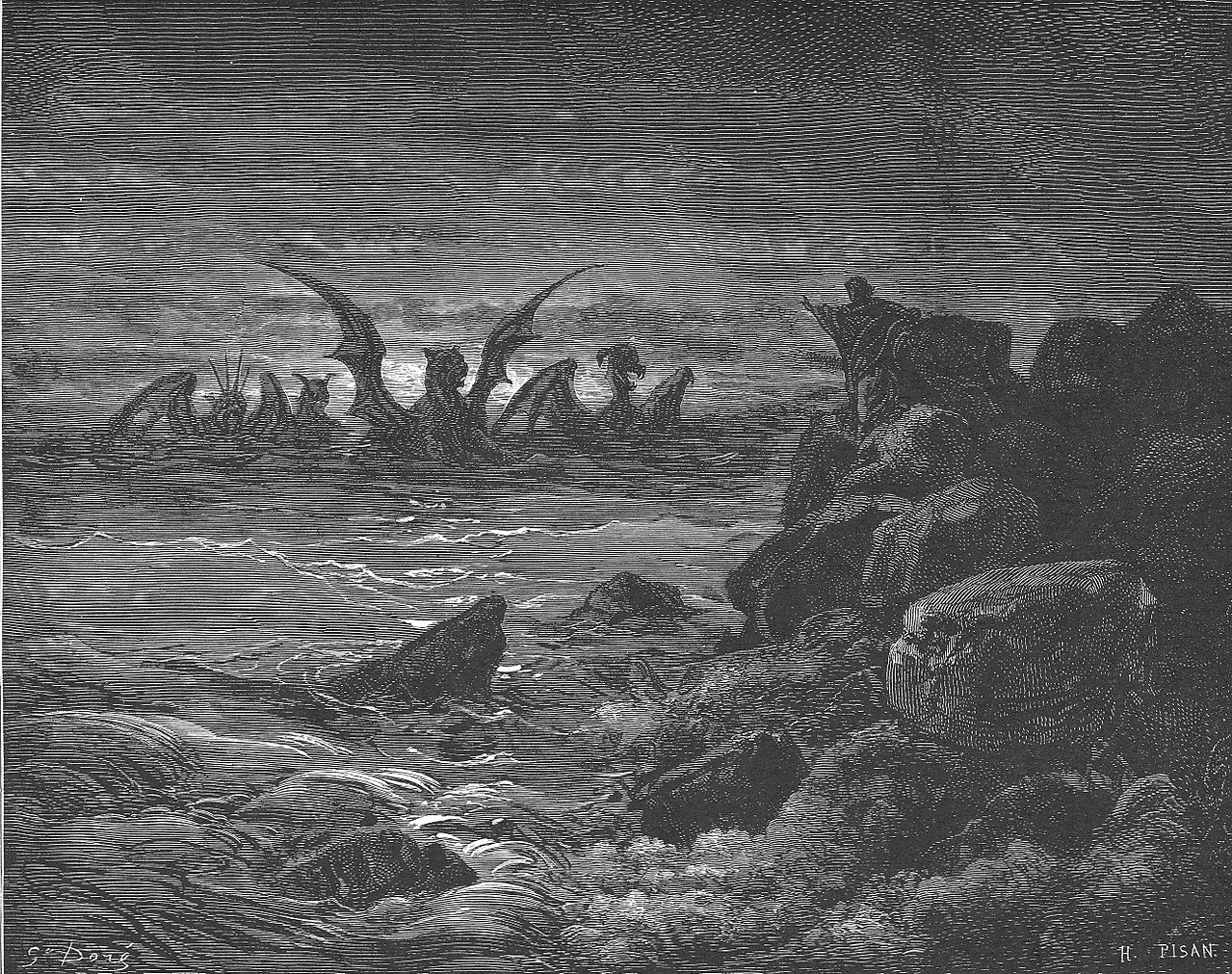
The Kingdom of God in Scripture, in full
"The kingdom of God" names not a place first but a reign: God's kingly rule breaking in, which then produces a people and a realm who live under it. The storyline starts long before Israel has a king: God himself is enthroned over creation (Ps 93; Ps 103:19), and when Israel finally asks Samuel for a human king "like all the nations," the text is blunt that something is being set aside as much as instituted (1 Sam 8:7).
The throne is then localized in one house: God's covenant with David promises a throne and a kingdom "established for ever" (2 Sam 7), and the royal psalms enlarge it: the king set on Zion's hill (Ps 2), invited to sit at God's right hand (Ps 110, the single most-quoted Old Testament text in the New).
The prophets watch that throne collapse into exile and, without walking back the promise, push its fulfillment forward: a righteous Branch who will reign wisely (Jer 23:5), a child on David's throne "henceforth even for ever" (Isa 9:6-7).
Daniel then does something the earlier texts do not: he lifts the horizon from a national throne to a kingdom no empire can touch: a stone that shatters the world-powers and becomes a mountain filling the whole earth (Dan 2:44-45), a dominion given to "one like a son of man" that will not pass away (Dan 7:13-14). That is the OT's unfinished business: a promised king, a promised kingdom, and a throne standing empty since 586 BC.
The Gospels open by declaring the wait over. John the Baptist and Jesus preach the identical line ("the kingdom of heaven is at hand" (Matt 3:2; 4:17)) and Mark compresses Jesus' entire platform into one sentence: "The time is fulfilled, and the kingdom of God is at hand: repent ye, and believe the gospel" (Mark 1:15). But the kingdom Jesus announces resists a single tense.
He says it has already arrived in his own works ("if I cast out devils by the Spirit of God, then the kingdom of God is come unto you" (Matt 12:28)) and in the same breath teaches his followers to keep praying for its coming (Matt 6:10). Luke records the flatly ambiguous claim that the kingdom is "within you" or "in the midst of you" (Luke 17:20-21), a translation question no single English word resolves.
Rather than define it once, Jesus tells it forward in parables: a mustard seed's small start (Matt 13:31), leaven's hidden spread (Matt 13:33), a treasure worth everything (Matt 13:44): pictures of a kingdom present but not yet filling the earth the way Daniel's mountain does. He also refuses a political reading of it in front of Pilate: "My kingdom is not of this world" (John 18:36), a line that has anchored centuries of debate over just how this kingdom relates to the kingdoms of men.
The early church inherits the tension rather than resolving it. When the disciples ask, days before the ascension, whether Jesus will "at this time restore again the kingdom to Israel" (Acts 1:6), he redirects the question rather than answering it, and the church has been arguing about what that redirection means ever since.
Peter's Pentecost sermon reads Jesus' resurrection as an enthronement, citing the very psalm that promised a king at God's right hand (Acts 2:30-34); James later cites Amos's promise of David's rebuilt "tabernacle" to settle the question of Gentile inclusion (Acts 15:16-17): read by many as the promise already being fulfilled in the church, and by dispensational readers as Gentile salvation being shown consistent with a Davidic restoration still future to Israel.
Paul, meanwhile, describes believers as already "translated… into the kingdom of his dear Son" (Col 1:13) while just as plainly describing a kingdom Christ still must hand over to the Father after every enemy is put under his feet (1 Cor 15:24-25): present possession and future consummation held together in the same letter-writer. Hebrews calls what believers have already received "a kingdom which cannot be moved"
(Heb 12:28), and Revelation closes the canon with the reign made total and shared: "The kingdoms of this world are become the kingdoms of our Lord" (Rev 11:15), the redeemed reigning with him (Rev 20:4; 22:5).
The honest tension across all of this is timing and referent, not existence: nobody disputes that Jesus proclaimed a kingdom; the question is whether it is here, still coming, or both, and whether its fullness is a spiritual reign in the church, a future earthly reign centered on a restored Israel, or an already-inaugurated reign whose earthly dimension is still to come.
Twentieth-century scholarship argued this exact spectrum (a wholly future kingdom vs. one fully arrived vs. an "already and not yet" reign begun at the cross and completed at the return), and the older question of whether Matthew's "kingdom of heaven" names something different from "kingdom of God" elsewhere in the New Testament is still genuinely contested: most readers treat the two as the same reign under two names, a reverential Jewish way of avoiding overuse of the divine name, while the dispensational stream MannaFest stands in (Scofield, and Chuck Missler after him), argues the phrases are not simply interchangeable, "kingdom of heaven" carrying a distinct reference to the promised Davidic reign on earth.
Revelation 20's millennial reign remains the sharpest fork of all, read as a literal future reign by some and a present, symbolic one by others; MannaFest's own flag is the premillennial one; Christ returns before a literal thousand-year reign on the earth; the amillennial reading takes the thousand years as the present age, the postmillennial as an age the gospel brings in before he comes.
None of this is decoration around the edges of the doctrine; it is the doctrine, still being lived out by a church praying "Thy kingdom come" for a kingdom it also confesses has already broken in.
4 voices
What teachers have said
It is not smooth talk that reveals the presence of the kingdom of God, but power. When there is power in the words, then the kingdom is present in them.
Origen of Alexandria · Commentary on 1 Corinthians 2.22.6-8
Written before 253.
The kingdom of heaven is like treasure hid in a field - The kingdom of God within us is a treasure indeed, but a treasure hid from the world, and from the most wise and prudent in it.
John Wesley · Explanatory Notes upon the New Testament, 1755
By spiritual regeneration we therefore become sons and are adopted into the kingdom of God, not as aliens but as his creatures and offspring.
Augustine of Hippo · Sermon on the Mount 23.78
Written before 430.
The kingdom of heaven? This refers to justification by faith and sanctification by the Spirit. This is why it says elsewhere, "the kingdom [of heaven] is within you."
Cyril of Alexandria · Fragment 17.4
Written before 444.
23 verses
The complete list
This subject carries 35 curated verses. 12 of them are quoted above, and the other 23 stand here, book by book. Open a book to read the references with a clause of each verse.
Daniel2
Matthew7
- Matthew 3:2and saying, “Repent, for the kingdom of heaven is near.”
- Matthew 4:17From that time on Jesus began to preach, “Repent, for the kingdom of heaven is near.”
- Matthew 6:10Your kingdom come, Your will be done, on earth as it is in heaven.
- Matthew 12:28But if I drive out demons by the Spirit of God, then the kingdom of God has come upon you.
- Matthew 13:31He put before them another parable: “The kingdom of heaven is like a mustard seed that a man...
- Matthew 13:33He told them still another parable: “The kingdom of heaven is like leaven that a woman took and...
- Matthew 13:44The kingdom of heaven is like treasure hidden in a field. When a man found it, he hid it again...
Luke2
Acts3
- Acts 1:6So when they came together, they asked Him, “Lord, will You at this time restore the kingdom to...
- Acts 2:30But he was a prophet and knew that God had promised him on oath that He would place one of his...
- Acts 15:16‘After this I will return and rebuild the fallen tent of David. Its ruins I will rebuild, and I...
1 Corinthians1
Revelation3
- Revelation 11:15Then the seventh angel sounded his trumpet, and loud voices called out in heaven: “The kingdom...
- Revelation 20:4Then I saw the thrones, and those seated on them had been given authority to judge. And I saw...
- Revelation 22:5There will be no more night in the city, and they will have no need for the light of a lamp or...
The great themes
The subjects beside it
On this page
Subjects8