
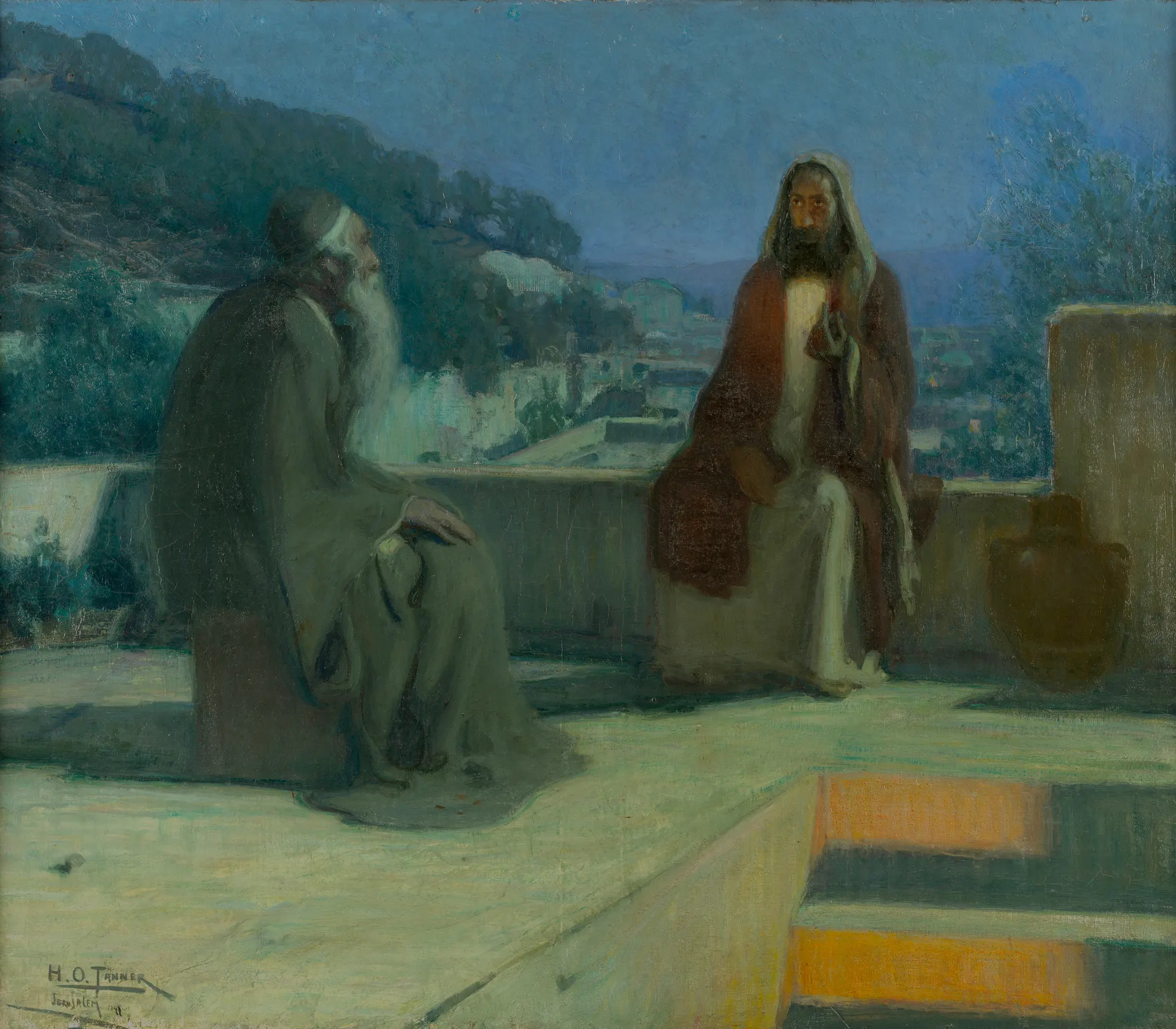
Johnchapter 7
53 verses · John, by tradition · AD 85 to 95 · The Gospels
On the last and greatest day of the feast, Jesus stood up and called out in a loud voice, “If anyone is thirsty, let him come to Me and drink.
Introduction
John, by tradition, The Gospels, John Overview.
John wrote this chapter for readers who knew that people who met Jesus did not agree about Him. It is set at the most crowded feast of the year, and the city is full of opinions. His own brothers doubt Him, the crowds divide, and the authorities send officers who come back empty-handed. Listen for the questions people ask about where the Christ comes from. Notice the moment on the last day of the feast when Jesus stands and calls out. Read it as a chapter of voices in a crowd.
Context
- Who
- Readers who had kept Tabernacles and knew its ceremonies by heart
- What
- Jesus at the Feast of Tabernacles, teaching in the temple, the crowd divided over Him, and His call to the thirsty on the last day.
- Where
- Galilee at the start, then the temple courts in Jerusalem during the feast.
- When
- The Feast of Tabernacles in the autumn, about AD 29, some six months before the crucifixion.
- Why
- To show the division Jesus causes and to offer Him as the source of living water, which the Gospel explains as the Spirit.
Historical context
Tabernacles filled the city. Families built and lived in booths of branches for a week, remembering the wilderness, and the feast doubled as the harvest thanksgiving after the grapes and olives were in. It was the largest pilgrimage of the year.
Show the rest of the historical context, 3 more paragraphs
Two ceremonies dominated it, and both explain what Jesus says. Every morning a priest carried a golden pitcher down to the pool of Siloam, filled it, and processed back to pour the water out at the base of the altar while the crowd sang from Isaiah about drawing water from the wells of salvation. On the last and greatest day of the feast, the day John names, Jesus stood up and cried out, if anyone thirsts, let him come to me and drink.
The other ceremony was light. Great lampstands were lit in the Court of the Women and burned so brightly that, according to Jewish tradition, there was not a courtyard in Jerusalem that did not reflect their light, and men danced with torches through the night. The claim to be the light of the world, which comes immediately after this feast, was made in that room.
The temple police sent to arrest him were the Levitical guard the chief priests commanded, a real force with real authority inside the complex. Their report, no one ever spoke like this man, is one of the more quietly remarkable lines in the Gospel. Nicodemus then invokes an actual rule of Jewish law, that a man is not judged before he is heard.
Significance
The argument in the crowd is a genuine first-century objection, and John lets it stand unanswered in the chapter: the Messiah comes from Bethlehem, and this man is from Galilee. Readers of this Gospel knew the answer, and John trusts them to supply it rather than stopping to argue.
Show the rest of the significance, 1 more paragraph
The Spirit is explained in an aside, that the promise of rivers of living water pointed to the Spirit, who had not yet been given because Jesus was not yet glorified. For readers living after Pentecost, that note connected the feast they had kept as children to what they now had.
The heads below are this chapter's scenes. The numbered points under each are its verses.
Jesus Goes Up to the Feast in Secret
Jesus traveled throughout Galilee: Months pass between the close of chapter 6 and this verse. Jesus traveled throughout Galilee and kept out of Judea, where the leaders were trying to kill Him. The Jews here names that Judean leadership, the men of chapter 5 who had already settled on His death.
John 7:1
“After these things - After the transactions which are recorded in the last chapters had taken place, and after the offence he had given the Jews. See Joh 5:18. Jesus walked - Or Jesus lived, or taught. He traveled around Galilee teaching. In Jewry - In Judea, the southern division of Palestine. Compare the notes at Joh 4:3. The Jews sought - That is, the rulers of the Jews. It does not appear that the common people ever attempted to take his life.”
2 more voices on this verseWhat preachers and commentators have said about this verse, in their own words.
John 7:1
“It is not said, He durst not, but, He would not, walk in Jewry; it was not through fear and cowardice that he declined it, but in prudence, because his hour was not yet come. Gospel light is justly taken away from those that endeavour to extinguish it.”
Matthew Henry · Commentary on the Whole Bible (1707-1721)puritan
John 7:1
The chapter we now begin is divided from the preceding one by a wide interval of time. The many miracles which our Lord wrought, while He "walked in Galilee," are passed over by John in comparative silence. The events which he was specially inspired to record are those which took place in or near Jerusalem. We should observe in this passage the desperate hardness and unbelief of human nature. We are told that even our Lord's "brethren did not believe in Him."
John 7:2-3
the Jewish Feast of Tabernacles: is Sukkot, the autumn feast when Israel lived in booths for seven days in memory of the wilderness. His brothers tell Him to leave Galilee and show His works to His disciples in Judea. Jerusalem is packed with pilgrims at that feast.
John 7:2
“Now the Jews' feast of tabernacles was at hand. Which began on the fifteenth day of the month Tisri, which answers to part of our September; when the Jews erected tents or booths, in which they dwelt, and ate their meals during this festival; and which was done, in commemoration of the Israelites dwelling in booths in the wilderness; and was typical of Christ's tabernacling in human nature; and an emblem of the saints dwelling in the earthly houses and tabernacles of their bodies, in this their wilderness and pilgrimage state.”
1 more voice on this verse
John 7:2
“Feast of tabernacles - This feast was celebrated on the fifteenth day of the month Tisri, answering to the last half of our September, and the first half of October. This month was the seventh of the ecclesiastical, and first of the civil, year. The feast took its name from the tents which were erected about the temple, in public places, in courts, and on the flat roofs of their houses, and in gardens; in which the Jews dwelt for eight days, in commemoration of the forty years during which their fathers dwelt in the wilderness.”
Adam Clarke · Commentary on the Bible (1810-1826)evangelical
Who these brothers were is disputed. John Gill holds they were other than the sons of Alphaeus named in Matthew 13:55, since some of those were among the Twelve. Cyril of Alexandria calls them reputed brothers who thought Jesus a son of Joseph.
John 7:3
“His brethren said--(See on Mt 13:54-56). Depart . . . into Judea, &c.--In Joh 7:5 this speech is ascribed to their unbelief. But as they were in the "upper room" among the one hundred and twenty disciples who waited for the descent of the Spirit after the Lord's ascension (Ac 1:14), they seem to have had their prejudices removed, perhaps after His resurrection.”
Jamieson, Fausset & Brown · Commentary Critical and Explanatory on the Whole Bible (1871)reformed
2 more voices on this verse
John 7:3
“That is, the brethren of Jesus, as the Syriac and Persic versions express it; who were not James and Joses, and Simon and Judas, the sons of Alphaeus, the brother of Joseph, the husband of Mary, so called, Mat 13:55, for some of these were of the number of the twelve; and all of them believers in Christ; whereas these his brethren were not.”
John 7:3
“The reputed brethren of the Saviour not yet recognizing God the Word indwelling in His Holy Flesh, nor knowing at the time when they are saying these things, that He was made Man, have still petty conceptions of Him and think far too little of the grace and excellence that is in Him, seeing nothing more than the rest, deluded by the common opinions of Him, thinking that He too was in truth begotten of their father Joseph, and not seeing the hidden provision of the Mystery.”
Cyril of Alexandria · written before 444 · Commentary on the Gospel of John, Book 4patristic
John 7:4-5
The brothers argue from publicity, that a man who wants to be known does nothing in secret. Show Yourself to the world asks for a display. John then states their condition in one line, that even His brothers did not believe in Him.
John 7:4
“No man that doeth any thing in secret, etc. - They took it for granted that Christ was influenced by the same spirit which themselves felt; and that therefore he should use every opportunity of exhibiting himself to the public, that he might get into repute; and they hoped that a part of his honor would be reflected back upon themselves, as being his near relations.”
Adam Clarke · Commentary on the Bible (1810-1826)evangelical
1 more voice on this verse
John 7:4
“Jesus was teaching the way of life, preaching the kingdom of God and actively engaged in healing infirmities of body and soul. But all that time, while strangers were keenly interested in him, his closest relatives were absent. By and by they turn up and keep outside, but they do not go in, because they did not think much of what was going on within.”
Tertullian · written before 220 · On the Flesh of Christ 7patristic
His own brothers did not believe: Clarke says they counted Him an eminent prophet. They doubted He was the Messiah because He did not show Himself to the world as they expected. Tertullian cites the verse, found in the Gospel before Marcion's time, to explain why Jesus set His mother and brothers aside for a time.
John 7:5
“Neither did his brethren believe in him - They did not receive him as the promised Messiah; but, having seen so many of his miracles, they could not but consider him as an eminent prophet. They supposed that, if he were the Messiah, he would wish to manifest himself as such to the world; and, because he did not do so, they did not believe that he was the salvation of Israel.”
Adam Clarke · Commentary on the Bible (1810-1826)evangelical
1 more voice on this verse
John 7:5
“But there is some ground for thinking that Christ's answer denies His mother and brethren for the present, as even Apelles might learn. "The Lord's brethren had not yet believed in Him." So is it contained in the Gospel which was published before Marcion's time; whilst there is at the same time a want of evidence of His mother's adherence to Him, although the Marthas and the other Marys were in constant attendance on Him.”
Tertullian · written before 220 · On the Flesh of Christpatristic
John 7:6-7
My time has not yet come: is the hour language this Gospel has carried from chapter 2 on, while their time is always at hand. The world has no quarrel with them, and it hates Him for His testimony that its works are evil. Hatred follows the witness.
John 7:6
“They expected Christ's company with them to the feast, perhaps hoping he would bear their charges: but here, (1.) He shows the difference between himself and them, in two things:-- [1.] His time was set, so was not theirs: My time is not yet come, but your time is always ready.”
Matthew Henry · Commentary on the Whole Bible (1707-1721)puritan
1 more voice on this verse
John 7:6
“My time is not yet come - It is probable our Lord meant no more than this, that he had some business to transact before he could go to Jerusalem; but his brethren, having nothing to hinder them might set off immediately. Others think he speaks of his passion: My time of suffering is not yet come: as ye are still in friendship with the world, ye need not be under any apprehension of danger: ye may go when ye please. The first sense I think is the best.”
Adam Clarke · Commentary on the Bible (1810-1826)evangelical
it hates Me, because I testify: Albert Barnes explains the difference: the brothers held no principle against the world and shared its spirit, so it had no reason to hate them. Jesus bore witness against it and declared its works evil. That witness, Barnes says, was the main cause of the opposition.
John 7:7
“The world cannot hate you - You profess no principles in opposition to the world. You do not excite its envy, or rouse against you the civil rulers. As you possess the same spirit and principles with the men of the world, they cannot be expected to hate you. I testify of it - I bear witness against it. This was the main cause of the opposition which was made to him. He proclaimed that men were depraved, and the result was that they hated him.”
John 7:8-9
Go up to the feast on your own: Go up on your own releases the brothers to their own plan. He declines their manner and their moment, and verse 10 shows Him going up later and quietly. Jesus remained in Galilee.
John 7:8
“I go not up yet unto this feast - Porphyry accuses our blessed Lord of falsehood, because he said here, I will not go to this feast, and yet afterwards he went; and some interpreters have made more ado than was necessary, in order to reconcile this seeming contradiction. To me the whole seems very simple and plain.”
Adam Clarke · Commentary on the Bible (1810-1826)evangelical
Jesus remained in Galilee: Matthew Henry draws a lesson from the later going up. Jesus went up to the same feast as brothers who did not believe, while keeping His distance from them. Henry concludes that one may share worship with those one would not choose as close companions.
John 7:9
“But he went up after them. We may lawfully join in the same religious worship with those with whom we should yet decline an intimate acquaintance and converse; for the blessing of ordinances depends upon the grace of God, and not upon the grace of our fellow-worshippers.”
Matthew Henry · Commentary on the Whole Bible (1707-1721)puritan
after His brothers had gone up to the feast: He goes up after the brothers have gone, and He goes in secret. Every Israelite man was commanded to keep this feast at Jerusalem, so the going itself is obedience to the law. The display urged in verse 4 gets no part in it.
John 7:10
“Or, He went up in secret, because He did not seek the favour of men, and took no pleasure in pomp, and being followed about with crowds.”
Alcuin of York · written before 804 · Catena Aurea by Aquinaspatristic
John 7:11-13
looking for Him at the feast: The leaders are looking for Him at the feast before He has arrived. The crowds whisper, some calling Him a good man and others saying He deceives the people. Nobody speaks openly, for fear of the Jews.
John 7:11
“Then the Jews sought him at the feast,.... Some to take him and kill him, and others to hear his doctrine, and see his miracles: for all expected him at the feast, knowing it was always his custom, as it was his duty, as an Israelite, to attend at it: and said, where is he? not naming his name; either through contempt, which might be the case of the far greater part; or through fear of the Jews; or because that he was so well known.”
1 more voice on this verse
John 7:11
“Then the Jews sought him - By Jews here are to be understood the scribes, Pharisees, and rulers of the people, and not the inhabitants of the province of Judea. It appears, from the following verses, that many of the people were prejudiced in his favor, but they dared not to own it publicly for fear of the Jews, i.e. for fear of the rulers of the people.”
Adam Clarke · Commentary on the Bible (1810-1826)evangelical
Clarke says those who knew Jesus best called Him good, while those who took up the priests' verdict called Him a deceiver and spoke out. His friends only whispered, Clarke adds. Matthew Henry finds both verdicts still current in his own day, among Socinians and deists.
John 7:12
“Some said, He is a good man - The multitude were divided in their opinions concerning him: those who knew him best said, He is a good man. Those who spoke according to the character given him by the priests, etc., said, Nay; but he deceiveth the people. Those who spoke evil of him spoke out, because they had the rulers on their side; but those who spoke good of him were obliged to do it in private, because they feared these rulers.”
Adam Clarke · Commentary on the Bible (1810-1826)evangelical
1 more voice on this verse
John 7:12
“Such murmuring as there was among the Jews concerning Christ there is still among us: the Socinians say, He is a good man, and further they say not; the deists will not allow this, but say, He deceived the people.”
Matthew Henry · Commentary on the Whole Bible (1707-1721)puritan
for fear of the Jews: Cyril of Alexandria says John means the rulers when he writes the Jews here, withholding their titles of elder or priest. John Gill names what the crowd feared: being mobbed, prosecuted or put out of the synagogue. Albert Barnes notes that only His friends would not speak publicly.
John 7:13
“Howbeit, no man spoke openly of him,.... So loud as to be overheard, at least by many, but in a secret and whispering way; or did not speak with freedom, or all their mind, what they really thought of him, nor with courage and boldness: for fear the Jews; for fear of being mobbed by them, or up and prosecuted, or turned out of the synagogue; for a law was made, that whoever confessed him, should be so used; and this deterred persons from expressing the true sentiments of their minds about him.”
2 more voices on this verse
John 7:13
“There was murmuring among the Jews, and for fear of the Jews, he says that no man could speak openly. The Divine Evangelist then is calling the rulers of the Jews emphatically Jews, not deigning (as seems to me) to call them elders or priests, or the like, kindled with pious jealousy unto grief to themward, whom with reason does God accuse of destroying His spiritual vineyard, saying in the prophets, Many pastors destroyed My vineyard, they defiled My portion, they gave My longed-for portion for an impassable wilderness, it hath become a vanishing of perdition.”
Cyril of Alexandria · written before 444 · Commentary on the Gospel of John, Book 4patristic
John 7:13
“Spake openly of him - The word translated “openly,” here, is commonly rendered “boldly.” This refers doubtless, to those who really believed on him. His enemies were not silent; but his friends had not confidence to speak of him openly or boldly that is, to speak what they really thought. Many supposed that he was the Messiah, yet even this they did not dare to profess. All that they could say in his favor was that he was a good man.”
Teaching in the Temple: Judge Righteous Judgment
John 7:14-15
About halfway through the feast: is the fourth day of eight. He teaches in the temple courts, the most public place in the city. The question put to Him is about schooling, and a teacher then took his authority from the rabbi he had sat under.
John 7:14
“Now at the middle of the feast - Which lasted eight days. It is probable this was on the Sabbath day. Jesus went up into the temple - Directly, without stopping any where else.”
John Wesley · Explanatory Notes upon the New Testament (1755)evangelical
1 more voice on this verse
John 7:14
“The midst of the feast - Though the canons required him to be there on the first day, for the performance of a great variety of rites, yet, as these were in general the invention of their doctors, he might think it very proper neither to attend nor perform them.”
Adam Clarke · Commentary on the Bible (1810-1826)evangelical
Jamieson, Fausset and Brown, following Meyer, read the question as the Jews' own admission that this man had studied under no human teacher. Albert Barnes explains that such learning meant knowledge of the Scriptures and traditions taught in the schools.
John 7:15
“Knoweth this man letters - The Jewish letters or science consisted in the knowledge of their Scriptures and traditions. Jesus exhibited in his discourses such a profound acquaintance with the Old Testament as to excite their amazement and admiration. Having never learned - The Jews taught their law and tradition in celebrated schools. As Jesus had not been instructed in those schools, they were amazed at his learning. What early human teaching the Saviour had we have no means of ascertaining, further than that it was customary for the Jews to teach their children to read the Scriptures.”
1 more voice on this verse
John 7:15
“These rulers knew well enough that He had not studied under any human teacher--an important admission against ancient and modern attempts to trace our Lord's wisdom to human sources [MEYER]. Probably His teaching on this occasion was expository, manifesting that unrivalled faculty and depth which in the Sermon on the Mount had excited the astonishment of all.”
Jamieson, Fausset & Brown · Commentary Critical and Explanatory on the Whole Bible (1871)reformed
John 7:16-18
The teaching comes from the One who sent Him, and that answers the question about schooling. Verse 17 gives a test anyone can run: whoever wants to do God's will comes to know where the teaching is from. The test of a teacher is whose glory he seeks.
John 7:16
“Doctrine that is of God, then, is one thing; doctrine that is human is another. So when the Jews, regarding him as man, called into question his teaching and said, "How does this man have such learning when he has never been taught?" Jesus answered and said, "My teaching is not mine." For in teaching without elegance of letters, he seems to teach not as [a] man but rather as God who, instead of learning his doctrine, originated it.”
Ambrose of Milan · written before 397 · Exposition of the Christian Faith 2.9.79-80patristic
1 more voice on this verse
John 7:16
“My doctrine is not mine - Our blessed Lord, in the character of Messiah, might as well say, My doctrine is not mine, as an ambassador might say, I speak not my own words, but his who sent me: and he speaks these words to draw the attention of the Jews from the teaching of man to the teaching of God; and to show them that he was the promised Messiah, the very person on whom, according to the prophet, (Isa 11:2), the Spirit of Jehovah - the Spirit of wisdom, counsel, understanding, might, and knowledge, should rest.”
Adam Clarke · Commentary on the Bible (1810-1826)evangelical
desires to do His will: Jamieson, Fausset and Brown call this a principle: anyone whose single desire is to do God's will comes to know which teaching is from God. The lack of that desire, they add, is the chief cause of unbelief among those who have revealed religion.
John 7:17
“A principle of immense importance, showing, on the one hand, that singleness of desire to please God is the grand inlet to light on all questions vitally affecting one's eternal interests, and on the other, that the want of this, whether perceived or not, is the chief cause of infidelity amidst the light of revealed religion.”
Jamieson, Fausset & Brown · Commentary Critical and Explanatory on the Whole Bible (1871)reformed
1 more voice on this verse
John 7:17
“They are such as have an honest principle of regard to God, and are truly desirous to glorify and please him. Whence it is that such a one shall know of the truth of Christ's doctrine. (1.) Christ has promised to give knowledge to such; he hath said, He shall know, and he can give an understanding.”
Matthew Henry · Commentary on the Whole Bible (1707-1721)puritan
is a man of truth: Clarke frames the verse as a second test: reject as a false prophet anyone who speaks on his own authority and seeks his own glory. Cyril of Alexandria says the teaching of Jesus passes that test, for He draws out the spiritual sense already hidden in the law.
John 7:18
“Secondly, See the contrary character Christ gives of himself and his doctrine: He that seeks his glory that sent him, as I do, makes it to appear that he is true. Those teachers, and those only, who are sent of God, are to be received and entertained by us.”
Matthew Henry · Commentary on the Whole Bible (1707-1721)puritan
2 more voices on this verse
John 7:18
“He giveth this evident proof that He doth not labour for His Own glory by His teaching, that He does not use any strange words and foreign to the law (for this were to speak of Himself), but that He is exhorting them rather to be obedient to the former oracles, while He removes only the unprofitable and gross shadow of the letter, and transforms it persuasively unto the spiritual sense, which already lay hid in types.”
Cyril of Alexandria · written before 444 · Commentary on the Gospel of John, Book 4patristic
John 7:18
“He that speaketh of himself, etc. - I will give you another rule, whereby you shall know whether I am from God or not: If I speak so as to procure my own glory, to gratify vanity, or to secure and promote my secular interests, then reject me as a deceiver and as a false prophet.”
Adam Clarke · Commentary on the Bible (1810-1826)evangelical
John 7:19-20
Why are you trying to kill Me drags the plot of chapter 5 into daylight. Before it comes a charge of His own, that Moses gave them the law and none of them keeps it. The crowd answers with an insult, that He has a demon.
John 7:19
“Did not Moses give you the law? - This they admitted, and on this they prided themselves. Every violation of that law they considered as deserving of death. They had accused Jesus of violating it because he had healed a man on the Sabbath, and for that they had sought his life, Joh 5:10-16. He here recalls that charge to their recollection, and shows them that, though they pretended great reverence for that law, yet they were really its violators in having sought his life. None of you ... - None of you Jews. They had sought to kill him.”
Adam Clarke thinks this crowd was outside the chief priests' secret and could not believe anyone wanted Him dead for healing a sick man. Some manuscripts, he notes, give the answer to the Jews who were seeking His life. Matthew Henry notes that Jerusalem's own people knew the plot.
John 7:20
“Thou hast a devil - The crowd, who made this answer, were not in the secret of the chief priests. They could not suppose that any person desired to put him to death for healing a diseased man; and therefore, in their brutish manner, they say, Thou hast a demon - thou art beside thyself, and slanderest the people, for none of them desires to put thee to death. The Codex Cyprius (K), four others, and the margin of the later Syriac, attribute this answer to the Jews, i.e. those who were seeking his life.”
Adam Clarke · Commentary on the Bible (1810-1826)evangelical
John 7:21-22
The one miracle is the healing at Bethesda in chapter 5, still the standing grievance months later. He argues from their own law: circumcision falls on the eighth day, and a boy is circumcised on the Sabbath when the day lands there. The rite came through Moses from the patriarchs.
John 7:21
“One work - The healing of the man on the Sabbath, John 5. Ye all marvel - You all wonder or are amazed, and particularly that it was done on the Sabbath. This was the particular ground of astonishment, that he should dare to do what they esteemed a violation of the Sabbath.”
(not that it is from Moses: Matthew Henry explains the aside: circumcision was a seal of the righteousness of faith. It began with the promise, 430 years before the law, as Galatians 3 argues. Irenaeus says the law allowed healing on the Sabbath, since it circumcised on that day.
John 7:22
“Moses gave you circumcision - The sense is, because Moses enjoined your circumcision (though indeed it was far more ancient than him) you think it no harm to circumcise a man on the Sabbath: and are ye angry at me (which anger had now continued sixteen months) for doing so much greater a good, for healing a man, body and soul, on the Sabbath?”
John Wesley · Explanatory Notes upon the New Testament (1755)evangelical
2 more voices on this verse
John 7:22
“It is clear therefore, that He loosed and vivified those who believe in Him as Abraham did, doing nothing contrary to the law when He healed upon the Sabbath-day. For the law did not prohibit men from being healed upon the Sabbaths; [on the contrary,] it even circumcised them upon that day, and gave command that the offices should be performed by the priests for the people; yea, it did not disallow the healing even of dumb animals.”
Irenaeus · written before 202 · Against Heresies 4.8.2patristic
John 7:22
“Though it was incorporated into the Mosaic institution, yet it was ordained long before, for it was a seal of the righteousness of faith, and therefore commenced with the promise four hundred and thirty years before, Gal. iii.”
Matthew Henry · Commentary on the Whole Bible (1707-1721)puritan
John 7:23-24
making the whole man well on the Sabbath?: The argument runs from the lesser case to the greater. One part of the body is treated on the Sabbath to keep the law of Moses whole. A whole man made well on the same day draws their anger.
John 7:23
“That the law of Moses should not be broken - In order that the law requiring it to be done at a specified time, though that might occur on the Sabbath, should be kept. Are ye angry ... - The argument of Jesus is this: “You yourselves, in interpreting the law about the Sabbath, allow a work of necessity to be done. You do that which is necessary as an ordinance of religion denoting separation from other nations, or external purity.”
1 more voice on this verse
John 7:23
“Circumcision was but a ceremonial institution; it was of the fathers indeed, but not from the beginning; but what Christ did was a good work by the law of nature, a more excellent law than that which made circumcision a good work. Circumcision was a bloody ordinance, and made sore; but what Christ did was healing, and made whole.”
Matthew Henry · Commentary on the Whole Bible (1707-1721)puritan
Stop judging by outward appearances: Cyril of Alexandria turns their own law on them: it forbids respect of persons in judging, for the judgment is God's. John Gill reads judging by outward appearances as partiality toward the scribes and Pharisees who had condemned the healing on the Sabbath.
John 7:24
“The Law (He says) which ye are so zealous to take the part of, and for the sake of which ye were kindled even unto fierce wrath, openly cries aloud, Ye shall not respect persons in judgment, for the judgment is God's. Ye then who condemn Me as a transgressor on account of the sabbath, and decide that it is most fitting to be angry at this, do ye care for the honour of the Law, take shame at the message, Judge not according to the appearance, but judge righteous judgment.”
Cyril of Alexandria · written before 444 · Commentary on the Gospel of John, Book 4patristic
1 more voice on this verse
John 7:24
“Judge not according to the appearance,.... Or through respect of persons, and so as to please men, the Scribes and Pharisees; who had condemned the action of Christ, in curing the diseased man on the sabbath day, and sought to kill him for it: but judge righteous judgment; give your sense and judgment of things, according to the truth and evidence of them; and do not find fault with that, which you yourselves allow of, and which Moses and his law, and your own practices, justify.”
Is This the Christ? Officers Sent to Take Him
John 7:25-27
the people of Jerusalem: know what the pilgrims miss. Their question is about the silence of the rulers, whether the rulers have truly recognized that this is the Christ. Against that they set a common expectation, that when the Christ comes His origin stays hidden.
John 7:25
“Since it was now the feast of the Law called the feast of tabernacles, and the Jews were thronging, so to say, from all the region round about unto Jerusalem (for so had the Lawgiver decreed), Christ was making His teaching to all. For not surely to the townspeople alone was He speaking.”
Cyril of Alexandria · written before 444 · Commentary on the Gospel of John, Book 5patristic
1 more voice on this verse
John 7:25
“We see in these verses, the obstinate blindness of the unbelieving Jews. We find them defending their denial of our Lord's Messiahship, by saying, "But we know where this man comes from. Whenever the Christ comes, no one will know where he comes from." And yet in both these assertions they were wrong! They were wrong in saying that they "knew where our Lord came from." They meant no doubt to say that He was born at Nazareth, and belonged to Nazareth, and was therefore a Galilean.”
speaking publicly: John Gill notes how boldly Jesus was speaking publicly, charging them with a plot, as though the chief priests had licensed Him. The rulers are silent, and the city wonders why.
John 7:26
“But lo, he speaketh boldly,.... And with great freedom, and openly and publicly in the temple, as if he had a licence from the chief priests for so doing: and they say nothing to him; do not contradict him, or forbid him speaking; he goes on without control; though he takes great liberty in charging the Jews with an intention to kill him, in arguing from their practices in vindication of himself, and in suggesting that they judged in favour of men, and not according to the truth of things.”
1 more voice on this verse
John 7:26
“That this is the very Christ? - In most of the common printed editions αληθως is found, the Very Christ; but the word is wanting in BDKLTX, twenty-two others, several editions; all the Arabic, Wheelock’s Persic, the Coptic, Sahidic, Armenian, Slavonic, Vulgate, and all the Itala but one, Origen, Epiphanius, Cyril, Isidore, Pelusian, and Nonnus. Grotius, Mill, Bengel, and Griesbach, decide against it. Bishop Pearce says, I am of opinion that this second αληθως, in this verse, should be omitted, it seeming quite unnecessary, if not inaccurate, when the words αληθως εγνωσαν, had just preceded it.”
Adam Clarke · Commentary on the Bible (1810-1826)evangelical
Albert Barnes explains the belief that no one will know where the Christ is from. The people held He would be born in Bethlehem, where David lived, then hidden, and later come from a place no one expected. John Wesley says this held true of His divine nature.
John 7:27
“When Christ cometh, none knoweth whence he is - This Jewish tradition was true, with regard to his Divine nature: in that respect none could declare his generation. But it was not true with regard to his human nature, for both his family and the place of his birth were plainly foretold.”
John Wesley · Explanatory Notes upon the New Testament (1755)evangelical
John 7:28-29
still teaching in the temple courts: Jesus grants they know Him and where He is from, and His origin runs past that to the One who sent Him, who is true. Their claim to know God breaks on their failure to know the One He sent, and His answer ends on I know Him.
John 7:28
“And of Myself I am not come, but He is true That sent Me. Under the guise of defence He finds fault with the Jews who were insulting through long unbelief. With no slight skill then He composing His Discourse, by every means contrives not to seem to excite His hearers by any occasion to reasonable displeasure, but veiling His words in obscurity, He beguiles their excess of anger and draws off the edge of their passion.”
Cyril of Alexandria · written before 444 · Commentary on the Gospel of John, Book 5patristic
1 more voice on this verse
John 7:28
“Ye both know me, and ye know whence I am - Perhaps they should be read interrogatively: Do ye both know me, and know whence I am? Our Lord takes them up on their own profession, and argues from it.”
Adam Clarke · Commentary on the Bible (1810-1826)evangelical
I am from Him: Cyril of Alexandria has Jesus agree with their saying of verse 27 in a sense they missed. He knows the One who sent Him and is from Him, and they do not know Him.
John 7:29
“But I know him: for I am from him - Instead of εἰμὶ, I am, some editions, the Syriac Hieros. read εἷμι, I came, according to the Attics. Nonnus confirms this reading by paraphrasing the word by εληλυθα, I came. As the difference between the two words lies only in the accents, and as these are not found in ancient MSS., it is uncertain which way the word was understood by them: nor is the matter of much moment; both words amount nearly to the same meaning and εἷμι, I came, seems too refined.”
Adam Clarke · Commentary on the Bible (1810-1826)evangelical
1 more voice on this verse
John 7:29
“Ye have just said (He saith) When Christ cometh, no man knoweth whence He is. But since ye insist that ye hold this your opinion rightly, as being the truth, I agree to your words herein. For True is He of Whom I am, the Father, but He is not known of you.”
Cyril of Alexandria · written before 444 · Commentary on the Gospel of John, Book 5patristic
John 7:30-31
no one laid a hand on Him: They tried to seize Him, and no one laid a hand on Him. His hour holds back theirs as well. Many in the crowd believed, and their reason is put as a question, whether the Christ will do more signs than this man has done.
John 7:30
“Then they sought to take him - The rulers and their friends. They did this: 1. Because of his reproof; and, 2. For professing to be the Messiah. His hour - The proper and the appointed time for his death. See Mat 21:46.”
1 more voice on this verse
John 7:30
“With Him is nothing incomplete or out of due season, just as with the Father there is nothing incongruous. For all these things were foreknown by the Father; but the Son works them out at the proper time in perfect order and sequence.”
Irenaeus · written before 202 · Against Heresies 3.16.7patristic
will He perform more signs: Albert Barnes traces the hope of a Christ who would perform many signs to Isaiah 35:5 and 6, the blind seeing and the lame leaping. Jamieson, Fausset and Brown hear friendly voices in the crowd, held down by hostile superiors and unable to keep quiet.
John 7:31
“Will he do more miracles? - It was a common expectation that the Messiah would work many miracles. This opinion was founded on such passages as Isa 35:5-6, etc.: “Then the eyes of the blind shall be opened, and the ears of the deaf shall be unstopped; then shall the lame man leap as an hart,” etc. Jesus had given abundant evidence of his power to work such miracles, and they therefore believed that he was the Messiah.”
1 more voice on this verse
John 7:31
“When Christ cometh, will he, &c.--that is, If this be not the Christ, what can the Christ do, when He does come, which has not been anticipated and eclipsed by this man? This was evidently the language of friendly persons, overborne by their spiteful superiors, but unable to keep quite silent.”
Jamieson, Fausset & Brown · Commentary Critical and Explanatory on the Whole Bible (1871)reformed
John 7:32-34
sent officers to arrest Him: The chief priests and the Pharisees, two parties that rarely agreed, sent officers to arrest Him. His answer sets out His own timetable, a little while longer and then a going to the One who sent Him, where they cannot come. The going is a return.
John 7:32
“The people murmured such things - The people began to be convinced that he was the Messiah; and this being generally whispered about, the Pharisees, etc., thought it high time to put him to death, lest the people should believe on him; therefore they sent officers to take him.”
Adam Clarke · Commentary on the Bible (1810-1826)evangelical
only a little while longer: Albert Barnes places this about six months before His death, and he hears tenderness in it. Jesus knows they seek His life, and He tells them so that they may still seek His favor while He is with them. The time for coming to Him is short.
John 7:33
“Yet a little while am I with you - It will not be long before my death. This is supposed to have been about six months before his death. This speech of Jesus is full of tenderness. They were seeking his life. He tells them that he is fully aware of it; that he will not be long with them; and implies that they should be diligent to seek him while he was yet with them. He was about to die, but they might now seek his favor and find it.”
Jesus says where I am, in the present tense. John Wesley reads it of the Son's constant presence in heaven by His divine nature, though His going there as man was still ahead. He calls these words the text that this chapter and the next expound.
John 7:34
“These words are, as it were, the text which is commented upon in this and the following chapter. Where I am - Christ's so frequently saying while on earth, where I am, when he spake of his being in heaven, intimates his perpetual presence there in his Divine nature: though his going thither was a future thing, with regard to his human nature.”
John Wesley · Explanatory Notes upon the New Testament (1755)evangelical
John 7:35-36
the Jews are dispersed among the Greeks: They guess at the diaspora, the Jews dispersed among the Greeks in the cities of the empire. The guess lands near a truth they cannot see, and the word does reach the Greeks, carried by the men He leaves behind. The question stays open in their mouths.
John 7:35
“The dispersed among the Gentiles - To the Jews scattered among the Gentiles, or living in distant parts of the earth. It is well known that at that time there were Jews dwelling in almost every land. There were multitudes in Egypt, in Asia Minor, in Greece, in Rome, etc., and in all these places they had synagogues. The question which they asked was whether he would leave an ungrateful country, and go into those distant nations and teach them. Gentiles - In the original, Greeks.”
What does He mean by saying: They repeat His words exactly and still ask what He means. John Wesley reads where I am as the Son's constant presence in heaven, so they will look for Him and never find Him.
John 7:36
“What manner of saying is this that he said,.... It is not easy to be understood; and if that is not meant, which is suggested, what should he mean by saying, ye shall seek me, and shall not find me, and where I am, thither ye cannot come? repeating the words of Christ just now expressed by him.”
1 more voice on this verse
John 7:36
"What is this saying that he said: You will seek me and will not find me; and where I am, you cannot come?" Therefore they do not deserve to understand, because they were unwilling to humble themselves to believe.
Bonaventure · written before 1257 · Commentary on John, Chapter 7patristic
Rivers of Living Water and a Divided City
John 7:37-38
the last and greatest day of the feast: Each morning of the feast a priest carried water from the pool of Siloam and poured it out at the altar. On the last and greatest day that pouring stopped. Into the silence Jesus stood and called out, let anyone who is thirsty come to Me and drink.
John 7:37
“In the last day, that great day of the feast,.... That is, of tabernacles, as appears from Joh 7:2, which was usually called חג, "the feast", in distinction from the passover and Pentecost (q); and the eighth day of it was called הרגל האחרון, "the last day of the feast" (r), as here: and it was a "great day", being, as is said in Lev 23:36, an holy convocation, a solemn assembly, in which no servile work was done, and in which an offering was made by fire unto the Lord.”
2 more voices on this verse
John 7:37
“In the last day - The eighth day of the festival. That great day - The day of the holy convocation or solemn assembly, Lev 23:36. This seems to have been called the great day: 1. Because of the solemn assembly, and because it was the closing scene. 2. Because, according to their traditions, on the previous days they offered sacrifices for the pagan nations as well as for themselves, but on this day for the Jews only (Lightfoot). 3. Because on this day they abstained from all servile labor Lev 23:39, and regarded it as a holy day.”
John 7:37
“On the last, the great day of the feast - On this day there was the greatest concourse of people, and they were then wont to fetch water from the fountain of Siloam, which the priests poured out on the great altar, singing one to an other, With joy shall ye draw water from the wells of salvation.”
John Wesley · Explanatory Notes upon the New Testament (1755)evangelical
The Scripture this verse cites is hard to locate. John Wesley hears a general reference to the Scriptures that picture the Spirit poured out as water. Jamieson, Fausset and Brown point to Ezekiel 47, where water flows from under the temple.
John 7:38
“As the Scripture hath said - Not expressly in any one particular place. But here is a general reference to all those scriptures which speak of the effusion of the Spirit by the Messiah, under the similitude of pouring out water.”
John Wesley · Explanatory Notes upon the New Testament (1755)evangelical
2 more voices on this verse
John 7:38
This … is not a trivial matter when we read that a river goes forth from the throne of God. For you read the words of the Evangelist John that speaks to this: "And he showed me a river of living water, bright as crystal, proceeding out of the throne of God and of the Lamb. In the middle of the street and on either side was the tree of life, bearing twelve kinds of fruits, yielding its fruit every month, and the leaves of the tree were for the healing of all nations."
Ambrose of Milan · written before 397 · On the Holy Spirit 3.20.153-156patristic
John 7:38
“Eze 47:1-12; in most of which the idea is that of waters issuing from beneath the temple, to which our Lord compares Himself and those who believe in Him. out of his belly--that is, his inner man, his soul, as in Pr 20:27. rivers of living water--(See on Joh 4:13, 14).”
Jamieson, Fausset & Brown · Commentary Critical and Explanatory on the Whole Bible (1871)reformed
Cross references
John 7:38
- Quoted inJohn 7:38Whoever believes in Me, as the Scripture has said: ‘Streams of living water will flow from within him.’”
kathos eipen he graphe ('as the scripture hath said') introducing 'rivers of living water', famously UNLOCATABLE to any single OT verse; a genuine crux the marker preserves honestly
speaking about the Spirit: John names what the water means. The Spirit is the gift, and those who believed in Him would receive Him later, at Pentecost. The giving waits on the glorifying of Jesus, and in this Gospel the cross is where the glory falls.
John 7:39
“But this spake he of the Spirit,.... These are the words of the evangelist, explaining the figurative expressions of Christ; showing, that by rivers of living water, he meant the Spirit in his gifts and graces; and which is the plain sense of the passages referred to by him, particularly Isa 44:3, and which, as before observed, the Jews supposed were intimated by their drawing and pouring water at the feast of tabernacles.”
1 more voice on this verse
John 7:39
“In Joh 16:7 the Holy Ghost is represented not only as the gift of Christ, but a gift the communication of which was dependent upon His own departure to the Father. Now as Christ was not yet gone, so the Holy Ghost was not yet given.”
Jamieson, Fausset & Brown · Commentary Critical and Explanatory on the Whole Bible (1871)reformed
John 7:40-41
The crowd splits three ways over one saying. Some name Him the Prophet, others the Christ, and others object on a point of geography, how the Christ can come from Galilee. These are the highest titles the crowd has, and both belong to Him.
John 7:40
“Of a truth this is the Prophet - The great prophet, or teacher, spoken of by Moses, Deu 18:15, which they improperly distinguished from the Messiah, Joh 7:41. Some no doubt knew that by the prophet, the Messiah was meant; but others seem to have thought that one of the ancient prophets should be raised from the dead, and precede the appearing of the Messiah.”
Adam Clarke · Commentary on the Bible (1810-1826)evangelical
1 more voice on this verse
John 7:40
“These verses show us, for one thing, how useless is knowledge in religion, if it is not accompanied by grace in the heart. We are told that some of our Lord's hearers knew clearly where Christ was to be born. They referred to Scripture, like men familiar with its contents. "Has not the Scripture said that Christ comes of the seed of David, and out of the town of Bethlehem, where David was?" And yet the eyes of their understanding were not enlightened. Their own Messiah stood before them, and they neither received, nor believed, nor obeyed Him.”
John Gill thinks those who declared This is the Christ drew on His signs and on the promise of living water. Adam Clarke says the objectors assumed He was born in Galilee. A little inquiry would have shown Bethlehem, Clarke adds.
John 7:41
“Shalt Christ come out of Galilee? - As the prophets had declared that the Messiah was to come from the tribe of Judah, and from the family of David, and should be born in the city of Bethlehem, these Jews, imagining that Christ had been born in Galilee, concluded that he could not be the Messiah. Had they examined the matter a little farther, they would have found that he had his birth exactly as the prophets had foretold; but, for want of this necessary examination, they continued in unbelief, and rejected the Lord that bought them.”
Adam Clarke · Commentary on the Bible (1810-1826)evangelical
John 7:42-44
from the line of David: The crowd quotes Micah 5:2 correctly, the Christ out of David's line and out of Bethlehem. Their information is right and their conclusion is wrong. They argue from a Galilean upbringing they can see, and Bethlehem is where He was born.
John 7:42
“No careless search do the Jews make about Christ, for they were found going through every idea and through varied ideas gathering the perception of the truth. For having first marvelled through His Words, and already taken the eminent confidence of His instructions as a guide to their conjecturing something great about Him, they search besides the Divine Scripture, thinking to find thence a most unerring conception of Him: for so is its nature.”
Cyril of Alexandria · written before 444 · Commentary on the Gospel of John, Book 5patristic
there was division in the crowd: Adam Clarke notes that the Greek word is schisma, a split into parties, which he calls the true notion of schism. John Gill lists the parties: those who took Him for a prophet, those who called Him the Christ, and those who objected to His country.
John 7:43
“So there was a division among the people concerning him. Some, though they did not go so far as to believe him to be the Messiah, yet took him to be a prophet, and a very extraordinary one; others made no difficulty to assert him to be the Christ; and others objected to it on account of the country from whence he came, and so fulfilled the words of Christ, Luk 12:51.”
1 more voice on this verse
John 7:43
“There was a division - Σχισμα, a schism; they were divided in sentiment, and separated into parties. This is the true notion of schism.”
Adam Clarke · Commentary on the Bible (1810-1826)evangelical
no one laid a hand on Him: Cyril of Alexandria and Adam Clarke read the division differently. Cyril thinks the officers saw the quarrel as their chance to seize Him. Clarke holds that the division kept anyone from laying a hand on Him, under God, since a united crowd would have killed Him.
John 7:44
“Would have taken him - Or, they wished to seize him. And this they would have done, and destroyed him too at that time, had they been unanimous; but their being divided in opinion, Joh 7:43, was the cause, under God, why his life was at that time preserved. How true are the words of the prophet: The wrath of man shall praise thee; and the remainder thereof thou wilt restrain! Psa 76:10.”
Adam Clarke · Commentary on the Bible (1810-1826)evangelical
1 more voice on this verse
John 7:44
“They who had been sent by the chief priests and Pharisees to take the Lord, made the dissension of the multitude with one another a seasonable pretext for their daring deed. For they imagined that they would with less dispute suffer them to bear Him away, as no longer careful what should befall Him, but that as having been an occasion of fighting and disturbance, they would be altogether glad at His being insulted.”
Cyril of Alexandria · written before 444 · Commentary on the Gospel of John, Book 5patristic
John 7:45-46
The officers sent in verse 32 come back with no prisoner. Their answer is testimony from men sent to make an arrest, never has anyone spoken like this man. They had gone to take Him and stood listening instead.
John 7:45
“Then came the officers to the chief priests and Pharisees,.... Who were assembled together in council, as the great sanhedrim of the nation; who were sitting and expecting Jesus to be brought before them.”
1 more voice on this verse
John 7:45
“The officers - Those who had been appointed Joh 7:32 to take him. It seems that Jesus was in the midst of the people addressing them, and that they happened to come at the very time when he was speaking. They were so impressed and awed with what he said that they dared not take him. There have been few instances of eloquence like this.”
Adam Clarke says the officers ran their masters' errand without sharing their spirit, sent to seize a seditious man and a false prophet. They found a different man from the one described.
John 7:46
“They perceived that this was not a mere man like themselves, but that this was he who gave water to the saints and that it was he who was announced by the prophet Isaiah. For he was truly the splendor of the light, and the Word of God, the river that flowed from the fountains and watered the paradise of old. But now, to all he gives the same gift of the Spirit and says, "If anyone thirst, let him come to me and drink.”
Athanasius of Alexandria · written before 373 · Festal Letter 44patristic
1 more voice on this verse
John 7:46
“Never man spake like this man - Though these officers had gone on the errand of their masters, they had not entered into their spirit. They were sent to apprehend a seditious man, and a false prophet. They came where Jesus taught; they found him to be a different person to the description they received from their masters, and therefore did not attempt to touch or molest him.”
Adam Clarke · Commentary on the Bible (1810-1826)evangelical
John 7:47-49
The Pharisees answer the report with a question about being deceived. Their measure of truth is rank, whether any of the rulers or Pharisees have believed in Him. The crowd that does not know the law is put under a curse in the same breath.
John 7:47
“It seems likely that the officers were more strongly Jewish, and ever cleaving to the Pharisees and sharing their common mind, and ever soused with the words of their rulers, were persuaded to think the same with them, as being ever with them. But when they came, no ways bringing the Lord, but astonishment-stricken beyond their expectation, and late and only now marvelling at Him Whom they ought not to have hated at the beginning, and thinking that all the rest ought to be persuaded by them: they say with a kind of deep anguish, Have YE also been deceived?”
Cyril of Alexandria · written before 444 · Commentary on the Gospel of John, Book 5patristic
1 more voice on this verse
John 7:47
“Are ye also deceived? - They set down the claims of Jesus as of course an imposture. They did not examine, but were, like thousands, determined to believe that he was a deceiver. Hence, they did not ask them whether they were convinced, or had seen evidence that he was the Messiah; but, with mingled contempt, envy, and anger, they asked if they were also deluded.”
Adam Clarke answers the question: few rulers had believed. He calls that no proof against Jesus, for the great and the wise have generally rejected the truth of God. Nicodemus, one of them, speaks two verses later.
John 7:48
“Have any of the rulers - believed on him? - Very few. But is this a proof that he is not of God? No, truly. If he were of the world, the world would love its own. The religion of Christ has been in general rejected by the rulers of this world. A life of mortification, self-denial, and humility, does not comport with the views of those who will have their portion in this life. It has ever been a mark of the truth of God that the great, the mighty, and the wise have in general rejected it.”
Adam Clarke · Commentary on the Bible (1810-1826)evangelical
1 more voice on this verse
John 7:48
“They fall away to their wonted boastfulness, casting imputation of unlearning on those who marvelled at Jesus as a wonder-worker and as bringing in things God-befitting, and crown their own heads alone with skill in the law and knowledge of the holy Scriptures. And because themselves consent not to those who rightly marvel at these things, they believe that they are full of virtue.”
Cyril of Alexandria · written before 444 · Commentary on the Gospel of John, Book 5patristic
Albert Barnes and Jamieson, Fausset and Brown note that the word for crowd carries contempt, much like rabble. To know the law meant schooling under the Pharisees. Thomas Aquinas says the Pharisees rejected the people's words because those words rebuked their own evil.
John 7:49
“This people - The word here translated “people” is the one commonly rendered “the multitude.” It is a word expressive of contempt, or, as we would say, the rabble. It denotes the scorn which they felt that the people should presume to judge for themselves in a case pertaining to their own salvation. Who knoweth not the law - Who have not been instructed in the schools of the Pharisees, and been taught to interpret the Old Testament as they had.”
1 more voice on this verse
John 7:49
“But this people--literally, "multitude," meaning the ignorant rabble. (Pity these important distinctions, so marked in the original of this Gospel, should not be also in our version.) knoweth not the law--that is, by school learning, which only subverted it by human traditions. are cursed--a cursed set (a kind of swearing at them, out of mingled rage and scorn).”
Jamieson, Fausset & Brown · Commentary Critical and Explanatory on the Whole Bible (1871)reformed
John 7:50-51
who had gone to Jesus earlier: Nicodemus speaks from inside the council. John reminds the reader that he had gone to Jesus earlier, by night, in chapter 3. His question is about procedure, whether the law convicts a man before it hears him, and Deuteronomy 1:16 puts that hearing on every judge.
John 7:50
“Nicodemus - See Joh 3:1. One of them - That is, one of the great council or Sanhedrin. God often places one or more pious men in legislative assemblies to vindicate his honor and his law; and he often gives a man grace on such occasions boldly to defend his cause; to put men upon their proof, and to confound the proud and the domineering. We see in this case, also, that a man, at one time timid and fearful (compare Joh 3:1), may on other occasions be bold, and fearlessly defend the truth as it is in Jesus.”
1 more voice on this verse
John 7:50
“One of the rulers is Nicodemus, and he is numbered among those who had authority, yet not wholly unbelieving nor altogether vying with their folly, but already pricked, not indeed having his love to Christ yet free, yet to some degree feeling shame at the convictions of his conscience.”
Cyril of Alexandria · written before 444 · Commentary on the Gospel of John, Book 5patristic
without first hearing from him: Theophylact of Ohrid says the question exposes men who boasted of the law without reading or keeping it. John Gill sees in Nicodemus a secret respect for Jesus, joined to too little courage to side with Him openly. Albert Barnes notes that no witness had been called.
John 7:51
“Doth our law judge any man,.... Or condemn any man; or can any man be lawfully condemned: before it hear him: what he has to say for himself; is this the usual process in our courts? or is this a legal one to condemn a man unheard? and know what he doth? what his crimes are. This he said, having a secret respect for Christ, though he had not courage enough openly to appear for him.”
1 more voice on this verse
John 7:51
“Doth our law ... - The law required justice to be done, and gave every man the right to claim a fair and impartial trial, Lev 19:15-16; Exo 23:1-2; Deu 19:15, Deu 19:18. Their condemnation of Jesus was a violation of every rule of right. He was not arraigned; he was not heard in self-defense, and not a single witness was adduced. Nicodemus demanded that justice should be done, and that he should, not be condemned until he had had a fair trial. Every man should be presumed to be innocent until he is proved to be guilty.”
They answer Nicodemus with a question about where he is from. Look into it is the step they had skipped in his case. No prophet comes out of Galilee overstates their own Scriptures, and Jonah came out of Gath-hepher in Galilee.
John 7:52
“Art thou also of Galilee? - They knew very well that he was not; but they spoke this by way of reproach. As if they had said, thou art no better than he is, as thou takest his part. Many of the Galileans had believed on him, Which the Jews considered to be a reproach. Art thou his disciple, as the Galileans are? Search, and look - Examine the Scriptures, search the public registers, and thou wilt see that out of Galilee there ariseth no prophet.”
Adam Clarke · Commentary on the Bible (1810-1826)evangelical
2 more voices on this verse
John 7:52
“They knew Jonah arose out of Gethhepher; and Nahum from another village in Galilee. Yea, and Thisbe, the town of Elijah, the Tishbite, was in Galilee also. They might likewise have known that Jesus was not born in Galilee, but at Bethlehem, even from the public register there, and from the genealogies of the family of David.”
John Wesley · Explanatory Notes upon the New Testament (1755)evangelical
John 7:52
“But rage is blind, and deep prejudice distorts all facts. Yet it looks as if they were afraid of losing Nicodemus, when they take the trouble to reason the point at all. It was just because he had "searched," as they advised him, that he went the length even that he did.”
Jamieson, Fausset & Brown · Commentary Critical and Explanatory on the Whole Bible (1871)reformed
Note on the text · John 7:53 - 8:11
One of the most beloved stories about Jesus is missing from the earliest copies of John, and in the later copies that have it, it does not stay in one place.
The witnesses, and what each reads here
- Papyrus 66 (P66) · c. AD 200Does not contain the passage. John 8:12 follows directly on John 7:52.
- Papyrus 75 (P75) · c. AD 175-225Does not contain the passage. This is our earliest substantial copy of this part of John, and the story is simply not in it.
- Codex Sinaiticus (א) · c. AD 330-360Does not contain the passage.
- Codex Vaticanus (B) · c. AD 300-350Does not contain the passage.
- Codex Alexandrinus (A) and Codex Ephraemi (C) · 5th centuryBoth are damaged exactly here, so neither can be read directly, but in each case scholars have measured the missing leaves against the surviving handwriting, and there is not enough room for the passage. The gap is too small to have held it.
- Codex Bezae (D) · 5th centuryContains the passage in its familiar place after John 7:52. This is the earliest surviving Greek manuscript that has it.
- The Old Syriac and the early Coptic versions · 3rd-5th centuryDo not contain the passage. Its absence is not confined to Greek copies; the early translations into other languages do not have it either.
- Later Greek manuscripts, and this is the striking datum · 9th century onwardWhere the passage does appear, it moves. Most copies place it after John 7:52. Some place it after John 7:36. One family of manuscripts puts it at the very end of the Gospel, after John 21:25. Another family takes it out of John altogether and places it in Luke, after Luke 21:38. A passage that travels between Gospels is behaving unlike anything else in the New Testament.
- Manuscripts that carry it under a mark of doubt · 9th century onwardMany copies that include the passage flag it with asterisks or obeli, the scribal signs for material known to be questioned. The scribes copied it and told the reader they had reservations.
each went to his own home: with nothing decided. This verse also opens the passage printed as 7:53 to 8:11, where Jesus is asked about a woman taken in adultery. The earliest Greek manuscripts lack the passage, and the church has long received the account as true.
John 7:53
“And every man went unto his own house - There is every mark of confusion and disorder in this breaking up of the Sanhedrin. It is possible that some of the Sadducees might have joined Nicodemus in opposing the Pharisees, and thus increased the disorder. It is a most instructive and melancholy exhibition of the influence of pride, envy, contempt, and anger, when brought to bear on an inquiry, and when they are manifestly opposed to candor, to argument, and to truth.”
2 more voices on this verse
John 7:53
“And every man went to his own house - So that short plain question of Nicodemus spoiled all their measures, and broke up the council! A word spoken in season, how good it is!”
John Wesley · Explanatory Notes upon the New Testament (1755)evangelical
John 7:53
“In the Gospel, according to John, there is found in many of both the Greek as well as the Latin copies, the story of the adulteress who was accused before the Lord.”
Jerome · written before 420 · Against the Pelagians 2.17patristic
This site records the readings below for this chapter. Spelling and word-order differences that change no meaning are passed over.
- The Woman Caught in Adultery John 7:53 - 8:11, at the verse ↑
Keep studying
Studies22
Places1
Sources for this chapter
The summary
Jamieson, Fausset & Brown, Commentary Critical and Explanatory; John Calvin, Commentaries; John Wesley, Explanatory Notes Upon the New Testament and Matthew Henry, Complete Commentary.
The exposition
Adam Clarke, Commentary on the Bible; Albert Barnes; Ambrose of Milan, On the Holy Spirit 3.20.153-156; Athanasius of Alexandria, FESTAL LETTER 44; Brooke Foss Westcott, The Gospel according to St. John; Cyril of Alexandria; Irenaeus, AGAINST HERESIES 4.8.2; J. C. Ryle, Expository Thoughts on the Gospels, John; Jamieson, Fausset & Brown, Commentary Critical and Explanatory on the Whole Bible; John Calvin, Commentary on a Harmony of the Evangelists; John Gill; John Lightfoot, Horae Hebraicae et Talmudicae on John; John Wesley, Explanatory Notes upon the New Testament; Matthew Henry, Commentary on the Whole Bible; Tertullian, On the Flesh of Christ; Theophylact of Ohrid, Commentary on John and Thomas Aquinas, Commentary on John.