
John 7:53
in John 7Then each went to his own home.
BSB
The same verse in ASV and KJV ▾
ASV
[And they went every man unto his own house:
KJV
And every man went unto his own house.
⋯
This verse in John 7
Commentary
14 notes on this verseThe manuscripts
The Woman Caught in Adultery
on John 7:53 - 8:11
One of the most beloved stories about Jesus is missing from the earliest copies of John, and in the later copies that have it, it does not stay in one place. What it changes: No doctrine. Nothing taught in these twelve verses is unique to them. The mercy of Jesus toward the guilty, his refusal to be used as a weapon, his call to repentance that follows rather than replaces forgiveness, all of it runs through the whole of the Gospels. Luke 7:36-50 alone carries the same weight.
In the Gospel, according to John, there is found in many of both the Greek as well as the Latin copies, the story of the adulteress who was accused before the Lord.
The record, by era
The Church Fathers2 voices
Some men of slight faith, or, rather, some hostile to true faith, fearing, as I believe, that liberty to sin with impunity is granted their wives, remove from their scriptural texts the account of our Lord's pardon of the adulteress, as though he who said, "From now on, sin no more," granted permission to sin, or as though the woman should not have been cured by the divine physician by the remission of that sin in order not to offend others who are equally unclean.
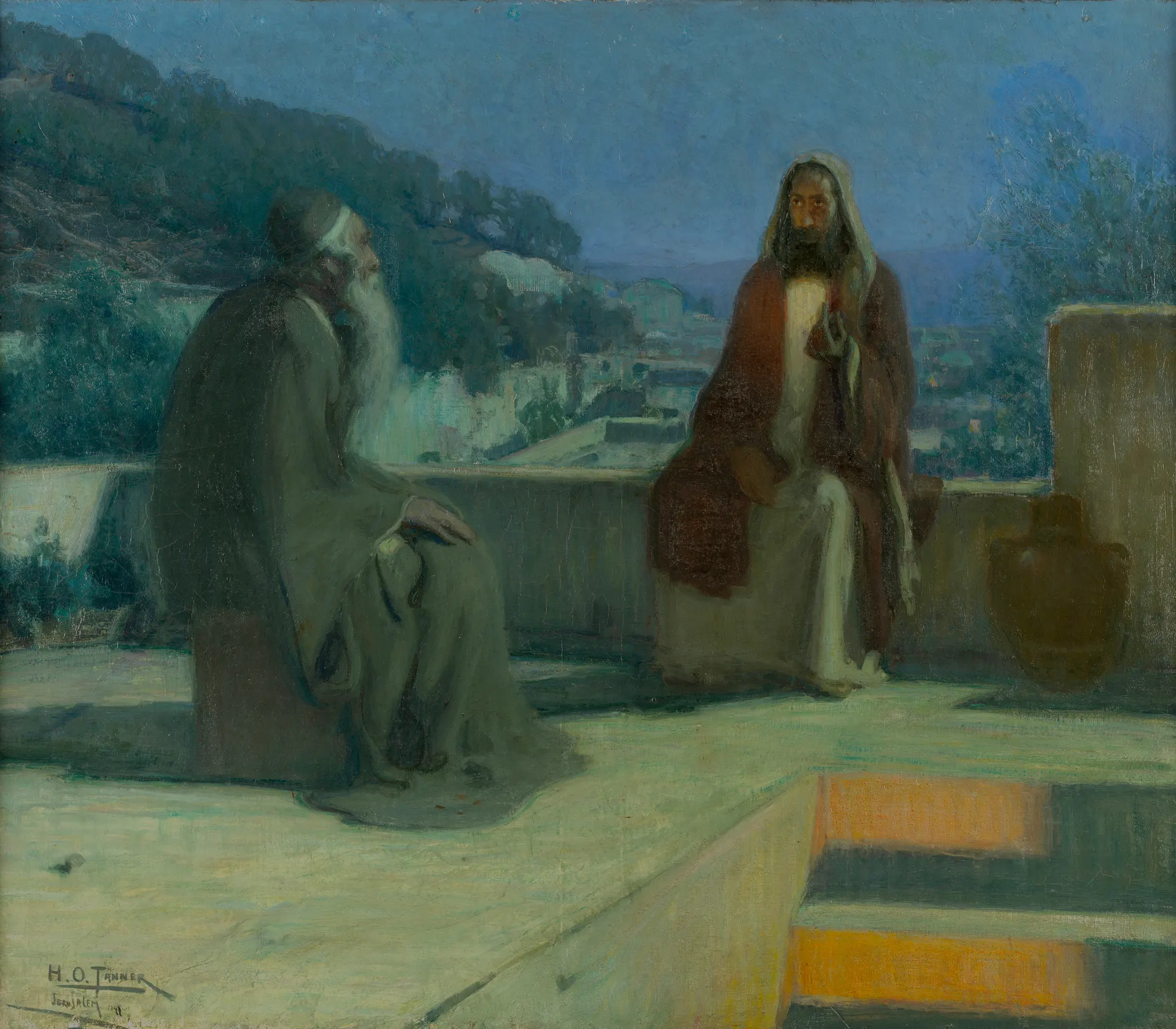
"Nicodemus," however, "one of the Pharisees, who had come to the Lord by night,"-not indeed as being himself unbelieving, but timid; for therefore he came by night to the light, because he wished to be enlightened and feared to be known;-Nicodemus, I say, answered the Jews, "Doth our law judge a man before it hear him, and know what he doeth?" For they perversely wished to condemn before they examined. Nicodemus indeed knew, or rather believed, that if only they were willing to give Him a patient hearing, they would perhaps become like those who were sent to take Him, but preferred to believe. They answered, from the prejudice of their heart, what they had answered to those officers, "Art thou also a Galilean?" That is, one seduced as it were by the Galilean. For the Lord was said to be a Galilean, because His parents were from the city of Nazareth. I have said "His parents" in regard to Mary, not as regards the seed of man; for on earth He sought but a mother, He had already a Father on high. For His nativity on both sides was marvellous: divine without mother, human without father. What, then, said those would-be doctors of the law to Nicodemus? "Search the Scriptures, and see that out of Galilee ariseth no prophet." Yet the Lord of the prophets arose thence. "They returned," saith the evangelist, "every man to his own house."
The Medieval Church3 voices
Having effected nothing, devoid of faith, and therefore incapable of being benefited, they returned to their home of unbelief and ungodliness.
The outcome of this dissension is seen to be useless. So he says: Then every man returned, leaving the matter unfinished, to his own house, i.e., to what belonged to him, empty of faith and frustrated in his evil desires. "He frustrates the plans of …
"And they returned," because they could not avoid reproof and also could not carry out their evil design. Therefore he says: "And they returned, each one to his own house," so that not one remained with another; whence Sirach 21: "The congregation of sinners is …
7 more voices on this verse
The Puritans and the Awakening3 voices
And every man went to his own house - So that short plain question of Nicodemus spoiled all their measures, and broke up the council! A word spoken in season, how good it is!
12 And there was much murmuring among the people concerning him: for some said, He is a good man: others said, Nay; but he deceiveth the people. 13 Howbeit no man spake openly of him for fear of the Jews. The reason given why Christ spent more of his time in Galilee than in Judea (
quarantine:debris (2026-07-29) — unbalanced-parens
And every man went unto his own house.
The Nineteenth Century4 voices
A commentator
Albert Barnes1798–1870
Notes, Explanatory and Practical, on the Old and New Testaments (1832-1869)
And every man went unto his own house - There is every mark of confusion and disorder in this breaking up of the Sanhedrin. It is possible that some of the Sadducees might have joined Nicodemus in opposing the Pharisees, and thus increased the disorder. It is a most instructive and melancholy exhibition of the influence of pride, envy, contempt, and anger, when brought to bear on an inquiry, and when they are manifestly opposed to candor, to argument, and to truth.
A commentator
J.C. Ryle1816–1900
Expository Thoughts on the Gospels: John (lightly modernized text, Grace Gems edition) (1869)
These verses show us, for one thing, how useless is knowledge in religion, if it is not accompanied by grace in the heart. We are told that some of our Lord's hearers knew clearly where Christ was to be born. They referred to Scripture, like men familiar with its contents. "Has not the Scripture said that Christ comes of the seed of David, and out of the town of Bethlehem, where David was?" And yet the eyes of their understanding were not enlightened. Their own Messiah stood before them, and they neither received, nor believed, nor obeyed Him.
A commentator
J.C. Ryle1816–1900
Expository Thoughts on the Gospels: John (lightly modernized text, Grace Gems edition) (1869)
proposed
These verses show us, for one thing, how useless is knowledge in religion, if it is not accompanied by grace in the heart. We are told that some of our Lord's hearers knew clearly where Christ was to be born. They referred to Scripture, like men familiar with its contents. "Has not the Scripture said that Christ comes of the seed of David, and out of the town of Bethlehem, where David was?" And yet the eyes of their understanding were not enlightened. Their own Messiah stood before them, and they neither received, nor believed, nor obeyed Him. A certain degree of religious knowledge, beyond doubt, is of vast importance. Ignorance is certainly not the mother of true devotion, and helps nobody toward heaven. An "unknown God" can never be the object of a reasonable worship. Happy indeed would it be for Christians if they all knew the Scriptures as well as the Jews seem to have done, when our Lord was on earth! But while we value religious knowledge, we must take care that we do not overvalue it. We must not think it enough to know the facts and doctrines of our faith, unless our hearts and lives are thoroughly influenced by what we know. The very devils know the creed intellectually, and "believe and tremble," but remain devils still. (James 2:19.) It is quite possible to be familiar with the letter of Scripture, and to be able to quote texts appropriately, and reason about the theory of Christianity, and yet to remain dead in trespasses and sins. Like many of the generation to which our Lord preached, we may know the Bible well, and yet remain faithless and unconverted. Heart-knowledge, we must always remember, is the one thing needful. It is something which schools and universities cannot confer. It is the gift of God.
And every man went, etc. - The authority and influence of Nicodemus, in this case, was so great that the Sanhedrin broke up without being able to conclude any thing. As the feast was now ended, they were not obliged to continue any longer in or about Jerusalem; and therefore all returned to their respective dwellings. This verse and the first eleven verses of the following chapter are wanting in several MSS. Some of those which retain the paragraph mark it with obelisks, as a proof of spuriousness. Those which do retain it have it with such a variety of reading as is no where else found in the sacred writings. Professor Griesbach leaves the whole paragraph in the text with notes of doubtfulness. Most of the modern critics consider it as resting on no solid authority.
How the passage was read
On John 7:1-53On John 7:1-53
The water ceremony He interrupted
“The Feast of Booths” is Tabernacles, in Hebrew Sukkot: the autumn week when Israel lived (and Jewish families still eat) in leafy shelters remembering the wilderness. In Temple times each morning of the feast a priest carried water in gold from the pool of Siloam up to the altar and poured it out, praying for the year's rain, while the crowds sang: the Mishnah calls it the Rejoicing at the Place of the Water-Drawing, and the Talmud says whoever never saw it “has never seen rejoicing in his life” (Sukkah 51a).
That is the scene on “the last day of the feast, the great day,” when Jesus stood and cried out, “If anyone thirsts, let him come to me and drink”: a claim staged inside the feast's own ceremony, at the moment all Jerusalem was thinking about water from God.
This section is reception history: how the passage was read and kept in the Jewish tradition. Where a reading parts from an essential of the Christian faith, the section says so at that point.
Sources: Mishnah Sukkah 4:9 (the water-drawing rite) · Sukkah 51a (“has never seen rejoicing”)
The walk
8 stopsEach card is a verse this one points to, and under it the verses that one points to in turn. Where several paths arrive at the same place, that place is listed first: the text keeps returning to it.
Through
Psalms 33:10The LORD frustrates the plans of the nations; He thwarts the devices of the peoples.
it leads to
- Psalms 21:11
Though they intend You harm, the schemes they devise will not prevail.
- Job 5:12–13
He thwarts the schemes of the crafty, so that their hands find no success.
- Isaiah 44:25
who foils the signs of false prophets and makes fools of diviners, who confounds the wise and turns their knowledge into nonsense,
- Proverbs 21:30
There is no wisdom, no understanding, no counsel that can prevail against the LORD.
- 2 Samuel 15:31
Now someone told David: “Ahithophel is among the conspirators with Absalom.” So David pleaded, “O LORD, please turn the counsel of Ahithophel into foolishness!”
- Psalms 21:11
Through
Psalms 76:5The valiant lie plundered; they sleep their last sleep. No men of might could lift a hand.
it leads to
- Nahum 3:18
O king of Assyria, your shepherds slumber; your officers sleep. Your people are scattered on the mountains with no one to gather them.
- Psalms 13:3
Consider me and respond, O LORD my God. Give light to my eyes, lest I sleep in death,
- Nahum 3:18
Through
Psalms 76:10Even the wrath of man shall praise You; with the survivors of wrath You will clothe Yourself.
it leads to
- Romans 9:17
For the Scripture says to Pharaoh: “I raised you up for this very purpose, that I might display My power in you, and that My name might be proclaimed in all the earth.”
- Romans 9:17
Where this verse is studied
On this page
About John
This page draws on 12 works. Open the list of works
This page draws on Adam Clarke, Commentary on the Bible; Albert Barnes, Notes, Explanatory and Practical, on the Old and New Testaments (1832-1869); Alcuin of York, Catena Aurea by Aquinas; Augustine of Hippo, ON ADULTEROUS MARRIAGES 2.7.6; Augustine of Hippo, Tractates on John 33; Bonaventure, Commentary on John, Chapter 7; J.C. Ryle, Expository Thoughts on the Gospels: John (lightly modernized text, Grace Gems edition); Jerome, Against the Pelagians 2.17; John Gill, Exposition of the New Testament (1746-1748); John Wesley, Explanatory Notes upon the New Testament; Matthew Henry, Commentary on the Whole Bible and Thomas Aquinas, Commentary on John.