
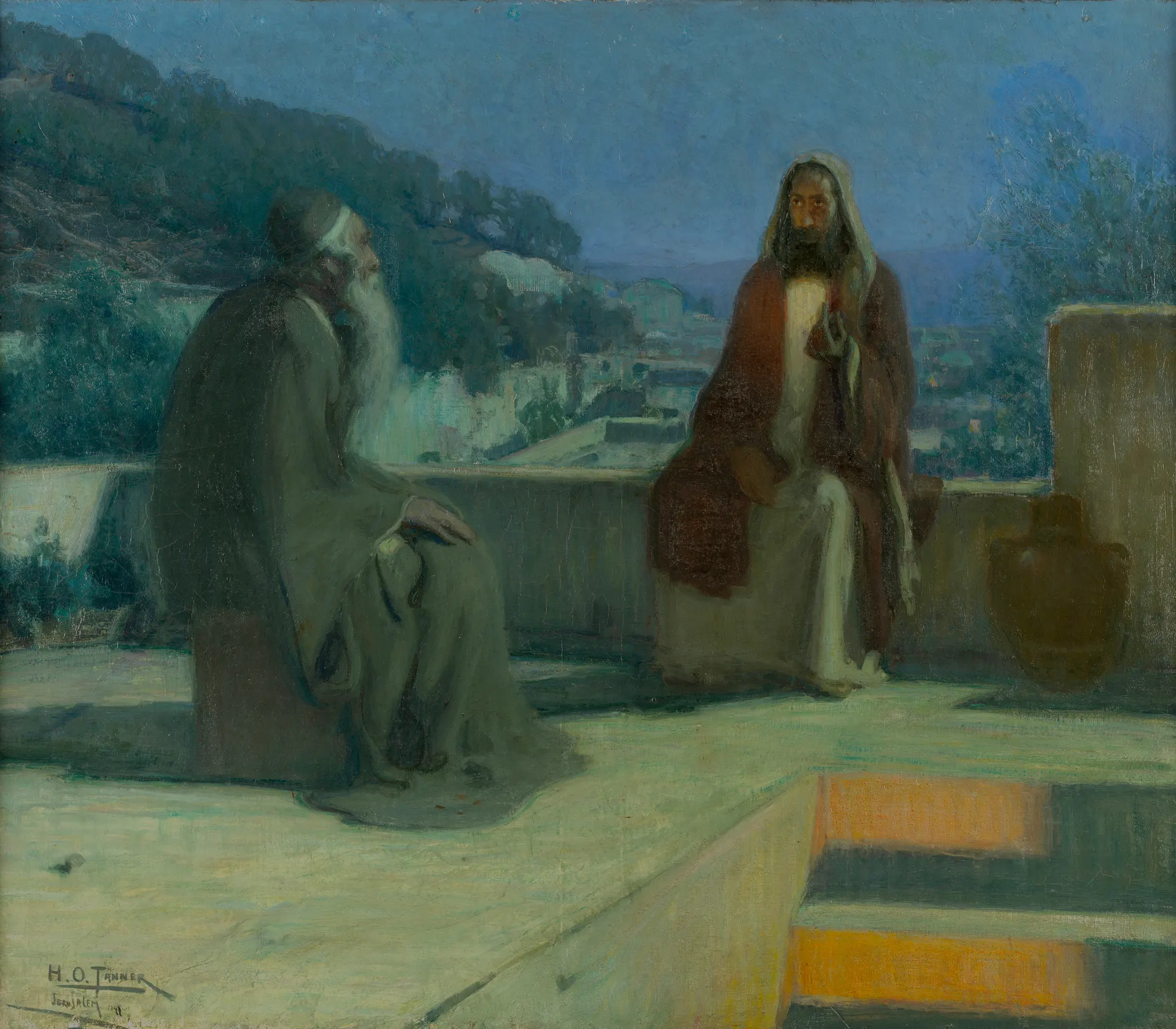
Johnchapter 12
50 verses · John, by tradition · AD 85 to 95 · The Gospels
Isaiah said these things because he saw Jesus’ glory and spoke about Him.
Introduction
John, by tradition, The Gospels, John Overview.
This chapter closes the public ministry that the Gospel has followed since the wedding at Cana. Its writer walked into Jerusalem with Jesus that week, and he says plainly that he understood much of it only after the resurrection. He wrote for a church of Jews and Gentiles together, and this chapter shows the Gentiles first coming into view. It moves from a table among friends to a crowd, then to one voice speaking in public for the last time. Listen for the word hour, and for the prophet the writer quotes about his own people. Read it as the door between the signs and the upper room.
Context
- Who
- Readers who understood both the price of perfume and the meaning of a palm branch
- What
- The anointing at Bethany, the entry into Jerusalem, the coming of the Greeks and the last public words of Jesus, with the writer's account of Israel's unbelief.
- Where
- Bethany, the road into Jerusalem and the temple courts filled with the Passover crowds.
- When
- Six days before the last Passover and the days that followed, in the week of the crucifixion, about AD 30 or 33.
- Why
- To show that the hour of the cross has come and to close the public ministry with its call to believe while the light remains.
Historical context
The perfume is priced in the text at three hundred denarii, which was close to a year's wages for a labouring man. Nard was imported from the mountains of the far east and sold in sealed flasks; once opened it could not be saved. Anointing the feet rather than the head, and drying them with her hair, was an act of self-abasement, a woman's loosed hair in public was itself scandalous.
Show the rest of the historical context, 3 more paragraphs
Palm branches carried a national charge. They had been waved when the Maccabees retook the temple, and they appear on Jewish coins from the later revolts as a symbol of independence. Combined with the shout from Psalm 118 and the words the King of Israel, the crowd was staging a liberation rally, and the Roman garrison in the fortress overlooking the temple would have been watching.
The Greeks who ask to see Jesus were most likely God-fearers, Gentiles who worshipped Israel's God and came up for the feast without becoming Jews. They approach Philip, who has a Greek name and comes from Bethsaida in a bilingual region. Their arrival is what prompts Jesus to say the hour has come.
The grain of wheat that must fall into the ground and die was farming everyone had done. Seed kept in a jar stays seed; seed buried stops being seed and becomes a crop. It is the plainest possible statement of what the coming week is for.
Significance
John reports the Pharisees saying to one another, look, the world has gone after him, and then a delegation of Gentiles arrives at exactly that moment. The Gospel treats the complaint as an unintentional prophecy.
Show the rest of the significance, 1 more paragraph
The chapter closes with an honest and uncomfortable note for readers under pressure: many even of the authorities believed in him, but because of the Pharisees they did not confess it, for they loved the glory that comes from man more than the glory that comes from God. Secret belief is named for what it is.
The heads below are this chapter's scenes. The numbered points under each are its verses.
Mary's Costly Ointment and Judas's Complaint
John 12:1-2
Six days before the Passover: dates the dinner to the week of the cross, with the order of 11:53 already out against Jesus. Martha serves, as she serves at Luke 10:40. Lazarus reclines at the table, and verse 10 has the chief priests planning his death.
John 12:1
“The chapter we have now begun finishes a most important division of John's Gospel. Our Lord's public addresses to the unbelieving Jews of Jerusalem are here brought to an end. After this chapter, John records nothing but what was said in private to the disciples. We see, for one thing, in this passage, what abounding proofs exist of the truth of our Lord's greatest miracles. We read of a supper at Bethany, where Lazarus "sat at the table" among the guests—Lazarus, who had been publicly raised from the dead, after lying four days in the grave.”
3 more voices on this verseWhat preachers and commentators have said about this verse, in their own words.
John 12:1
“Six days before the passover - Namely, on the Sabbath: that which was called by the Jews, "The Great Sabbath." This whole week was anciently termed "The great and holy week." Jesus came - From Ephraim, chap. xi, 54.”
John Wesley · Explanatory Notes upon the New Testament (1755)evangelical
John 12:1
“Disdaining the plot of the Jews, the Lord gives Himself up, willing to suffer when the time for suffering was come, going to Bethany; not actually into Jerusalem, lest, suddenly appearing to the Jews, He might kindle them to anger; but by the rumour of His being so near gradually softening the rage of their wrath. And He eats with Lazarus, thereby reminding those who saw them of His God-befitting power.”
Cyril of Alexandria · written before 444 · Commentary on the Gospel of John, Book 7patristic
John 12:1
“Bethany is here described to be the town where Lazarus was, whom he raised from the dead. The miracle wrought here put a new honour upon the place, and made it remarkable. Christ came hither to observe what improvement was made of this miracle; for where Christ works wonders, and shows signal favours, he looks after them, to see whether the intention of them be answered.”
Matthew Henry · Commentary on the Whole Bible (1707-1721)puritan
So they hosted a dinner for Jesus: Martha served at the dinner, and Lazarus reclined at the table. Barnes places the house at Simon the leper's from Matthew 26:6, while Gill and Chrysostom place it in Martha's own home. Chrysostom and Theophylact see Lazarus eating as proof he lived again.
John 12:2
“Martha herself was taking great care with the service and was ministering to Christ with all her heart. Mary herself was seated at the feet of Jesus and kissing them.… Christ beholds them both with his divine eyes and is cheered and rejoices over the purity of their mode of life and the offering to him of their undefiled service.”
Athanasius of Alexandria · written before 373 · Homily on the Resurrection of Lazaruspatristic
2 more voices on this verse
John 12:2
“See this passage explained in the notes at Mat 26:3-16. Joh 12:2 A supper - At the house of Simon the leper, Mat 26:6. Lazarus was ... - The names of Martha and Lazarus are mentioned because it was not in their own house, but in that of Simon.”
John 12:2
“Martha served--This, with what is afterwards said of Mary's way of honoring her Lord, is so true to the character in which those two women appear in Lu 10:38-42, as to constitute one of the strongest and most delightful confirmations of the truth of both narratives.”
Jamieson, Fausset & Brown · Commentary Critical and Explanatory on the Whole Bible (1871)reformed
a pint of expensive perfume: Mary pours out about a pint of pure nard, priced in verse 5 at three hundred denarii, near a year's wages. Nard came from a plant of the Indian mountains, and the fragrance filled the house. She anoints His feet and dries them with her hair.
John 12:3
“In loving this body, that is, the church, bring water for his feet and kiss his feet, not only pardoning those who have become enmeshed in sin but by your peace giving them harmony and putting them at peace. Pour ointment on his feet, that the whole house wherein Christ reclines at table may be filled with the odor of your ointment, that all at table with him may be pleased with your perfume. In other words, pay honor to the least.”
Ambrose of Milan · written before 397 · Letter 62 (to His Sister)patristic
3 more voices on this verse
John 12:3
“Considering what Christ has done and suffered for us, we are very ungrateful if we think any service too hard to do, or too mean to stoop to, whereby he may really be glorified. (3.) A believing love; there was faith working by this love, faith in Jesus as the Messiah, the Christ, the Anointed, who, being both priest and king, was anointed as Aaron and David were.”
Matthew Henry · Commentary on the Whole Bible (1707-1721)puritan
John 12:3
“The only use of this was to refresh and exhilarate--a grateful compliment in the East, amidst the closeness of a heated atmosphere, with many guests at a feast. Such was the form in which Mary's love to Christ, at so much cost to herself, poured itself out.”
Jamieson, Fausset & Brown · Commentary Critical and Explanatory on the Whole Bible (1871)reformed
John 12:3
“Then Mary, taking a pound of ointment - There were two persons who poured ointment on Christ. One toward the beginning of his ministry, at or near Nain, Luke vii, 37, &c. The other six days before his last passover, at Bethany; the account of whom is given here, as well as by St. Matthew and Mark.”
John Wesley · Explanatory Notes upon the New Testament (1755)evangelical
John 12:4-6
who was going to betray Him: Judas asks why the perfume was not sold for three hundred denarii, with the money going to the poor. John names him first as the man about to betray Him. Verse 6 answers that he was a thief who helped himself to the money bag he carried.
John 12:4
“Then saith one of his disciples,.... Who had no true love for his master, was an hypocrite, and a covetous person: Judas Iscariot; so called, to distinguish him from another Judas, an apostle; See Gill on Mat 10:4. Simon's son; this is omitted in the Vulgate Latin, Syriac, Persic, and Ethiopic versions; See Gill on Joh 13:2; which should betray him; and so he did; this was pre-determined by God, foretold in prophecy, and foreknown by Christ; and is observed here, to show the temper and character of the man.”
1 more voice on this verse
John 12:4
“It is possible for the worst of men to lurk under the disguise of the best profession; and there are many who pretend to stand in relation to Christ who really have no kindness for him. Judas was an apostle, a preacher of the gospel, and yet one that discouraged and checked this instance of pious affection and devotion.”
Matthew Henry · Commentary on the Whole Bible (1707-1721)puritan
Judas prices the perfume at three hundred denarii. Augustine and Chrysostom reconcile Matthew 26:8, where the disciples complain, by holding that Judas spoke first and with another purpose. Ambrose sets the two prices side by side, three hundred for the perfume and thirty for the betrayal.
John 12:5
“Why was not this ointment sold for three hundred pence,.... Meaning Roman pence, one of which is, of the value of our money, seven pence halfpenny; so that three hundred pence amount to nine pounds seven shillings and six pence: and given to the poor? this was his pretence, and with which he covered himself; his uneasiness was, because it was not sold, and the money put into his hands, as appears by what follows.”
2 more voices on this verse
John 12:5
“Three hundred pence - Or denarii: about 9£. 13s. 9d. of our money; reckoning the denarius at 7 3/4d. One of my MSS. of the Vulgate (a MS. of the 14th century) reads, cccc denarii.”
Adam Clarke · Commentary on the Bible (1810-1826)evangelical
John 12:5
“O traitor Judas, you value the ointment of his passion at three hundred pence, and you sell his passion at thirty pence. Rich in valuing, cheap in wickedness!”
Ambrose of Milan · written before 397 · On the Holy Spirit 3.17.128patristic
As keeper of the money bag: Judas kept the money bag and took from it. Augustine draws from this that Judas was a thief and lost before he ever took the chief priests' money. Ephrem holds that Jesus gave him the bag to satisfy his greed, and Theophylact to take away every excuse.
John 12:6
“Not that He cared for the poor - There should be a particular emphasis laid on the word he, as the evangelist studies to show the most determined detestation to his conduct. And bare what was put therein - Or rather, as some eminent critics contend, And stole what was put in it. This seems the proper meaning of εβαϚαζεν; and in this sense it is used, Joh 20:15: If thou hast Stolen him away - ει συ εβαϚασας αυτον. In the same sense the word is used by Josephus, Ant. b. xii. c.”
Adam Clarke · Commentary on the Bible (1810-1826)evangelical
John 12:7-8
the day of My burial: Leave her alone answers the objection by naming what the act is for, the day of My burial, now six days off. The poor are always there, and the hour in front of them comes once. Deuteronomy 15:11 stands behind the saying about the poor.
John 12:7
“Let her alone: against the day of my burying hath she kept this - Several MSS. and versions read thus: - Αφες αυτην, ἱνα εις την ἡμεραντου ενταφιασμου μου τηρησῃ - Let her alone, That she may keep it to the day of my embalming. This is the reading of BDLQ, four others, Arabic, Coptic, Ethiopic, Armenian, later Syriac in the margin, Slavonic, Vulgate, all the Itala but one; Nonnus, Ambrosius, Gaudentius, and Augustin.”
Adam Clarke · Commentary on the Bible (1810-1826)evangelical
2 more voices on this verse
John 12:7
“And the Lord also makes it clear that the woman was free from any blame, whereby He covertly rebukes the traitor; not in His good judgment finding fault with things that were worthy of praise, but saying: Let her alone. And He said in defence of the anointing with the ointment, that it had been done, not out of luxuriousness, but because of a certain mystery which had reference to His burying; although she who did it was unaware of the design of the mystery.”
Cyril of Alexandria · written before 444 · Commentary on the Gospel of John, Book 8 (Fragments)patristic
John 12:7
“But as the time was so near at hand when that office would have to be performed, and she was not to have that privilege even alter the spices were brought for the purpose (Mr 16:1), He lovingly regards it as done now.”
Jamieson, Fausset & Brown · Commentary Critical and Explanatory on the Whole Bible (1871)reformed
The poor you will always have: The poor will always be with them. Augustine reads the absence as bodily only, for at Matthew 28:20 Jesus promises to be with His people always. Theophylact notes that Jesus answers Judas without exposing him to the others.
John 12:8
“And the Lord also brings forward an argument which convinces us that nothing is better than devotion towards Him. For, He says, love for the poor is very praiseworthy, only let it be put after veneration of God. And what He says amounts to this: The time, He says, which has been appointed for My being honoured, that is to say, the time of My sojourn on earth, does not require that the poor should be honoured before Me. And this He said with reference to the Incarnation.”
Cyril of Alexandria · written before 444 · Commentary on the Gospel of John, Book 8patristic
1 more voice on this verse
John 12:8
"In the act of love done to Him she had erected to herself an eternal monument, as lasting as the Gospel, the eternal word of God. From generation to generation this remarkable prophecy of the Lord has been fulfilled; and even we, in explaining this saying of the Redeemer, of necessity contribute to its accomplishment" [OLSHAUSEN].
Jamieson, Fausset & Brown · Commentary Critical and Explanatory on the Whole Bible (1871)reformed
John 12:9-11
a large crowd of Jews learned: A large crowd came out to Bethany to see Lazarus as well as Jesus, and the chief priests laid plans to kill Lazarus too. Verse 11 gives their reason: many of the Jews were leaving them for Jesus on his account.
John 12:9
“Much people of the Jews - John, who was a Galilean, often gives the title of Jews to those who were inhabitants of Jerusalem.”
Adam Clarke · Commentary on the Bible (1810-1826)evangelical
1 more voice on this verse
John 12:9
“Through the strangeness of the sign the multitude are astonished; and that which they heard to have been done they wished also to behold with their eyes, that they might believe it more confidently.”
Cyril of Alexandria · written before 444 · Commentary on the Gospel of John, Book 8 (Fragments)patristic
the chief priests made plans to kill: The chief priests planned to kill Lazarus too. Wesley draws from this a reason the other Gospels leave out the raising of Lazarus, written while he still lived. Augustine and Bede mark the folly of planning to kill a man the Lord had already raised from the dead.
John 12:10
“The chief priests consulted, how to kill Lazarus also - Here is the plain reason why the other evangelists, who wrote while Lazarus was living, did not relate his story.”
John Wesley · Explanatory Notes upon the New Testament (1755)evangelical
2 more voices on this verse
John 12:10
“In the presence of such grace given by the Lord, of such a miracle of divine bounty, when all ought to have rejoiced, the wicked were stirred up and gathered a council against Christ and wished moreover to kill Lazarus also. Do you not recognize that you are the successors of those whose hardness you inherit? For you too are angry and gather a council against the church, because you see the dead come to life again in the church and raised again by receiving forgiveness of their sins.”
Ambrose of Milan · written before 397 · Concerning Repentance 2.7.59patristic
John 12:10
“Consulted that they might put Lazarus also to death - As long as he lived they saw an incontestable proof of the Divine power of Christ; therefore they wished to put him to death, because many of the Jews, who came to see him through curiosity, became converts to Christ through his testimony. How blind were these men not to perceive that he who had raised him, after he had been dead four days, could raise him again though they had slain him a thousand times?”
Adam Clarke · Commentary on the Bible (1810-1826)evangelical
many of the Jews were deserting them: Many Jews were leaving the chief priests for Jesus. Theophylact notes that with the feast near, crowds went out to Bethany to see the man raised from the dead. Cyril says the rulers planned murder upon murder to undo a sign they could not deny.
John 12:11
“See now how frantic the rulers seem to become, wildly rushing hither and thither under the influence of their envy, and saying nothing coherently. They seriously meditate murder upon murder, thinking to remove the force of the miraculous deed at the same time with their victim, that they might stop the people running to believe Christ.”
Cyril of Alexandria · written before 444 · Commentary on the Gospel of John 8patristic
Hosanna! The King Comes on a Donkey's Colt
John 12:12-15
the great crowd that had come to the feast: The crowd carried palm branches out of the city and shouted Hosanna, the Hebrew cry save now. Blessed is He who comes is Psalm 118:26, sung by pilgrims going to the feast, and Jesus answered it by sitting on a young donkey. Zechariah 9:9 had already given the picture.
John 12:12
“A careful reader of the Gospels can hardly fail to observe that our Lord Jesus Christ's conduct, at this stage of His earthly ministry, is very peculiar. It is unlike anything else recorded of Him in the New Testament. Hitherto we have seen Him withdrawing as much as possible from public notice, retiring into the wilderness, and checking those who would have brought Him forward and made Him a king. As a rule He did not court popular attention. He did not "cry or strive, or cause His voice to be heard in the streets." (Matt. 12:19.)”
1 more voice on this verse
John 12:12
“Even so, from the day of this solemn entry into Jerusalem, "Christ our Passover" was virtually set apart to be "sacrificed for us" (1Co 5:7).”
Jamieson, Fausset & Brown · Commentary Critical and Explanatory on the Whole Bible (1871)reformed
They took palm branches and went: Palm branches were carried for victors. Cyril and Theophylact read them as the crowd hailing the One who raised Lazarus from the dead, and Gill notes that palms grew near Bethany. Theophylact holds that many hoped the King of Israel would free them from Rome.
John 12:13
“When the crowd took the palm branches from the date palms and went before Christ as he was about to go up to the feast, all of them bore witness that he had called Lazarus forth from the grave and had raised him from the dead. Because of this, this great throng believed on him when they heard that he had done this sign. For all the people had come out of the tomb before they buried him and closed the mouth of the tomb. A great wonder seized them all when they heard that he was alive again.”
Athanasius of Alexandria · written before 373 · Homily on the Resurrection of Lazaruspatristic
Cross references
John 12:13
- QuotingPsalms 118:25“O LORD, save us, we pray. We beseech You, O LORD, cause us to prosper!”
'Hosanna: Blessed is the King of Israel' (triumphal entry)
Finding a young donkey, Jesus sat: John tells only that Jesus found a young donkey. Chrysostom holds that the sending of disciples in the other Gospels also took place. Henry reads the donkey as a King coming without pomp, and Cyril as a lesson against being lifted up by praise.
John 12:14
“And Jesus, when he had found a young ass,.... Which he sent his disciples for, to a neighbouring village, and they brought to him: sat thereon, as it is written; in Zec 9:9 though some part of the words seems to be taken out of Isa 62:11; See Gill on Mat 21:5; and so Nonnus paraphrases it here, "that it might be fulfilled which Esaias said".”
1 more voice on this verse
John 12:14
“For when a great multitude were escorting Him like a body-guard and shouting His praises, with the most perfect self-restraint He seated Himself upon an ass, teaching us not to be lifted up by praises, and omitting no necessary thing. Matthew therefore related at greater length the circumstances concerning the ass; but John comes at once to the point of the affair that was most suited to the occasion, as it is his custom to do.”
Cyril of Alexandria · written before 444 · Commentary on the Gospel of John 8patristic
Do not be afraid stands where the prophet says rejoice. Chrysostom explains the comfort to the Daughter of Zion, for most of her kings had been unjust, and her King now comes gentle. Eusebius holds that Jesus alone fits the prophecy.
John 12:15
“Zechariah gave this prophecy after the return from Babylon toward the conclusion of prophecy. But there is no record of a Jewish king since that time, such as the prophecy predicts, except our Lord and Savior Jesus Christ, in whom this prediction was fulfilled.… But what was his riding on a donkey meant to show but the lowly and humble manner that marked his first coming?”
Eusebius of Caesarea · written before 339 · Proof of the Gospel 9.17patristic
1 more voice on this verse
John 12:15
“It was foretold that Zion's king should come, should come thus, sitting on an ass's colt; even this minute circumstance was foretold, and Christ took care it should be punctually fulfilled. Note, (1.) Christ is Zion's king; the holy hill of Zion was of old destined to be the metropolis or royal city of the Messiah.”
Matthew Henry · Commentary on the Whole Bible (1707-1721)puritan
Cross references
John 12:15
- QuotingZechariah 9:9“Rejoice greatly, O Daughter of Zion! Shout in triumph, O Daughter of Jerusalem! See, your King comes to you, righteous and victorious, humble and riding on a donkey, on a colt, the foal of a donkey.”
'Fear not... behold, thy King cometh, sitting on an ass's colt'
His disciples did not understand these things: at the time. The meaning came back to them after Jesus was glorified, with the written word attached to what they had watched. John records the same delayed remembering at 2:22.
John 12:16
“At first therefore they were ignorant that these words had been written with regard to Him; but after the Resurrection, they did not continue to suffer from the Jewish blindness, but the knowledge of the Divine words was revealed to them through the Spirit. And then was the Christ glorified, when after being crucified He came to life again.”
Cyril of Alexandria · written before 444 · Commentary on the Gospel of John, Book 8patristic
1 more voice on this verse
John 12:16
“Then remembered they, etc. - After the ascension of Christ, the disciples saw the meaning of many prophecies which referred to Christ, and applied them to him, which they had not fully comprehended before. Indeed it is only in the light of the new covenant, that the old is to be fully understood.”
Adam Clarke · Commentary on the Bible (1810-1826)evangelical
John 12:17-19
when He called Lazarus from the tomb: Witnesses who had stood there when He called Lazarus from the tomb kept telling what they saw, and the crowd went out on that report. The Pharisees answer with a complaint, that the whole world has gone after Him. The Greeks of verse 20 arrive in the next line.
John 12:17
“When he called Lazarus out of the tomb - How admirably does the apostle express, as well the greatness of the miracle, as the facility with which it was wrought! The easiness of the Scripture style on the most grand occurrences, is more sublime than all the pomp of orators.”
John Wesley · Explanatory Notes upon the New Testament (1755)evangelical
1 more voice on this verse
John 12:17
“Note, The truth of Christ's miracles was evidenced by incontestable proofs. It is probable that those who had seen this miracle did not only assert it to those who asked them, but published it unasked, that this might add to the triumphs of this solemn day; and Christ's coming in now from Bethany, where it was done, would put them in mind of it.”
Matthew Henry · Commentary on the Whole Bible (1707-1721)puritan
the crowd went out to meet Him: The crowd went out because they heard of the sign. Theophylact and Aquinas hold that Jesus kept the greatest sign for the last. Theodore and Cyril say the crowd saw the promise of the prophets, that death would be overcome, kept in Lazarus four days dead.
John 12:18
“Therefore those who had heard of the performance of this miracle also met Him with glory, that is, they believed; for if they had not believed, they would not have changed so quickly.”
Theophylact of Ohrid · written before 1107 · Commentary on Johnpatristic
Look how the whole world has gone: The Pharisees admit the whole world has gone after Jesus. Clarke notes the whole world was a common Jewish way of saying everyone. Chrysostom hears secret believers among the Pharisees, while Cyril holds they spoke truer than they knew, for the Gentiles too would believe.
John 12:19
“Ye prevail nothing - Either by your threatening or excommunications. The world is gone after him - The whole mass of the people are becoming his disciples. This is a very common form of expression among the Jews, and simply answers to the French, tout le monde, and to the English, every body - the bulk of the people. Many MSS., versions, and fathers, add ὁλος, the Whole world. As our Lord’s converts were rapidly increasing, the Pharisees thought it necessary to execute without delay what they had purposed at their first council. See Joh 11:53.”
Adam Clarke · Commentary on the Bible (1810-1826)evangelical
1 more voice on this verse
John 12:19
“This they say, finding fault with themselves, that they had not long ago put Jesus and Lazarus also to death, urging themselves to murder; being angry concerning the believing multitude, as though deprived of their special possessions----those which really belonged to God.”
Cyril of Alexandria · written before 444 · Commentary on the Gospel of John, Book 8patristic
Greeks Ask for Jesus; the Grain of Wheat Must Die
John 12:20-22
some Greeks among those who went up to worship: Greeks who had come up to worship at the feast ask Philip for an introduction. Sir, we want to see Jesus is their whole request. Philip brings it to Andrew, and both men carry Greek names.
John 12:20
“Certain Greeks - There are three opinions concerning these: 1. That they were proselytes of the gate or covenant, who came up to worship the true God at this feast. 2. That they were real Jews, who lived in Grecian provinces, and spoke the Greek language. 3. That they were mere Gentiles, who never knew the true God: and hearing of the fame of the temple, or the miracles of our Lord, came to offer sacrifices to Jehovah, and to worship him according to the manner of the people of that land.”
Adam Clarke · Commentary on the Bible (1810-1826)evangelical
3 more voices on this verse
John 12:20
“The forbidding of the priests to accept of any oblation or sacrifice from a Gentile (which was done by Eleazar the son of Ananias, the high priest), Josephus says, was one of those things that brought the Romans upon them, War 2. Though these Greeks, if uncircumcised, were not admitted to eat the passover, yet they came to worship at the feast.”
Matthew Henry · Commentary on the Whole Bible (1707-1721)puritan
John 12:20
“Certain Greeks - A prelude of the Gentile Church. That these were circumcised does not appear. But they came up on purpose to worship the God of Israel.”
John Wesley · Explanatory Notes upon the New Testament (1755)evangelical
John 12:20
“Greeks--Not Grecian Jews, but Greek proselytes to the Jewish faith, who were wont to attend the annual festivals, particularly this primary one, the Passover.”
Jamieson, Fausset & Brown · Commentary Critical and Explanatory on the Whole Bible (1871)reformed
The Greeks came to Philip of Bethsaida. Jamieson, Fausset and Brown take them as Gentiles who went up to worship at the feasts. Clarke suggests they came from towns near Galilee, and Barnes reads their wish to see Jesus as a wish to hear Him.
John 12:21
“Even though they knew it not, the Pharisees were telling the truth when they said: Behold, the whole world is gone after Him. For not Jews only, but Gentiles as well, were destined to accept the faith. Wherefore also the application of the Greeks happened at that time as a sort of firstfruits; and to Philip as being himself a Galilean, the Galilean Greeks came, asking him to shew them Jesus Whom they wished to see, as they were continually hearing Him well spoken of; that they might worship Him and attain the object of their desires.”
Cyril of Alexandria · written before 444 · Commentary on the Gospel of John 8patristic
Philip relayed this appeal to Andrew: Philip told Andrew before going to Jesus. Chrysostom and Barnes hold he was unsure whether Jesus would receive Gentiles after Matthew 10:5. Theophylact reads the two going together as humility, neither willing to decide alone.
John 12:22
“Andrew and Philip tell Jesus - How pleasing to God is this union, when the ministers of his Gospel agree and unite together to bring souls to Christ. But where self-love prevails, and the honor that comes from God is not sought, this union never exists. Bigotry often ruins every generous sentiment among the different denominations of the people of God.”
Adam Clarke · Commentary on the Bible (1810-1826)evangelical
The hour has come is spoken the moment Gentiles ask for Him. Three times before this the hour had not yet come, at 2:4, 7:30 and 8:20. The Son of Man is glorified through the cross ahead.
John 12:23
“The hour is come - The time is come. The word “hour” commonly means a definite part or a division of a day; but it also is used to denote a brief period, and a fixed, definite, determined time. It is used in this sense here. The appointed, fixed time is come - that is, is so near at hand that it may be said to be come. The Son of man - This is the favorite title which Jesus gives to himself, denoting his union with man, and the interest he felt in his welfare.”
2 more voices on this verse
John 12:23
“Seeing therefore that Gentiles are hastening in eager desire to see Him and to turn towards Him, on this account He says: The hour is come. For near at hand was the time of His Passion, after which the calling of the Gentiles immediately followed. And He calls the time now present "the hour," with the intention of showing that no other occasion can bring Him to the necessity of suffering, save only this season marked out by His own appointed limitations.”
Cyril of Alexandria · written before 444 · Commentary on the Gospel of John, Book 8patristic
John 12:23
“The middle wall of partition that keeps them out from the commonwealth of Israel is on the eve of breaking down, "and I, if I be lifted up from the earth, shall draw all men unto Me"; I see them "flying as a cloud, and as doves to their cotes"--a glorious event that will be for the Son of man, by which this is to be brought about.”
Jamieson, Fausset & Brown · Commentary Critical and Explanatory on the Whole Bible (1871)reformed
unless a kernel of wheat falls to the ground: A kernel of wheat that falls to the ground and dies bears much fruit, and the same kernel kept whole stays a single seed. The Greek behind remains only a seed is stays alone. The doubled Truly, truly marks the weight of the saying.
John 12:24
“Except a corn of wheat fall into the ground and die, it abideth alone; but if it die, it bringeth forth much fruit--The necessity of His death is here brightly expressed, and its proper operation and fruit--life springing forth out of death--imaged forth by a beautiful and deeply significant law of the vegetable kingdom.”
Jamieson, Fausset & Brown · Commentary Critical and Explanatory on the Whole Bible (1871)reformed
1 more voice on this verse
John 12:24
“Unless a grain of wheat die - The late resurrection of Lazarus gave our Lord a natural occasion of speaking on this subject. And agreeable to his infinite knowledge, he singles out, from among so many thousands of seeds, almost the only one that dies in the earth: and which therefore was an exceeding proper similitude, peculiarly adapted to the purpose for which he uses it.”
John Wesley · Explanatory Notes upon the New Testament (1755)evangelical
John 12:25-26
Whoever loves his life will lose it: Hating it in this world keeps it for eternal life. Hates is the Hebrew idiom of comparison, loving one thing less than another, the same word behind Luke 14:26. Verse 26 sets the servant where the Master is, and the Father honors him there.
John 12:25
“You not only ought not to be offended at the thought of My suffering, or to disbelieve the words I said, but it is even right that you should be prepared in anticipation of it; for he that thinks fit to be careful over his life here, and is not willing to expose it to dangers for My sake, loses it in the time to come. But he who exposes it to dangers in this present world is laying up in store for it great rewards.”
Cyril of Alexandria · written before 444 · Commentary on the Gospel of John, Book 8patristic
1 more voice on this verse
John 12:25
“On the contrary, as He became Man to exemplify this fundamental law of the Kingdom of God in its most sublime form, so the very utterance of it on this occasion served to sustain His own Spirit in the double prospect to which He had just alluded.”
Jamieson, Fausset & Brown · Commentary Critical and Explanatory on the Whole Bible (1871)reformed
If anyone serves Me, he must follow: Serve comes three times in the verse, as Spurgeon counts it. Chrysostom and Theophylact read follow as readiness for the death Jesus has just told in the kernel of wheat. Augustine reads following as imitation, citing 1 Peter 2:21.
John 12:26
“THIS verse is all about serving and service. Three times over you get the word, "serve," or, "servant." Each clause of our text has in it a part of the verb, "to serve." You cannot have Christ if you will not serve Him! If you take Christ, you must take Him in all His Characters, not only as Friend, but also as Master. And if you are to become His disciple, you must also become His servant. I hope that no one here kicks against that Truth of God!”
Charles Spurgeon · written before 1892 · The Metropolitan Tabernacle Pulpit, Sermon No. 2449: “The Rule and Reward of Serving Christ” (lightly modernized text, CCEL edition)Particular Baptist
1 more voice on this verse
John 12:26
“If any man serve Me, let him follow Me. What He says is something of this kind: If I, He says, for the sake of benefitting you am exposing Myself to death, is it not indeed cowardly on your part to shrink from despising your transient life for the sake of enjoying your private advantages, and from obtaining life imperishable by means of the death of the body? For they seem to be hating their own life, with regard to the endurance of suffering, who expose it to death, and keep it for everlasting blessings.”
Cyril of Alexandria · written before 444 · Commentary on the Gospel of John, Book 8patristic
John 12:27-28
Now My soul is troubled: , and the sentence turns on itself. He speaks the prayer He could pray, Father, save Me from this hour, then prays Father, glorify Your name. This is the only voice from heaven in John.
John 12:27
“Now is my soul troubled - The mention of his death brought before him its approaching horrors, its pains, its darkness, its unparalleled woes. Jesus was full of acute sensibility, and his human nature shrunk from the scenes through which he was to pass. See Luk 23:41-44. What shall I say? - This is an expression denoting intense anxiety and perplexity. As if it were a subject of debate whether he could bear those sufferings; or whether the work of man’s redemption should be abandoned, and he should call upon God to save him.”
2 more voices on this verse
John 12:27
“Now is my soul troubled - He had various foretastes of his passion. And what shall I say? - Not what shall I choose? For his heart was fixed in choosing the will of his Father: but he laboured for utterance.”
John Wesley · Explanatory Notes upon the New Testament (1755)evangelical
John 12:27
“What He recoils from is not subjection to His Father's will: but to show how tremendous a self-sacrifice that obedience involved, He first asks the Father to save Him from it, and then signifies how perfectly He knows that He is there for the very purpose of enduring it.”
Jamieson, Fausset & Brown · Commentary Critical and Explanatory on the Whole Bible (1871)reformed
The Father answers from heaven. Chrysostom reads I have glorified it of the signs already done, and I will glorify it again of the cross. Augustine places the first glory before the world was made, and Jamieson, Fausset and Brown tie it to the baptism and the transfiguration.
John 12:28
“There came therefore a voice out of heaven, saying, I have both glorified it, and will glorify it again. The Evangelist did not say that it was the Father Who uttered the voice from above, but that the voice came from heaven; in order that no heretics, because they heard that the Father spake, might attempt to say that also the Divine Nature, to wit, the Father, is encompassed with a gross body. Wherefore he speaks indeed of the harmonious voice, but how the voice was brought to pass it is not in our power to say.”
Cyril of Alexandria · written before 444 · Commentary on the Gospel of John, Book 8patristic
2 more voices on this verse
John 12:28
“Father, glorify thy name - By the name of God is to be understood himself, in all his attributes: his wisdom, truth, mercy, justice, holiness, etc., which were all more abundantly glorified by Christ’s death and resurrection, (i.e. shown forth in their own excellence), than they had ever been before. Christ teaches here a lesson of submission to the Divine will. Do with me what thou wilt, so that glory may redound to thy name. Some MSS. read, Father, glorify my name: others, glorify thy Son.”
Adam Clarke · Commentary on the Bible (1810-1826)evangelical
John 12:28
“I have both glorified it--referring specially to the voice from heaven at His baptism, and again at His transfiguration. and will glorify it again--that is, in the yet future scenes of His still deeper necessity; although this promise was a present and sublime testimony, which would irradiate the clouded spirit of the Son of man.”
Jamieson, Fausset & Brown · Commentary Critical and Explanatory on the Whole Bible (1871)reformed
John 12:29-30
said that it had thundered: The crowd heard the same sound and split two ways, thunder to some and an angel to others. John gives the reader the words themselves, which the crowd could not make out. Jesus says the voice came for their sake.
John 12:29
“How does God speak? Does He have a physical voice? Not at all, but He pours forth oracles with a certain superior power than a physical voice could have. The prophets heard this voice; the faithful hear this voice, but the wicked do not understand. Finally, in the Gospel you have, because the evangelist heard Him saying: "And I have glorified, and will glorify again" (John 12:28); but the Jews did not hear. For they said: "It thundered" (Ibid., 29).”
Ambrose of Milan · written before 397 · On Paradise, Chapter 14.69patristic
1 more voice on this verse
John 12:29
“The people - A part of the people. It thundered - The unexpected sound of the voice would confound and amaze them; and though there is no reason to doubt that the words were spoken distinctly Mat 3:17, yet some of the people, either from amazement or envy, would suppose that this was a mere natural phenomenon.”
The voice came for the crowd. Barnes holds Jesus needed no such voice to confirm His way, and Clarke thinks the word yours meant the Greeks. Augustine adds that as the voice came for their sake, so His soul was troubled for their sake.
John 12:30
“Jesus answered and said unto them, This voice hath not come for My sake, but for your sakes. The Father replied aloud----after what manner He only knows----unto His own Son, manifesting His own purpose with intent to rouse the zeal of the hearers, that they might believe without any doubt that He is by Nature the Son of God the Father. But the multitude were perplexed and divided unto different surmisings, without understanding. For they ought to have apprehended that it was the Father that gave answer, unto Whom the Son had addressed His words.”
Cyril of Alexandria · written before 444 · Commentary on the Gospel of John, Book 8patristic
1 more voice on this verse
John 12:30
“This voice came not because of me, but for your sakes - Probably meaning those Greeks who had been brought to him by Philip and Andrew. The Jews had frequent opportunities of seeing his miracles, and of being convinced that he was the Messiah; but these Greeks, who were to be a first fruits of the Gentiles, had never any such opportunity. For their sakes, therefore, to confirm them in the faith, this miraculous voice appears to have come from heaven.”
Adam Clarke · Commentary on the Bible (1810-1826)evangelical
John 12:31-33
Now judgment is upon this world: Judgment falls on this world and the prince of this world is cast out, and the moment named is the cross. Lifted up carries two senses in the Greek, raised on a cross and raised in glory, and John tells the reader which death was meant.
John 12:31
“Is the judgment of this world - That is, now is the judgment given concerning it, whose it shall be. Now shall the prince of this world - Satan, who had gained possession of it by sin and death, be cast out -That is, judged, condemned, cast out of his possession, and out of the bounds of Christ's kingdom.”
John Wesley · Explanatory Notes upon the New Testament (1755)evangelical
1 more voice on this verse
John 12:31
“Now is the judgment of this world - Greek: “crisis.” This expression, doubtless, has reference to his approaching death, and whatever he means by judgment here relates to something that was to be accomplished by that death. It cannot mean that then was to be the time in which the world was to be finally judged, for he says that he did not come then to judge the world Joh 12:47; Joh 8:15, and he has clearly declared that there shall be a future day when he will judge all mankind.”
Jesus will draw everyone to Himself. Chrysostom compares the verb at 6:44 and says that when the Son draws, the Father draws. Barnes reads everyone as all kinds of people, Jews and Gentiles, and Athanasius sees the arms spread on the cross to draw both.
John 12:32
“On an evening when the regular hearers left their seats to be occupied by strangers. JESUS is the spokesman here. He tells of His own death by crucifixion and of the result which will follow. It appears, then, that our Lord's power to draw all men to Himself lies mainly in His death. By being lifted up from the earth upon the Cross, He was made to die and He also was made to draw all men unto Himself. There is an attractive power about our Lord's Person, about His life and about His teaching.”
3 more voices on this verse
John 12:32
For it is only on the cross that a man dies with his hands spread out. And so it was fitting for the Lord to bear this also and to spread out his hands, that with the one he might draw the ancient people and with the other those from the Gentiles and unite both in himself. For this is what he himself has said, signifying by what manner of death he was to ransom all: "I, when I am lifted up," he says, "shall draw all unto me."
Athanasius of Alexandria · written before 373 · On the Incarnation of the Word 25.3-4patristic
John 12:32
“Lifted up from the earth - This is a Hebraism which signifies dying. Death in general is all that is usually imported. But our Lord made use of this phrase, rather than others that were equivalent, because it so well suited the particular manner of his death.”
John Wesley · Explanatory Notes upon the New Testament (1755)evangelical
John 12:32
“And I, if I be lifted up from the earth, will draw all men unto me--The "I" here is emphatic--I, taking the place of the world's ejected prince. "If lifted up," means not only after that I have been lifted up, but, through the virtue of that uplifting.”
Jamieson, Fausset & Brown · Commentary Critical and Explanatory on the Whole Bible (1871)reformed
Cross references
John 12:32
- Quoted inJohn 18:32“This was to fulfill the word that Jesus had spoken to indicate the kind of death He was going to die.”
hina ho logos tou Iesou plerothe hon eipen ('that the word of Jesus might be fulfilled'), fulfillment formula over Jesus' own saying about the manner of his death
to indicate the kind of death: Lifted up points to the cross. Theophylact explains that crucifixion raises a man off the ground. Cyril draws from the aside that Jesus knew both that He would die and how, and John repeats the words at 18:32.
John 12:33
“Hereby the Evangelist showed that the Lord did not suffer in ignorance, but voluntarily; and with full knowledge, not only that He was dying, but also in what manner: and He named the Cross [as His] death.”
Cyril of Alexandria · written before 444 · Commentary on the Gospel of John, Book 8patristic
the Christ will remain forever: The crowd sets one strand of expectation against another, the Law saying the Christ will remain forever. They cannot fit a Son of Man who must be lifted up beside it. Psalm 89:36 and Isaiah 9:7 carry that throne without end.
John 12:34
“And this they say, as we have remarked, understanding that being "lifted up" meant being crucified. For it was their wont to signify by more auspicious names things which pointed directly to sore disasters. They essay therefore by means of the Scripture to prove that Christ speaks falsehood. For the Scripture, says [one of them], denies that the Christ is but for a time, when it says concerning Him: Thou art a Priest for ever. How then sayest Thou: "I am the Christ," whereas Thou sayest that Thou wilt die?”
Cyril of Alexandria · written before 444 · Commentary on the Gospel of John, Book 8patristic
1 more voice on this verse
John 12:34
“We have heard out of the law - That is, out of the sacred writings. The words here are quoted from Psa 110:4; but the Jews called every part of the sacred writings by the name, The Law, in opposition to the words or sayings of the scribes. See on Joh 10:34 (note).”
Adam Clarke · Commentary on the Bible (1810-1826)evangelical
John 12:35-36
the Light will be among you: a little while longer, and the words set a limit on the offer. Walk while you have the Light is the answer to their question, a command in place of an explanation. Jesus then went away and was hidden from them.
John 12:35
“For in that servant form was the fullness of true light: and when he emptied himself, he was the light. Finally, he said: Walk while you have the light (John 12:35). And when he was in death, he was not in the shadow. Finally, even in hell, he poured out the light of eternal life. There the true light of wisdom shone, illuminating hell, but hell was not closed.”
Ambrose of Milan · written before 397 · On the Sacrament of the Incarnation of the Lord, Chapter 5.41patristic
believe in the Light, so that you: Sons of light share the nature of the light. Clarke reads it as a child sharing its parent's nature, and Augustine as a new birth by the truth they had heard. Cyril reads Jesus going away and being hidden as His own choice, with the Passion near.
Unbelief Foretold: They Loved the Glory of Men
John 12:37-41
so many signs in their presence: John steps out of the account to answer why Israel did not believe. He reaches for Isaiah 53:1 on unbelief and Isaiah 6:10 on a hardening that follows long refusal. Verse 41 puts the throne room vision of Isaiah 6 on Jesus.
John 12:37
“So many miracles - This does not refer to any miracles performed on this occasion, but to all his miracles performed in view of the nation, in healing the sick, opening the eyes of the blind, raising the dead, etc. John here gives the summary or the result of all his work undeniable proof of his being the Messiah, yet the nation did not believe on him. Before them - Before the Jewish nation. Not in the presence of the people whom he was then addressing, but before the Jewish people.”
1 more voice on this verse
John 12:37
“And the Evangelist, wishing to convict their immoderate stubbornness, adds also the words: before them; showing that they did not believe even what they saw.”
Cyril of Alexandria · written before 444 · Commentary on the Gospel of John, Book 8 (Fragments)patristic
The unbelief fulfilled the word of Isaiah. Clarke renders the clause Thus the word of Isaiah was fulfilled, and Theophylact holds the prophecy foretold the event without causing it. Wesley reads the arm of the Lord as the power of God in the works of Christ.
John 12:38
“That the saying of Esaias - Or, Thus the word of Isaiah was fulfilled. So I think ἱνα (commonly rendered that) should be translated. For it certainly does not mean the end the Pharisees had in view by not believing; nor the end which the prophet had in view in predicting the incredulity of the Jews; but simply, such a thing was spoken by the prophet, concerning the Jews of his own time, and it had its literal fulfillment in those of our Lord’s time.”
Adam Clarke · Commentary on the Bible (1810-1826)evangelical
2 more voices on this verse
John 12:38
“The arm of the Lord - The power of God manifested by Christ, in his preaching, miracles, and work of redemption.”
John Wesley · Explanatory Notes upon the New Testament (1755)evangelical
John 12:38
“That the saying of Esaias . . . might be fulfilled--This unbelief did not at all set aside the purposes of God, but, on the contrary, fulfilled them.”
Jamieson, Fausset & Brown · Commentary Critical and Explanatory on the Whole Bible (1871)reformed
Cross references
John 12:38
- QuotingIsaiah 53:1“Who has believed our message? And to whom has the arm of the LORD been revealed?”
'Lord, who hath believed our report?', unbelief fulfillment ('that the saying of Esaias might be fulfilled')
ConnectionsIsaiah 53:1
For this reason they were unable: Isaiah had said why they were unable to believe. Chrysostom and Barnes read unable as a will set against belief; Wesley and Gill, as God giving them over to the hardened hearts they chose. Cyril holds the cause was their own malice, which Isaiah foretold.
John 12:39
“It was not however with intent to fulfil the prophecies that the Jews slew the Lord, for in that case they would not have been impious; but it was by reason of their own malignity. For although the prophets foretold the things which were certainly to be brought to pass by their determined evil counsel, they foretold it for this cause, that the sober might leap over the pitfalls of the devil: for surely they who heard might also have taken heed. On which, account also the prediction was needful. That it was not God Who blinded the Jews.”
Cyril of Alexandria · written before 444 · Commentary on the Gospel of John, Book 8 (Fragments)patristic
3 more voices on this verse
John 12:39
“Therefore they could not believe,.... God had determined to leave them to the blindness and hardness of their hearts, and to deny them his grace, which only could cure them of it, and enable them to believe: he had foretold this in prophecy, and they were manifestly the persons spoken of; and therefore considering the decrees of God, the predictions of the prophet, and the hardness of their hearts, they were left unto, it was morally impossible they should believe, because that Esaias said again, in Isa 6:9.”
John 12:39
“They could not believe - See Mar 6:5; “He could there do no mighty works,” etc. The works can and could are often used in the Bible to denote the existence of such obstacles as to make a result certain, or as affirming that while one thing exists another thing cannot follow. Thus, Joh 5:44; “How can ye believe which receive honor one of another.” That is, while this propensity to seek for honor exists, it will effectually prevent your believing.”
John 12:39
“Therefore now they could not believe - That is, by the just judgment of God, for their obstinacy and wilful resistance of the truth, they were at length so left to the hardness of their hearts, that neither the miracles nor doctrines of our Lord could make any impression upon them.”
John Wesley · Explanatory Notes upon the New Testament (1755)evangelical
John gives the words of Isaiah in his own form. Augustine and Chrysostom read He has blinded their eyes as God leaving those who first turned from Him. Barnes reads it as a truth preached that hardened hearts set against seeing and understanding, and Clarke applies it to the nation.
John 12:40
“And I should heal them - This verse is taken from Isa 6:9, and, perhaps, refers more to the judgments that should fall upon them as a nation, which God was determined should not be averted, than it does to their eternal state. To suppose that the text meant that God was unwilling that they should turn unto him, lest he should be obliged to save them, is an insupportable blasphemy.”
Adam Clarke · Commentary on the Bible (1810-1826)evangelical
1 more voice on this verse
John 12:40
“When he saw his glory - Christ's, Isaiah vi, 1, &c. And it is there expressly said to be the glory of the Lord, Jehovah, the Supreme God.”
John Wesley · Explanatory Notes upon the New Testament (1755)evangelical
Cross references
John 12:40
- QuotingIsaiah 6:10Make the hearts of this people calloused; deafen their ears and close their eyes. Otherwise they might see with their eyes, hear with their ears, understand with their hearts, and turn and be healed.”
'He hath blinded their eyes' (hardening; John says Isaiah 'saw his glory')
he saw Jesus’ glory and spoke: Isaiah saw the glory of Jesus. Barnes and Wesley note the one Isaiah saw in chapter 6 bears the divine name, so John sets the glory of the Lord on Jesus. Theophylact notes that Isaiah seems to speak of the Father where John names the Son.
John 12:41
“These things said Esaias,.... Concerning the blinding and hardening of the Jews: when he saw his glory, and spake of him; when he saw, in a visionary way, the glory of the Messiah in the temple, and the angels covering their faces with their wings at the sight of him; and when he spake of him as the King, the Lord of hosts, whom he had seen, Isa 6:1, from whence it is clear that he had respect to the Jews in the times of the Messiah.”
2 more voices on this verse
John 12:41
“In approaching the account of his coming to humanity, the prophecy before us tells first of his divine kingdom, in which it says that the prophet saw him sitting on a throne high and exalted.”
Eusebius of Caesarea · written before 339 · Proof of the Gospel 7.1patristic
John 12:41
"THE SON is the King Jehovah who rules in the Old Testament and appears to the elect, as in the New Testament THE SPIRIT, the invisible Minister of the Son, is the Director of the Church and the Revealer in the sanctuary of the heart" [OLSHAUSEN].
Jamieson, Fausset & Brown · Commentary Critical and Explanatory on the Whole Bible (1871)reformed
ConnectionsIsaiah 6:1
John 12:42-43
many of the leaders believed in Him: and said nothing, for fear of being put out of the synagogue, the penalty named at 9:22. The word for praise in verse 43 is doxa, glory, the same word used of what Isaiah saw.
John 12:42
“Nevertheless among the chief rulers also,.... These were the members of the Jewish sanhedrim, as Nicodemus, Joseph of Arimathea, and others: many believed on him; that he was the Messiah, though they did not believe in him in a spiritual and saving manner, as their Redeemer and Saviour, only in their minds, being convicted by his miracles, gave an assent unto him, as the promised Messiah.”
2 more voices on this verse
John 12:42
“Among the chief rulers - many believed on him - We only know the names of two of them, Nicodemus, and Joseph of Arimathea. But - they did not confess him - Or it: they were as yet weak in the faith, and could not bear the reproach of the cross of Christ. Besides, the principal rulers had determined to excommunicate every person who acknowledged Christ for the Messiah; see Joh 9:22.”
Adam Clarke · Commentary on the Bible (1810-1826)evangelical
John 12:42
“Now, however, when constrained by the signs to believe and no longer daring to gainsay the Lord, they fail of eternal life through the persistence of their own abominable perversity in esteeming their position in the eyes of men higher than their relationship to God, and in being slaves of a temporal glory, deeming it an intolerable loss to fail of honour at the hands of the Pharisees. Forasmuch therefore as this was what hindered them from believing, hear what the Christ says...”
Cyril of Alexandria · written before 444 · Commentary on the Gospel of John, Book 8 (Fragments)patristic
they loved praise from men more: They loved praise from men. Theophylact points back to 5:44, where Jesus asks how men who seek glory from one another can believe. Augustine says their love of praise outran their faith, and Barnes calls it belief of the mind without a living faith.
John 12:43
When we are persecuted, let us not think it strange; let us not love the present world, nor the praises which come from men, nor the glory and honour of rulers, according as some of the Jews wondered at the mighty works of our Lord, yet did not believe on Him, for fear of the high priests and the rest of the rulers: "For they loved the praise of men more than the praise of God."
Apostolic Constitutions · written before 380 · Constitutions of the Holy Apostles Book 5patristic
1 more voice on this verse
John 12:43
“The praise of men - The approval of human beings. It does not appear that they had a living, active faith, but that they were convinced in their understanding that he was the Messiah. They had that kind of faith which is so common among people - a speculative acknowledgment that religion is true, but an acknowledgment which leads to no self-denial, which shrinks from the active duties of piety, and fears man more than God. True faith is active. It overcomes the fear of man; it prompts to self-denying duties, Heb.”
John 12:44-46
Then Jesus cried out: Jesus cried out, and the words gather the public ministry up. Believing in Him is believing in the One who sent Him, and seeing Him is seeing that same One. The claim to come into the world as a light closes the public teaching where 1:9 opened it.
John 12:44
“Jesus cried and said,.... Upon this occasion, on account of the prevailing hardness and unbelief of the Jewish nation, and the non-confession of him by those who did believe him to be the Messiah.”
2 more voices on this verse
John 12:44
“The one who confesses the Father believes on the Son. For the one who does not know the Son does not know the Father. For everyone that denies the Son does not have the Father, but the one who confesses the Son has both the Father and the Son. What, then, is the meaning of "believes not in me"? It speaks not about what you can perceive in bodily form, nor merely on the man whom you see.”
Ambrose of Milan · written before 397 · Exposition of the Christian Faith 5.10.119-20patristic
John 12:44
“Jesus said with a loud voice - This which follows to the end of the chapter, is with St. John the epilogue of our Lord's public discourses, and a kind of recapitulation of them. Believeth not on me - Not on me alone, but also on him that sent me: because the Father hath sent the Son, and because he and the Father are one.”
John Wesley · Explanatory Notes upon the New Testament (1755)evangelical
whoever sees Me sees the One: To see Jesus is to see the Father. Barnes reads the saying as a claim to share the nature of the Father, for no messenger could say it of himself. Theophylact takes the seeing as the sight of faith, and Jesus says the same to Philip at 14:9.
I have come into the world as a light: Jesus has come into the world as a light. Chrysostom and Theophylact note that Scripture calls God light, so the Son takes the name of the Father. Augustine reads remain in darkness as proof that Jesus found everyone in darkness, and Barnes reads darkness as error and sin.
John 12:46
“I am come a light into the world - Probably referring to what his forerunner had said, Joh 1:5. Before the coming of this Savior, this sun of righteousness, into the world, all was darkness: at his rising the darkness is dispersed; but it only profits those whose eyes are open to receive the rays of this sun of righteousness. See on Joh 1:5 (note); Joh 3:19 (note); Joh 8:12 (note); Joh 9:5 (note).”
Adam Clarke · Commentary on the Bible (1810-1826)evangelical
1 more voice on this verse
John 12:46
“Behold, again He grasps their faith and fixes it on Himself, and effects at once two most useful ends. For on the one hand in professing Himself to be Light He proves that He is God by Nature, for so to be called befits Him alone Who is in His Nature God; and on the other hand by adding the cause of His coming, He brings a blush to the cheek of any man who thinks but little of loving Him.”
Cyril of Alexandria · written before 444 · Commentary on the Gospel of John, Book 8 (Fragments)patristic
John 12:47-48
I do not judge him: The first coming is aimed at rescue, to save the world. A man who hears these words and keeps none of them is left unjudged for now. The word already spoken judges him on the last day.
John 12:47
He judges not, and do you judge? He says that "whoever believes in me may not remain in darkness," that is, that if he is in darkness he may not remain that way but may amend his error, correct his fault and keep my commandments. For I have said, "I do not desire the death of the wicked, but their conversion." I said above that he who believes on me is not judged, and I keep to this: "For I have not come to judge the world, but that the world may be saved through me."
Ambrose of Milan · written before 397 · Concerning Repentance 1.12.54patristic
3 more voices on this verse
John 12:47
“And if any man hear my words and believe not,.... Men may hear the Gospel of Christ, and not understand it; and they may understand it literally and grammatically, though not spiritually and experimentally, and not believe it; not so much as give credit or an assent to the truth of it, but reject and deny it; for though faith comes by hearing to some, it does not come to all: some receive no profit by hearing it, because it is not mixed with faith by them.”
John 12:47
“I judge him not ... - Joh 8:15. It was not his present purpose to condemn men. He would come to condemn the guilty at a future time. At present he came to save them. Hence he did not now even pronounce decisively on the condition of those who rejected him, but still gave them an opportunity to be saved.”
John 12:47
“I judge him not - Not now: for I am not come to judge the world. See, Christ came to save even them that finally perish! Even these are a part of that world, which he lived and died to save.”
John Wesley · Explanatory Notes upon the New Testament (1755)evangelical
There is a judge for the one: The word Jesus has spoken will judge. Augustine reads the word as Jesus Himself, the judge at the last day. Clarke takes it as the teaching they heard, the standard of the judgment, and Barnes says the one who rejects Him carries his own condemnation.
John 12:48
“The word that I have spoken - shall judge him - Ye shall be judged according to my doctrine: the maxims which ye have heard from my mouth shall be those on which ye shall be tried in the great day; and ye shall be condemned or acquitted according as ye have believed or obeyed them, or according as ye have despised and violated them, See this proved, Mat 25:35 (note), etc.”
Adam Clarke · Commentary on the Bible (1810-1826)evangelical
1 more voice on this verse
John 12:48
“They will be self-condemned therefore, He says, who refuse to hear Him and do not accept the saving faith. For He that came to illumine, came not in order to judge, but to save. He therefore that disobeys and thereby subjects himself to the greatest miseries, let him blame himself as justly punished." For I am not the cause thereof, Who desire to save those that are going to fall into judgment, and Who came for this end.”
Cyril of Alexandria · written before 444 · Commentary on the Gospel of John, Book 8 (Fragments)patristic
John 12:49-50
the Father who sent Me has commanded Me: Every word came on the Father's command, what He should say and how He should say it. Deuteronomy 18:18 promised a prophet who speaks what God commands. The command itself leads to eternal life, and the Book of Signs closes on that word.
John 12:49
“It is not because Jesus lacks deliberate purpose or initiative, nor is it because he has to wait for some prearranged signal, that he employs language of this kind. His purpose is to make plain that his own will is connected in indissoluble union with the Father. Let us not then understand that what he calls a "commandment" is a peremptory mandate delivered by organs of speech, and giving orders to the Son, as to a subordinate concerning what he ought to do.”
Basil of Caesarea · written before 379 · On the Holy Spirit 8.20patristic
1 more voice on this verse
John 12:49
“For I have not spoken of myself - I have not spoken for my secular interest: I have not aimed at making any gain of you: I have not set up myself as your teachers in general do, to be supported by my disciples, and to be credited on my own testimony. I have taught you, not the things of men, but the deep, everlasting truths of God. As his envoy, I came to you; and his truth only I proclaim. Gave me a commandment - Or, commission. So I understand the original word, εντολη.”
Adam Clarke · Commentary on the Bible (1810-1826)evangelical
His command leads to eternal life: The command of the Father leads to eternal life. Augustine reasons that the Son is eternal life, so the Son is Himself the command of the Father. Barnes reads the command as the call to believe in the Son, and Clarke sets it beside 1 John 5:11 and 12.
John 12:50
“I know that this commandment is life everlasting - These words of our Lord are similar to that saying in St. John’s first epistle, 1Jn 5:11, 1Jn 5:12. This is the record, that God hath given unto us eternal life, and this life is in his Son. He that hath the Son hath life. God’s commandment or commission is, Preach salvation to a lost world, and give thyself a ransom for all; and whosoever believeth on thee shall not perish, but have everlasting life.”
Adam Clarke · Commentary on the Bible (1810-1826)evangelical
Keep studying
Studies23
Sources for this chapter
The summary
Jamieson, Fausset & Brown, Commentary Critical and Explanatory; John Calvin, Commentaries; John Wesley, Explanatory Notes Upon the New Testament and Matthew Henry, Complete Commentary.
The exposition
Adam Clarke, Commentary on the Bible; Albert Barnes, Notes, Explanatory and Practical, on the Gospels; Alexander Maclaren, Expositions of Holy Scripture, John; Ambrose of Milan, On the Holy Spirit 3.17.128; Athanasius of Alexandria, On the Incarnation of the Word 25.3-4; Augustine of Hippo; Bede, Homilies on the Gospels 2.4; Brooke Foss Westcott, The Gospel according to St. John; Charles Spurgeon, The Metropolitan Tabernacle Pulpit, Sermon No. 2449: “The Rule and Reward of Serving Christ” (lightly modernized text, CCEL edition); Cyril of Alexandria; Ephrem the Syrian, COMMENTARY ON TATIAN'S DIATESSARON 17.13; Eusebius of Caesarea, PROOF OF THE GOSPEL 9.17; J. C. Ryle, Expository Thoughts on the Gospels, John; Jamieson, Fausset & Brown, Commentary Critical and Explanatory on the Whole Bible; Jerome, Commentary on Matthew; John Calvin, Commentary on the Gospel according to John; John Chrysostom; John Gill, Exposition of the New Testament; John Lightfoot, Horae Hebraicae et Talmudicae on John; John Wesley, Explanatory Notes upon the New Testament; Matthew Henry, Commentary on the Whole Bible; Theodore of Mopsuestia, COMMENTARY ON JOHN 5.12.17-18; Theophylact of Ohrid and Thomas Aquinas, Commentary on John.