
Place
Gethsemane
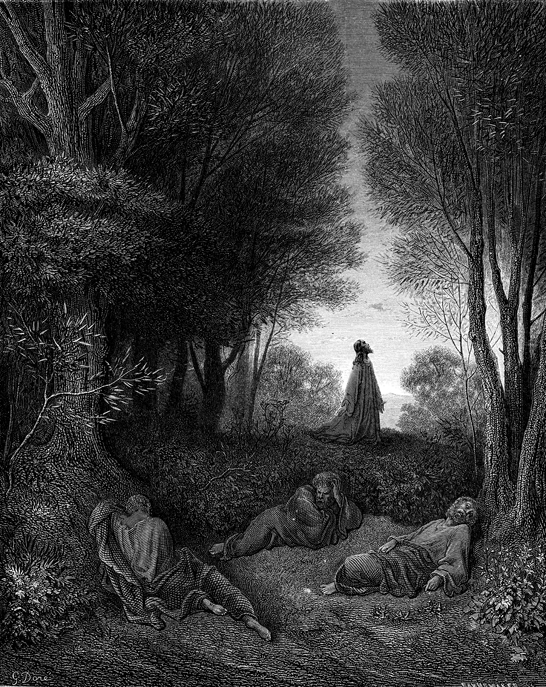
Gustave Doré, Doré's English Bible (1866). Public domain.
Summary
The olive garden across the Kidron at the foot of the Mount of Olives where Jesus prayed three times that the cup might pass, was strengthened by an angel, and was betrayed with a kiss.
- Gethsemane is a walled olive grove across the Kidron valley at the foot of the Mount of Olives. The name is not the word for garden. It is built from the words for press and oil, and it means oil press.
- On the night He was arrested Jesus prayed here three times that the cup would pass from Him, and three times said that His Father's will should be done instead.
- Judas did not have to search for Him. John 18:2 says the betrayer knew the place, because Jesus had often met there with His disciples.
- Hebrews 5:7 is the New Testament's own account of this scene. It reports loud cries and tears, and it says the prayer was heard.
- Pilgrims were shown a rock on this slope by the year 333, and a ritual bath of the Second Temple period was found beside the church in 2020.
On this page
In Scripture
- Verses
- 2
- Books
- 2
Where it is
- Region
- Jerusalem
- Kind of place
- Geographic feature
Why Gethsemane matters
What has been found
the evidence, and where it is disputed
The agony and the arrest
Matthew's account, with the beats Luke keeps that Matthew does not
Read Matthew's account, with the beats Luke keeps that Matthew does not
- He brings them to the place and goes in to prayMatthew 26:36At that time Jesus went with His disciples to a place called Gethsemane, and He told them, “Sit here while I go over there and pray.”
- He tells three men what is happening inside HimMatthew 26:38Then He said to them, “My soul is consumed with sorrow to the point of death. Stay here and keep watch with Me.”
- The first prayer, face on the groundMatthew 26:39Going a little farther, He fell facedown and prayed, “My Father, if it is possible, let this cup pass from Me. Yet not as I will, but as You will.”
- Luke alone records the anguish and the sweatLuke 22:44And in His anguish, He prayed more earnestly, and His sweat became like drops of blood falling to the ground.
- The second prayer, and the condition has changedMatthew 26:42A second time He went away and prayed, “My Father, if this cup cannot pass unless I drink it, may Your will be done.”
- He wakes them the third time and names the hourMatthew 26:45Then He returned to the disciples and said, “Are you still sleeping and resting? Look, the hour is near, and the Son of Man is betrayed into the hands of sinners.
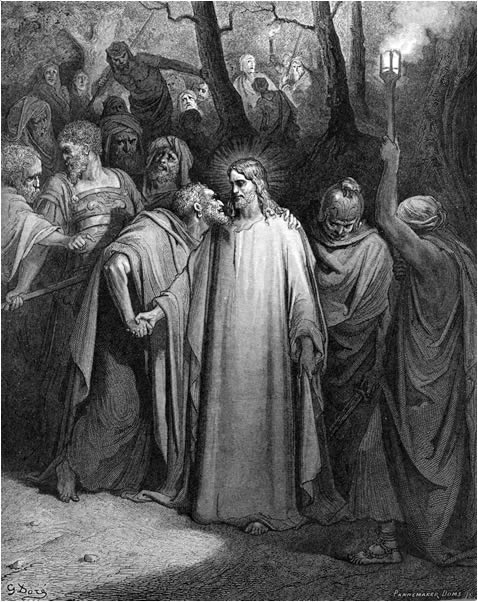
- Judas gives the signal he had arrangedMatthew 26:49Going directly to Jesus, he said, “Greetings, Rabbi!” and kissed Him.
- They seize Him and bind HimMatthew 26:50“Friend,” Jesus replied, “do what you came for.” Then the men stepped forward, seized Jesus, and arrested Him.
- The last miracle before the cross, for a man who came to take HimLuke 22:51But Jesus answered, “No more of this!” And He touched the man’s ear and healed him.
- The eleven scatterMatthew 26:56But this has all happened so that the writings of the prophets would be fulfilled.” Then all the disciples deserted Him and fled.
Matthew carries the three prayers, the sleeping men, the kiss and the flight. Luke alone records the anguish and the sweat, and the ear Jesus healed for a man who came to arrest Him. The beats run in the order the night ran.
The garden called the oil pressWhat happened here, in order
in the order the canon tells it
- A king leaves his city at night and crosses the Kidron2 Samuel 15:23Everyone in the countryside was weeping loudly as all the people passed by. And as the king crossed the Kidron Valley, all the people also passed toward the way of the wilderness.
- David goes up the Mount of Olives weeping, barefoot and covered2 Samuel 15:30But David continued up the Mount of Olives, weeping as he went up. His head was covered, and he was walking barefoot. And all the people with him covered their heads and went up, weeping as they went.
- Ahithophel, the counsellor who ate at the king's table, hangs himself2 Samuel 17:23When Ahithophel saw that his advice had not been followed, he saddled his donkey and set out for his house in his hometown. He put his affairs in order and hanged himself. So he died and was buried in his father’s tomb.
- David's line about the friend who shared his breadPsalms 41:9Even my close friend whom I trusted, the one who shared my bread, has lifted up his heel against me.
- The refrain about the downcast soul that Matthew 26:38 echoesPsalms 42:5Why are you downcast, O my soul? Why the unease within me? Put your hope in God, for I will yet praise Him for the salvation of His presence.
- The other cup, the one a rescued man liftsPsalms 116:13I will lift the cup of salvation and call on the name of the LORD.
- Jerusalem drains the cup of the LORD's fury to the dregsIsaiah 51:17Awake, awake! Rise up, O Jerusalem, you who have drunk from the hand of the LORD the cup of His fury; you who have drained the goblet to the dregs— the cup that makes men stagger.
- The Servant is crushed, and it is the LORD's willIsaiah 53:10Yet it was the LORD’s will to crush Him and to cause Him to suffer; and when His soul is made a guilt offering, He will see His offspring, He will prolong His days, and the good pleasure of the LORD will prosper in His hand.
- The same cup is handed to the nationsJeremiah 25:15This is what the LORD, the God of Israel, said to me: “Take from My hand this cup of the wine of wrath, and make all the nations to whom I send you drink from it.
- Strike the Shepherd, and the sheep will be scatteredZechariah 13:7Awake, O sword, against My Shepherd,against the man who is My Companion,declares the LORD of Hosts.Strike the Shepherd, and the sheep will be scattered,and I will turn My hand against the little ones.
- Jesus asks James and John whether they can drink His cupMatthew 20:22“You do not know what you are asking,” Jesus replied. “Can you drink the cup I am going to drink?” “We can,” the brothers answered.
- The hymn is sung and the company walks out to the Mount of OlivesMatthew 26:30And when they had sung a hymn, they went out to the Mount of Olives.
- Mark keeps the Aramaic word, AbbaMark 14:36“Abba, Father,” He said, “all things are possible for You. Take this cup from Me. Yet not what I will, but what You will.”
- Satan enters Judas, before the meal and before the gardenLuke 22:3Then Satan entered Judas Iscariot, who was one of the Twelve.
- Luke gives the habit that made the place findableLuke 22:39Jesus went out as usual to the Mount of Olives, and the disciples followed Him.
- The crossing of the Kidron, and the word gardenJohn 18:1After Jesus had spoken these words, He went out with His disciples across the Kidron Valley, where they entered a garden.
- His own summary of the night, spoken to PeterJohn 18:11“Put your sword back in its sheath!” Jesus said to Peter. “Shall I not drink the cup the Father has given Me?”
- The New Testament's own account of the prayer, and it was heardHebrews 5:7During the days of Jesus’ earthly life, He offered up prayers and petitions with loud cries and tears to the One who could save Him from death, and He was heard because of His reverence.
Where it points
The voices
each quoted from the work named
OUR Lord, after having eaten the Passover and celebrated the supper with His disciples, went with them to the Mount of Olives and entered the Garden of Gethsemane. What induced Him to select that place to be the scene of His terrible agony? Why there, in preference to anywhere else would He be arrested by His enemies? May we not conceive that as in a garden Adam's self-indulgence ruined us, so in another garden the agonies of the second Adam should restore us? Gethsemane supplies the medicine for the ills which followed upon the forbidden fruit of Eden.
A place called Gethsemane - A garden at the foot of the mount of Olives. The name seems to be formed from גת gath, a press, and סמן shemen, oil; probably the place where the produce of the mount of Olives was prepared for use. The garden of the oil-press, or olive-press.
Then cometh Jesus to a place called Gethsemane - That is, the valley of fatness. The garden probably had its name from its soil and situation, laying in some little valley between two of those many hills, the range of which constitutes the Mount of Olives.
4 more teachers on these versesMatthew Henry · Justin Martyr · Ambrose of Milan · J.C. Ryle
That he entered into a garden. This circumstance is taken notice of only by this evangelist, that Christ's sufferings began in a garden. In the garden of Eden sin began; there the curse was pronounced, there the Redeemer was promised, and therefore in a garden that promised seed entered the lists with the old serpent.
For in the memoirs which I say were drawn up by His apostles and those who followed them, [it is recorded] that His sweat fell down like drops of blood while He was praying, and saying, 'If it be possible, let this cup pass:' His heart and also His bones trembling; His heart being like wax melting in His belly: in order that we may perceive that the Father wished His Son really to undergo such sufferings for our sakes, and may not say that He, being the Son of God, did not feel what was happening to Him and inflicted on Him.
It must be used I think by way of question, as if he arrests the traitor with a lover's affection. He says, Betrayest thou with a kiss? that is, dost thou inflict a wound with the pledge of love? with the instruments of peace dost thou impose death? a slave, dost thou betray thy Lord; a disciple, thy master; one chosen, Him who chose thee? O great manifestation of Divine power, great discipline of virtue! Both the design of thy traitor is detected, and yet forbearance is not withheld.
The history of our Lord's agony in the garden of Gethsemane is a deep and mysterious passage of Scripture. It contains things which the wisest divines cannot fully explain. Yet it has upon its surface plain truths of most momentous importance.
Gethsemane in Scripture
2 verses name it, in 2 books
Open a book to read its mentions here. Text: Berean Standard Bible.
Old TestamentNew Testamentsegment width = share of mentions
New Testament2 books · 2 mentions
Matthew1 mention
The account
Read the account as one telling
Gethsemane lies on the lower western slope of the Mount of Olives, immediately east of the Kidron valley and directly across it from the temple platform. The ridge above it runs north to south and reaches about 826 metres at its highest point. The enclosed garden and the church beside it sit well down the western face, just above the Kidron bed. The walk from the temple platform down across the valley and up to the enclosure is under a kilometre and takes about a quarter of an hour at an unhurried pace. Every figure here is approximate.
The name says what the ground was for. Matthew and Mark call the place Gethsemane, and the Greek name stands on two Hebrew words, one for a press and one for oil. An oil press means a grove, and a grove on this slope means someone owned it, walled it and worked it. John does not use the name. He calls it a garden, and he is the only writer who does. Luke supplies the detail that turns a plot of ground into a habit: Jesus went out there as usual, and John 18:2 says the betrayer knew the place for exactly that reason.
The valley below it already carried a memory. When Absalom took the kingdom, David left Jerusalem at night, crossed the Kidron, and went up the Mount of Olives weeping with his head covered and his feet bare. The man who had betrayed him was Ahithophel, his own counsellor, who had eaten at his table and who hanged himself when his advice was refused. The Gospels do not comment on the parallel. They record a king crossing the same valley on the same errand of grief.
- first century
The setting in the first century was ordinary. Josephus describes gardens and plantations ringing Jerusalem outside the wall, and a private grove used by a teacher and his circle at festival time is the sort of thing he had in mind. He never mentions this one. No first-century source outside the Gospels names Gethsemane at all.
The night itself belongs to the last hours before the arrest. The Passover meal ended, a hymn was sung, and the company walked out of the city. Jesus left eight men near the entrance of the grove, took Peter, James and John further in, and told them His soul was consumed with sorrow to the point of death. He withdrew about a stone's throw, prayed three times that the cup would pass from Him, and three times said that His Father's will should be done instead. He came back three times and found the three asleep. Then Judas arrived with an armed party, and Jesus was seized and bound.
- AD 70
Forty years later the ground was stripped. Josephus records that the Roman legions besieging Jerusalem in AD 70 cut down every tree within ninety furlongs of the city to build their works, and that country which had been full of trees and pleasant gardens was left bare. Gethsemane is well inside that circle. Nothing growing on the slope today has a line back through that year.
Christians were being shown a spot here within three centuries of the arrest. The Bordeaux Pilgrim, whose itinerary of 333 is the oldest to survive, records a rock on this slope where Judas betrayed Christ, and that record is earlier than any church on the site. Egeria, in Jerusalem about 381 to 384, describes the whole congregation walking down here by night on the Thursday of Holy Week, with hymns, to hear the arrest read aloud. She says the weeping could be heard as far as the city. That liturgy is what fixed the place.
A basilica stood here in the reign of Theodosius I, and Egeria calls it elegant. The Custodia of the Holy Land, which owns and publishes the western site, follows the Annals of Eutychius in dating its ruin to the Persian capture of Jerusalem in 614; other accounts put it at the earthquake of 746. A Crusader church followed in the second half of the twelfth century, and John of Wurzburg reports it standing in 1165. It was damaged under Saladin and left in ruin, with the last documented pilgrimage to it given as 1323 in the Custodia's account and as 1345 in others.
Common questions
What does the name Gethsemane mean?
Readers differ; the positions are named
It is a place-name, and it is not the word for garden. The Greek name stands behind two Hebrew words, gath, a press, and shemen, oil, and the site's own lexicon glosses it in two words: oil-press. Adam Clarke sets out that derivation in his 1832 commentary.
John Wesley, Bede and Jerome carry an older reading of the same name, the valley of fatness, which rests on a different derivation. Both readings sit on this page and neither is settled here. John is the one evangelist who adds the word garden, and he uses that same word again of the place where the tomb stood.
Are the olive trees standing there the trees Jesus prayed under?
No, and the reason is older than any laboratory. Josephus records that the Roman legions cut down every tree within ninety furlongs of Jerusalem to build their siege works in AD 70, and Gethsemane is well inside that distance.
Radiocarbon dating published by Mauro Bernabei in 2015 could date only three of the eight trunks, because the rest are hollow and the older wood is gone. All three began in the twelfth century, the period of the Crusader church on the spot. A 2014 study led from the Italian national research council found that all eight trees carry one genetic profile, propagated from a single mother plant.
What the evidence leaves open is whether that stock was already growing on the site, because an olive regenerates from its own root and stump and the dated wood is trunk rather than root. The trees are old and genuine as what they are, and people have prayed among them for eight hundred years.
Is the enclosure beside the Church of All Nations the actual garden?
Readers differ; the positions are named
It rests on a continuous tradition rather than on an excavated object. The Bordeaux Pilgrim was shown a rock on this slope as the place of the betrayal in 333, before any church stood there, and Egeria describes the whole congregation of Jerusalem walking down here with hymns on the Thursday night about 381 to 384.
A basilica went up in the reign of Theodosius I, a Crusader church followed in the twelfth century, and the present Church of All Nations was raised on both between 1919 and 1924. In 2020 a ritual bath of the Second Temple period was found on the spot, the first evidence there from the New Testament period, and it fits a working oil press.
None of that fixes the boundary of the grove. The garden Scripture names is somewhere on this slope, and no excavated object proves the church stands on the ground of Matthew 26:36 rather than a hundred metres from it.
Was the sweat really blood?
Luke 22:44 says it became like drops of blood falling to the ground. The word rendered like is hosei, as if, and the word rendered drops is thrombos, a clot, which occurs once in the whole New Testament.
The verse also carries a genuine manuscript question, set out on this page. Some of the earliest copies lack Luke 22:43 to 22:44 and many others carry them, and Justin Martyr already quotes the sweat like drops of blood about AD 165. Those are the two facts, and the page states neither more nor less.
Why is Luke 22:43 to 22:44 printed in brackets in some Bibles?
Readers differ; the positions are named
Because the two verses are missing from several of the oldest manuscripts, including the papyrus P75, Codex Vaticanus and Codex Alexandrinus, and present in many others, including the first hand of Codex Sinaiticus, Codex Bezae and the great majority of later Greek copies.
Bruce Metzger and Bart Ehrman hold that they were added early to answer people who denied that Christ had a real body. Lincoln Blumell and Claire Clivaz argue the opposite, that the verses were original and were removed for a similar kind of reason.
Both sides agree the account is second-century at the latest, because Justin Martyr and Irenaeus both use it, which is earlier than any manuscript on either side. The standard critical editions keep the verses in the text inside double square brackets.
Why did Jesus take Peter, James and John further in?
The text does not say. It records that He took the three, told them His soul was consumed with sorrow to the point of death, and asked them to stay and keep watch.
These are the same three who were with Him at the raising of Jairus's daughter and on the mountain of the transfiguration. Chrysostom, preaching about AD 407, offered the reading that He took the men who had already seen His glory. That is his reading and the page gives it as one, not as the reason.
Who was the young man who ran away naked?
Readers differ; the positions are named
Mark 14:51 to 14:52 is the only account of him and it does not name him. Adam Clarke reads him as someone woken by the noise who came out wrapped in his bedding. Albert Barnes suggests the owner of the garden, who may have had an arrangement with Jesus about using the ground.
Spurgeon thought it was Mark himself, on the grounds that the Gospel writers tend to record their own part without naming themselves, and he offered it as a supposition rather than a fact. The text leaves the question open and so does this page.
What was in the cup?
Scripture says this cup and never defines it. What it does give is the prophets' own image behind the phrase. Isaiah 51:17 has Jerusalem draining the cup of the LORD's fury to the dregs, and Jeremiah 25:15 has the same cup handed to the nations.
Jesus had already used the word of Himself in front of James and John, and in the garden He calls it the cup the Father has given Me. Hebrews 5:7 to 5:9 is the New Testament's own reading of the whole scene, and it says the prayer was heard. Anything more specific than that is theology built on the text rather than the text.
Did Judas hang himself, or fall?
Readers differ; the positions are named
Matthew 27:5 says he went away and hanged himself. Acts 1:18 says he fell headlong in the field bought with the money and burst open.
The common reading harmonises the two, with the rope or the branch giving way and the body falling. That is a reading rather than a statement of either text, and this page names it as one.
Notable art
3 verified pieces depicting Gethsemane
Sources cited
- Berean Standard Bible (2023)Public domain. All Scripture text on this page, drawn from the site's own verse store.
- Research brief: GethsemaneThe brief this page is built from. Scripture, evidence, quote pool, art and doors, prepared 2026-09-02.
- The site's Strong's lexicon floorQueried 2026-09-02 for the name, the word for garden, the cup, Abba, agony and clot.
- R. Petruccelli and others, "Observation of eight ancient olive trees (Olea europaea L.) growing in the Garden of Gethsemane"Comptes Rendus Biologies 337:5 (2014), 311 to 317. The genetic and morphological study finding one genotype across all eight trees.
- Mauro Bernabei, "The age of the olive trees in the Garden of Gethsemane"Journal of Archaeological Science 53 (2015), 43 to 48. Radiocarbon dating of three datable trunks to the twelfth century.
- Israel Antiquities Authority, the December 2020 excavation announcementThe Second Temple period mikveh, the sixth-century church and the Crusader monastery. Excavation directed by David Yeger with the Studium Biblicum Franciscanum; Amit Re'em quoted. Not peer-reviewed or fully published at the time of announcement.
- Biblical Archaeology Society, "Remains found at Gethsemane"Second report of the same 2020 season.
- Custodia Terra Sancta, "Gethsemane, Basilica of the Agony"The custodian's own account of the sequence of churches, the Barluzzi dates, the rock in the presbytery, the Grotto and the Tomb of Mary.
- Itinerarium Burdigalense, the Bordeaux Pilgrim (333)Public domain. The oldest surviving Christian itinerary to the Holy Land, and the rock on this slope shown as the place of the betrayal.
- Egeria, Itinerarium, chapter XXXVI (about 381 to 384)Public domain. The Holy Thursday descent to Gethsemane with hymns, and the reading of the arrest.
- Flavius Josephus, The Jewish War, Book 6, chapter 1Public domain, Whiston translation. The trees cut down for ninety furlongs around Jerusalem in AD 70.
- Mishnah Pesahim 10:1, 10:6 and 10:7 (compiled about AD 200)The four cups and the Hallel on Passover night. William Davidson Edition at Sefaria.
- Mishnah Menahot 8:3The sources of oil for the meal offerings, naming Tekoa first and not naming the Mount of Olives. William Davidson Edition at Sefaria.
- Bruce M. Metzger, A Textual Commentary on the Greek New TestamentThe editorial committee's decision on Luke 22:43 to 44 and the reasoning for the double brackets.
- Bart D. Ehrman and Mark A. Plunkett, "The Angel and the Agony: The Textual Problem of Luke 22:43-44"Catholic Biblical Quarterly 45 (1983). The argument that the verses are an anti-docetic insertion.
- Lincoln H. Blumell, "Luke 22:43-44: An Anti-Docetic Interpolation or an Apologetic Omission?"TC: A Journal of Biblical Textual Criticism 19 (2014), 1 to 35. The argument for an early deliberate omission.
- Justin Martyr, Dialogue with Trypho, chapter 103 (about AD 165)Public domain. The earliest datable witness to the sweat like drops of blood.
- Irenaeus, Against HeresiesPublic domain. The sweat of blood used against the Docetae in the later second century.
- Charles H. Spurgeon, The Metropolitan Tabernacle PulpitPublic domain. Sermon No. 1199, "The Agony in Gethsemane" (1874), and the Gethsemane sermons around it.
- J.C. Ryle, Expository Thoughts on the Gospels: Mark (1857)Public domain, lightly modernised text.
- Matthew Henry, Commentary on the Whole Bible (1710)Public domain.
- Adam Clarke, Commentary on the Bible (1832)Public domain. The oil-press derivation of the name, with both Hebrew words.
- John Wesley, Explanatory Notes upon the New Testament (1755)Public domain. The older reading of the name as the valley of fatness.
- Albert Barnes, Notes, Explanatory and Practical, on the Old and New TestamentsPublic domain. The 1823 traveller's description of the enclosure and its eight trees.
- John Calvin, Commentaries (1554)Public domain. On the composition of the band that came to the garden.
- Ambrose of Milan, Exposition of the Gospel of Luke, and the Catena Aurea of Thomas Aquinas (about AD 397)Public domain. The question put to Judas about the kiss, and the healing of the ear.
- John Chrysostom, Homilies on the Gospel of Matthew (about AD 407)Public domain. Homily 83, on the two halves of the first prayer.
- Jamieson, Fausset and Brown, Commentary Critical and Explanatory on the Whole Bible (1871)Public domain. On Luke 22:44 and on the obedience of Hebrews 5:8.
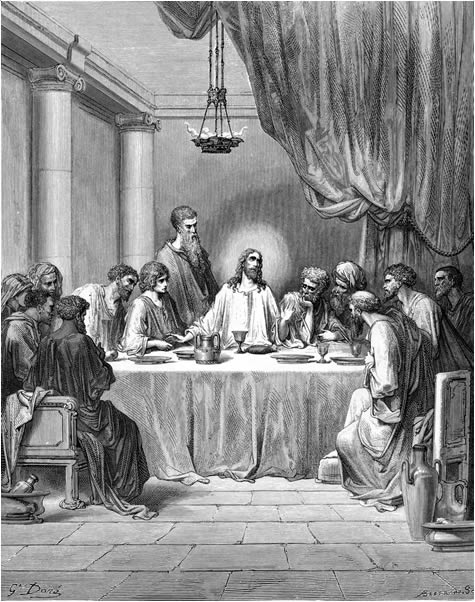
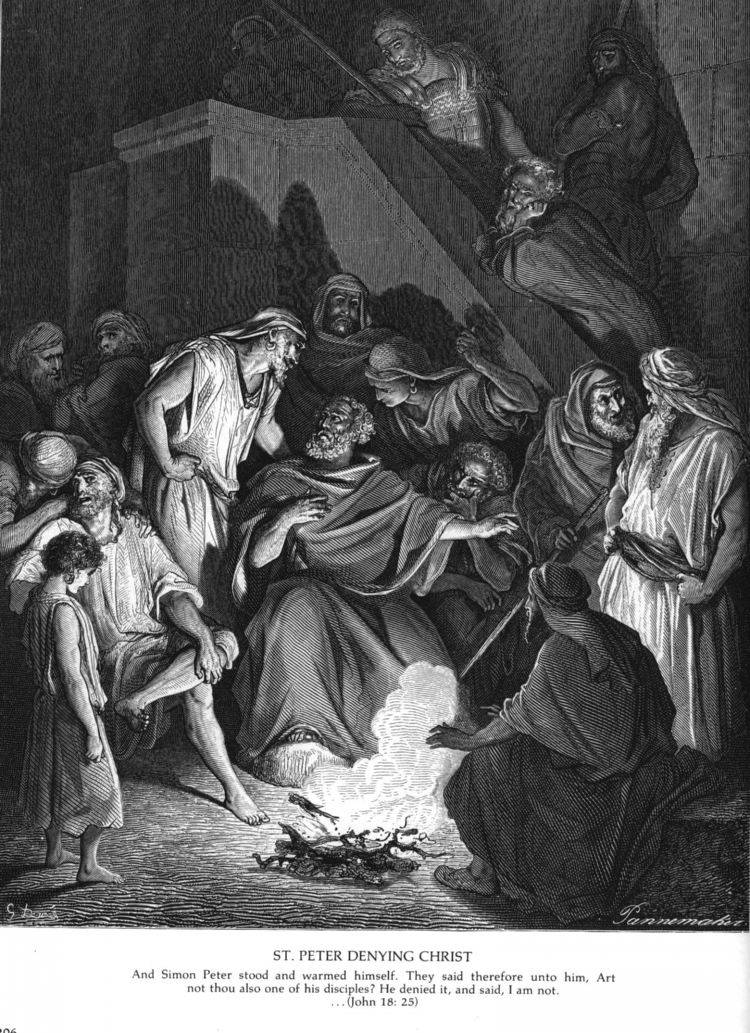
- Gustave Doré, Doré's English Bible (1866)Public domain. The two Gethsemane plates on this page and the two adjacent scenes, captioned for what they show.
- George Adam Smith, Atlas of the Historical Geography of the Holy Land (1915)Public domain. The reference maps used across the places pages.
- The site's curated quote poolEvery voice on this page is a public domain author whose quote was verified against the site's own pool on 2026-09-02.
Keep studying
On this page
Studies11
Lives that run through it2
Doorway2
Keep this page