
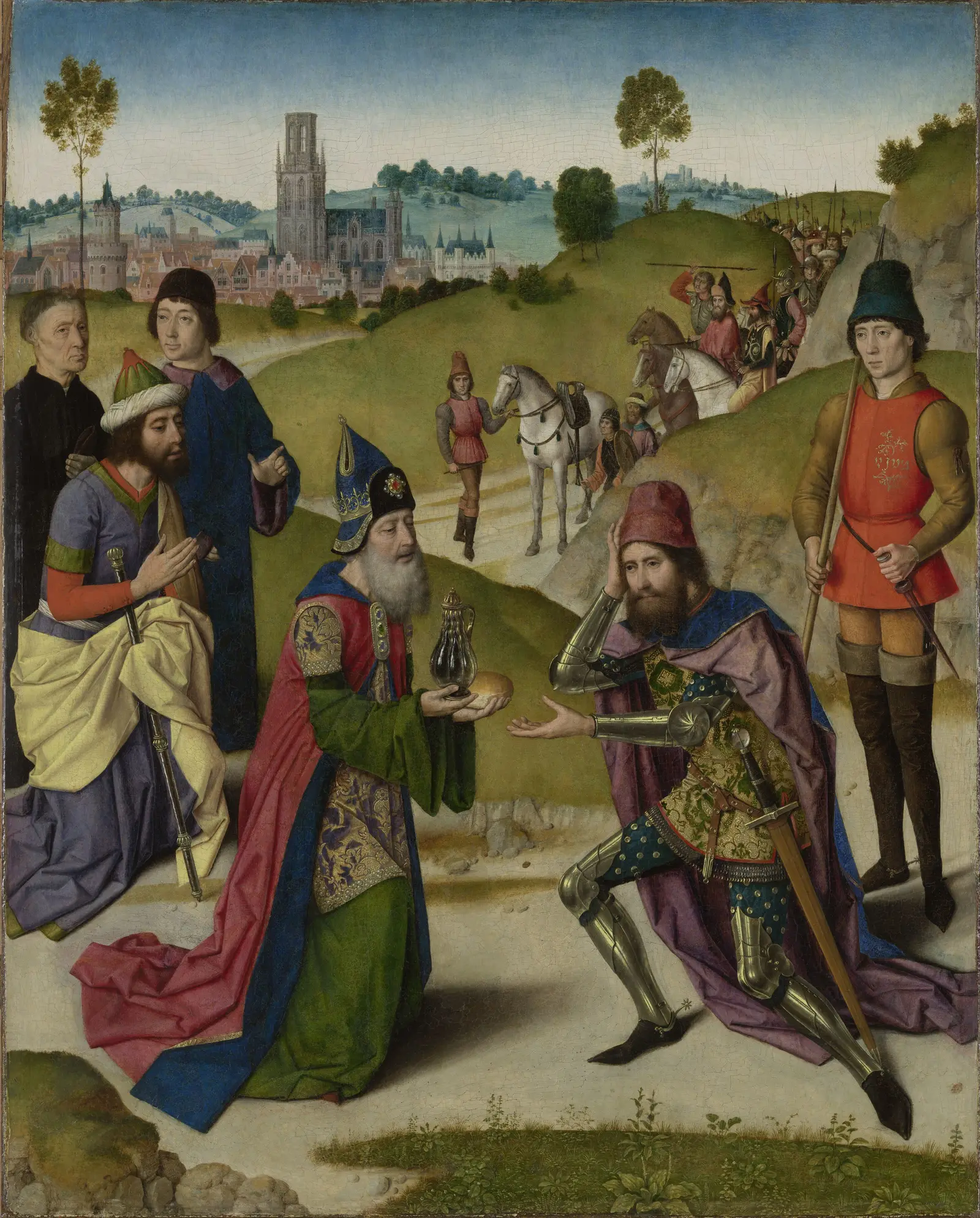
The Meeting of Abraham and Melchizedek, Dieric Bouts, 1464 to 1467. Public domain.
A movement of the canon
Hebrews, the General Epistles and Revelation
The letters that are not Paul's, plus Revelation. Hebrews, the short letters from Jesus' own circle, and the book that closes the Bible.
- 9Books
- 56Chapters
- 57Studies
The books
Hebrews
13 chThe NT's most sustained OT argument. Jesus is better than: angels, Moses, Aaron, the old covenant.
James
5 chThe Lord's brother on faith that works. ‘Be ye doers of the word, and not hearers only.’
1 Peter
5 chPeter to scattered exiles. A living hope; a royal priesthood; suffering borne in Christ.
2 Peter
3 chPeter's farewell. False teachers denounced; the Lord's patience defended; new heavens promised.
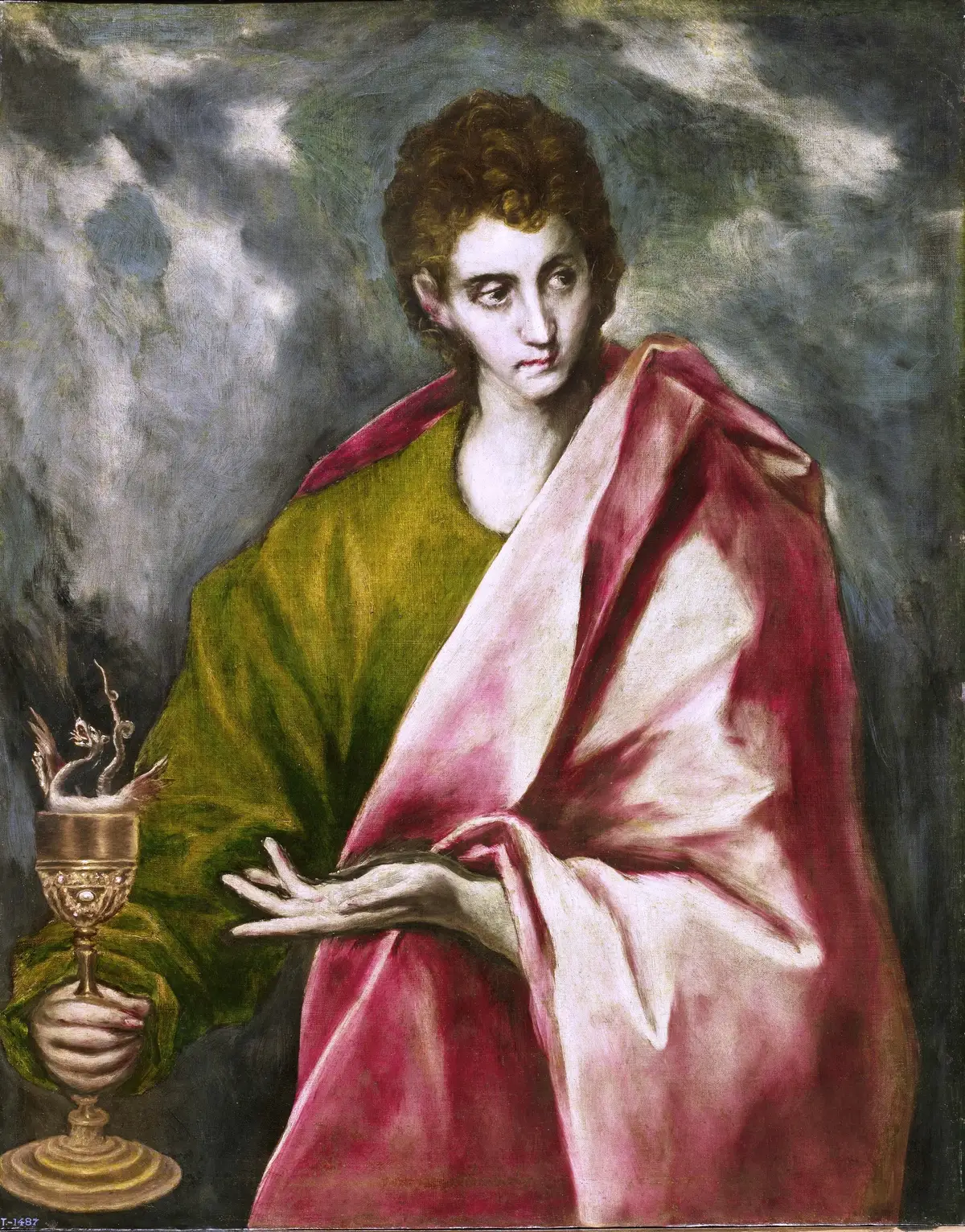
1 John
5 chThree tests (light, love, life) interwoven. ‘That ye may know that ye have eternal life.’
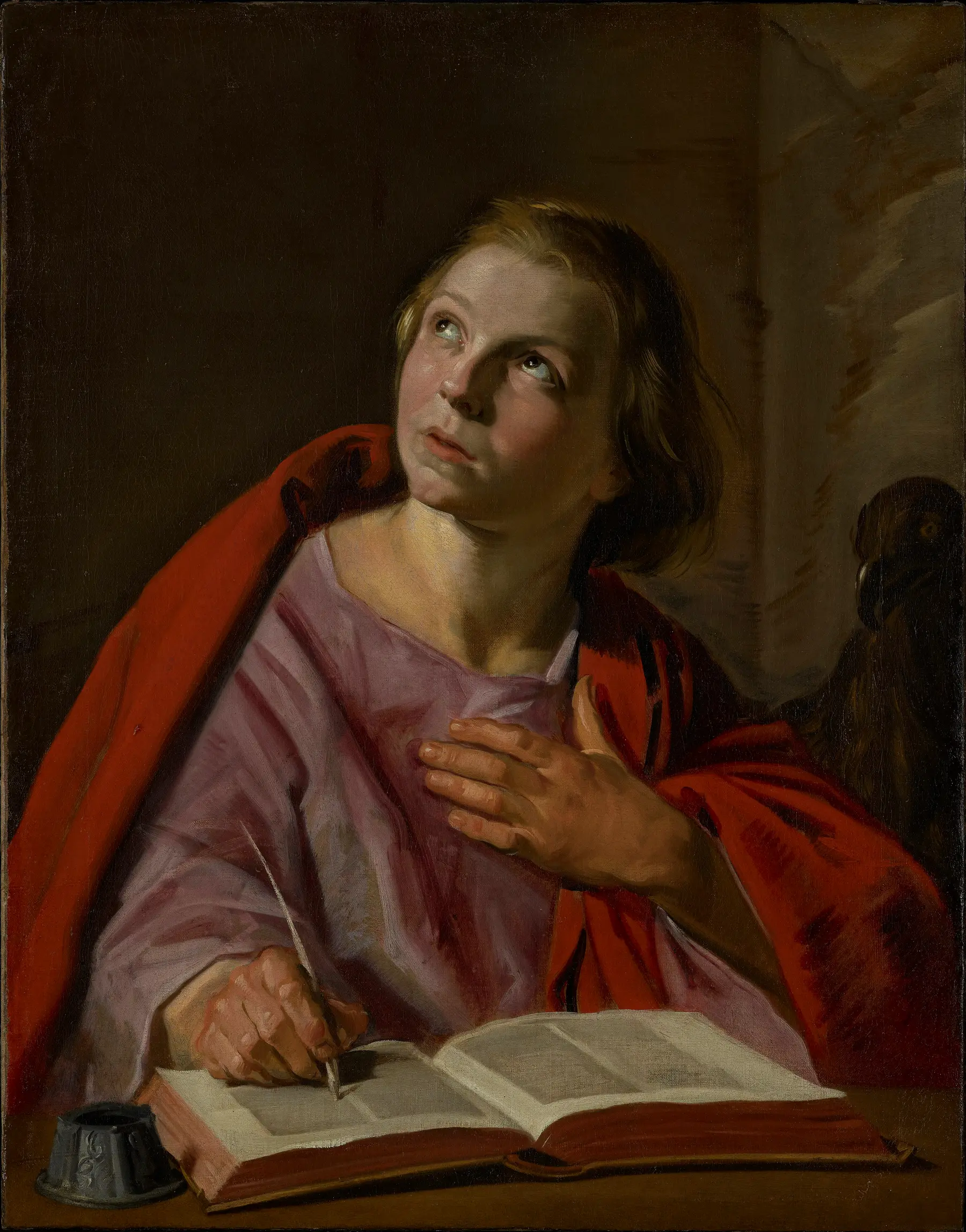
2 John
1 chThe elder to the elect lady. Thirteen verses on truth and love and guarded hospitality.
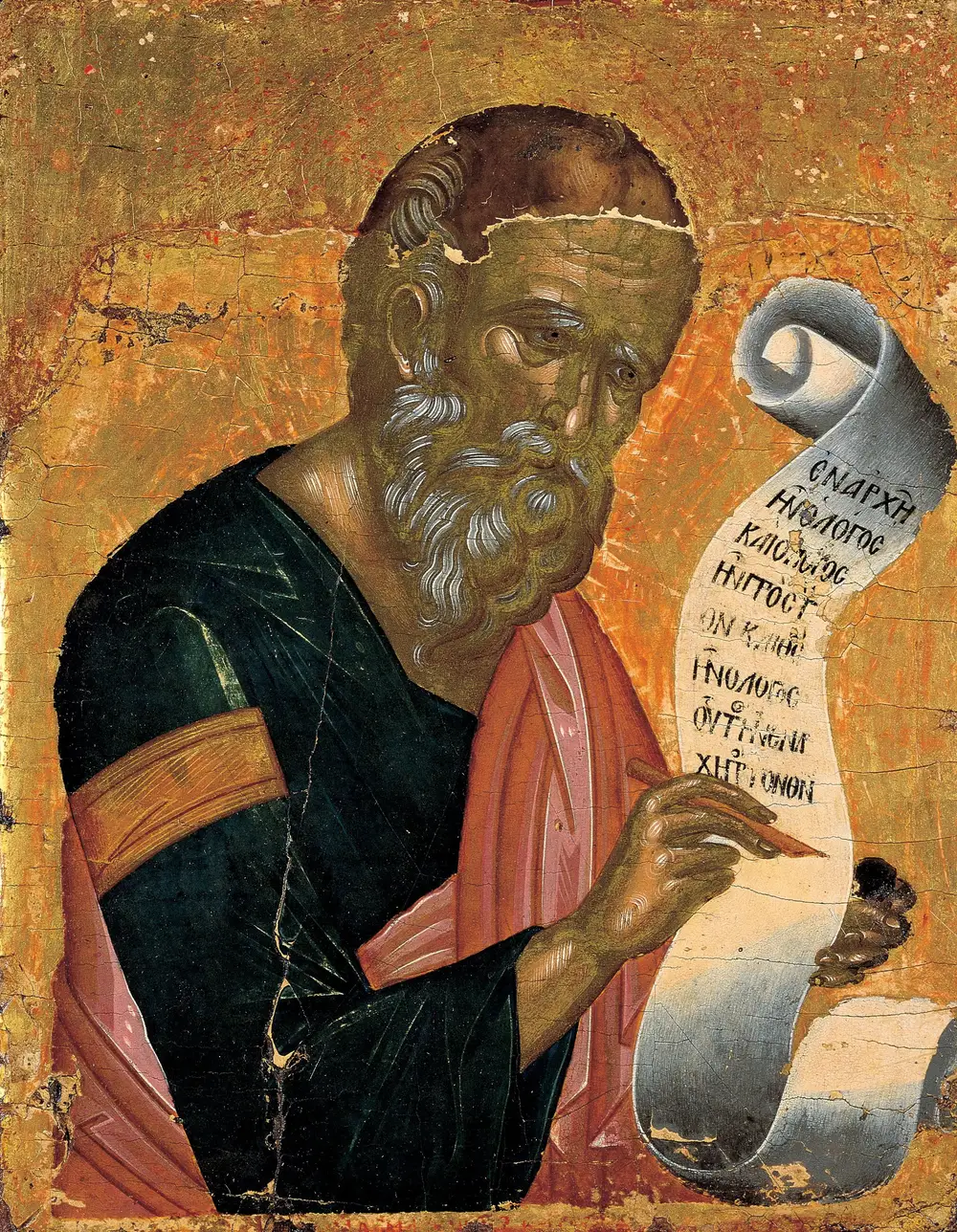
3 John
1 chThe elder to Gaius. Fourteen verses on welcome and on Diotrephes who ‘loveth the preeminence.’
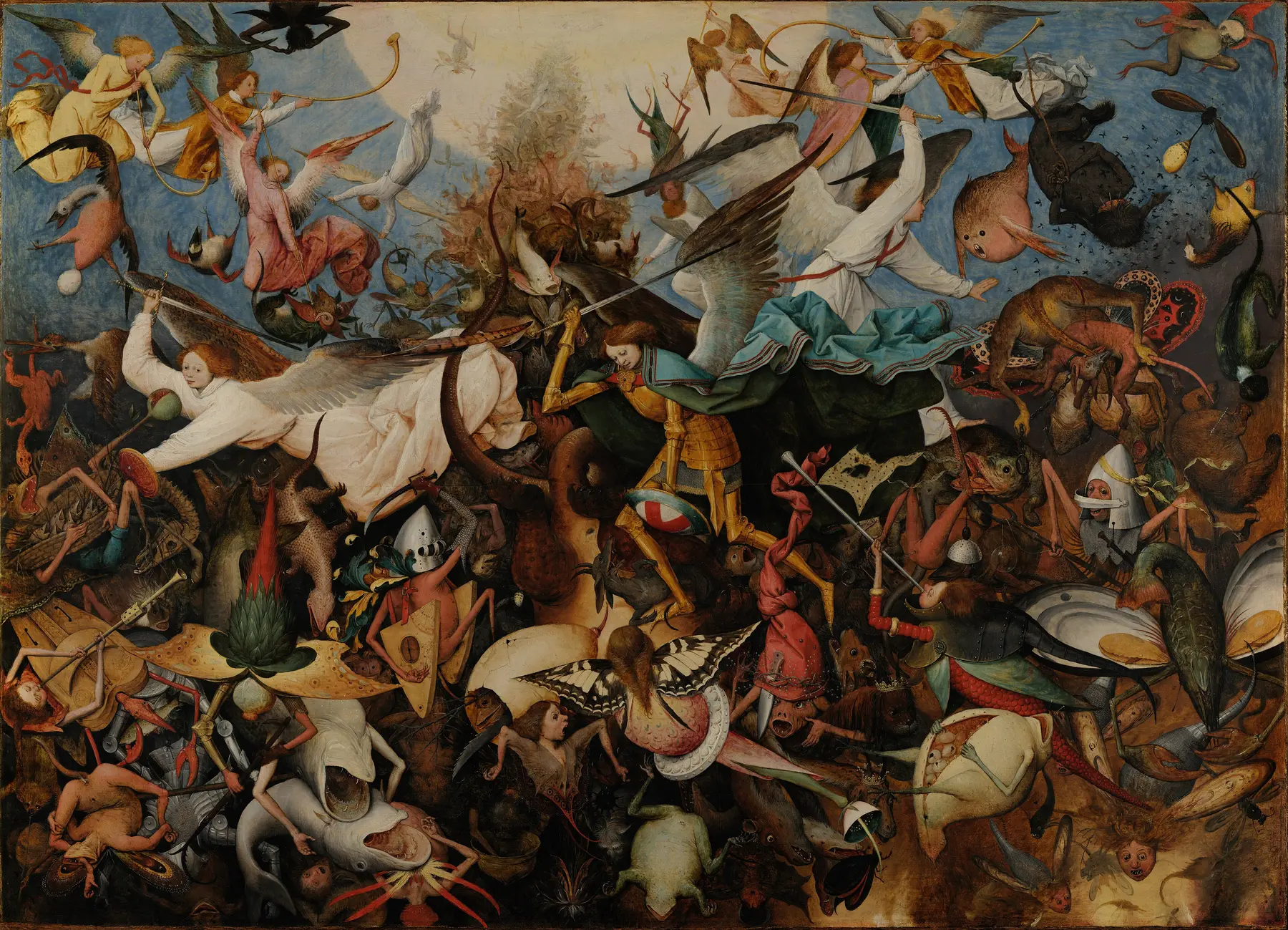
Jude
1 chTwenty-five urgent verses. ‘Earnestly contend for the faith which was once delivered unto the saints.’
Revelation
22 chJohn's apocalypse from Patmos. The Lamb reigns; the sevens unfold; the new Jerusalem descends.
Card plates: Gustave Doré — Doré’s English Bible (1866) and the Doré New Testament engravings. Public domain.
›Go deeper: how these books work together
The letters that close the New Testament are not Paul's. Hebrews argues (anonymously and with polished Greek) that Jesus is better than every institution Judaism knew. The General Epistles (James, 1 and 2 Peter, 1–3 John, Jude) gather short pastoral letters written to whole regions or specific households rather than to named churches. And Revelation closes the canon with John's apocalypse from Patmos: the slain Lamb enthroned, the scroll opened, Babylon fallen, the new Jerusalem descending.
These nine books are notable as much for what they are not as for what they are. They are not Paul; the theological accents shift. Hebrews' priesthood-Christology is its own, Owen-length argument. James stands closer to the Sermon on the Mount than to Romans. Peter and John carry pastoral voices aged by decades of witness. Jude is twenty-five sharp verses, hand-delivered. Revelation belongs to a genre unlike anything else in the New Testament: apocalyptic, OT-saturated, structured in sevens.
Three receive Tier 1 bespoke visuals (Hebrews' ‘better than’ comparison stack, 1 John's threefold test of light / love / life, Revelation's sevens structural wheel); the six General Epistles ship at uniform Tier 2 with signature verses, stat strips, and chapter grids. Revelation's interpretive framework surfaces Preterist / Futurist / Historicist / Idealist readings and the premillennial / amillennial / postmillennial positions on chapter 20: without picking a winner. Marcus Brown's Editor's Notes drawer is the only place those positions are taken.
Studies that walk through these books
The numeral is how many passages of Hebrews, the General Epistles and Revelation each study touches.