
Daniel 3:21
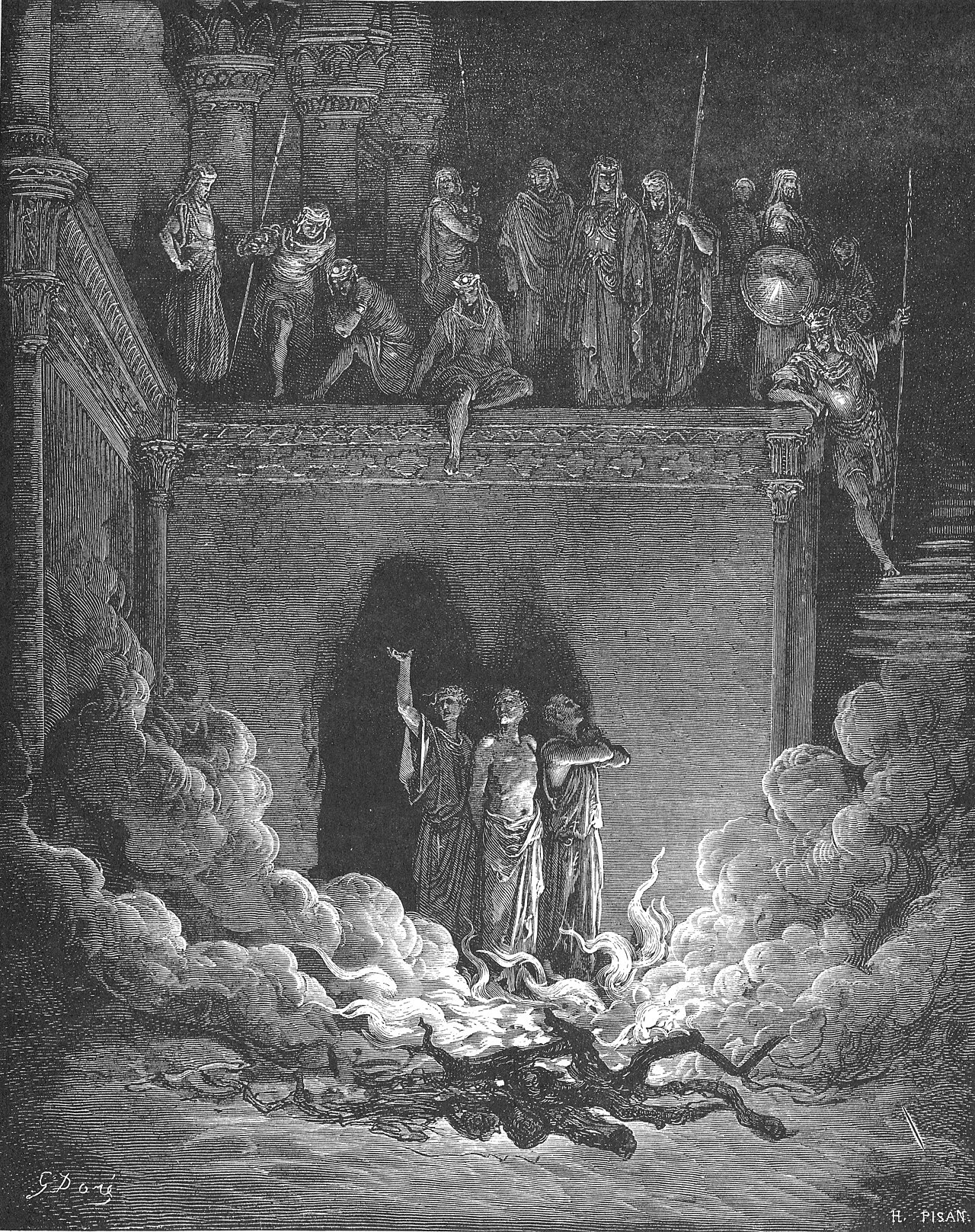
in Daniel 3So they were tied up, wearing robes, trousers, turbans, and other clothes, and they were thrown into the blazing fiery furnace.
BSB
The same verse in ASV and KJV ▾
ASV
Then these men were bound in their hosen, their tunics, and their mantles, and their other garments, and were cast into the midst of the burning fiery furnace.
KJV
Then these men were bound in their coats, their hosen, and their hats, and their other garments, and were cast into the midst of the burning fiery furnace.
⋯
This verse in Daniel 3
Commentary
5 notes on this verseVerse 21. "And straightway those men, bound up in their trousers and turbans and footgear and garments, were cast into the midst of the furnace of flaming fire..." Instead of sarbal, "trousers" interpreted by Symmachus as anaxy-rides ("trousers"), Aquila and Theodotion read simply saraballa rather than the corrupt reading sarabara. Now the shanks and shin-bones are called saraballa in the language of the Chaldeans, and by extension of the same word it is applied to those articles of clothing which cover the shanks and shins, as if they were to be called "shankies" and "shinnies" (crurales et tibiales).
This site's exposition
one seven times more
on Daniel 3:19-23
The king's face changes and the furnace is heated one seven times more than it was wont, fury doing physics no favors, since a hotter fire kills faster and the commentators note the order serves rage rather than punishment. The detail is court-precise: bound in their coats, their hosen, and their hats, the mightiest men of the army carrying them, and the flame slaying the executioners at the mouth, the chapter's proof before the miracle that this fire is real fire. The three fell down bound into the midst: the last the king's men see of them is men tied hand and foot in flame.
The record, by era
The Puritans and the Awakening1 voice
on Daniel 3:20-21
They were bound, that they might not struggle, or make any resistance, were bound in their clothes, for haste, or that they might be consumed the more slowly and gradually. But God's providence ordered it for the increase of the miracle, in that their clothes were not so much as singed.
The Nineteenth Century2 voices
A commentator
Albert Barnes1798–1870
Notes, Explanatory and Practical, on the Old and New Testaments (1832-1869)
Then these men were bound in their coats - They were seized just as they were. No time was given them for preparation; no change was made in their dress. In “autos-da-fe” of later times, it has been usual to array those who were to suffer in a peculiar dress, indicative of the fact that they were heretics, and that they deserved the flame. Here, however, the anger of the king was so great, that no delay was allowed for any such purpose, and they proceeded to execute the sentence upon them just as they were.
A commentator
Jamieson, Fausset & Brown1802–1910
Commentary Critical and Explanatory on the Whole Bible (1871)
(3) an outer mantle with a girdle round it. So these are specified [GESENIUS], "their pantaloons, inner tunics (hosen, or stockings, are not commonly worn in the East), and outer mantles." Their being cast in so hurriedly, with all their garments on, enhanced the miracle in that not even the smell of fire passed on their clothes, though of delicate, inflammable material.
The words behind it
13 Hebrew wordsEvery Hebrew word of this verse in the order it stands, with what it means and the door to its own study. The last column counts the times a word stands in the whole Bible: the rarer the word, the more the places it appears belong together.
| Hebrew | Sound | Meaning | Word study | In the Bible |
|---|---|---|---|---|
| בֵּאדַ֜יִן | bedayin | <in> then | H116 → | 57 times |
| גֻּבְרַיָּ֣א | guvraiya' | men the | H1400 → | 21 times |
| אִלֵּ֗ךְ | ʾilekh | these | H479 → | 14 times |
| כְּפִ֙תוּ֙ | kefitu | they were bound | H3729 → | 4 times |
| בְּסַרְבָּלֵיהוֹן֙ | besarbaleihon | in mantles their | H5622 → | |
| פַּטְּשֵׁיה֔וֹן | patisheihon | trousers their | H6361 → | |
| וְכַרְבְּלָתְה֖וֹן | vekharbelatehon | and caps their | H3737 → | |
| וּלְבֻשֵׁיה֑וֹן | ulevusheihon | and clothes their | H3831 → | |
| וּרְמִ֕יו | uremiv | and they were thrown | H7412 → | 12 times |
| לְגֽוֹא־ | legoy'- | to [the] midst of | H1459 → | 13 times |
| אַתּ֥וּן | ʾatun | [the] furnace of | H861 → | 10 times |
| נוּרָ֖א | nura' | fire the | H5135 → | 17 times |
| יָקִֽדְתָּֽא׃ | yakidta' | <the> burning | H3345 → | 8 times |
בֵּאדַ֜יִן<in> then
bedayinH116 →57 times
גֻּבְרַיָּ֣אmen the
guvraiya'H1400 →21 times
אִלֵּ֗ךְthese
ʾilekhH479 →14 times
כְּפִ֙תוּ֙they were bound
kefituH3729 →4 times
בְּסַרְבָּלֵיהוֹן֙in mantles their
besarbaleihonH5622 →
פַּטְּשֵׁיה֔וֹןtrousers their
patisheihonH6361 →
וְכַרְבְּלָתְה֖וֹןand caps their
vekharbelatehonH3737 →
וּלְבֻשֵׁיה֑וֹןand clothes their
ulevusheihonH3831 →
וּרְמִ֕יוand they were thrown
uremivH7412 →12 times
לְגֽוֹא־to [the] midst of
legoy'-H1459 →13 times
אַתּ֥וּן[the] furnace of
ʾatunH861 →10 times
נוּרָ֖אfire the
nura'H5135 →17 times
יָקִֽדְתָּֽא׃<the> burning
yakidta'H3345 →8 times
A shaded row is a word that stands 400 times or fewer in the Bible.
Where this verse is studied
On this page
About Daniel
This page draws on Albert Barnes, Notes, Explanatory and Practical, on the Old and New Testaments (1832-1869); Carl Friedrich Keil, Biblical Commentary on the Book of Daniel; Jamieson, Fausset & Brown, Commentary Critical and Explanatory on the Whole Bible; Jerome, St. Jerome, Commentary on Daniel, CHAPTER THREE; John Gill, Exposition of the Old Testament and Matthew Henry, Commentary on the Whole Bible.