
On this page, 7 sections
The one drawing
Across the canon
11 passages
Where Scripture speaks
The passages this subject stands on, in canon order.
He carried into exile all Jerusalem—all the commanders and mighty men of valor, all the craftsmen and metalsmiths—ten thousand captives in all. Only the poorest people of the land remained.Then Nebuzaradan captain of the guard carried into exile the people who remained in the city, along with the deserters who had defected to the king of Babylon and the rest of the population.Those who escaped the sword were carried by Nebuchadnezzar into exile in Babylon, and they became servants to him and his sons until the kingdom of Persia came to power.In the first year of Cyrus king of Persia, to fulfill the word of the LORD spoken through Jeremiah, the LORD stirred the spirit of Cyrus king of Persia to send a proclamation throughout his kingdom and to put it in writing as follows:By the rivers of Babylon we sat and wept when we remembered Zion.The time will surely come when everything in your palace and all that your fathers have stored up until this day will be carried off to Babylon. Nothing will be left, says the LORD.For this is what the LORD says: “When Babylon’s seventy years are complete, I will attend to you and confirm My promise to restore you to this place.For I know the plans I have for you, declares the LORD, plans to prosper you and not to harm you, to give you a future and a hope.In the thirtieth year, on the fifth day of the fourth month, while I was among the exiles by the River Kebar, the heavens opened and I saw visions of God.In the third year of the reign of Jehoiakim king of Judah, Nebuchadnezzar king of Babylon came to Jerusalem and besieged it.in the first year of his reign, I, Daniel, understood from the sacred books, according to the word of the LORD to Jeremiah the prophet, that the desolation of Jerusalem would last seventy years.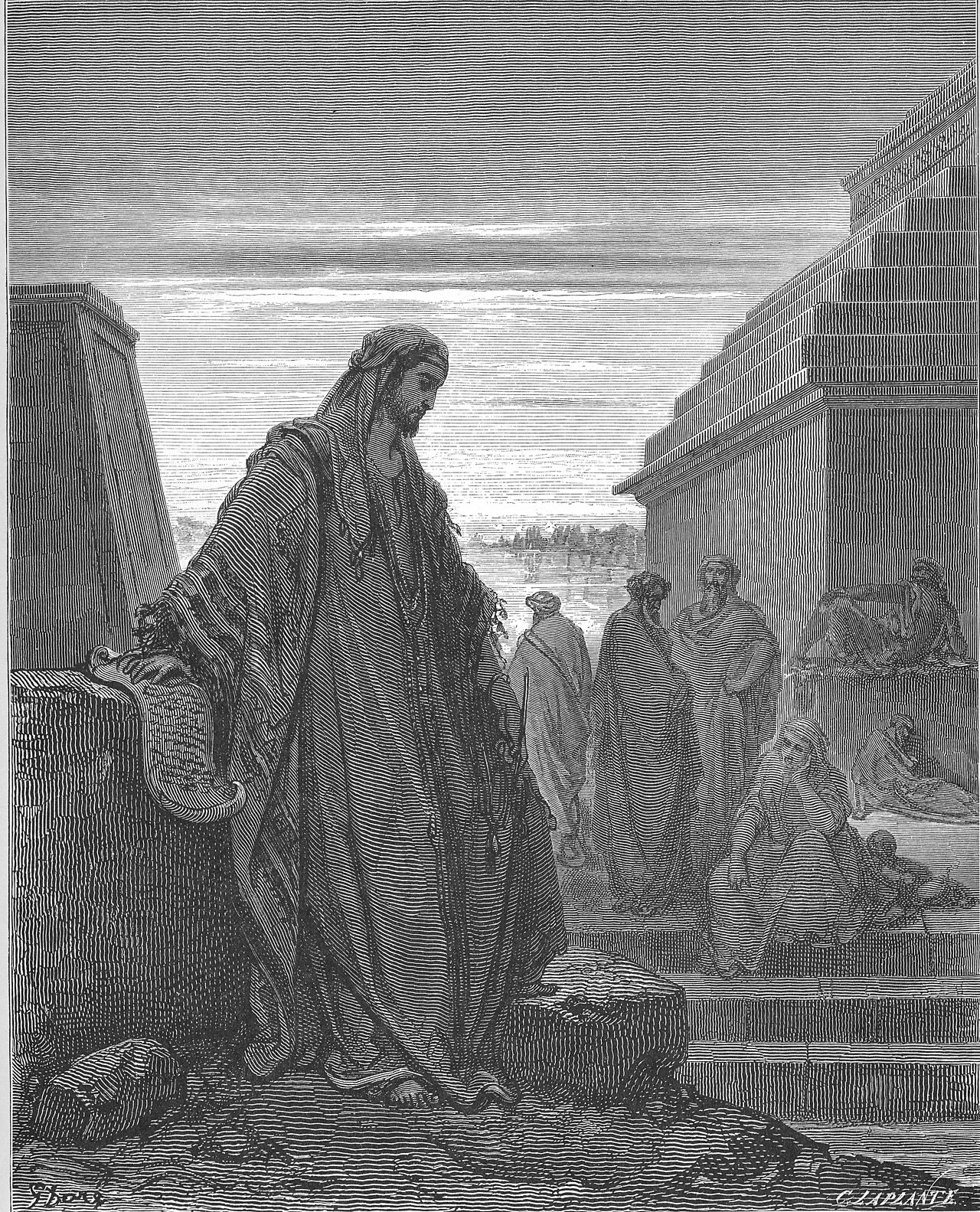
The exile in Scripture, in full
Exile is one of the most painful words in the Old Testament, and one of the most necessary. For centuries God had warned his people through the prophets that persistent idolatry would bring consequences, and in 586 BC those warnings became history. Nebuchadnezzar's armies destroyed Jerusalem and its temple, and the rest of the city's people were carried away to Babylon (2 Kings 25:11). The nation that had once stood in the Promised Land under David and Solomon now sat as captives in a foreign empire.
The exile did not come as a surprise to God, even though it devastated his people. The Chronicler explains that Judah was carried to Babylon and remained servants there until the kingdom of Persia rose, so that the land could enjoy its neglected sabbaths, a period appointed and not accidental (2 Chronicles 36:20). The exile was discipline, not abandonment: the painful outworking of a covenant relationship God had never broken, even when Israel had.
Scripture does not hide how much this hurt. One psalm captures the grief with unforgettable honesty: by the rivers of Babylon the exiles sat down and wept when they remembered Zion (Psalm 137:1). Harps hung silent on willow branches because captors demanded songs of joy from people who had none left to sing. Isaiah had foreseen this loss even earlier, warning King Hezekiah that everything in his house would one day be carried off to Babylon (Isaiah 39:6). The exile was long expected and still unbearable when it came.
Yet even inside that grief, God kept speaking. Jeremiah wrote to the exiles in Babylon with words that have comforted the discouraged ever since: after seventy years, God would visit them and bring them back to this place (Jeremiah 29:10). He followed that promise with one of the most quoted lines in Scripture, that he knew the plans he had for them, plans for good and not for evil, to give them a future and a hope (Jeremiah 29:11). Exile was real, but it was not the end of the story God was writing.
Some of Scripture's most vivid moments happen inside this captivity. Ezekiel received his call to prophesy while sitting among the exiles by the river Chebar, far from the temple he had trained to serve in (Ezekiel 1:1). Daniel was carried off as a young man when Nebuchadnezzar first besieged Jerusalem, and grew up entirely inside a pagan court, yet remained faithful there (Daniel 1:1).
Years later, reading Jeremiah's scroll, Daniel understood that the seventy years of exile were nearly finished, and he turned to prayer and fasting for his people (Daniel 9:2). Exile produced some of the deepest faith in the whole Bible, forged under pressure no one would choose.
The return finally came. Cyrus of Persia issued a proclamation permitting the exiles to go home and rebuild the temple, exactly as Jeremiah had said (Ezra 1:1). What God had scattered, God gathered again.
The pattern of exile and return echoes through the whole Bible's larger story. Humanity itself is, in a sense, exiled from Eden, cut off from the presence it was made for. The gospel answers that deeper exile. In Christ, those who were far off have been brought near, no longer strangers, but citizens of a kingdom that cannot be shaken and children brought home to the Father who never stopped planning their return.
4 voices
What teachers have said
If it refer to the captives in Babylon, it may mean that they felt themselves there as in a state of exile; for, although they had been seventy years in it, they still felt it as a strange land, because they considered Palestine their home.
Adam Clarke · Commentary on the Bible
Written before 1832.
No one is sufficient to redeem himself, unless he comes who turns away the captivity of the people, not with ransoms or with gifts, as it is written in Isaiah, but in his own blood.
Basil of Caesarea · Homilies on the Psalms 19:4 (psalm 48)
Written before 379.
And with regard to Babylon Jeremiah said, Babylon shall fall and shall not rise. And behold! To this day it continues in desolation and will do so forever.
Aphrahat the Persian Sage · Demonstrations 21:6
Written before 345.
All the force of the king of Babylon could not have done it if God had not ordered it; nor could he have any power against them but what was given him from above.
Matthew Henry · Commentary on the Whole Bible, 1710
Where it leads
Everything the site holds on the exile
The words underneath
Each card is one Hebrew or Greek word behind the exile. It gives the sense, the count across the canon, and the number in Strong's 1890 concordance.
shebi: captivity
Hebrew · H7628Strong's entry: exiled; captured; as noun, exile (abstractly or concretely and collectively); by extension, booty
what happens to a people God gives over
49 times in the Old Testament · shebi, in full →
galuth: captivity
Hebrew · H1546Strong's entry: captivity; concretely, exiles (collectively)
the state Israel entered and would one day leave
15 times in the Old Testament · galuth, in full →
galah: Heglam
Hebrew · H1540Strong's entry: to denude (especially in a disgraceful sense); by implication, to exile (captives being usually stripped); figuratively, to reveal
the verb behind Judah's forced removal from the land
186 times in the Old Testament · galah, in full →
golah: captivity
Hebrew · H1473Strong's entry: exile; concretely and collectively exiles
the collective noun for the exiles themselves
43 times in the Old Testament · golah, in full →
Where in the story
The subjects beside it
On this page